Don't want to rub salt in the wounds, but why wasn't a full-length beam ordered from the beginning?
Feels like you'll now have to spend quite a bit of money instead of consulting a structural engineer before you started?
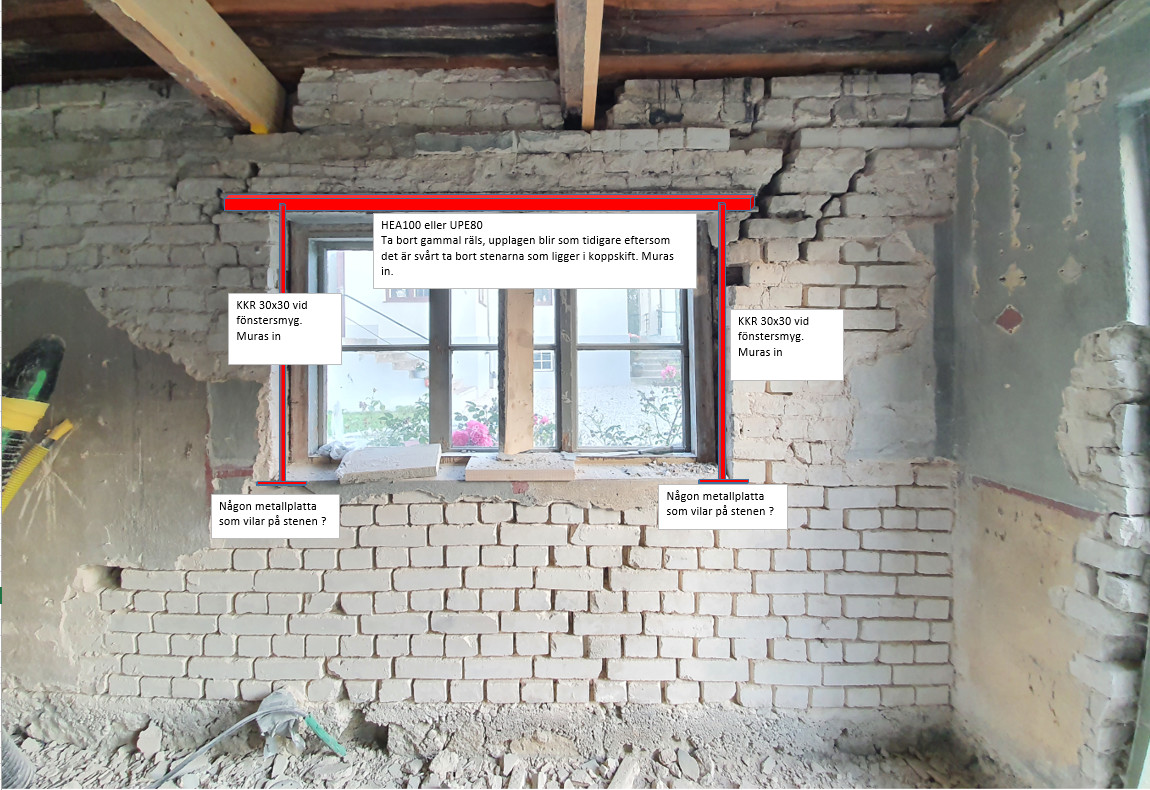
The problem is likely ensuring the load the bricks under the rail can bear, but couldn't you possibly trace in VKR/KKR on the sides of the window opening or maybe cast a standing pillar?
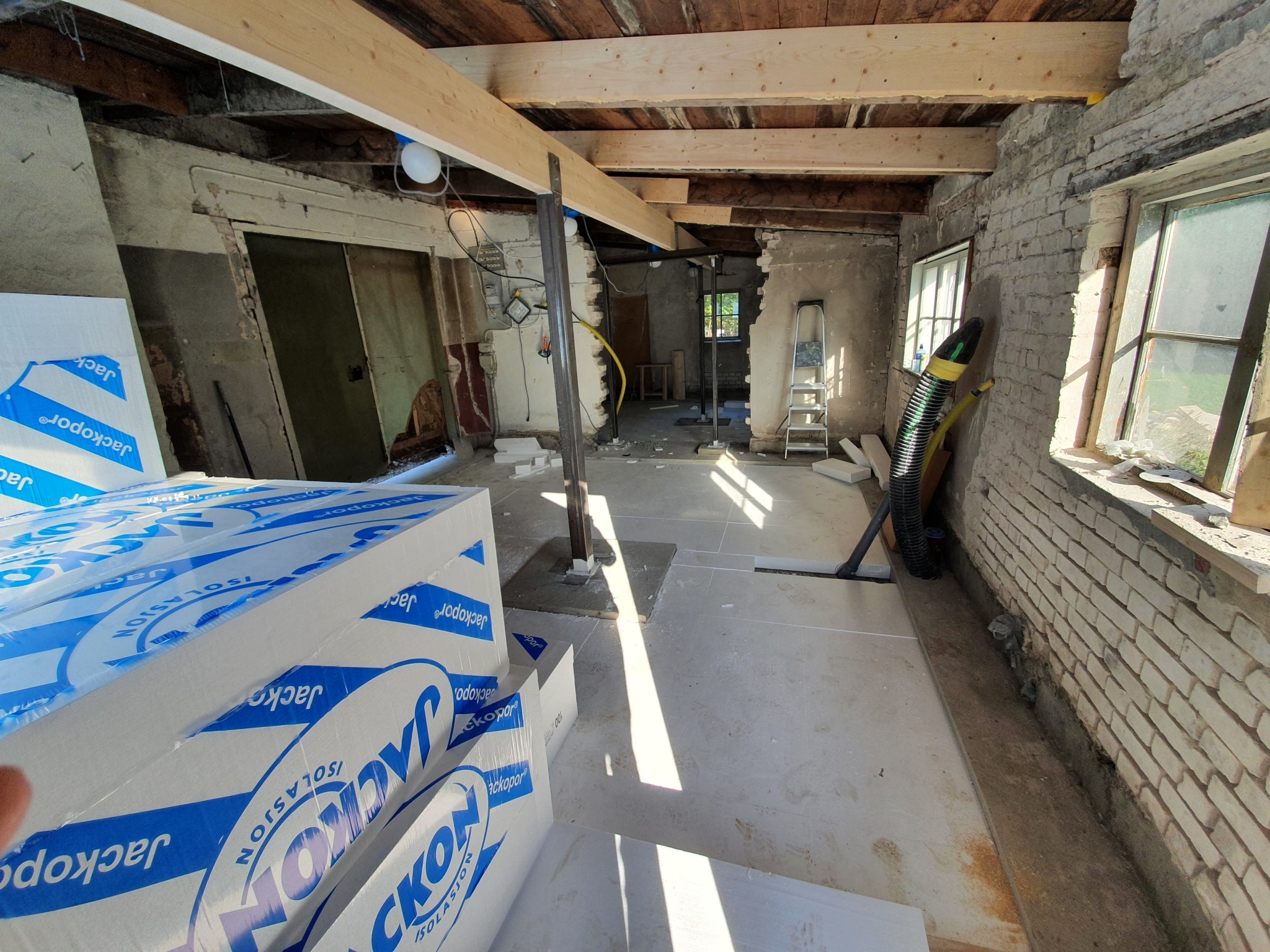
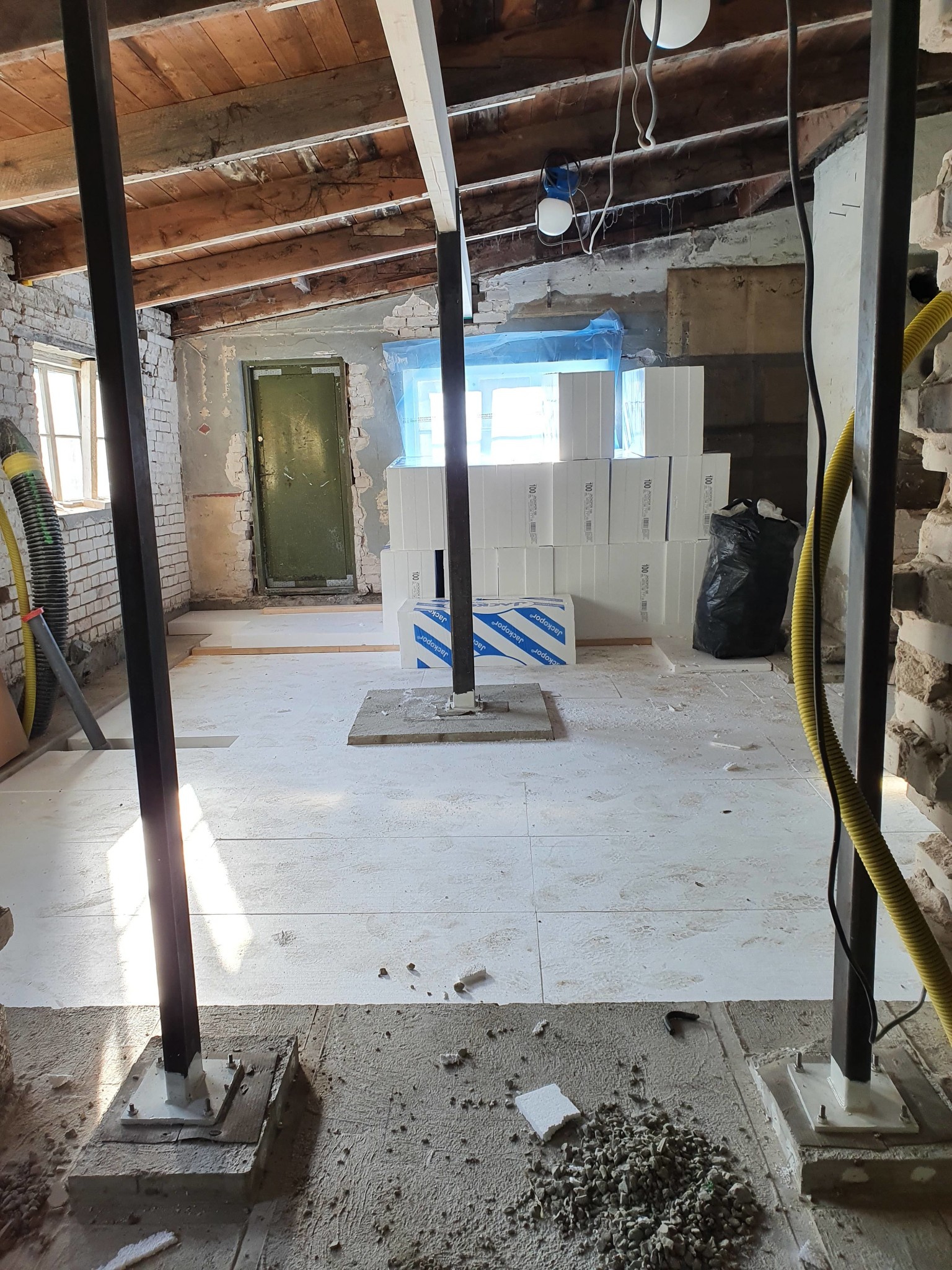
We probably assessed that it would be very difficult to fit a 12m glulam beam. It was that long initially but we cut it. But even if it hadn't been cut, the loads would have been only partially reduced, not solving the problem.
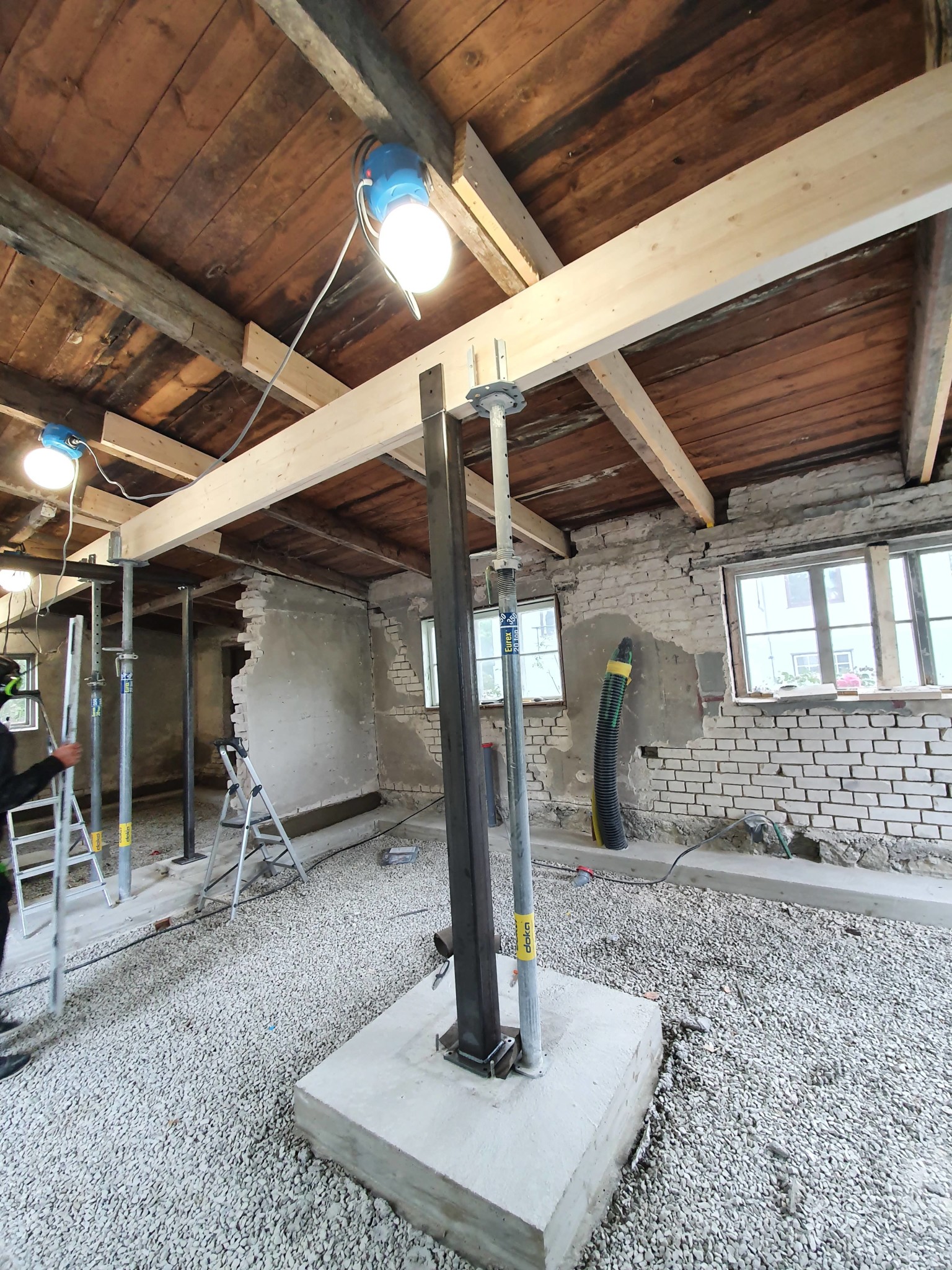
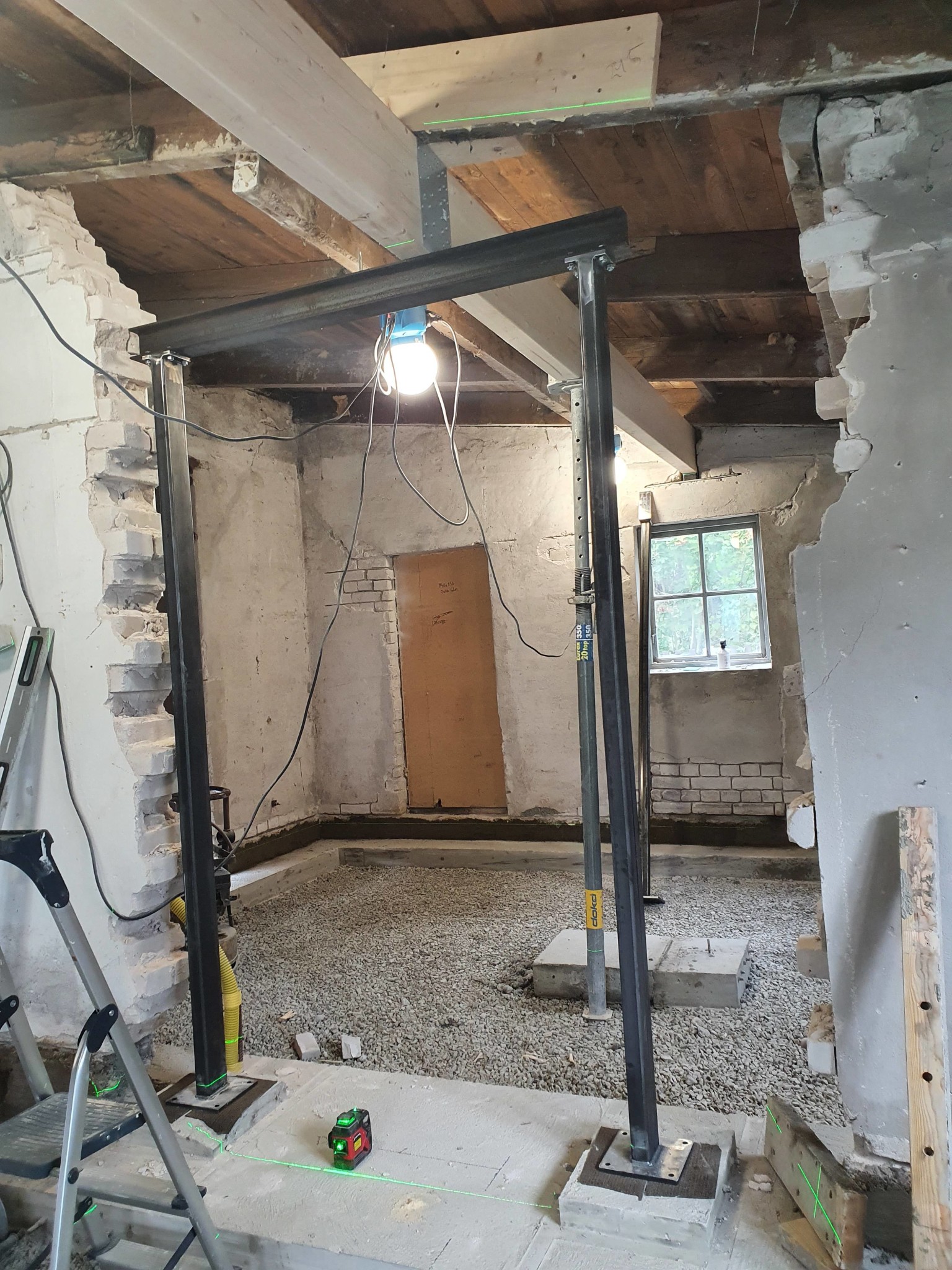
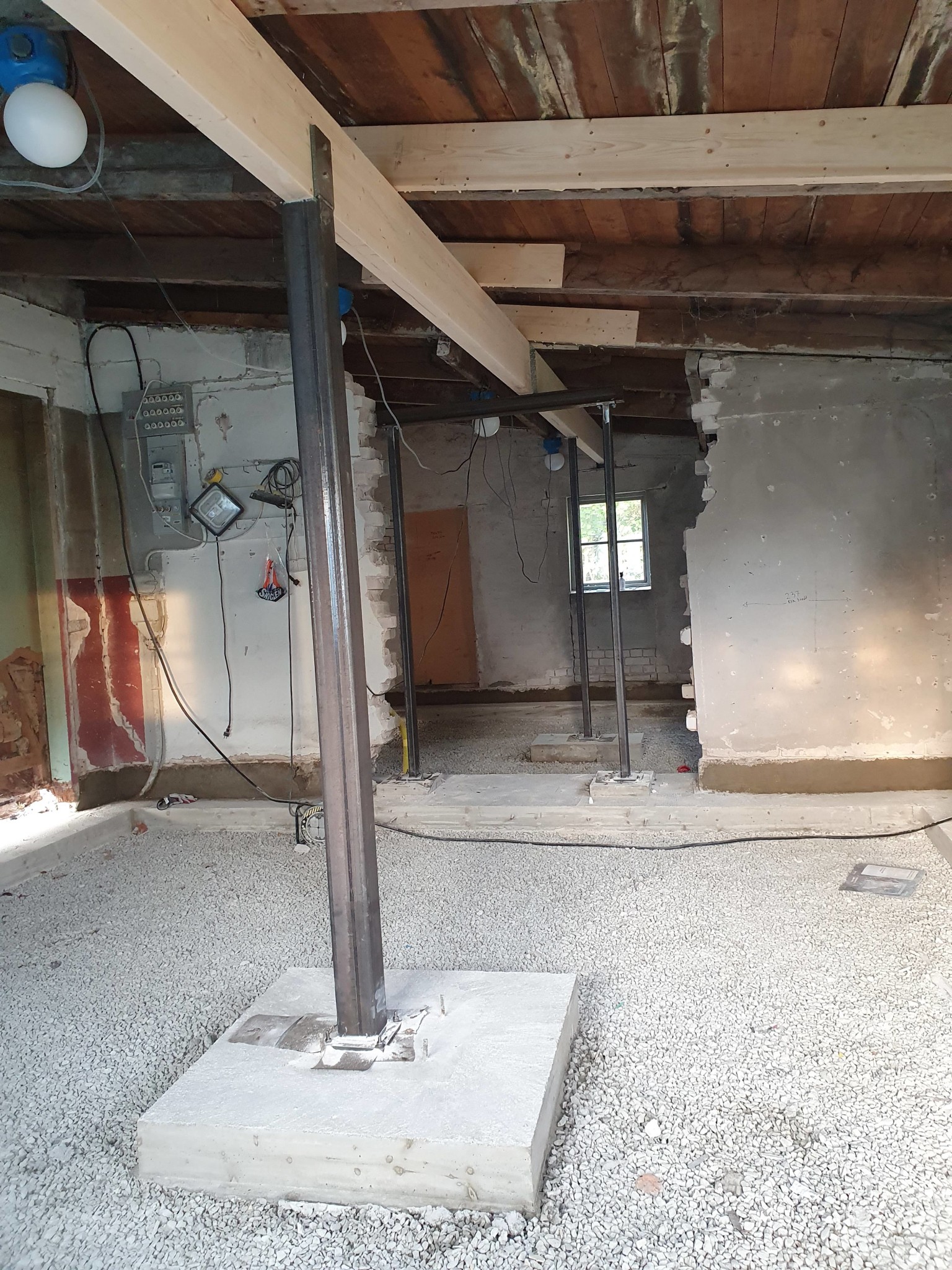
I have had a structural engineer involved from time to time, but they often lack understanding of older constructions. Additionally, they can't guarantee any calculations on older masonry. However, I have now managed the loads from the glulam beam by having KKR supports manufactured, which are arriving next week. But right now I am considering the loads from the roof trusses. They arise regardless of how I handle the glulam beam.
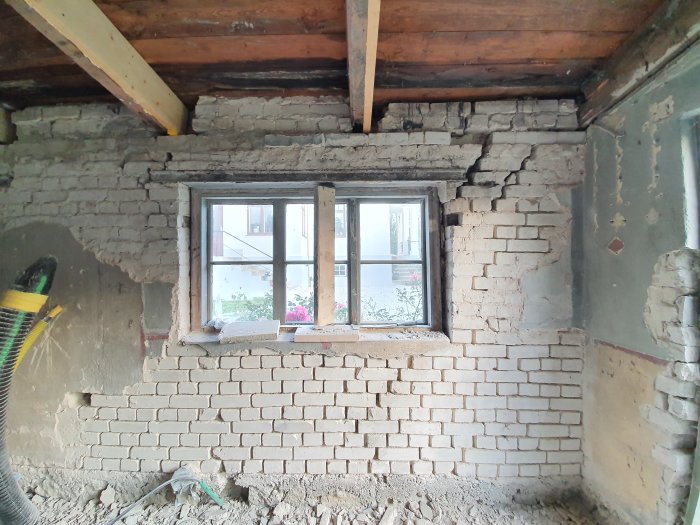
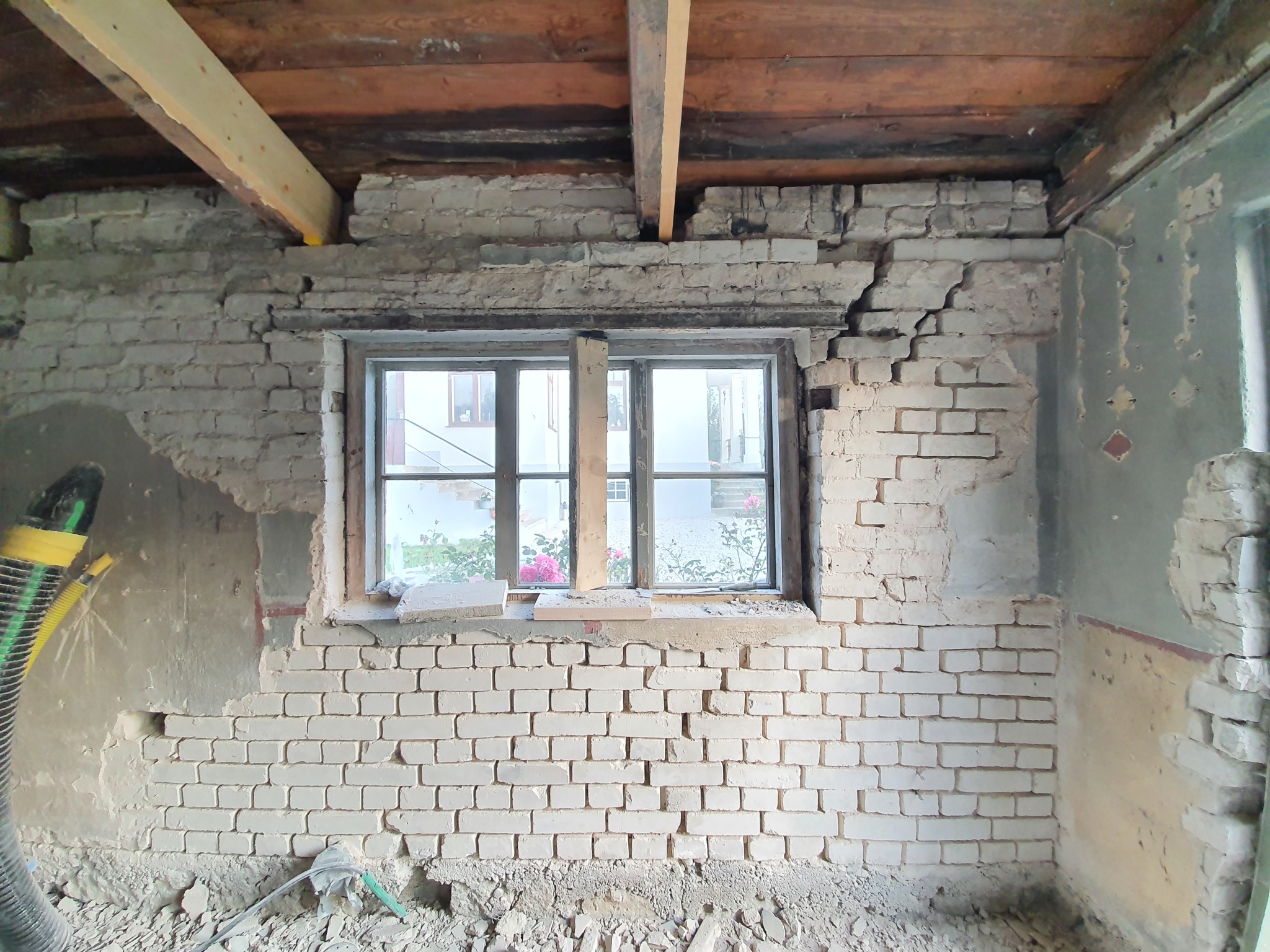
The problem with the tracks is that they are too short. The shear cracks (diagonal zig-zag shaped) are evidence that the tracks have not been able to bear the truss loads, as clearly seen in the image below. The radical solution is to replace the tracks with longer steel beams and to rebuild the wall. Since the masonry is done with alternating stretcher and header courses, this is not entirely simple.
Tear down two layers of stone above the window, mill vertical grooves on each side of the windows and remove the stone. Place two iron pillars in the grooves and lay a heabalk on top. Mesh and plaster the entire wall.
Tear down two layers of stone above the window, cut vertical grooves on either side of the windows and remove the stone. Place two iron pillars in the grooves and put a HEA beam on top. Mesh and plaster the entire wall.
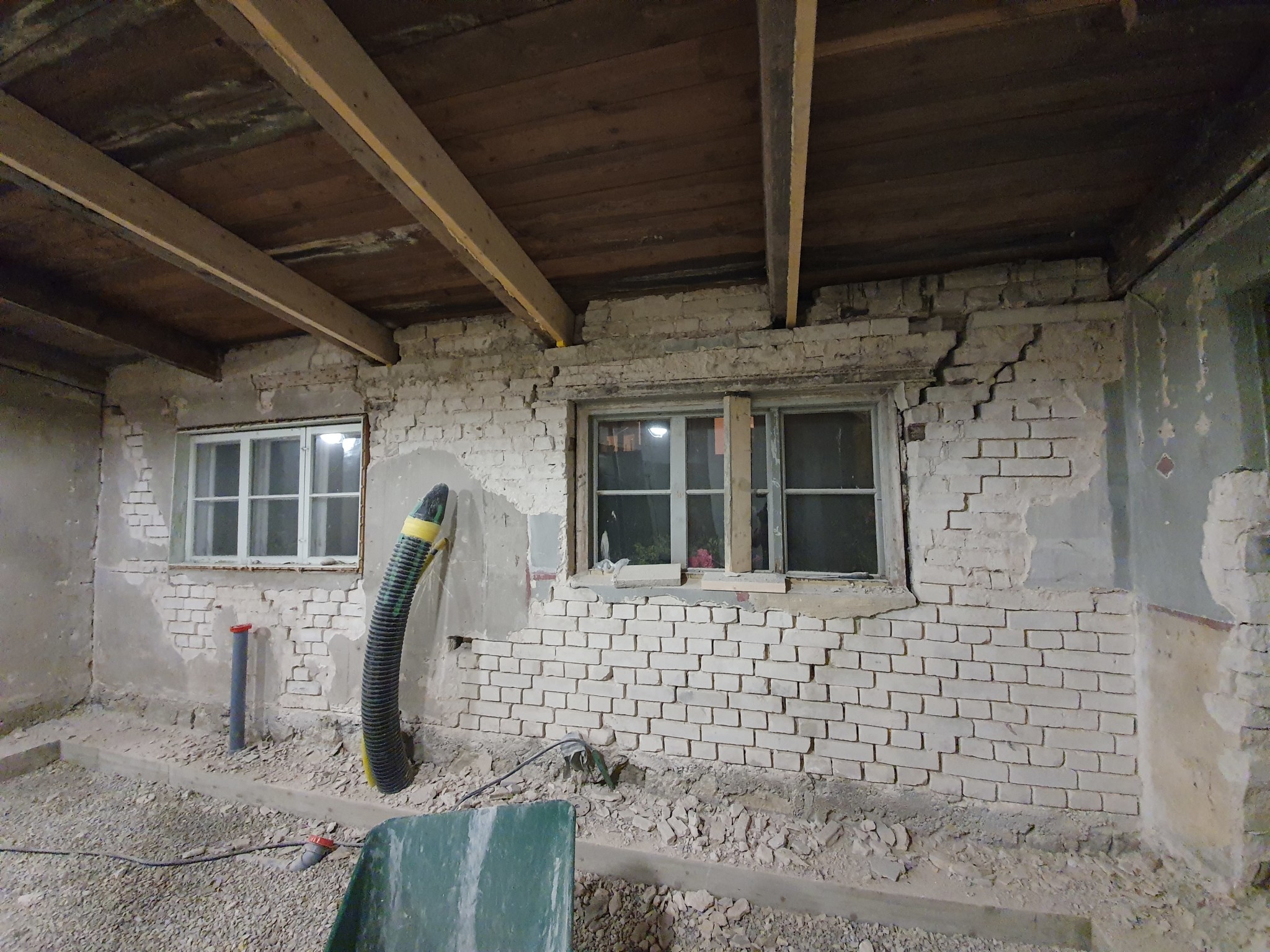
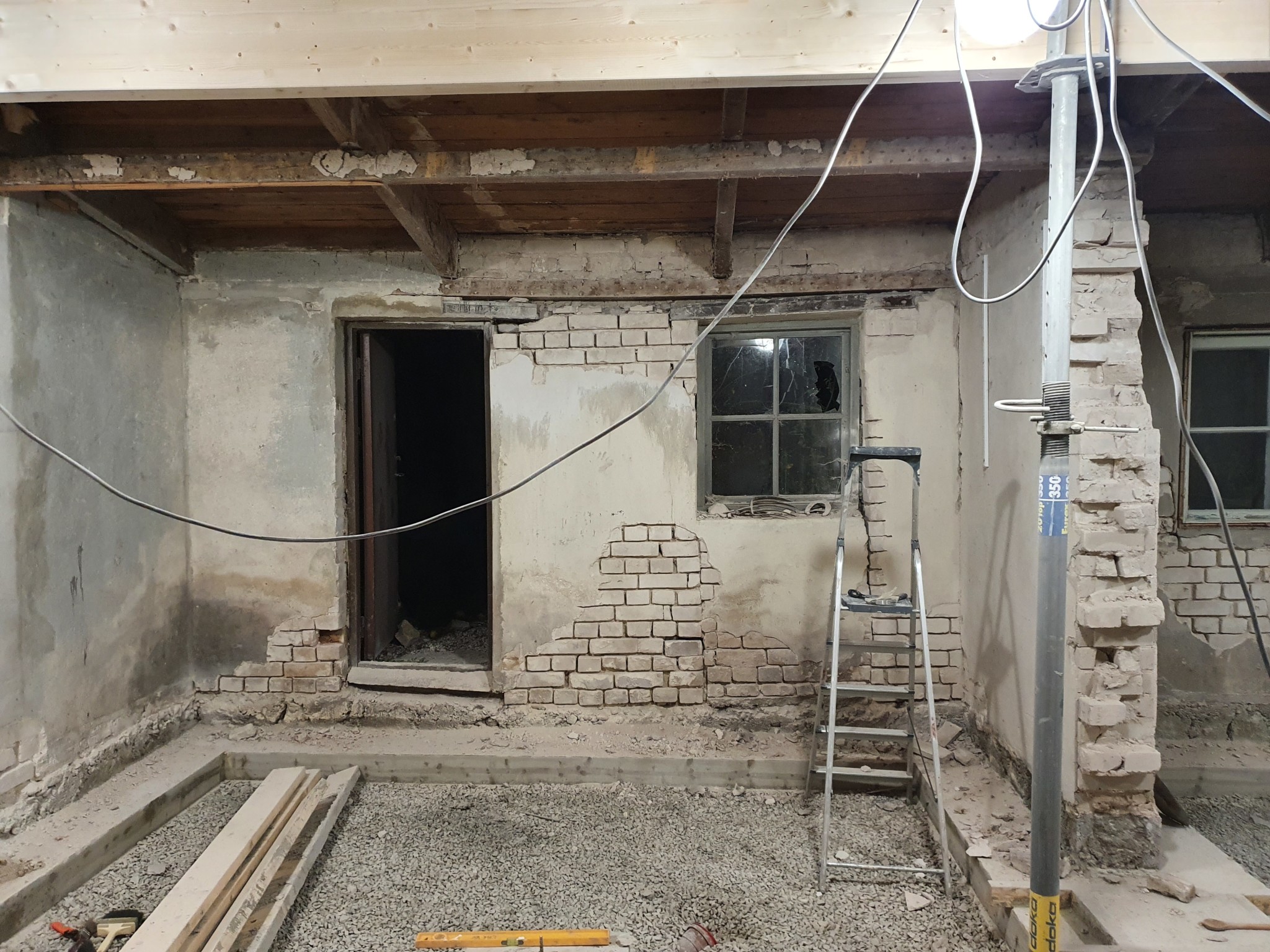
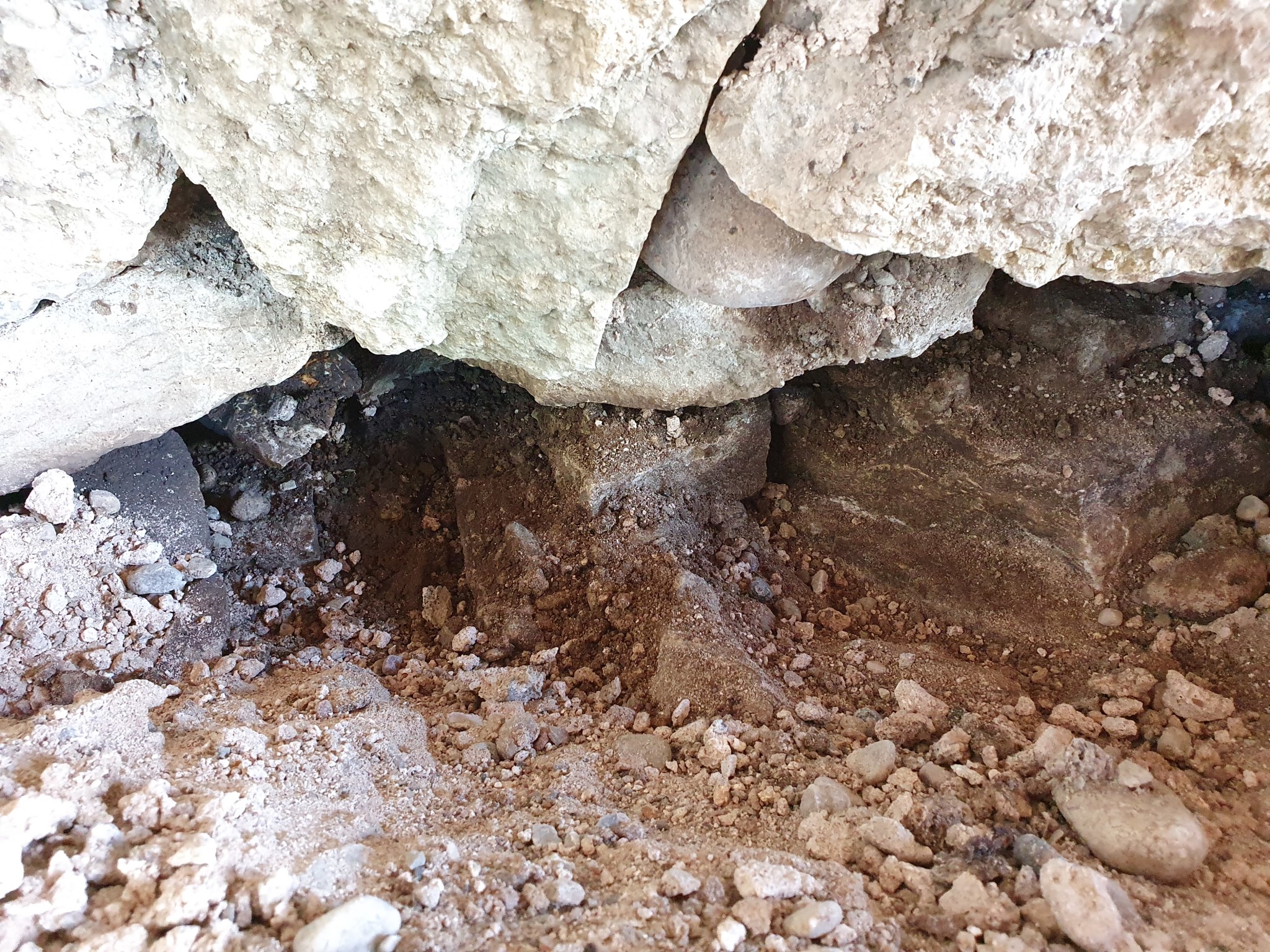
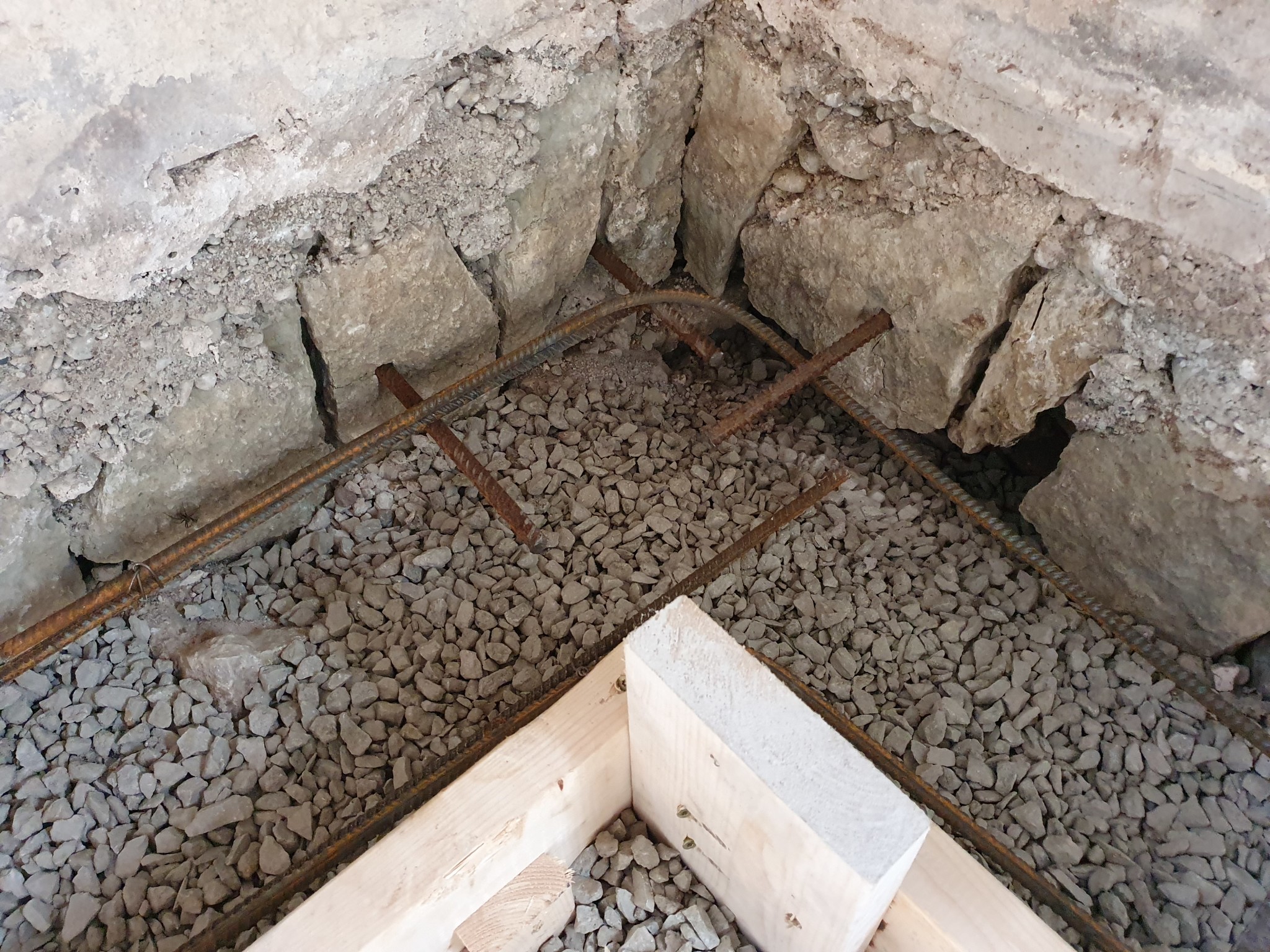
Thanks for the input. I'll think about solutions for a few days now. I'm posting two pictures of the brick wall – the long side, so you can see the whole picture. Previously, there was a wooden beam on which the rafters rested. It seems like a fairly good solution to distribute the load. Note that there have been massive settlements in the ground, which has also affected the cracking in the walls. I'm posting a picture of that too, i.e., before the base was cast, so keep that in mind.
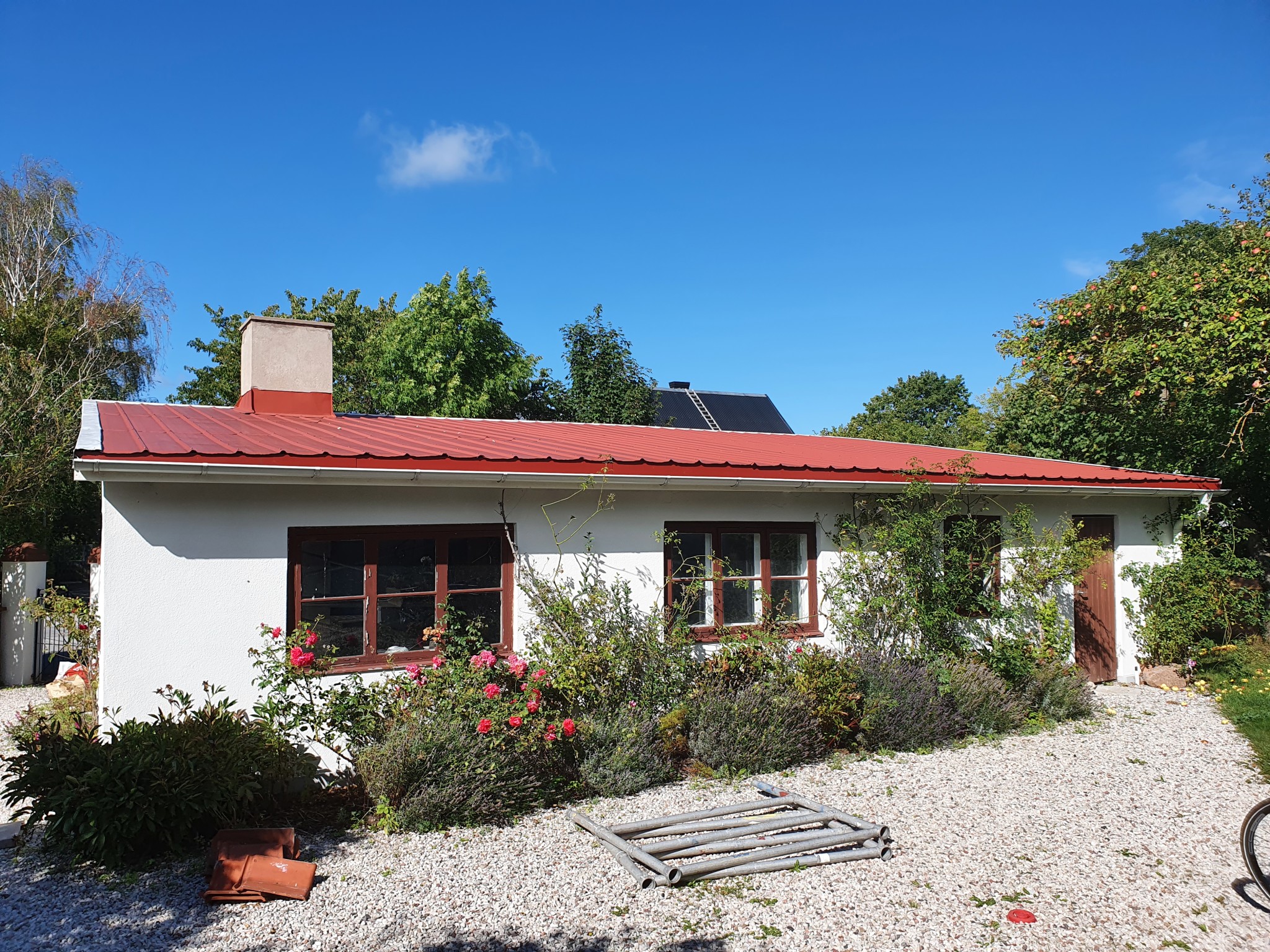
What kind of "house" are you working on? It looks like it's moved in all sorts of directions. Do you have any pictures of the exterior to show? What was this before you "sank your teeth into it"?
What kind of "house" are you working on? It looks like it has shifted in every possible direction. Do you have any pictures of the exterior to show? What was this before you "sank your teeth into it"?
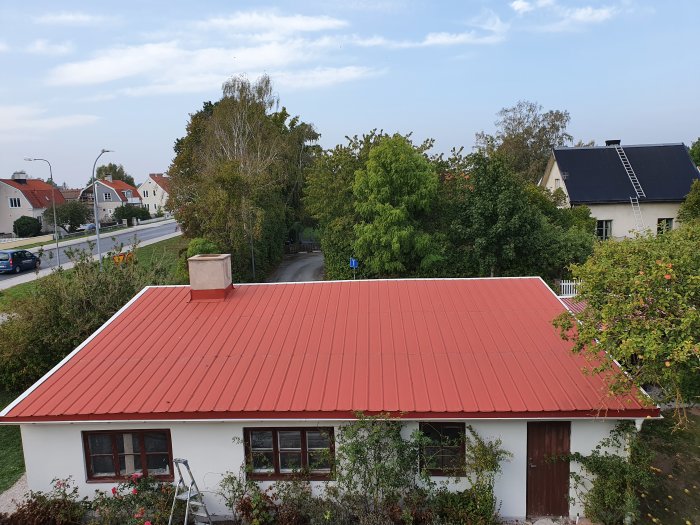
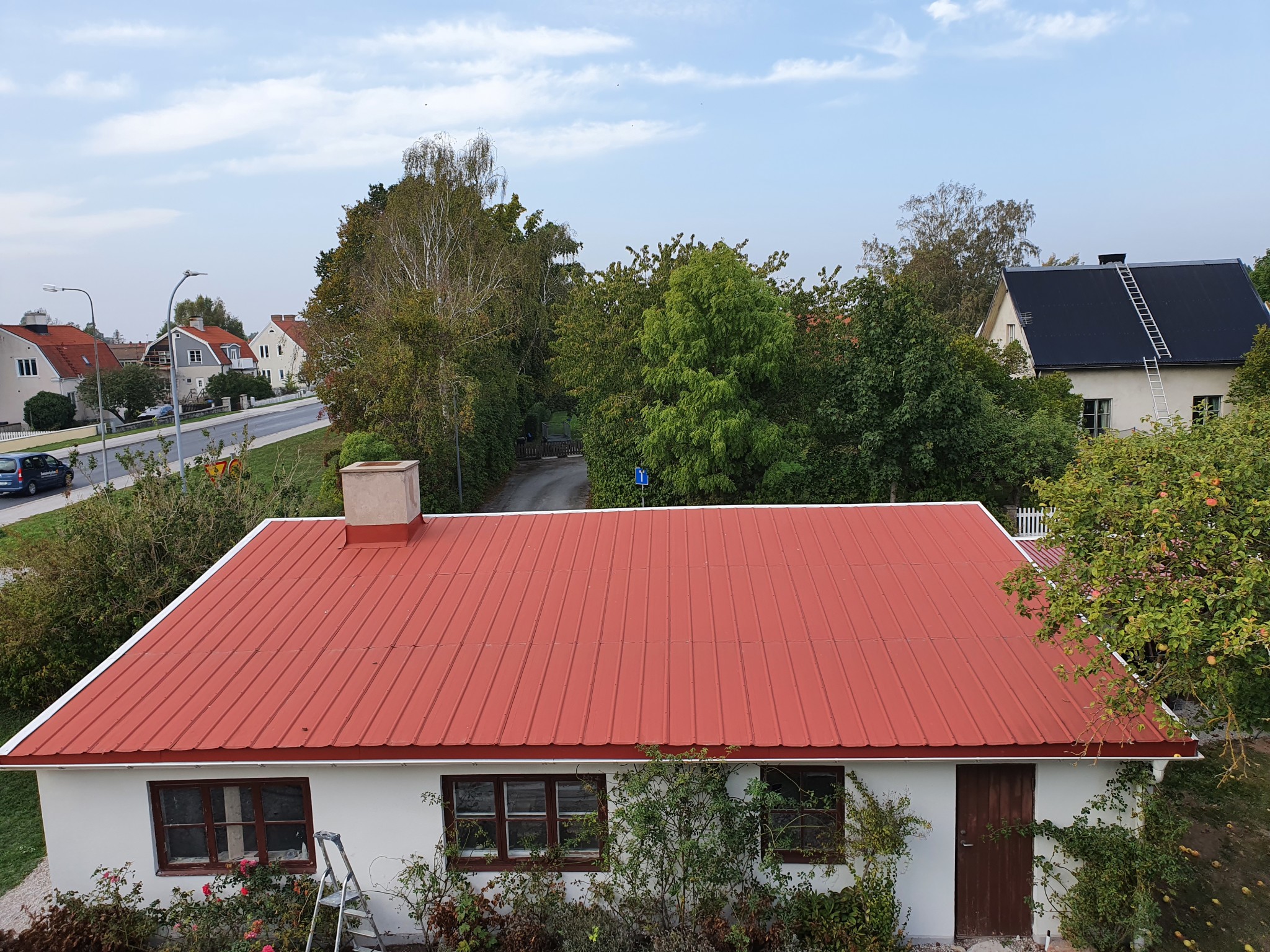
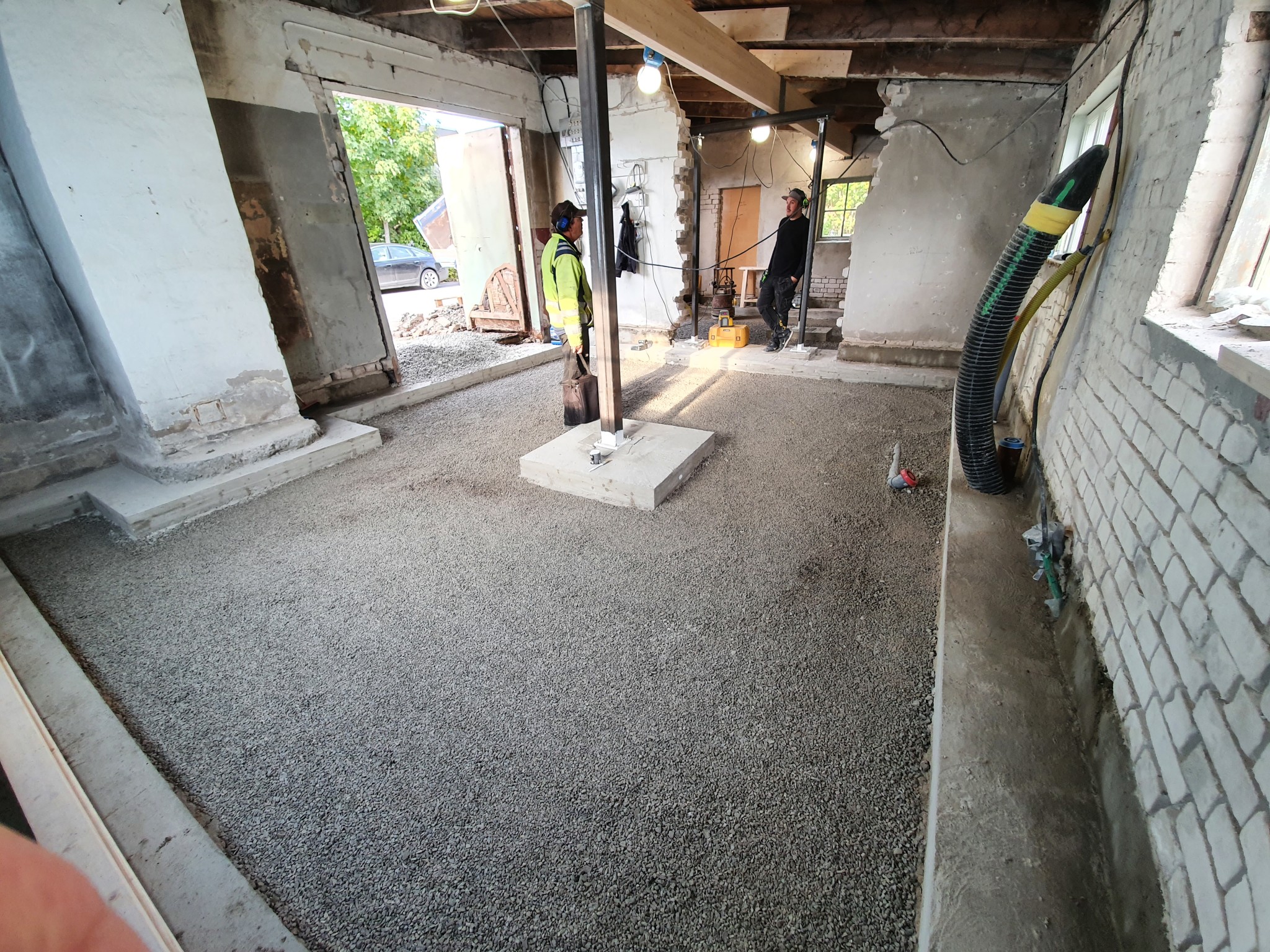
Old garage/workshop from around 1935 that is a complementary building to our permanent house. It has been used for several decades as an industrial workshop with vehicles and other heavy equipment. There was an old oil pit under the floor consisting of a concrete pit 2×2×2m! It is obvious they only built for it to last a generation, on the other hand, despite the ground settlements, it has still held up decently. See attached pictures of the exterior. It is quite newly painted, but by previous owners.
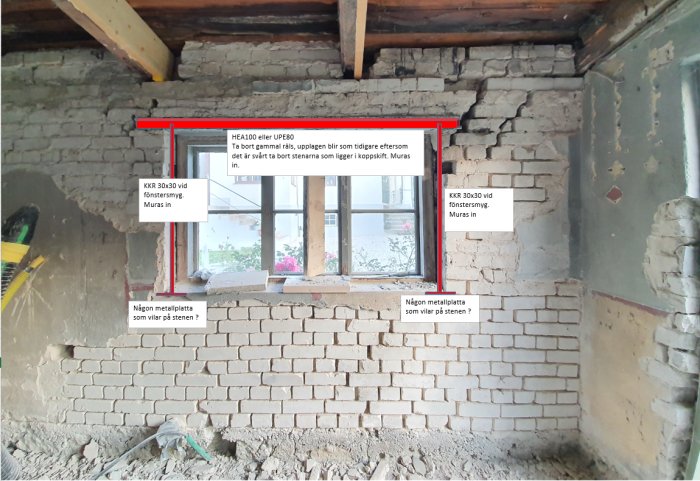
To relieve the trusses on the longitudinal side wall where I have two large windows (1.8 m wide), a small window (0.8 m wide), and a door 0.8 m wide. All windows and doors will be replaced for info. See the picture above of how it looks from the outside.
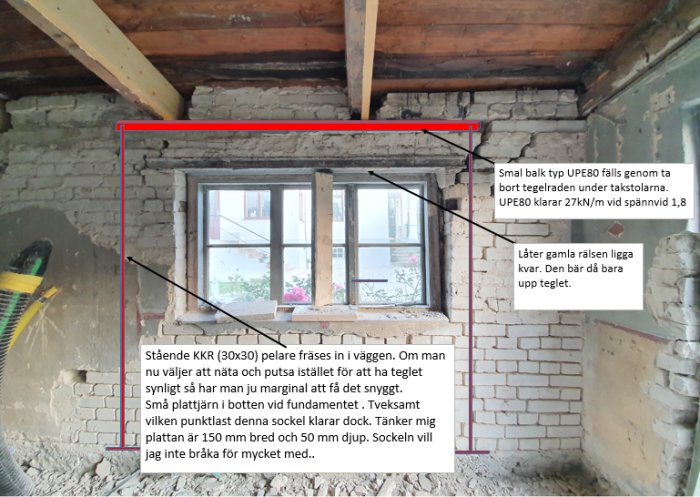
I'm currently considering these 4 different solutions. See below;
Option 1: Leg support recessed in the wall.
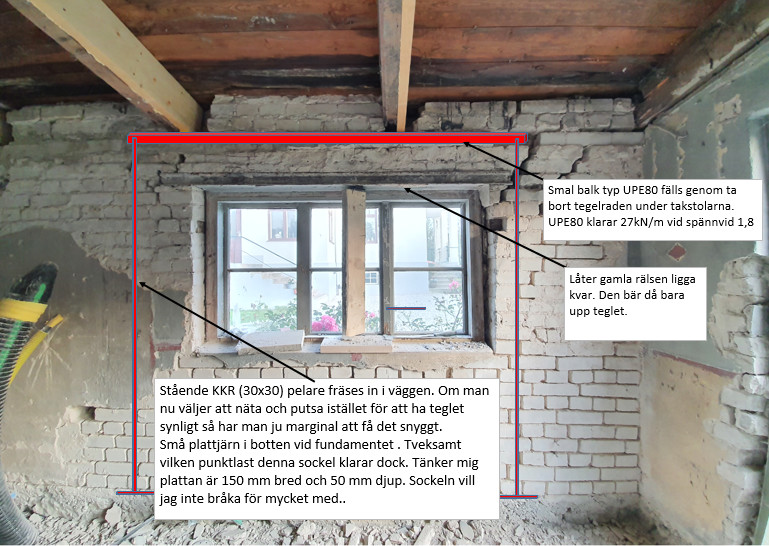
Option 2: Leg support that relieves a new rail. Simpler than option 1.
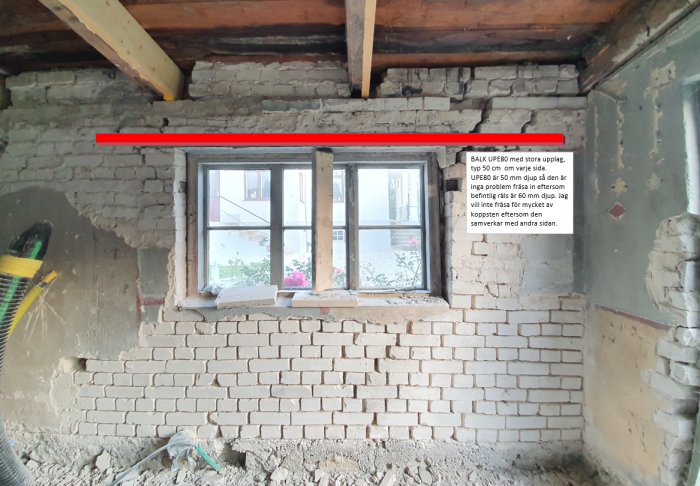
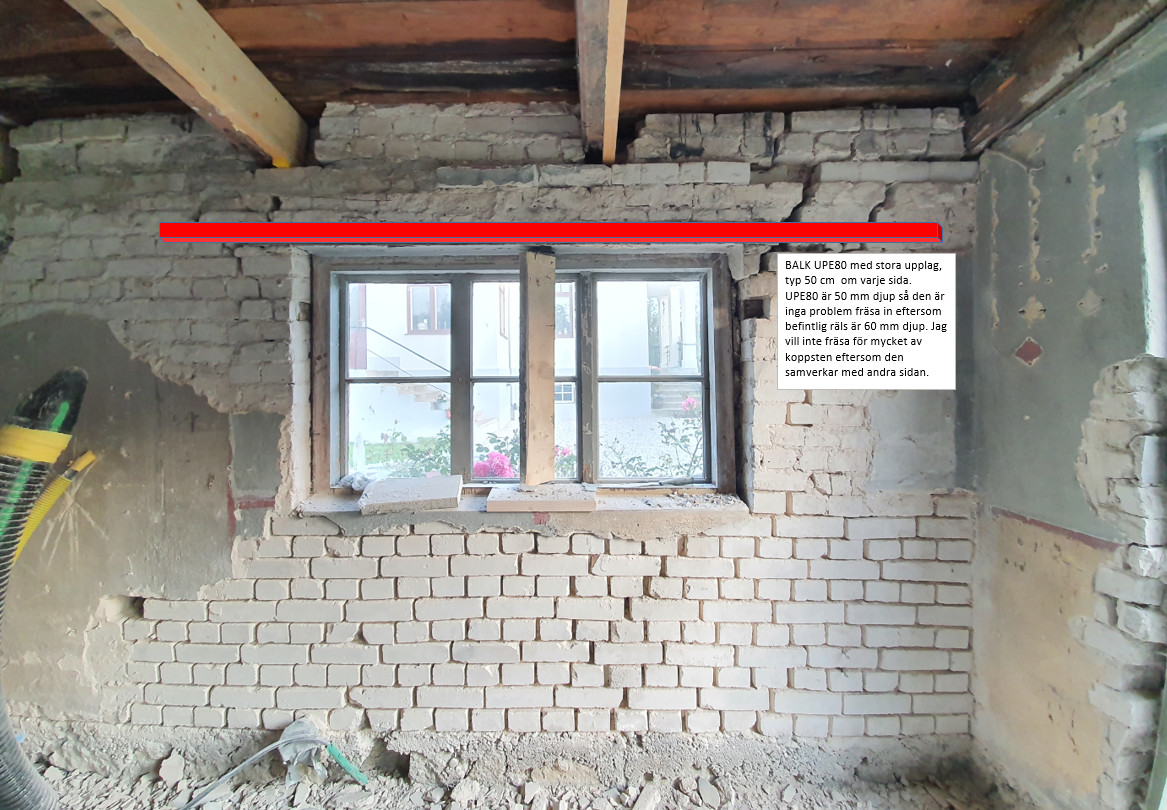
Option 3: Remove old rail and replace with a longer beam.
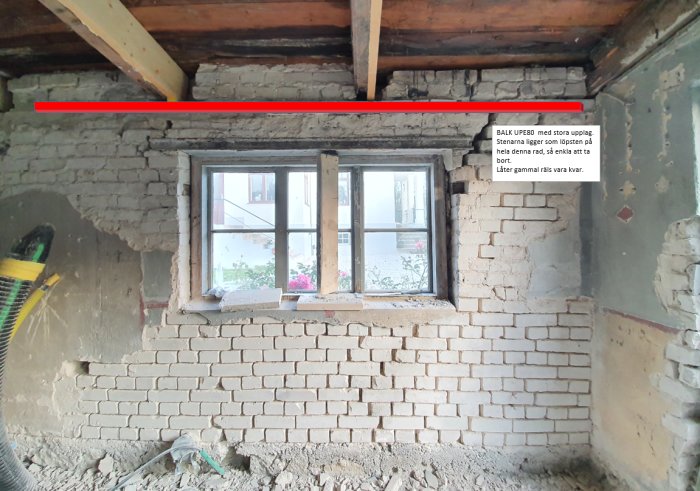
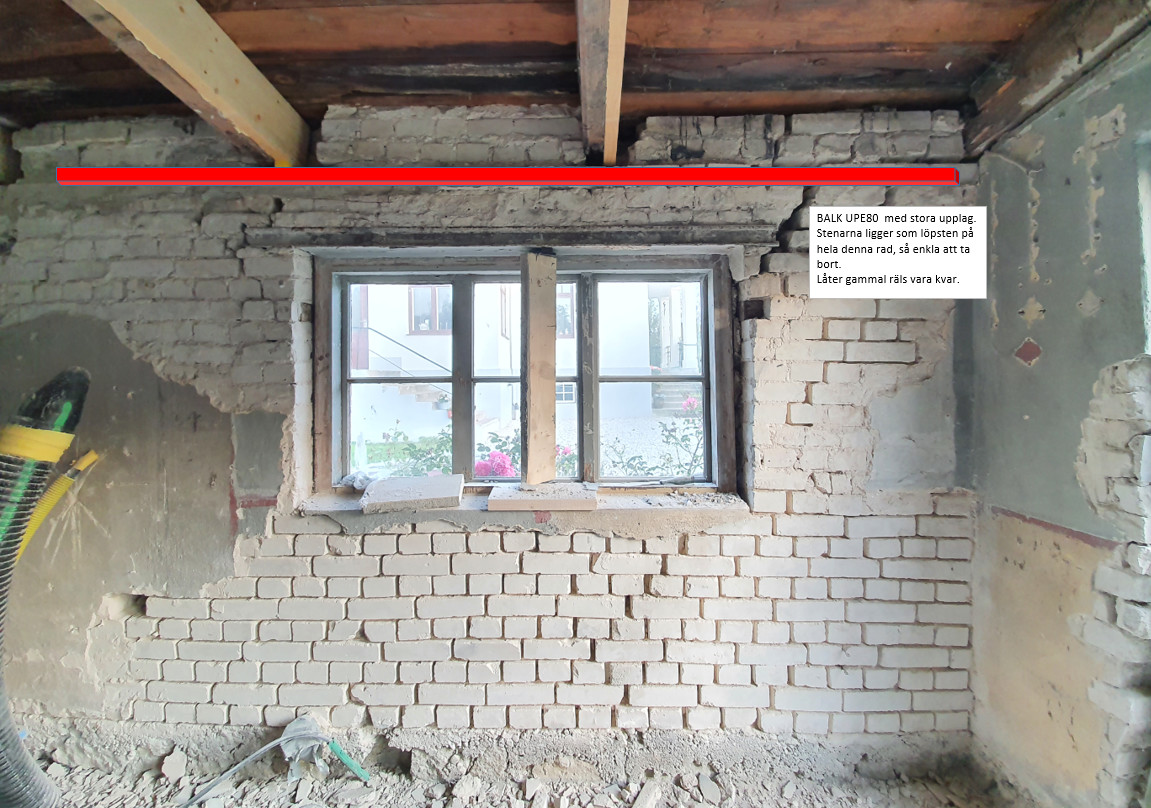
Option 4: Remove the row of running stone and insert a long beam. Keep the old rail. This is how it's done on other windows but with a wooden beam to even out the load...
Ponder on this a bit, have I missed any alternatives?
A crucial question is how you want the wall to look when it's finished. If you want to retain as much of the brick character as possible, then option 4 is probably the way to go.
A crucial question is how you want the wall to look when it's finished. If you want to preserve as much of the masonry character as possible, then option 4 is probably the way to go.
I would have wanted just this part (about 6 meters, up to the partition wall) brick-cleaned with new nice joints if it's technically possible considering the loads. Other walls will be meshed and plastered regardless.
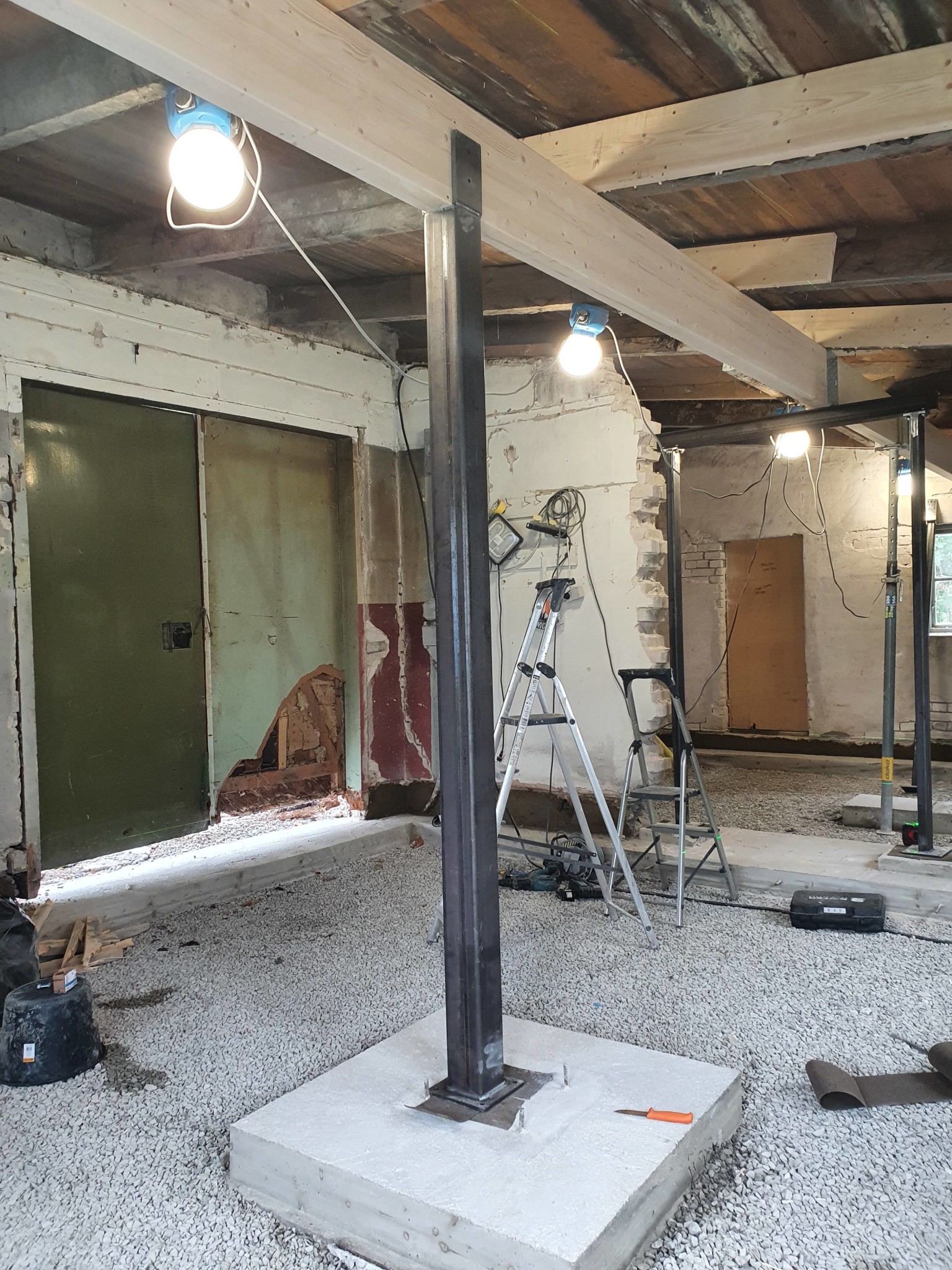
Some steel beams in place to relieve the glulam beam. One more relief remains on the long window. I probably won't do anything for the small window, hoping it can handle 9.5 kN.
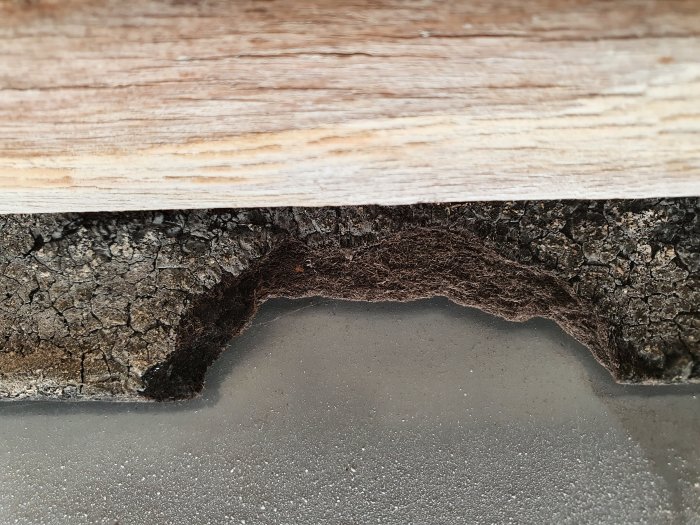
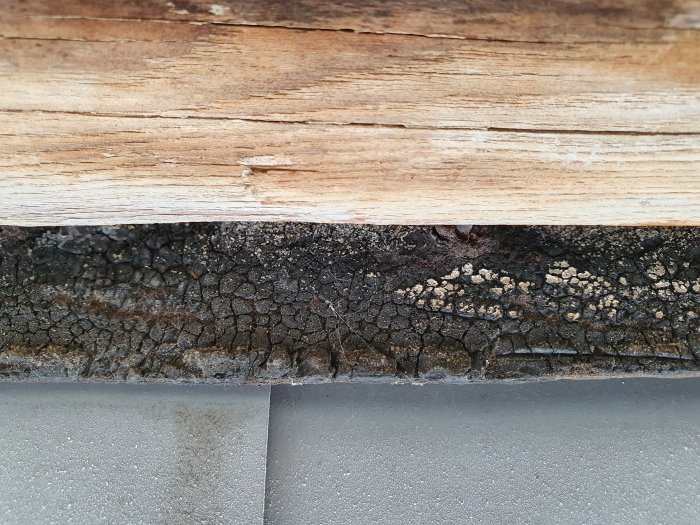
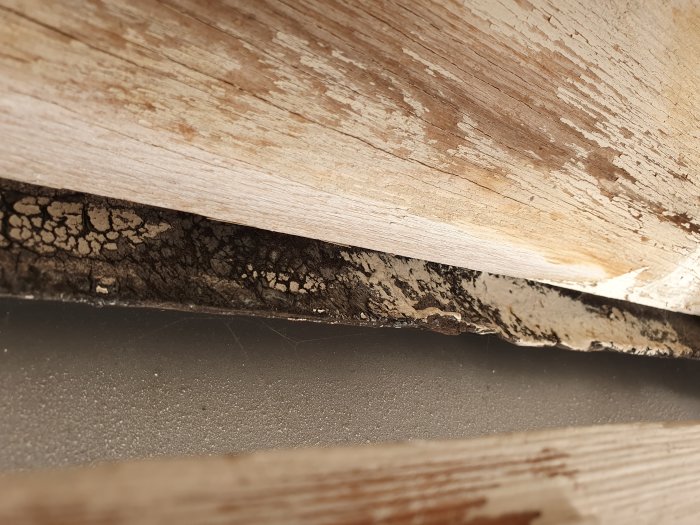
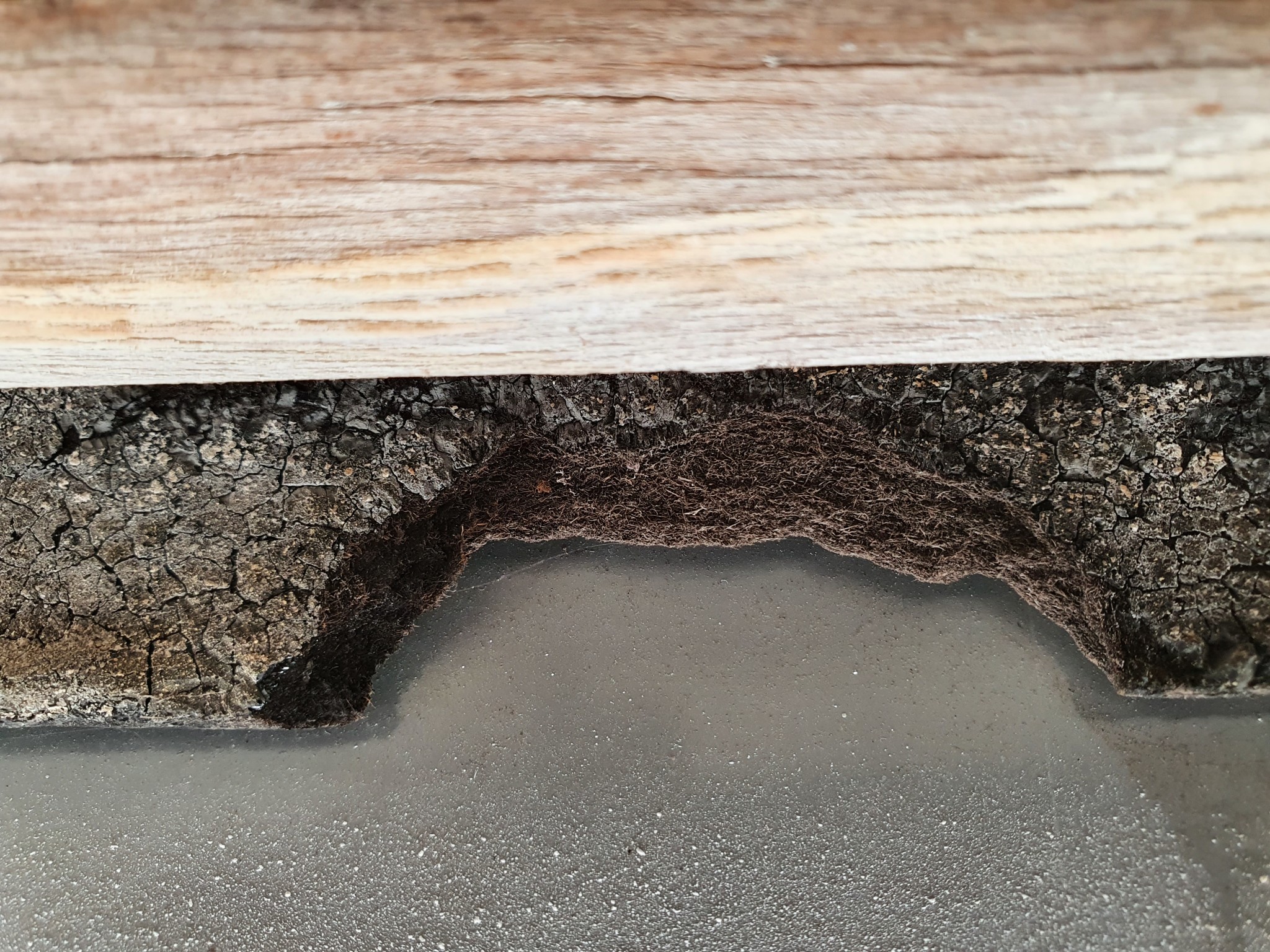
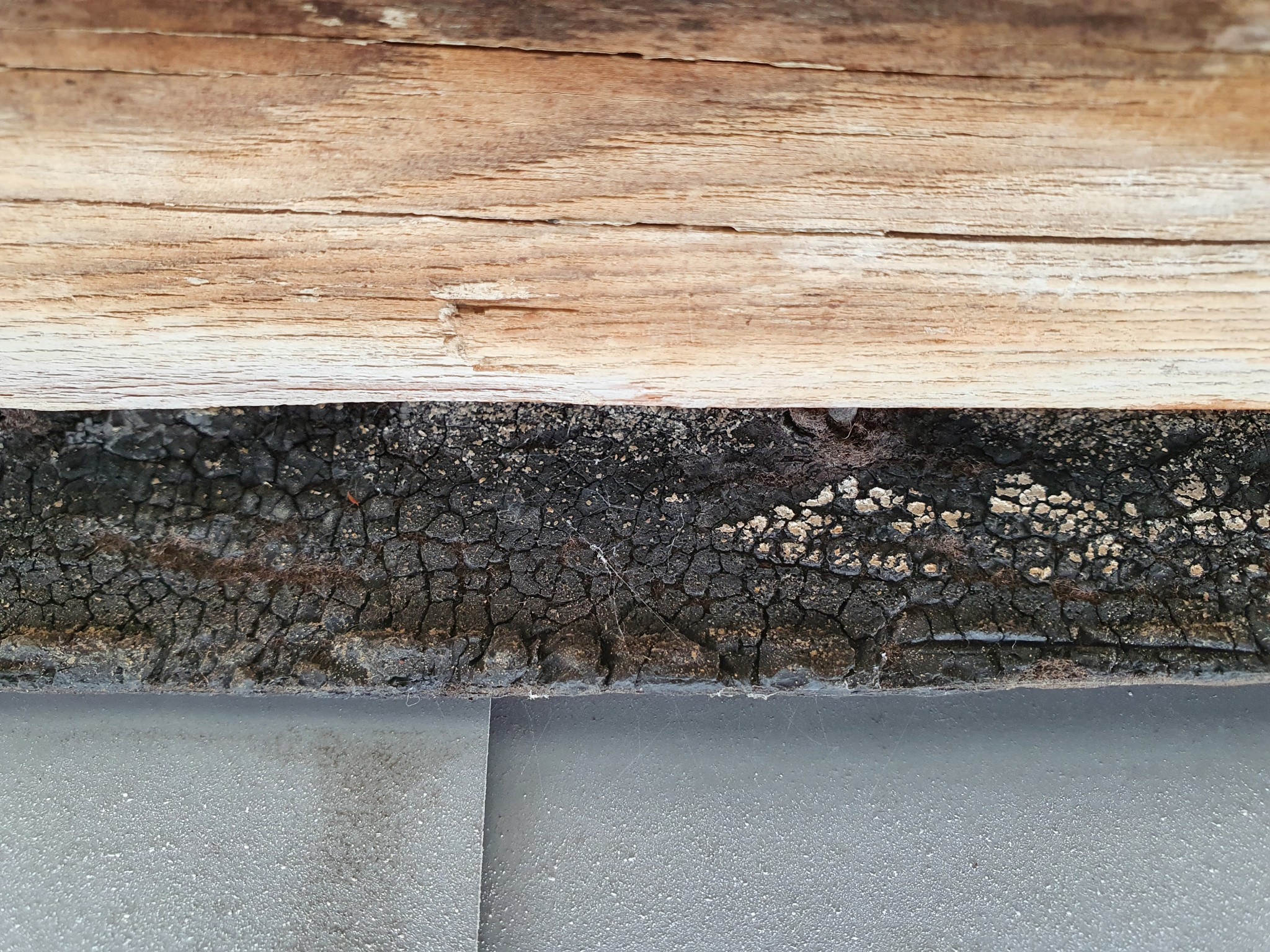
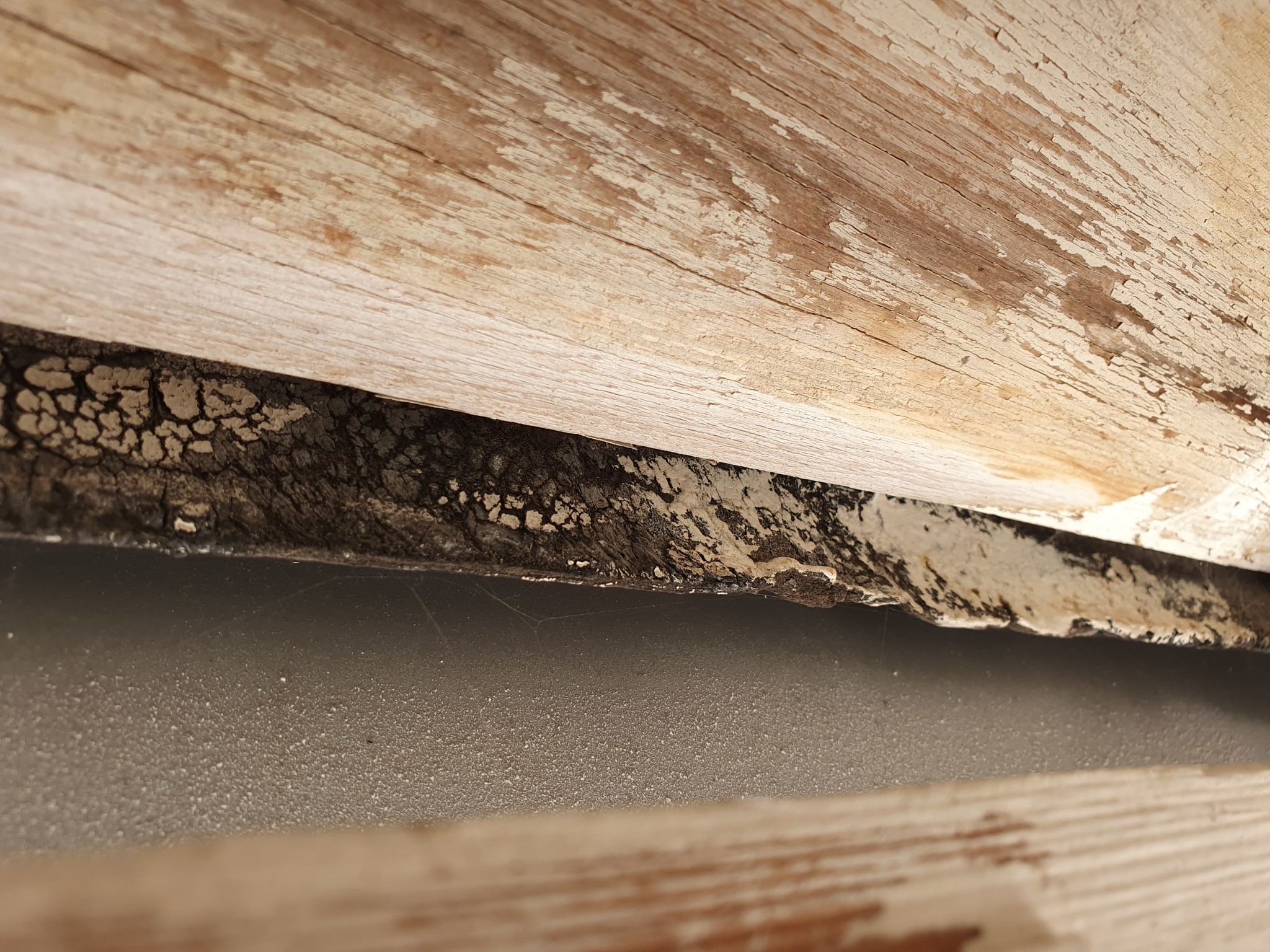
I take the opportunity to ask you about a completely different subject. How on earth do you assess the condition of roofing felt? Since I'm going to insulate the roof internally with cellulose, I won't be able to inspect the sheathing from the inside in the future.
I've taken some pictures of the roofing felt at the downpipes. It's quite stiff and dry but appears intact as far as I can see. I cut off a small piece and if you bend it, it snaps. I understand it's had its best days, but I'd really prefer to wait with the roof for a few more years... I can add that I haven't seen ongoing moisture spots in recent weeks despite quite a bit of rain...

richardtenggren said:
Don't want to rub salt in the wounds, but why wasn't a full-length beam ordered from the beginning?