I like the suggestion @Mazen made, but would at least have an anchor point in the middle of the ceiling. Two meters seems long for both copper and wooden rod. If the suggestion feels too difficult, a chain as proposed would probably work, or leather straps if you want something a bit more fun. Long screws, preferably attached to a common plate so that the forces are distributed over several screws.
I have, rightfully, been criticized for my previous post not contributing anything to the thread regarding the issue, so I picked up some stuff and made a simple attempt; however, the post became very long . It is hardly scientifically proven, so you’ll have to take it for what it is - though imho significantly more relevant than various statements:
Short Summary: a copper pipe works excellently as a clothes rod and to claim that copper is "too soft" is, until further empirical evidence disproves me, imho just a poorly substantiated opinion.
Summary: In comparison to a 25 mm steel pipe (normal "clothes rod" from Habo) and a 22 mm copper pipe, both have considerable deflection at 190 cm free span length when loaded in the middle with a water-filled mortar roll. The steel pipe has less deflection (2.9% vs 3.7% of the free span length), but the steel pipe is also more plastic (greater permanent deformation) than the copper pipe.
Longer Version:
My very simplified test rig consisted of a support in the form of a fork in the reinforcement to the old carport and a support in the form of a stack of systainers with a small wooden block with a V-groove to achieve a horizontal placement of the rods.
The test objects were what I had at home, a 25x1mm Habo 2000 mm clothes rod, I think exactly one such as linked in post #2 above and a 22x1mm copper pipe, a bit unsure if it's hard (R290) or semi-hard (R260), I think it's from Hornbach if anyone knows which version they stock.
A self-leveling laser on the stack of systainers was used as a reference point for measuring deflection. In the unloaded state, they differed by a few mm (depending on the difference in the diameter of the pipes), but these respective measurements have been deducted in all the dimensions below. As a load, a common mortar roll filled with water was used, which, using an S-hook, was hung in the middle of each rod (95 cm from either support), I never weighed it but the amount of water was constant between the tests.
When loaded, I got the following (in both cases quite considerable) deflection:
Clothes rod (steel) 25x1: 55mm
Water pipe (Copper) 22x1: 70mm
After the load was removed, a permanent deformation was noted and a new measurement was made, a miss here was that the mortar roll hung significantly longer (not measured, ~2x the time) on the copper pipe, which should affect the deformation. The permanent deflection was:
Clothes rod (steel) 25x1: 10mm
Water pipe (Copper) 22x1: 5mm
Thus, despite a longer time under load, the copper pipe returned closer to its original shape.
What is acceptable deflection is up to each to assess, and the load in this case was probably somewhat extreme. The difference between the two rods (where, moreover, the copper pipe is slightly smaller in dimension than the steel) is measurable, but perhaps within the margin of error for this simple test - however, to the steel pipe's advantage (30% more deflection on the copper pipe). The same should probably be said about the permanent deformation, here, however, to the copper pipe's advantage (100% more permanent deflection on the steel pipe).
So bjornlof - take the rod you find most aesthetically pleasing. If you want to reduce the deflection, you can always opt for a 28mm copper pipe, which I believe can also be obtained with a 1.3mm wall thickness (maybe available in 22 as well, I have a faint memory from my youth when I sold both clothes rods and water pipes).
/U
PS: a really lousy picture (blame it on poor light) of tonight's exercise:
Until then, I can only recommend my simple solution, described above. I do like simple solutions, and mostly stare at the ceiling when I wake up in the mornings
I had screwed a board onto each end of the wall and attached the pipes in holes in it. Feels more stable than fastening the pipes in holes in a drywall, and probably nicer. Not much work to saw and paint two boards.
Alternatively, attach them to the joists in the ceiling. The brackets don't have to be at the ends of the clothes rod.
Oh! I think I need to update some setting somewhere. Haven't received any notification or email that there have been a lot of new replies!
Big thanks for all the great tips and sensible thoughts. It's probably going to be something like this:
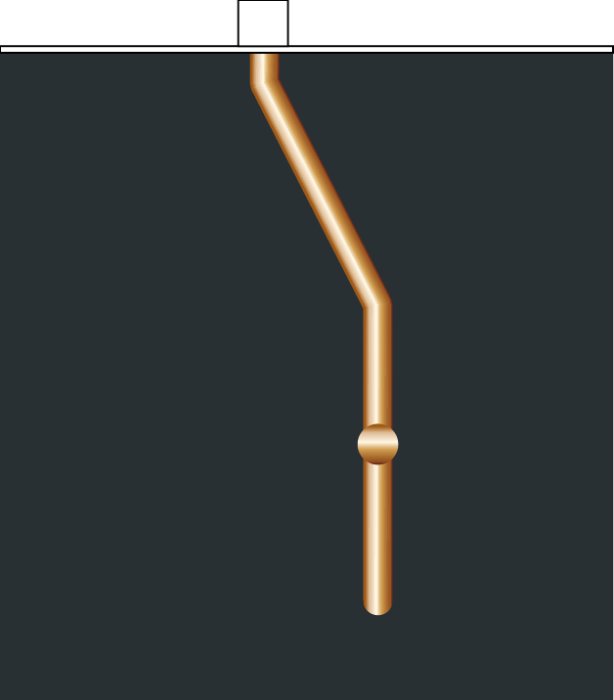
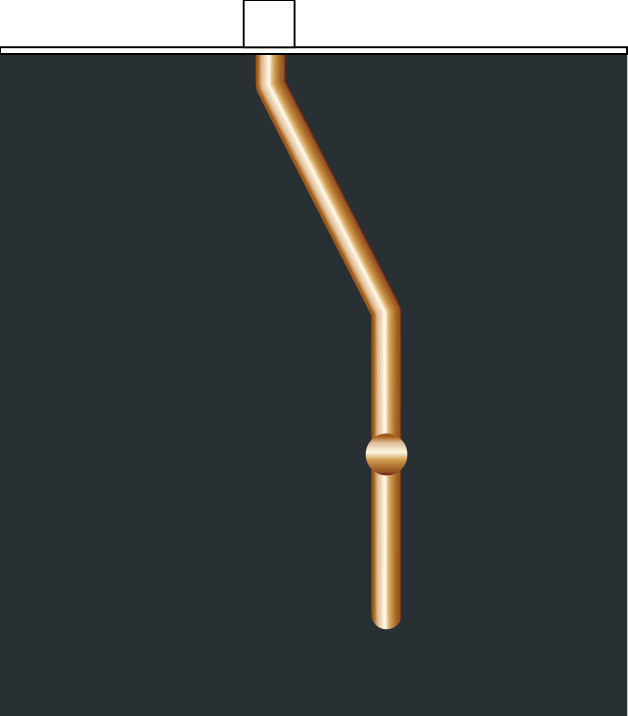
To avoid the hassle of drilling through the drywall, I'm considering doing something similar, viewed from the side:
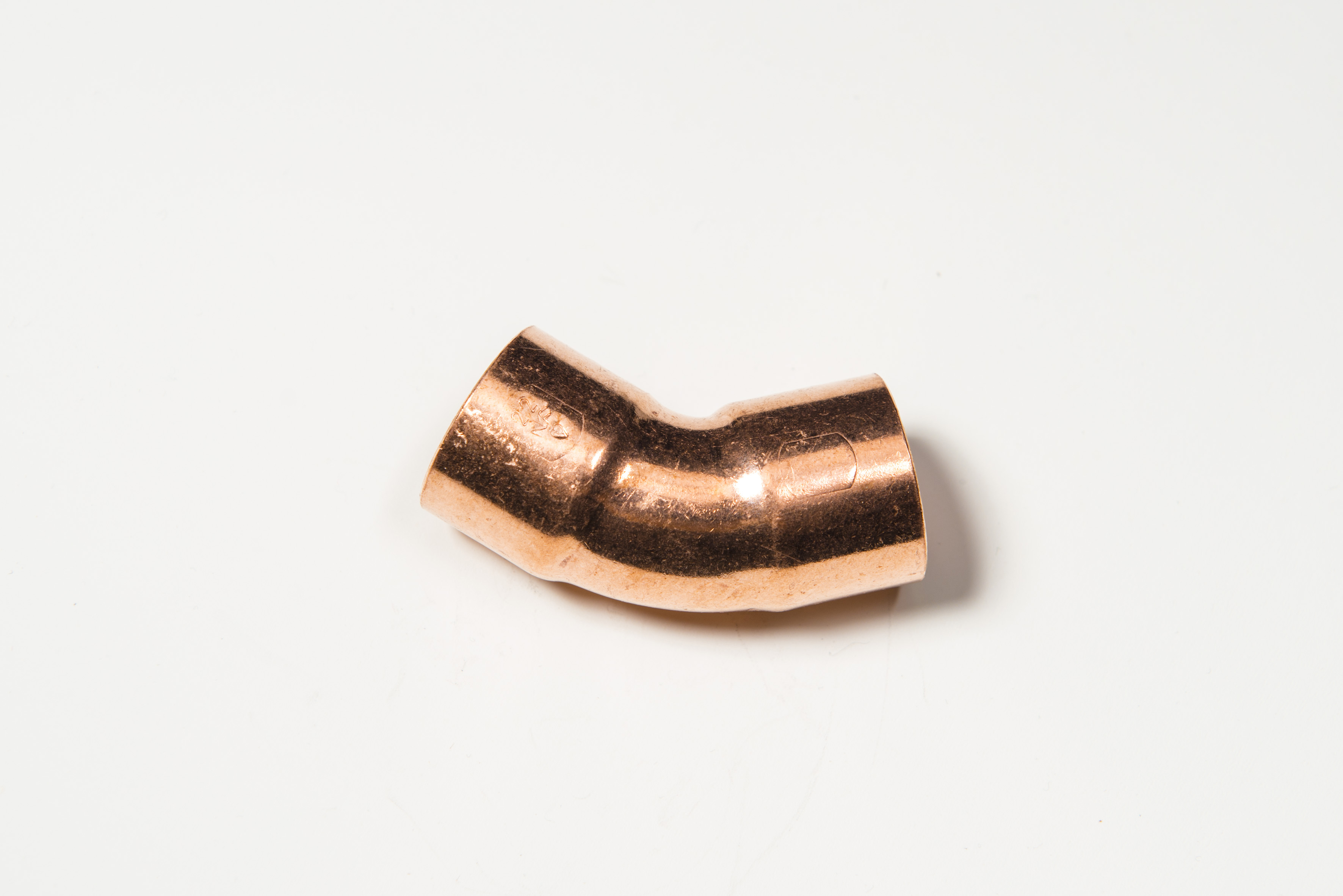
so that I have slightly angled pipes to fasten them to the stud. Should go quite smoothly with a few like these:
I have, rightly, been criticized for my previous post not contributing anything to the thread on the substantive issue, so I pulled out some gear and did a simple attempt, although the post became very long . It is hardly scientifically proven so you have to take it for what it is - however, imho significantly more relevant than various statements:
Brief Summary: a copper pipe works excellently as a clothing rod and to claim that copper is "too soft" is, until further empirical evidence disproves me, imho just a poorly substantiated opinion
Summary: In comparison with a 25 mm steel pipe (normal "clothing rod" from habo) and a 22 mm copper pipe, both experienced significant sagging at 190 cm free-hanging length when loaded in the middle with a water-filled mason's line. The steel pipe has less deflection (2.9% vs 3.7% of the free-hanging length) but the steel pipe is also more plastic (greater permanent deformation) than the copper pipe
Longer version:
My very simplified test rig consisted of a support in the form of a fork in the reinforcement of the old carport and a support in the form of a stack of systainers with a small wooden block with a V-groove to achieve a horizontal placement of the rods.
Test objects were what I had at home, a 25x1mm Habo 2000 mm clothing rod, I believe exactly one linked in post #2 above and a 22x1mm copper pipe, a bit unsure if it is hard (R290) or half-hard (R260), I think it is from Hornbach if someone knows which version they stock.
As a reference point for measuring the sagging, a self-leveling laser on the stack of systainers was used. In the unloaded state, there was a difference of a few mm (depending on the difference in diameter of the pipes) but these respective measures have been deducted in all the following measurements. A standard mason's line filled with water and hung in the middle of each rod (95 cm from either support) was used as the load, never weighed it but the amount of water was constant between tries.
Under load, I got the following deflections (significant in both cases):
Clothing rod (steel) 25x1: 55mm
Water pipe (Copper) 22x1: 70mm
After removing the load, permanent deformation was noted and new measurements were made, a missed point here was that the mason’s line hung significantly longer (not measured, ~2x the time) on the copper pipe, which should affect the deformation. The permanent sag was:
Clothing rod (steel) 25x1: 10mm
Water pipe (Copper) 22x1: 5mm
I.e., despite the longer time with the load, the copper pipe returned closer to its original shape
What is acceptable sagging, each can assess, and the load in this case was probably somewhat extreme. The difference between the two rods (where the copper pipe is somewhat smaller in dimension than the steel one) is measurable, but perhaps within the margin of error for this simple test - but in favor of the steel rod (30% more sagging in the copper pipe). The same should probably be said of the permanent deformation, here in favor of the copper pipe (100% more permanent sagging in the steel pipe).
So bjornlof - take the rod you find most aesthetically appealing, if you want to reduce sagging you can always go up to a 28mm copper pipe, which I believe can also be obtained with 1.3mm wall thickness (perhaps on 22 as well, faint memory from when I in my youth sold both clothing rods and water pipes)
/U
PS: a really bad picture (blaming it on poor lighting) of this evening's exercise:
[image]
Wow, what a job! Big thanks for your research Interesting to read that the copper pipe returned closer to its original state... So it will be some kind of middle support anyhow.
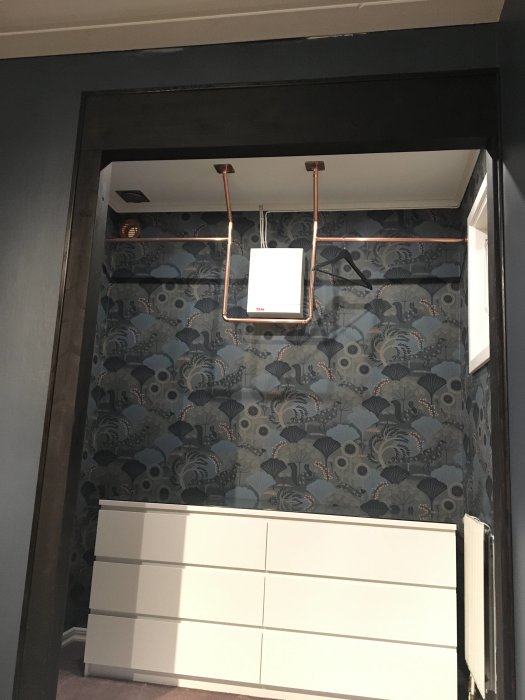
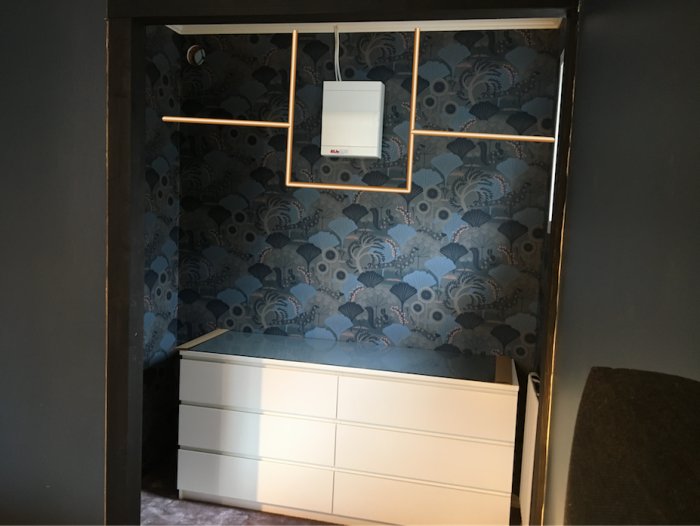
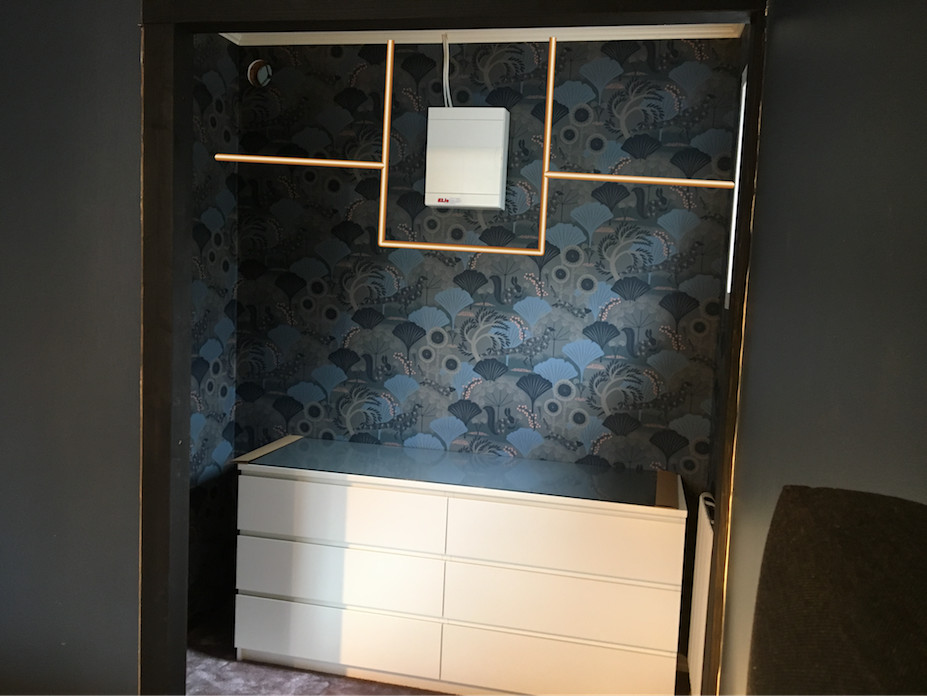
Suddenly it happens! After some delays and a few problems, the clothing rail is finally in place. Now we just have to build in the proppskåp, and then we can consider ourselves done...
Nice! Not for short people to hang things on, but maybe that's not needed either.
However, I would be a little worried about the strength. As it looks, there are double bent pipes up to the ceiling, is that correct? If so, I would be concerned that the downward forces on these would become so strong that they straighten out and the entire structure bends downwards, forwards. But partly it might be an optical illusion, partly the pipes might be reinforced, and partly I might be wrong.
Nice! Not something for short people to hang things on, but maybe that's not needed.
However, I would be a little worried about the durability. As it looks, there are double-bent pipes up to the ceiling, is that correct? I would then be concerned that the downward forces on these become so strong that they straighten out and the whole structure bends downward, forward. But it could partly be an optical illusion, partly the pipes could be reinforced, and partly I could be wrong.
Thanks! We're tall, so it doesn't matter to us that it's a bit high
We didn't bend the pipes but used T-connections and 45- and 90-degree bends. Then we glued with extra strong epoxy and crossed our fingers...
Click here to reply
Vi vill skicka notiser för ämnen du bevakar och händelser som berör dig.



 . It is hardly scientifically proven, so you’ll have to take it for what it is - though imho significantly more relevant than various statements: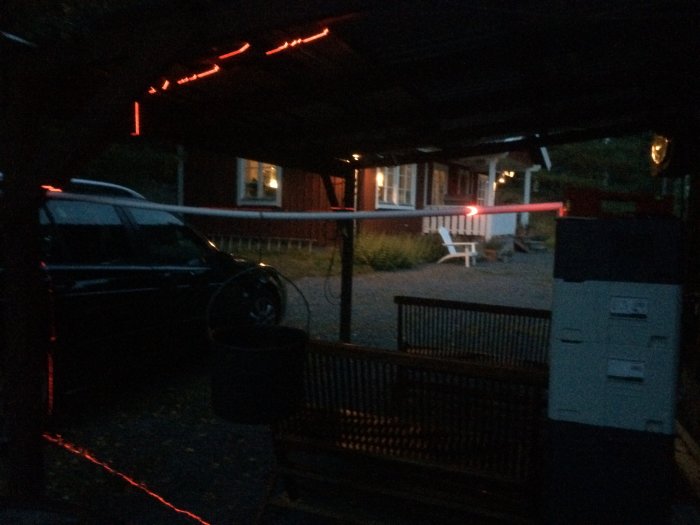




ullberg said:
I have, rightly, been criticized for my previous post not contributing anything to the thread on the substantive issue, so I pulled out some gear and did a simple attempt, although the post became very long