
2,960 views ·
6 replies
3k views
6 replies
Yet another thread about demolishing knee walls
Hello!
In my house, the previous owner has partially dismantled the attic walls. In one room, a new wall has been framed a bit further in, and in another room, a sleeping alcove has been created.
We are now planning to renovate the room with the sleeping alcove so that it is divided into two rooms. To achieve reasonable space in each room, we want to remove the attic walls. The idea is to frame the space where the ceiling height is less than 60-70 cm and create long, low storage areas.
The question is whether it's feasible to remove the attic walls. I can't see anything with the naked eye indicating that they are load-bearing. There are no visible sagging in the roof trusses in the rooms where the attic walls have already been removed.
Here is the original construction drawing. As I understand it, the attic walls are not load-bearing, but the roof trusses rest on the outer beams. What do you think?
If I need to hire someone to investigate this, what are they called and which companies employ such professionals?
In my house, the previous owner has partially dismantled the attic walls. In one room, a new wall has been framed a bit further in, and in another room, a sleeping alcove has been created.
We are now planning to renovate the room with the sleeping alcove so that it is divided into two rooms. To achieve reasonable space in each room, we want to remove the attic walls. The idea is to frame the space where the ceiling height is less than 60-70 cm and create long, low storage areas.
The question is whether it's feasible to remove the attic walls. I can't see anything with the naked eye indicating that they are load-bearing. There are no visible sagging in the roof trusses in the rooms where the attic walls have already been removed.
Here is the original construction drawing. As I understand it, the attic walls are not load-bearing, but the roof trusses rest on the outer beams. What do you think?
If I need to hire someone to investigate this, what are they called and which companies employ such professionals?
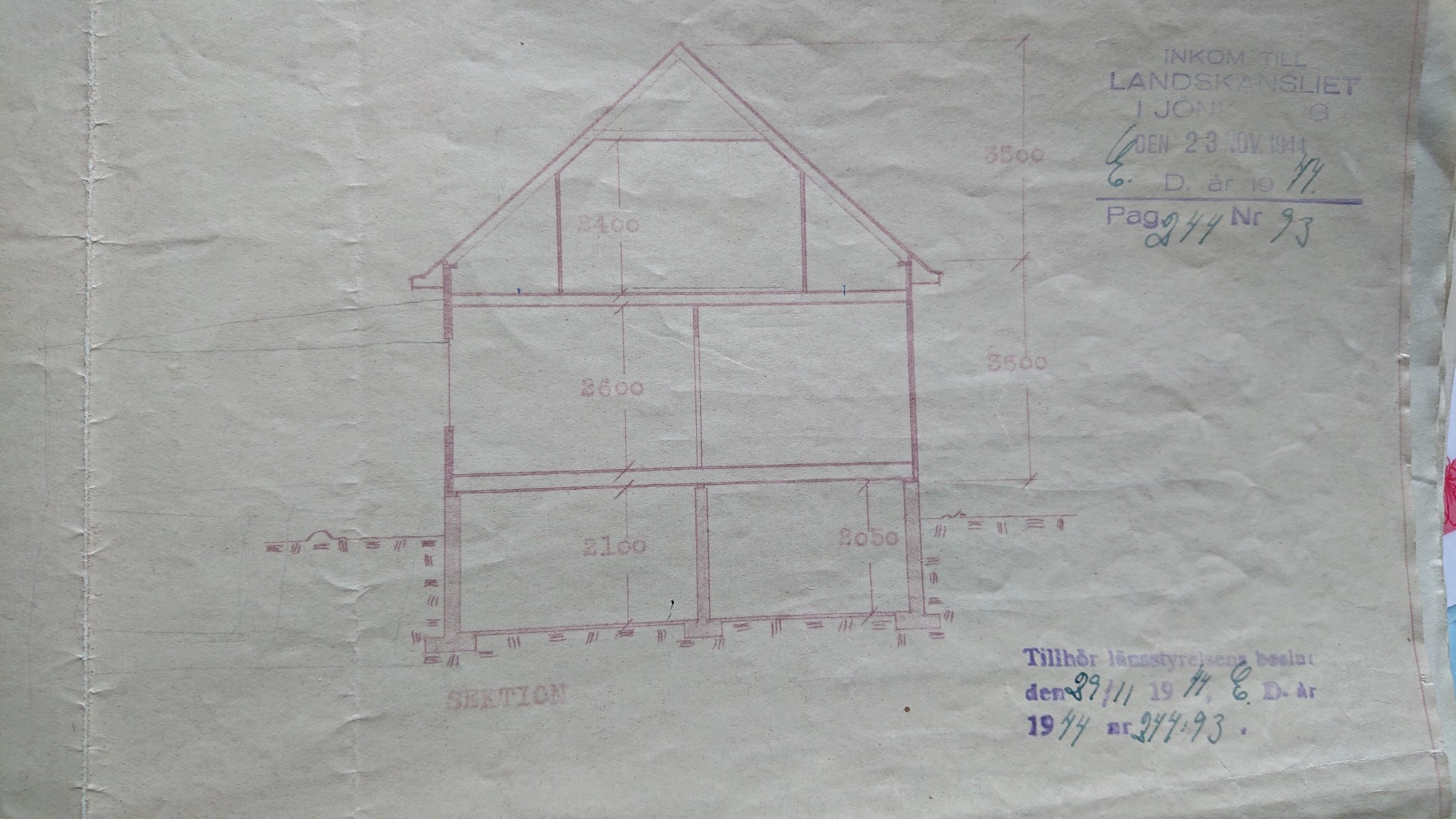

There you are unfortunately wrong, they are indeed load-bearing. Please read my article "How a Roof Truss Works" from August 2020. https://www.byggahus.se/sa-fungerar-en-takstol Without the support legs in the knee wall, the roof truss's upper legs would need to be more heavily dimensioned. However, it is usually possible to shift them sideways. This should be calculated first. Right now you cannot assess any deflections. Wait until there is a maximum amount of snow.
I crawled into the crawl spaces that remain where they moved the knee walls. Sure enough, it looks like they placed a beam against the ceiling, which they have pressed up with new support legs in the dimension 45x70 in each truss. It should reasonably work to do so in other places as well, but instead of enclosing the crawl spaces, I should be able to use that space for storage. Is it a constructor you need to come and calculate if it's sufficient or if you need to go up into the attic and reinforce further?J justusandersson said:Unfortunately, you're wrong there; they are indeed load-bearing. Feel free to read my article "How a Roof Truss Works" from August 2020. [link] Without the support legs that are in the knee wall, the upper parts of the trusses would need to be stronger. However, it is usually possible to shift them sideways. You should calculate this first. At the moment, you can't assess any deflections. Wait until there is a maximum amount of snow.
The dimensions of the support legs are not that sensitive. A short 45x70 can withstand quite a lot of compressive force. It is mainly the high legs that need to be checked. I guess they are 3x7 inches. That's when a structural engineer would be most useful. Different c/c distances between roof trusses and floor joists necessitate a support beam against the inner ceiling, as you wrote.
Hi!J justusandersson said:The dimensions of the support legs are not so sensitive. A short 45x70 can withstand quite a bit of compressive force. It is primarily the main legs that need to be checked. I guess it is a matter of 3x7 inches. Then you are most useful to an engineer. Different c/c distances between roof trusses and floor joists force a load-bearing beam against the ceiling, as you mentioned.
Measured my main legs, they are 3x6 if I haven't miscalculated. Also found a drawing of the roof trusses. There are no support legs drawn as far as I can see. My roof trusses are generally close together, about 105cc.
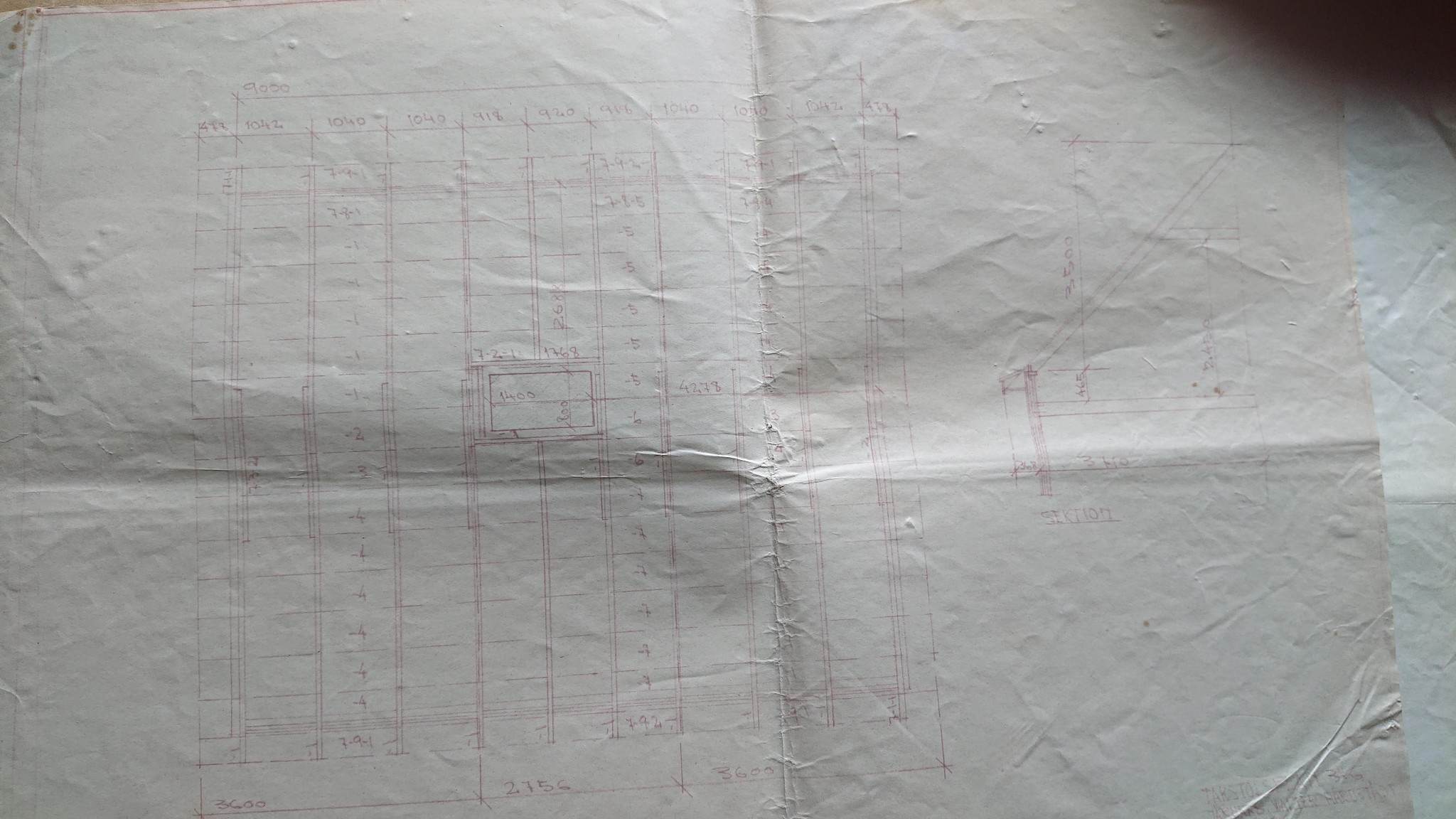
A very informative drawing, even though it was difficult to read. The substantial roof pitch combined with the dimensions of the rafters and the short c/c spacing means that no support legs are needed. The original drawing is surely correct in this regard. My guess is that they were added later for other reasons.
The "kattvindar" are included in the floor plan drawings, which are dated at the same time, but they are labeled as closets—so they probably were intended for storage, but not part of the truss construction back then. I talked with the neighbors who have houses built at the same time, and some of them didn’t even have "kattvindar" originally in the houses; instead, their upper floors consisted of a furnished room and a larger storage/drying room with clotheslines and dry storage. I’ll take the drawings to work one day and scan them. It feels good to have them stored in a sensible digital format as well.J justusandersson said:A very informative drawing, even though it was hard to read. The substantial roof pitch in combination with the dimensions of the rafters and the short c/c spacing means that no support legs are needed. The original drawing is likely correct in this regard. My guess is that they have been added afterwards for other reasons.
Click here to reply