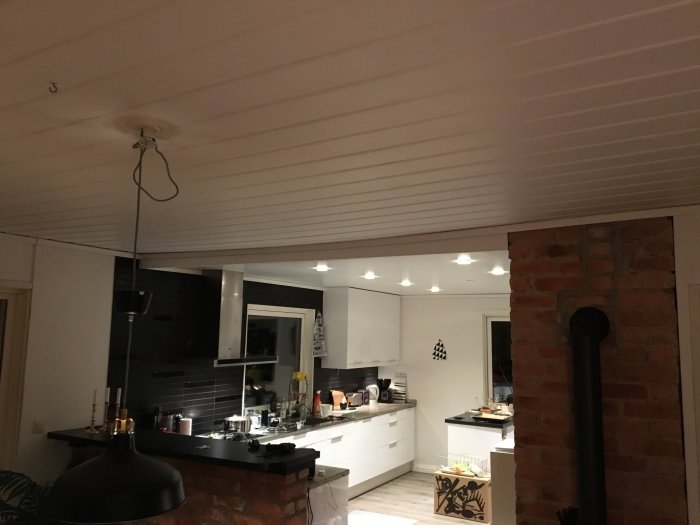
Hello! We have just bought a house and are considering opening up a bit between the bedroom and the small closet next to it. However, after removing the door frame, we see that there are tongue and groove boards on the entire wall and not studs with panels as we initially thought. So now we wonder if the wall is load-bearing or not. The house is a single-story villa of 95 sqm + basement from 1951.
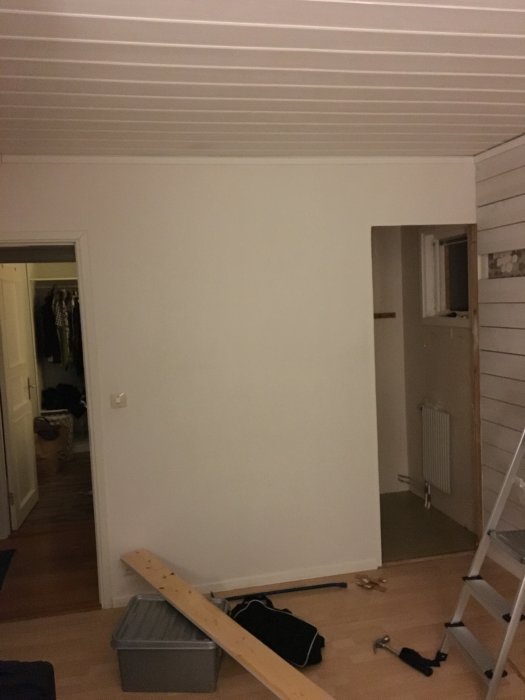
This is how it looks today in the bedroom:
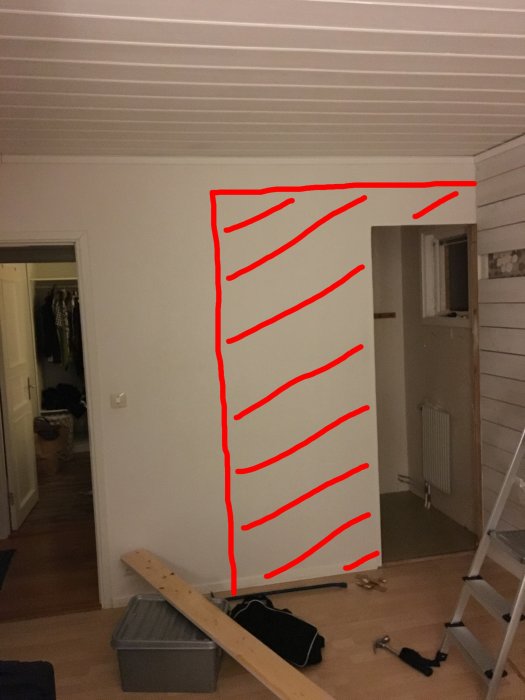
And this is how we would like to open it up (roughly):
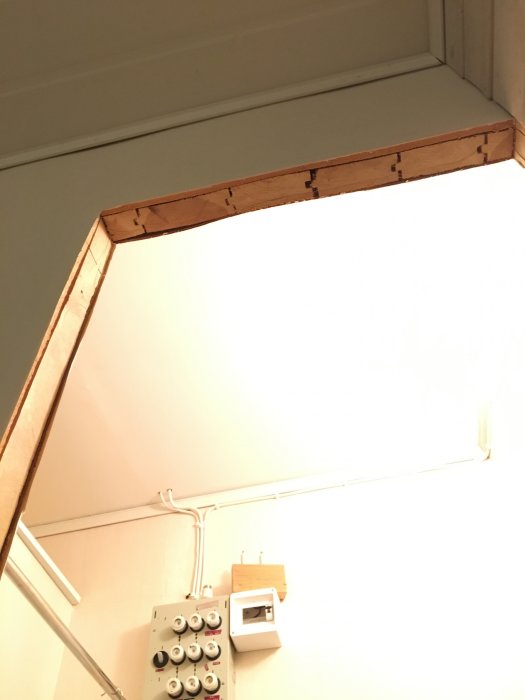
After removing the door frame:
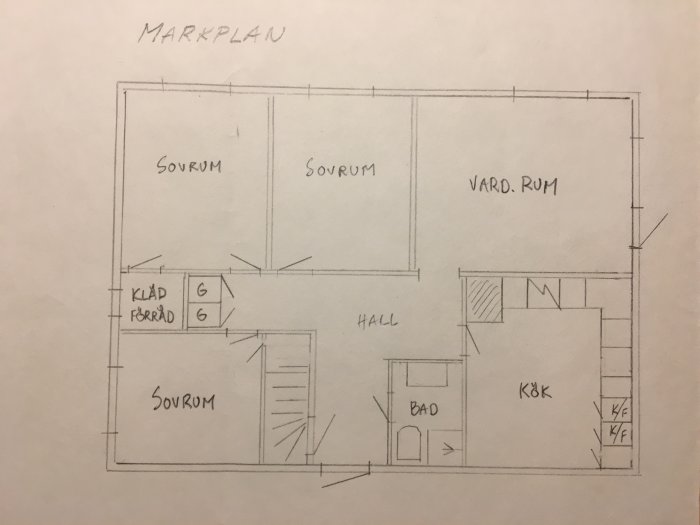
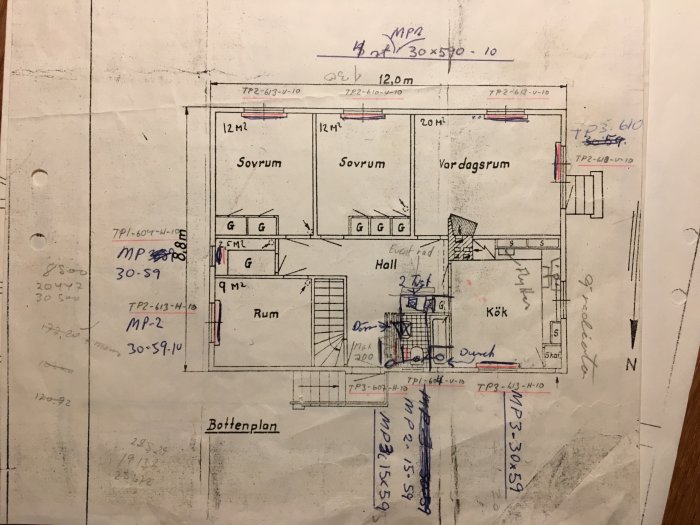
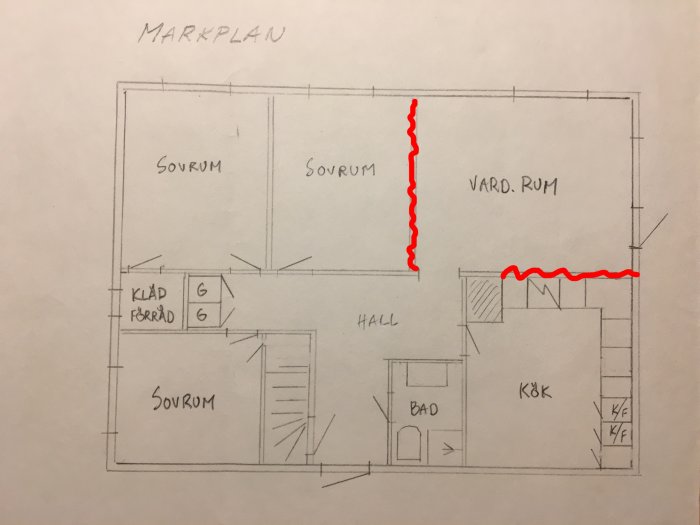
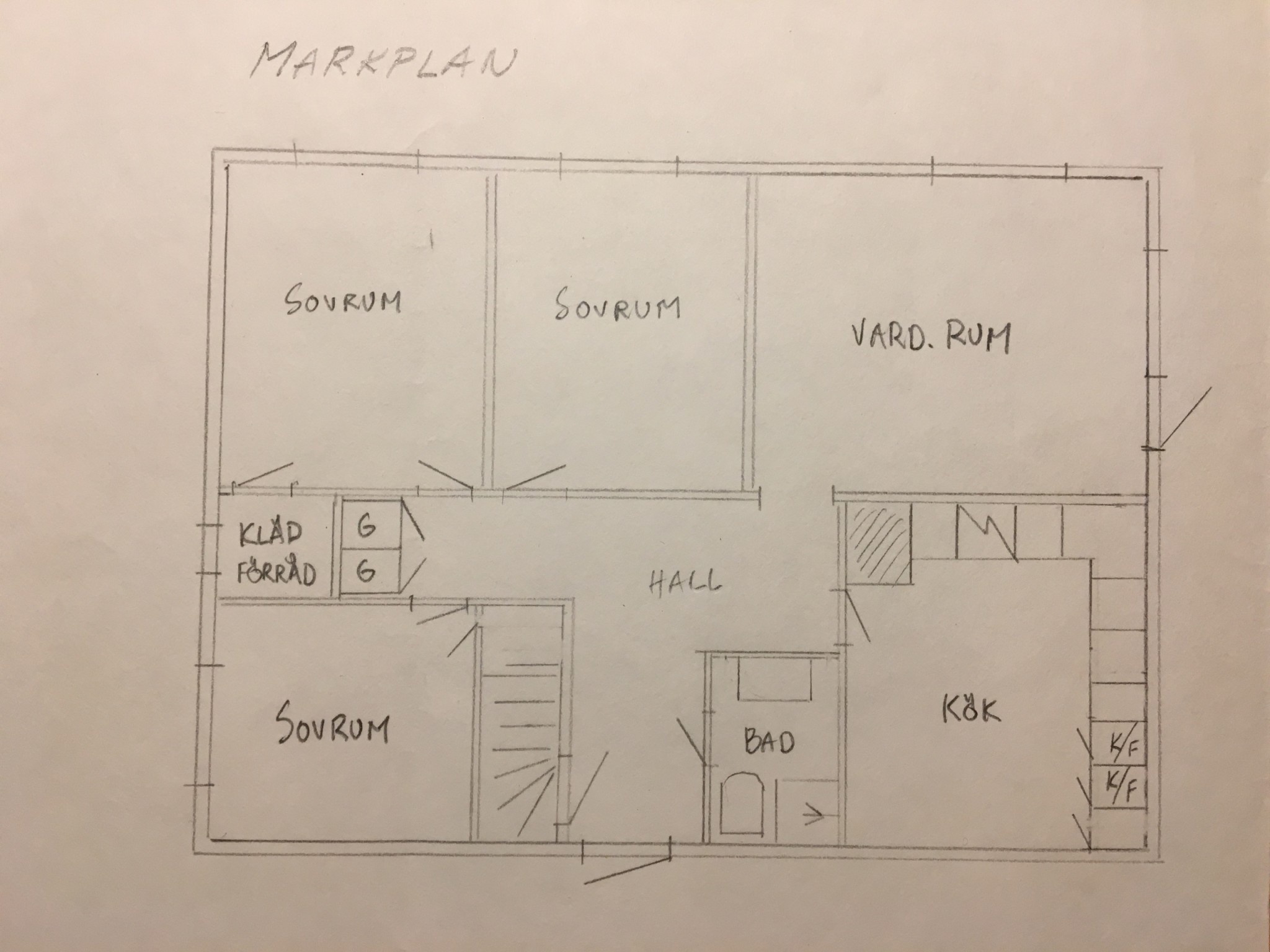
Floor plan sketch (it's between the upper left bedroom and the clothes storage we want to change):
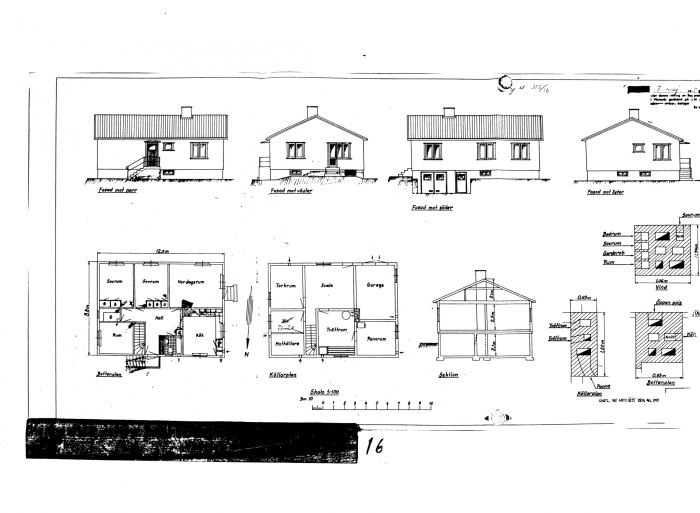
That's how it apparently looked a long time ago:
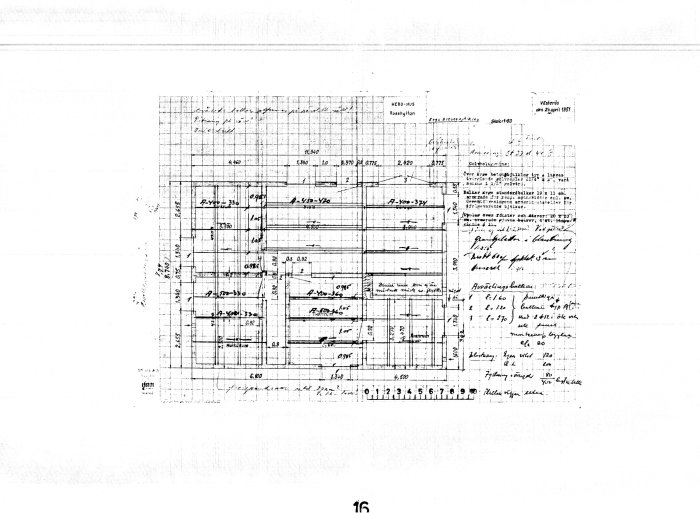
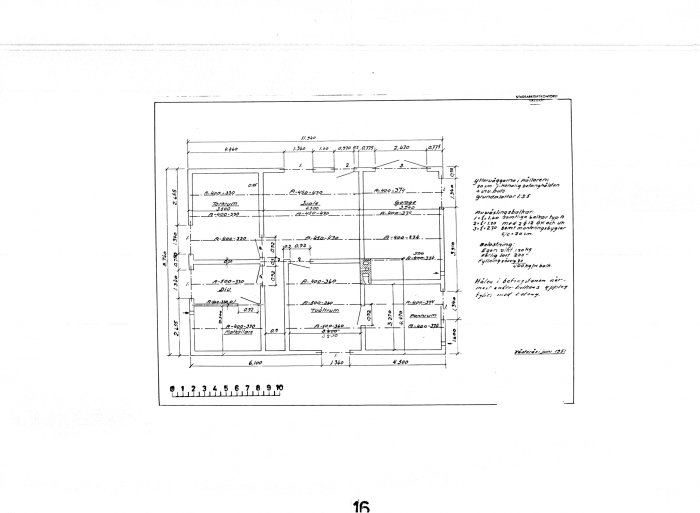
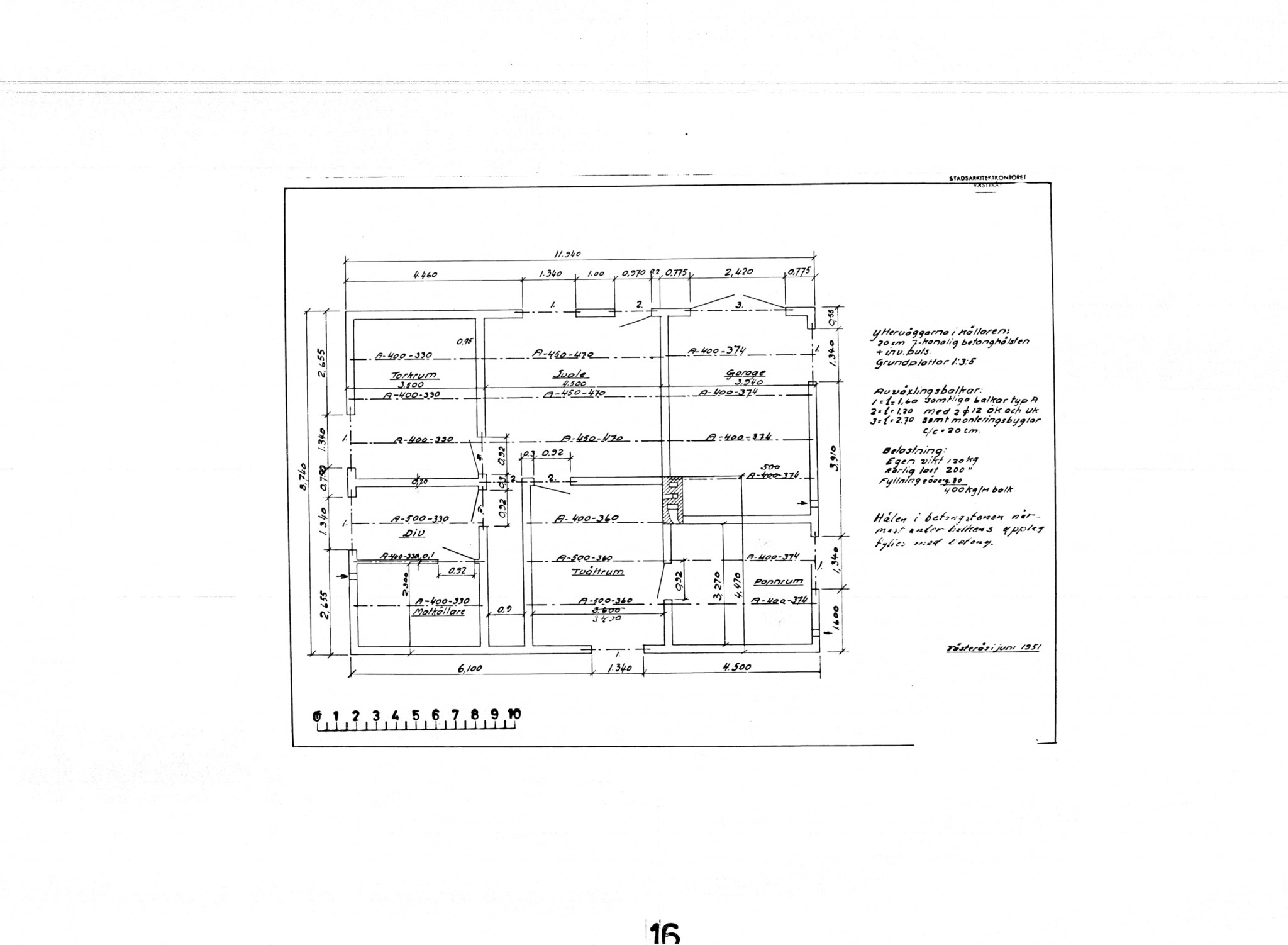
We contacted the municipality to get further drawings and only received these:
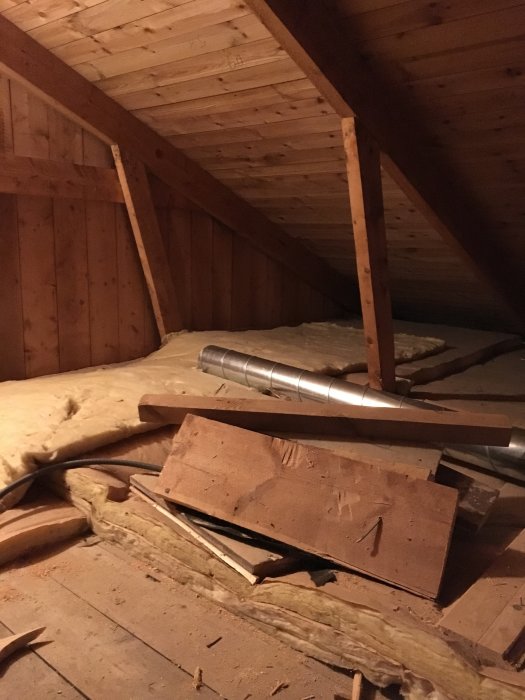
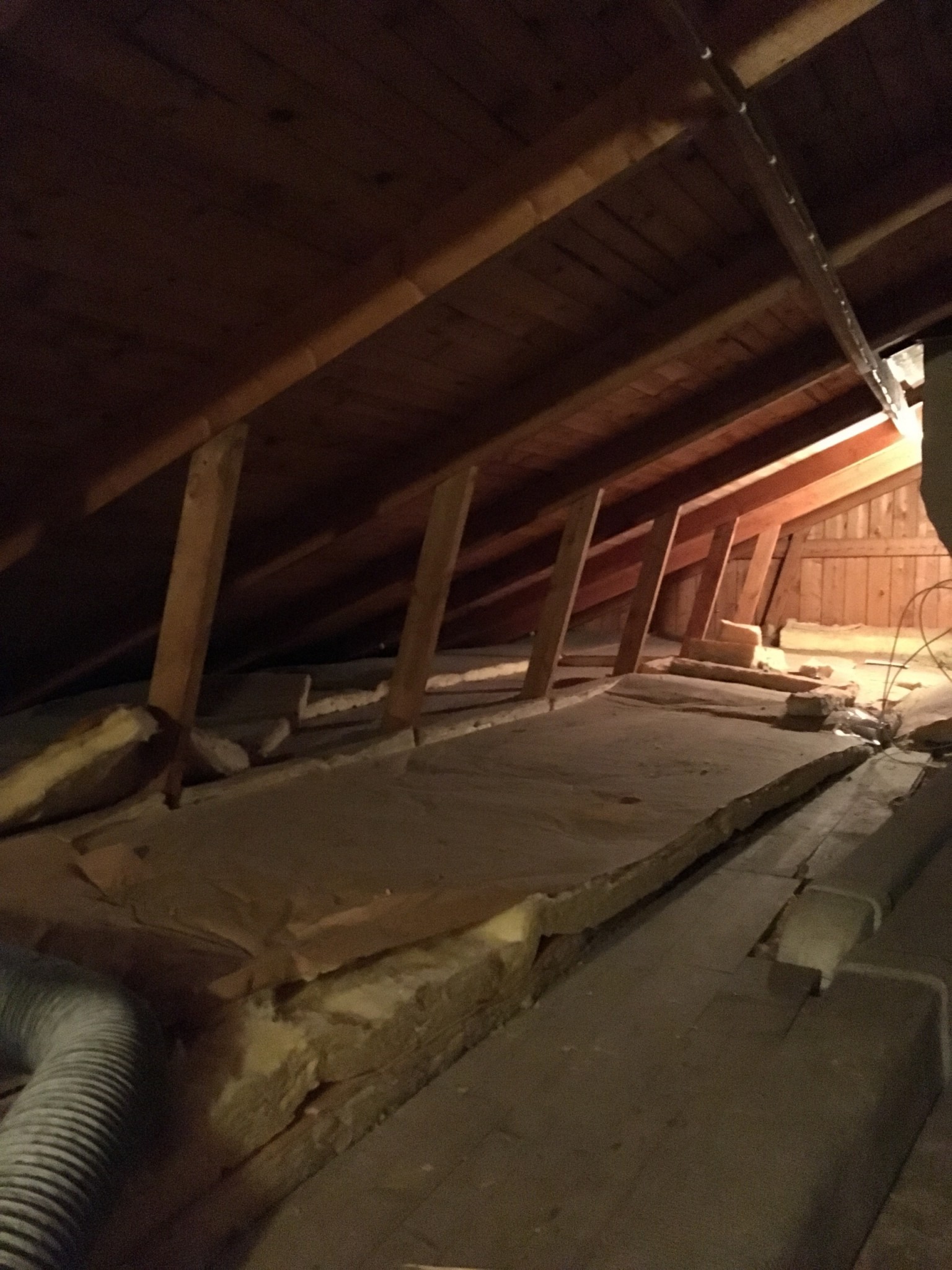
Here's what the attic looks like above the mentioned wall:
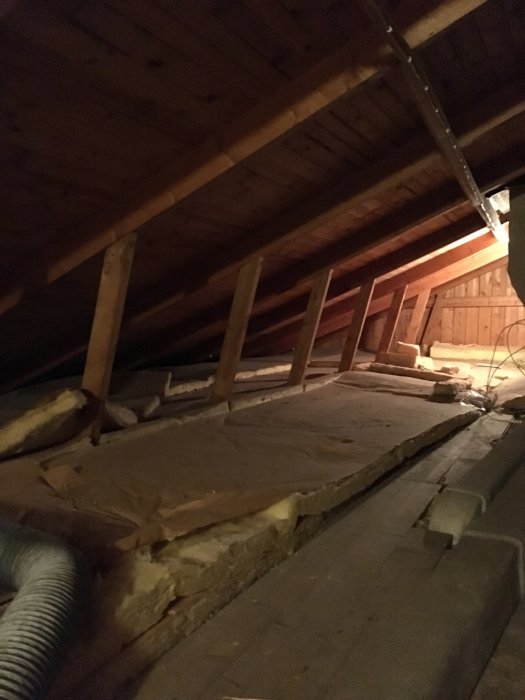
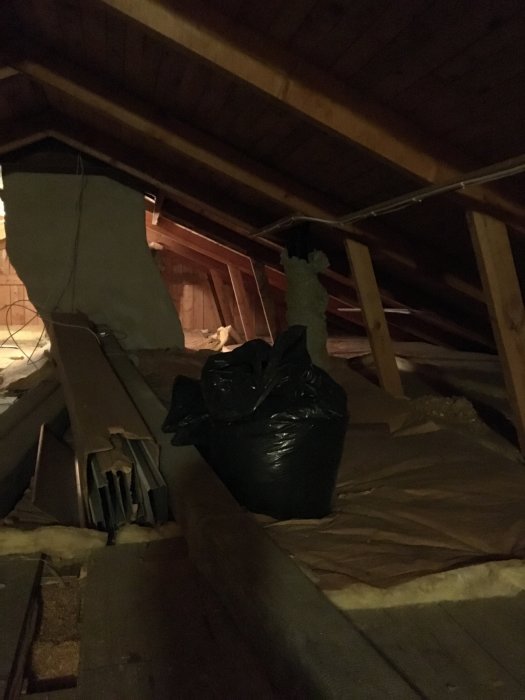
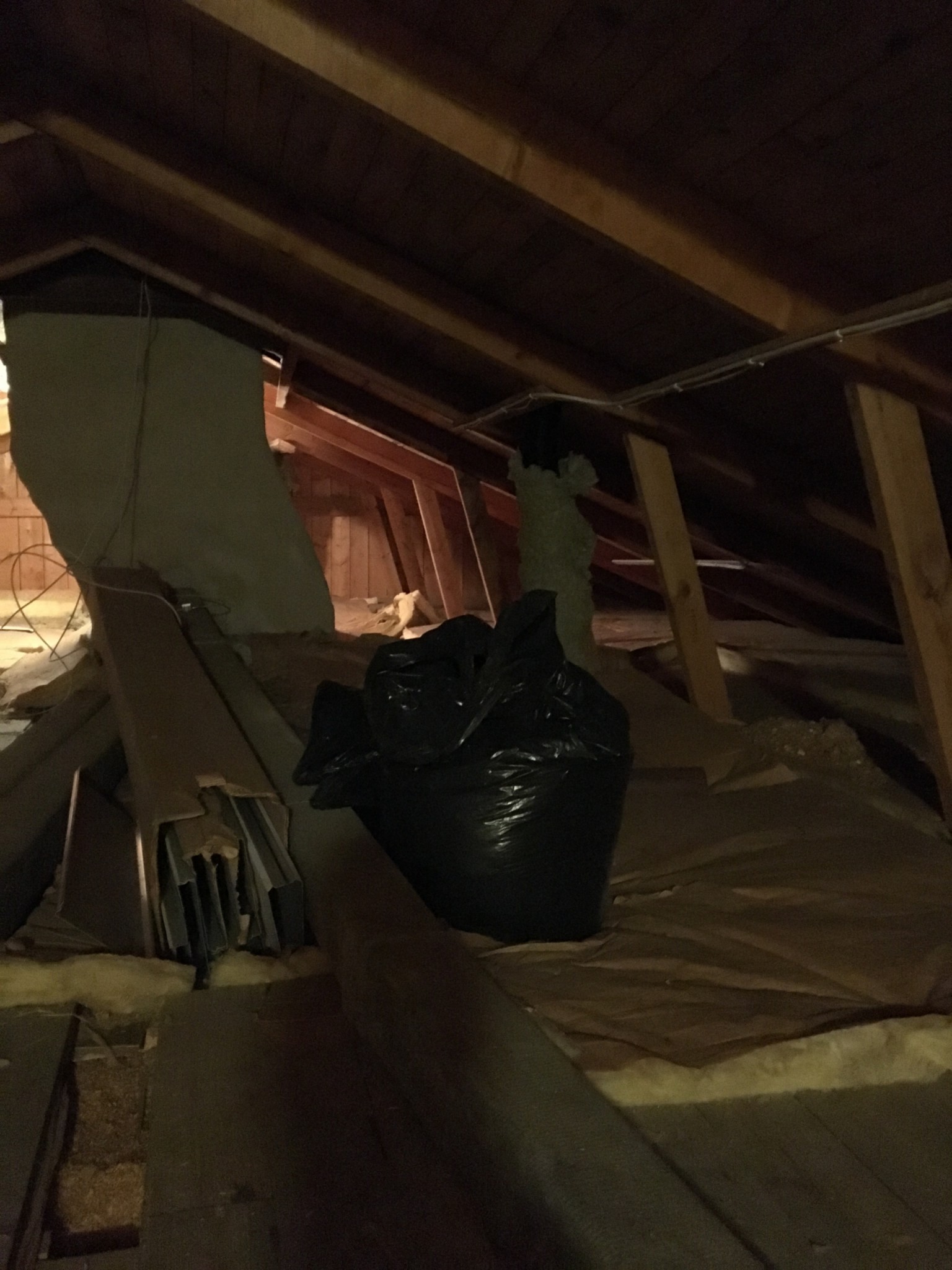
And the rest of the attic:
If it affects anything, it might be worth mentioning that the previous owner removed the wall between one of the living rooms and the kitchen as well as between the living room and the nearest bedroom:
I would also say load-bearing. But if you still want to leave a little wall at the top as shown in the picture, it's probably fine to counter it with a solid beam or a glulam beam. It's probably good to check if they did the same at the kitchen wall as well, because the wall there is equally load-bearing. The former wall between the bedroom and living room, however, should not be a problem being gone.
I also believe it is load-bearing. The wall is not very thick, but it is made of solid wood. It runs (or ran) through the entire house - in the middle. It has a wall under it (or nearby) in the basement. Under the basement wall, the foundation is also reinforced.
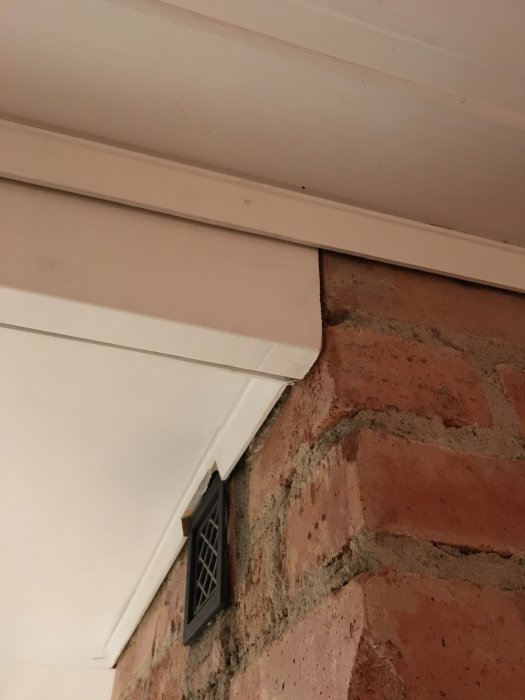
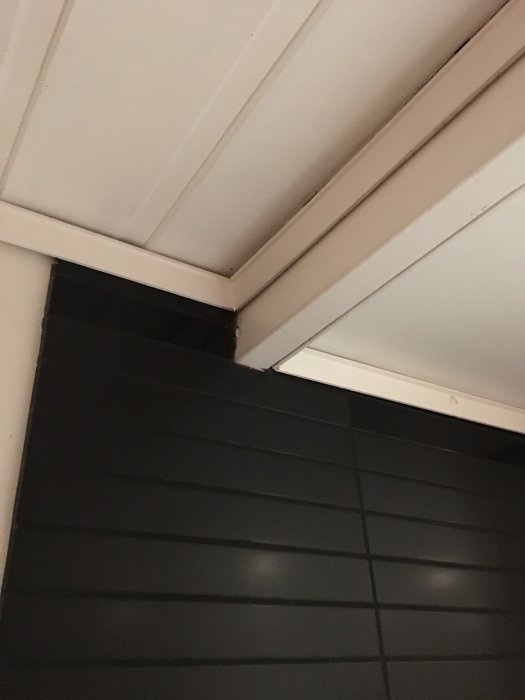
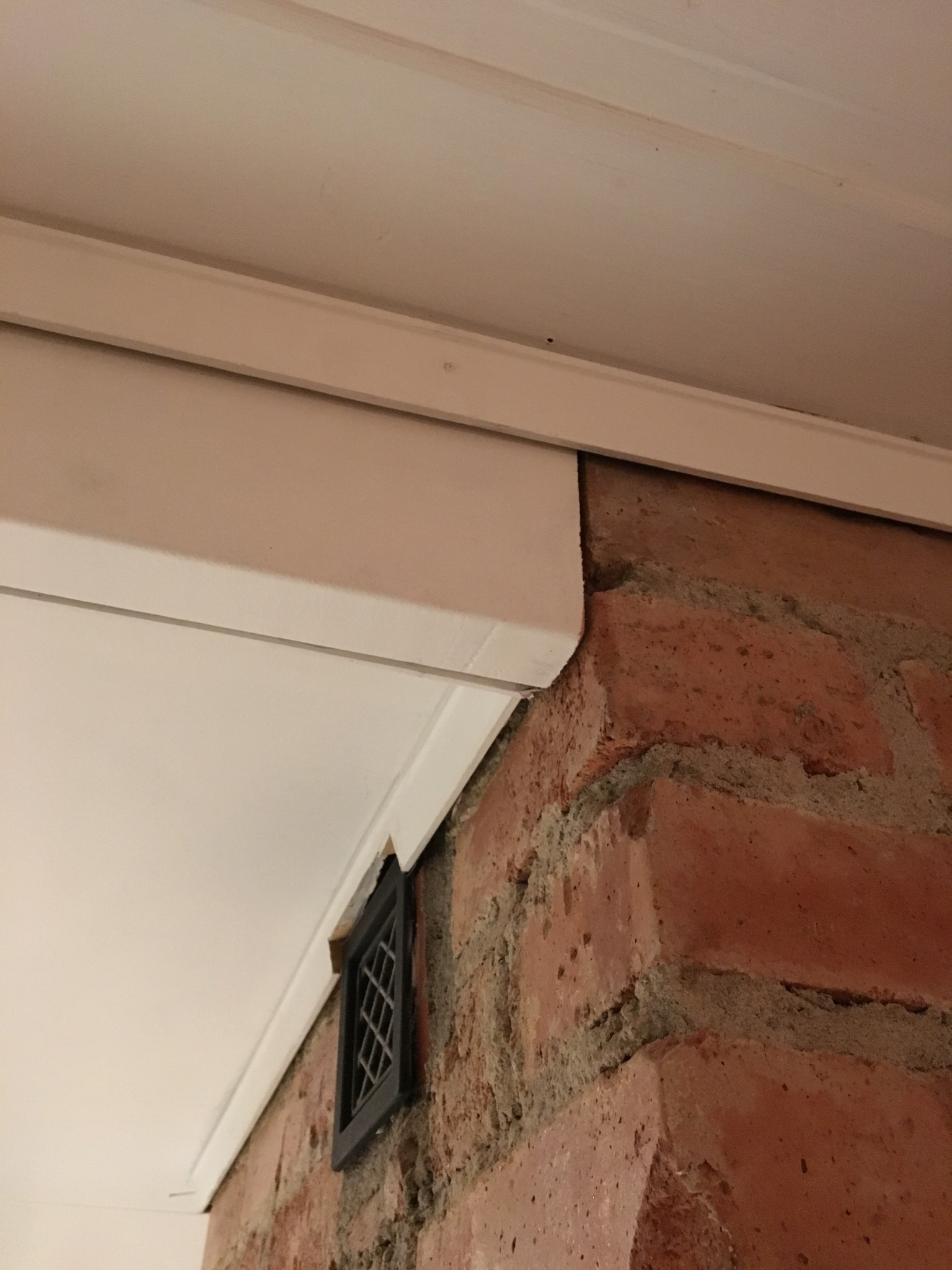
This is how it looks between the living room and the kitchen. It is a bit bulging. The house settled a bit after a blasting about 20 years ago so we thought it was probably because of that.
If it looks like that, I would bring in a structural engineer to take a look at it. As mentioned, the problems can be solved from the attic. The truss supports are likely positioned on beams that run across the room, so even if most of their forces go towards the outer wall, some probably also go towards the center of the house.
If the house has been guaranteed inspected by the seller in some way, you might be able to get some money back if they haven't disclosed that they removed a load-bearing structure. Otherwise, it probably falls under things that are your own responsibility through the duty to investigate.