
7,128 views ·
9 replies
7k views
9 replies
Wood paneling on the outside of lightweight concrete and clay plaster on the inside

Construction of a single-family house in Stockholm (permanent standard), 160 m2, modern architecture.
1. Does anyone have tips on how to attach wood paneling to a lightweight concrete wall (or lime-sandstone like Silka)?
2. Would clay plaster be suitable on the inside of a wall as described above?
3. Would it work with just (from the inside): clay plaster-lightweight concrete-wood paneling?
I know it's cheaper and better according to many to build classic wooden walls. I know many think you should have regular plaster on the outside. Etc. etc. But please keep the answers on topic, even though I happily accept tips on materials and construction techniques closely related to what I'm asking about.
1. Does anyone have tips on how to attach wood paneling to a lightweight concrete wall (or lime-sandstone like Silka)?
2. Would clay plaster be suitable on the inside of a wall as described above?
3. Would it work with just (from the inside): clay plaster-lightweight concrete-wood paneling?
I know it's cheaper and better according to many to build classic wooden walls. I know many think you should have regular plaster on the outside. Etc. etc. But please keep the answers on topic, even though I happily accept tips on materials and construction techniques closely related to what I'm asking about.

1. In lightweight concrete, you can screw in furring strips/ventilation battens with lightweight concrete screws and then nail the panel as usual. I'm not familiar with calcium silicate bricks, so I'll pass on that.
2. Pass
3. Aren't you going to have any insulation? Is it possible to meet the energy requirements of building regulations with just lightweight concrete? If you ignore insulation values and such, it must be a bombproof construction. The only thing I can think of is that it's important for the panel to be well ventilated since the lightweight concrete will let through more moisture than a "normal" wall.
2. Pass
3. Aren't you going to have any insulation? Is it possible to meet the energy requirements of building regulations with just lightweight concrete? If you ignore insulation values and such, it must be a bombproof construction. The only thing I can think of is that it's important for the panel to be well ventilated since the lightweight concrete will let through more moisture than a "normal" wall.
Last edited:
Thanks for your answers!Rickard.ag said:
1. In lightweight concrete, you can screw in furring strips/ventilation rules with lightweight concrete screws and then nail the panel as usual. I'm not familiar with lime-sandstone, so I'll pass on that.
2. Pass
3. Are you not going to have any insulation? Is it possible to meet the building regulations' energy requirements with just lightweight concrete?
1. Aha, sounds convenient. How much air gap should one have?
3. A bit borderline from what I understand, but with geothermal heating it might work. Says a lot... We'll see what the designer says.
It depends a bit on which panel you choose. A horizontal panel only needs vertical battens, and then 45mm is probably enough. A vertical panel needs horizontal battens, and in your example, I would also use a vertical ventilation batten. Then maybe ≈20mm+34mm is suitable, but of course, this is just my opinion, so take it for what it's worth.

Know-It-All
· Västra Götaland
· 12 425 posts
If you use Ytong Energy+ blocks, you easily meet the energy requirements.
Just screw up battens and nail the panel; you might need to use plugs or concrete screws. It could be cool with vertically aligned decking edge to edge as a panel
I opt out of plaster
Just screw up battens and nail the panel; you might need to use plugs or concrete screws. It could be cool with vertically aligned decking edge to edge as a panel
I opt out of plaster
Yes, I checked out Ytong as you mentioned. Shouldn't be any problems then.
I have actually planned vertical pine paneling and will have patios with decking on three sides of the house and definitely agree with the edge-to-edge idea, but I suppose that requires great precision.
Hey!
I'm thinking the same about paneling on lightweight concrete (externally), how did it work out for you?
Did you use battens and paneling as usual, or did you apply a base coat on the lightweight concrete first?
If you have pictures, feel free to send them
Otherwise, I'd gladly accept any tips or things to watch out for.
Take care and Merry Christmas!
I'm thinking the same about paneling on lightweight concrete (externally), how did it work out for you?
Did you use battens and paneling as usual, or did you apply a base coat on the lightweight concrete first?
If you have pictures, feel free to send them
Otherwise, I'd gladly accept any tips or things to watch out for.
Take care and Merry Christmas!
Know-It-All
· Västra Götaland
· 12 425 posts
There is really no direct reason to plaster aerated concrete if you are going to have paneling on it. Leca is sensible as it closes the structure.

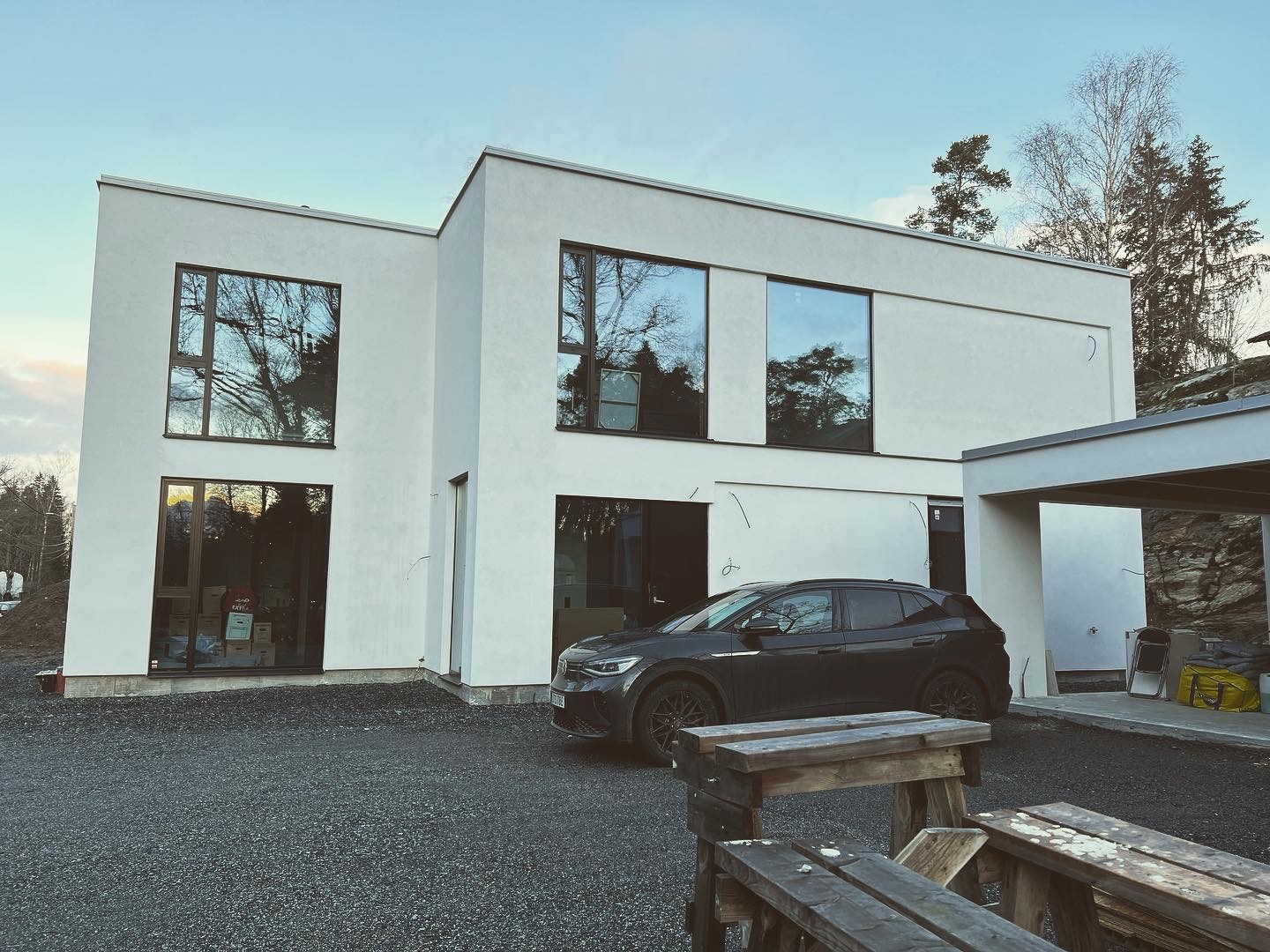
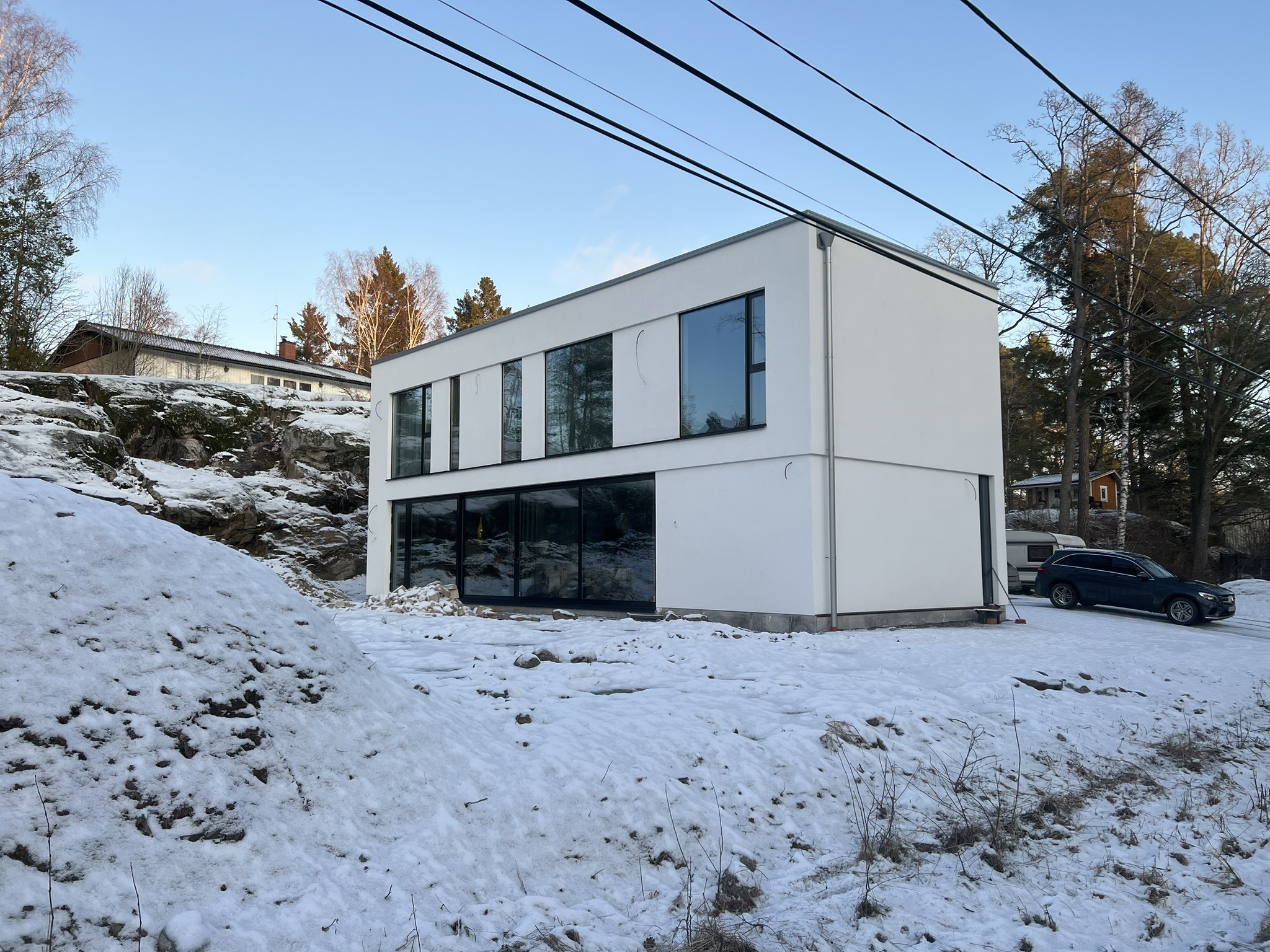
I have built a house with Ytong and have certain "fields" on the façade that will be clad in vertical wood paneling. To achieve an even level on the façade, I have deviated from the 360mm blocks and used 300mm blocks behind where the wood paneling will be. This way, I have created a 65mm space for the wood paneling including the battens. All Ytong is plastered with thin plaster, even the parts that will be behind the wood façade. The plan is to first have a vertical batten, then a horizontal batten, and then the façade panel.
Question 1: Is it enough with 2x façade battens 22x45 behind the façade panel? In that case, the system will be 22+22+22mm, which would be the perfect thickness.
Question 2: Do I need to have anything moisture-protective between the plastered façade and the vertical battens?
Question 3: What c/c distance should I have on the vertical and horizontal battens?
Question 1: Is it enough with 2x façade battens 22x45 behind the façade panel? In that case, the system will be 22+22+22mm, which would be the perfect thickness.
Question 2: Do I need to have anything moisture-protective between the plastered façade and the vertical battens?
Question 3: What c/c distance should I have on the vertical and horizontal battens?
Click here to reply