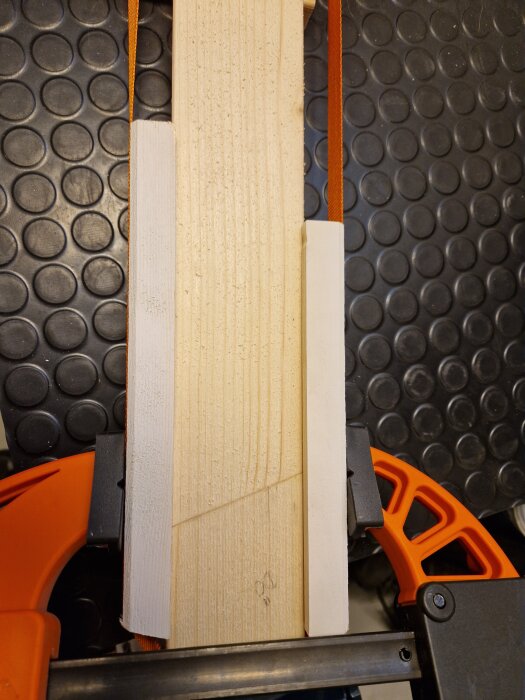
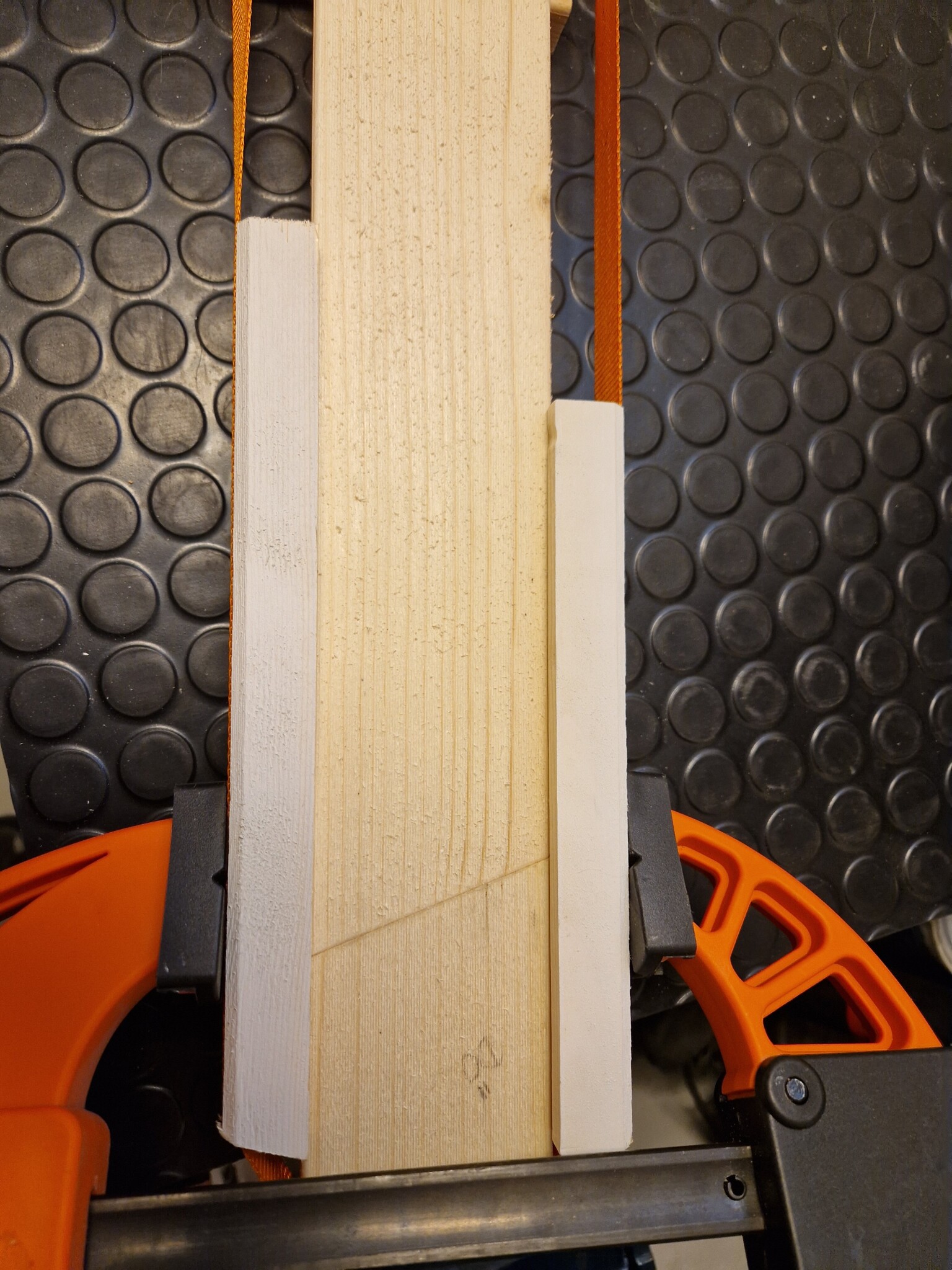
I had to splice the last piece to the window trim on the outside of the window and decided to try gluing it, as both nailing and screws were beyond what I had access to at the moment.
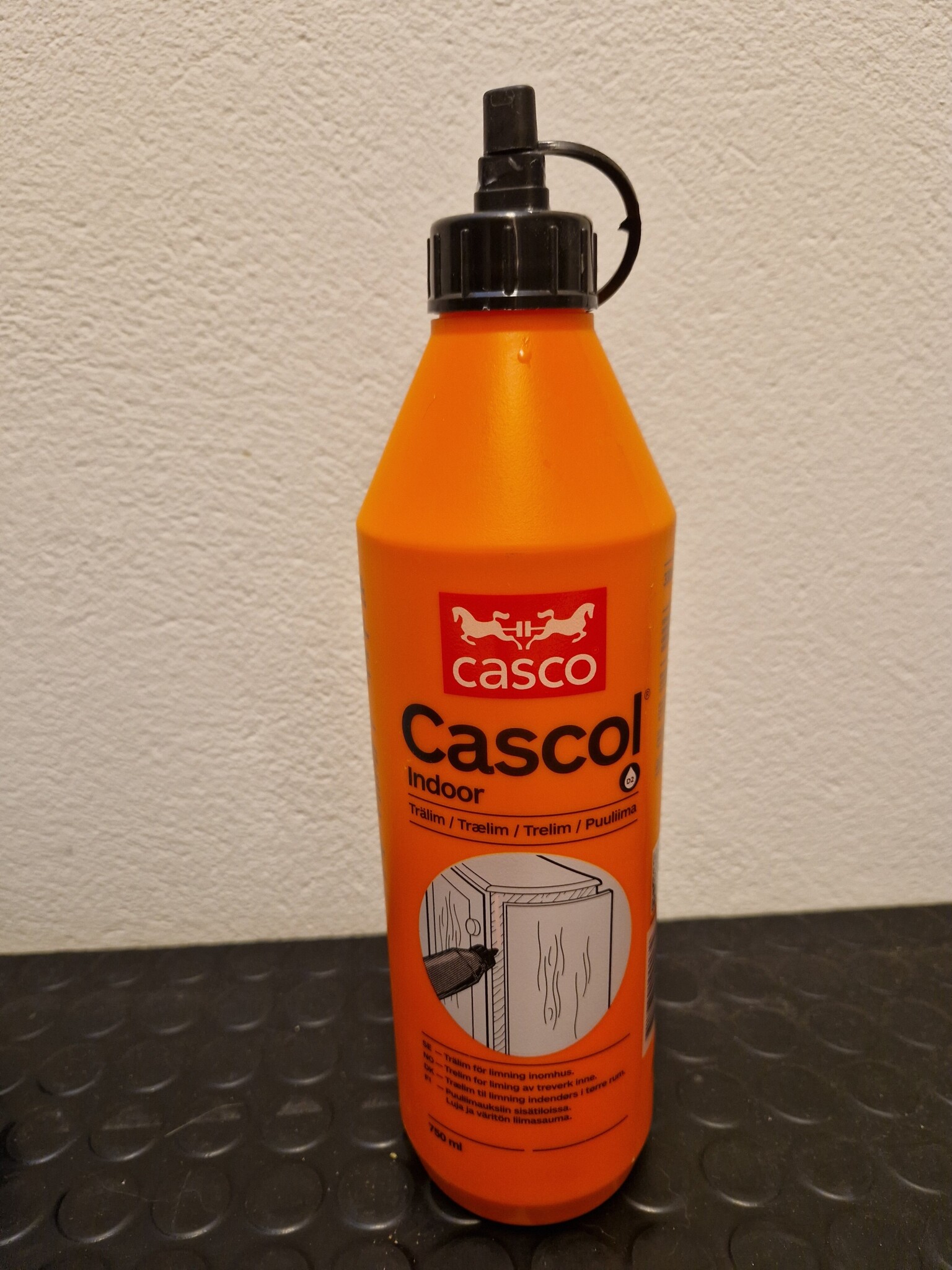
The board is cut at an angle because I initially had another solution in mind. This, of course, caused a bit of trouble during the glue pressing, but I think it turned out reasonably right in the end. In hindsight, I should have drawn a line across both pieces to more easily see that they were in the correct position. I also noted that the glue is intended for indoor use.
The plan is to oil, prime, and then paint two layers. This particular piece will sit above a window, so it won't be exposed to much weather.
What do you think, is it worth letting it dry properly, or should I settle for fastening it with an extra screw? If I'm going to proceed, how long should one wait before releasing the press and starting to oil the end grain?
Yep, I obviously made a mistake here. I'm considering breaking off the piece and re-gluing it instead. If I use Casco Outdoor glue, how long do I need to keep it under pressure before I can paint the next layer? It says 30 minutes in the manual, but does that really apply in this case? The primer I've applied still needs to dry until late tonight before the topcoat can go on, so I might not lose any time by redoing it now.
The primer is dry on the surface but apparently still needs to cure for at least 24 hours.
Well, now I've seen everything... Buying a plank at the hardware store and installing it would have been cheaper, faster, and better.
Cheaper because you'll have to redo the painting and everything.
Faster because the time you spend on bridging the gap would have been enough for the trip and purchase of said plank.
Better because you'll avoid an outdoor seam that will always be visible.
Scarfing outdoors is hard to get right, it never looks complete and is only done in rare cases with glue.
Yep, I obviously made a mistake here. I'm considering breaking the piece and gluing it again instead. If I use Casco Outdoor glue, how long do I need to keep it in the press before I can paint the next layer? It says 30 minutes in the manual, but does that really apply in this case? The primer I applied still needs to dry until late tonight before the topcoat goes on, so I might not lose any time by redoing it now.
The primer is dry on the surface but apparently still needs to cure for at least 24 hours.
The open time is quite short with wood glue, but expect a day before you have full strength. I don't know how it's affected by encapsulating the joint with paint, but it's risky to take chances.
Now I've seen it all... Buying a board at the hardware store and putting it in place would have been both cheaper, faster, and better.
Cheaper because you'll have to redo the work with painting and everything.
Faster because the time you spend on the joint would have sufficed for a trip and purchase of the said board.
Better because you'll avoid an outdoor joint that will always be visible.
Joining outdoors is difficult to get right, it never looks perfect and is only done in rare cases with glue.
I agree that a new board is better, but why do I need to redo all the work with painting and everything? I've only primed so far, so if I break off the piece and glue it with outdoor glue, I don't expect to have to repaint anything, the priming is just to make the paint adhere better, and here the joint becomes negligible.
Going to buy a new board definitely takes longer than splicing this one together. It was a fairly quick job, which can also be seen in the pictures.
The board itself cost maybe 130 SEK, plus the trip to the lumberyard.
This particular trim, as mentioned, is supposed to sit above a window but inside our façade (wooden house with Mexican brick where the brick sticks out a bit), so it is quite protected. It's very rare for water to run there.
Replacing the board now means I have to go out and buy a new one, get the saw out again, cut it, and prime it, which in turn means I have to wait another 24 hours.
So there are several reasons why the choice was made this way; if the trim had been more exposed, I would have put in the extra work directly, but now it doesn't.
I agree that a new board is better, but why do I have to redo the entire painting job and everything? I've only primed it so far, so if I break off the piece and glue it with outdoor glue, I don't expect to need to repaint anything. The priming is just for the paint to adhere better, and the seam here will be negligible.
Driving to buy a new board definitely takes longer than splicing this one together. It was quite a quick job, which is also evident in the pictures.
The board itself cost maybe 130 SEK, plus the trip to the lumberyard.
This particular trim, as I mentioned, is going above a window but inside our facade (a wooden house with Mexican brick where the brick protrudes a bit), so it's fairly protected. It's very unusual for water to run there.
Replacing the board now means I have to go buy a new one, bring out the saw again, cut and prime it, which in turn means I have to wait another 24 hours.
So there are several reasons why the choice was like this; if the trim were more exposed, I would have done the extra work directly, but it's not.
But if you've already glued with another glue, it's covered the pores, so the new glue won't bond well. That's if you can saw off the outermost millimeters on both sides.








Cheesen said:
Now I've seen it all... Buying a board at the hardware store and putting it in place would have been both cheaper, faster, and better.