

Soon we'll start tearing apart the bathroom on the upper floor. It's probably an attic space that was furnished once upon a time. It's far too cramped for a family, so we will move the wall towards the bedroom to make it larger. Additionally, we're considering removing the wall between the bedroom and the alcove to make the bedroom bigger. It's just dead space there today. In the picture, I have marked in black all the walls I assess as original walls, i.e., the attic space used to go behind them before they were converted into living space.
Now I'm wondering if someone with a similar house construction has knowledge about whether these are part of the load-bearing structure or if we can tear down the walls without worry. I haven't been up and dug in the sawdust to see what it looks like, but I'm not expecting to find anything special. How can I assess if the roof rests on these walls?
Now I'm wondering if someone with a similar house construction has knowledge about whether these are part of the load-bearing structure or if we can tear down the walls without worry. I haven't been up and dug in the sawdust to see what it looks like, but I'm not expecting to find anything special. How can I assess if the roof rests on these walls?
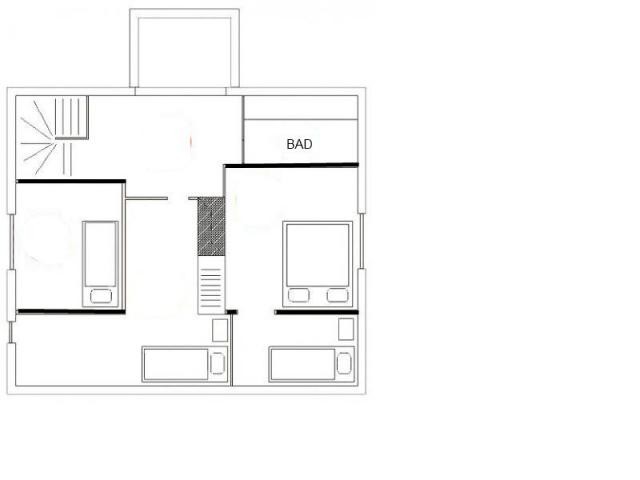

Feeling a bit curious about how the house looks. You mention it's an old kattvind, so there should be a slanted wall in the bathroom? At what height is the roof foot located? How does the exit to the balcony work (it's a balcony we see on the drawing, right)?
I believe there's quite a high risk that the wall is load-bearing; is there any wall on the ground floor that can support the floor structure under the current wall?
My advice is to contact a structural engineer and get a professional opinion. It doesn't have to be very expensive.
I believe there's quite a high risk that the wall is load-bearing; is there any wall on the ground floor that can support the floor structure under the current wall?
My advice is to contact a structural engineer and get a professional opinion. It doesn't have to be very expensive.
You shouldn't place so much weight on the "drawing." Yes, there are sloping ceilings on the upper floor, even in the bathroom. So you understand it's cramped. In the bathroom, they have built a partition wall towards the attic space to place pipes, etc. But otherwise, the sloping ceiling starts at about 80 cm. There's a dormer extension by the balcony. If you manage to check the blog, you will immediately see how it looks. On the ground floor, there are heart walls, but from the chimney out. So right under the walls on the upper floor, there's actually nothing supporting them. So if they are load-bearing, there's quite a bit of weight on the floor joists between the floors.
I understand that it's leaning towards me having to ask someone to come and look, but I was hoping that someone here had done roughly the same thing and could confirm how it stands. Of course, it's not worth skimping on a pro in this case. Can the pro also assess what type of beam is needed so I can put it in myself?
I understand that it's leaning towards me having to ask someone to come and look, but I was hoping that someone here had done roughly the same thing and could confirm how it stands. Of course, it's not worth skimping on a pro in this case. Can the pro also assess what type of beam is needed so I can put it in myself?
A good structural engineer can calculate the load-bearing capacity accurately and can also provide you with a written statement on it, so you're not liable for the cost if it collapses (they usually have insurance for this). They can, of course, also advise on which beam is needed. If they are to assess this "remotely," exact drawings and material specifications are required.
I have just had a strength calculation performed for a masonry wall next to the kitchen. There is so much to consider, load directly downwards, laterally (shear), etc.
Get a professional!
Regards,
Fredrik
I have just had a strength calculation performed for a masonry wall next to the kitchen. There is so much to consider, load directly downwards, laterally (shear), etc.
Get a professional!
Regards,
Fredrik
I looked online for a structural engineer and there are a few companies in Örebro, but they all seem to be focused on large constructions and new builds, not coming out to check the walls in my house. Do you have any good tips?
Got in touch with a company now. Nice guy who could come at any time. He seemed eager for work. I guess he would need to show that he is really educated if one is to trust his calculations later. But it didn't sound like large sums of money, around 5k SEK, for a look and then to draw up the construction and make a building notification to the municipality. The next question is who will install any beams.
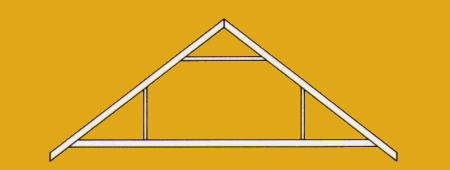
I have now had the structural engineer visit. He suggested mulpac's theory that they are support walls for the trusses. And if the top horizontal beam (I have no idea what the technical term is) is moved down to align with the top of the support walls, it's exactly how my house looks.
However, he believed that their function is more to keep the trusses from spreading apart and pushing out the walls. The wall towards the bathroom does indeed rest inside the outer wall, but otherwise, it stands on the joists, right in the middle of the span over the kitchen. So, there's no support wall underneath to absorb the force. On the opposite side, there's a support wall on the floor below, but there the force is directed precisely over the opening in that wall. Previously, the opening was narrower, and the force was absorbed by standing planks. But at some point, a larger opening was cut, apparently without considering the wall above. It seems to hold, but if we make a load-bearing adjustment, it feels uncomfortable to place it without support underneath.
What's a bit odd is that the support wall that continues along the entire side (on the opposite side of the balcony) also runs right in the middle of the joist span, which is maybe 4 meters. No visible deflection at all. On the other hand, the beams are 80 x 220.
Now I await a drawing and a proposal, and then I will see how we proceed.
However, he believed that their function is more to keep the trusses from spreading apart and pushing out the walls. The wall towards the bathroom does indeed rest inside the outer wall, but otherwise, it stands on the joists, right in the middle of the span over the kitchen. So, there's no support wall underneath to absorb the force. On the opposite side, there's a support wall on the floor below, but there the force is directed precisely over the opening in that wall. Previously, the opening was narrower, and the force was absorbed by standing planks. But at some point, a larger opening was cut, apparently without considering the wall above. It seems to hold, but if we make a load-bearing adjustment, it feels uncomfortable to place it without support underneath.
What's a bit odd is that the support wall that continues along the entire side (on the opposite side of the balcony) also runs right in the middle of the joist span, which is maybe 4 meters. No visible deflection at all. On the other hand, the beams are 80 x 220.
Now I await a drawing and a proposal, and then I will see how we proceed.
Are you not allowed to believe things when you are educated? I don't know if I would feel more secure if he consistently said he didn't know when it's not entirely clear how things stand.
No, of course. It remains to be seen what impression he gives with the proposal then.
I have some old drawings of the house. Or actually more like sketches from a time when they were working on the pipes in the house, and it is clear that the upper floor consisted of a large hallway, a side attic on the entire north side (the side without a balcony), and a room. The bathroom then seemed to have been a closet. Now, I'm not an engineer in any field whatsoever, but to me it doesn't seem perfectly clear to say that these are load-bearing walls when they don't exist consistently throughout the house.
I have some old drawings of the house. Or actually more like sketches from a time when they were working on the pipes in the house, and it is clear that the upper floor consisted of a large hallway, a side attic on the entire north side (the side without a balcony), and a room. The bathroom then seemed to have been a closet. Now, I'm not an engineer in any field whatsoever, but to me it doesn't seem perfectly clear to say that these are load-bearing walls when they don't exist consistently throughout the house.
Click here to reply
Similar threads
-
Kommer Win 11 att fungera i min APPLE - DATOR
Teknik -
Vad kommer det sej att den rena disken i maskinen luktar illa vid regn
Kök -
Will this glueing hold (wood)
Building Materials and Construction Technology -
Varför kommer vatten från fogen nybyggt badrum
Badrum -
Råd önskas - kommer in vatten på vinden vid skorstenen
Tak & Vind