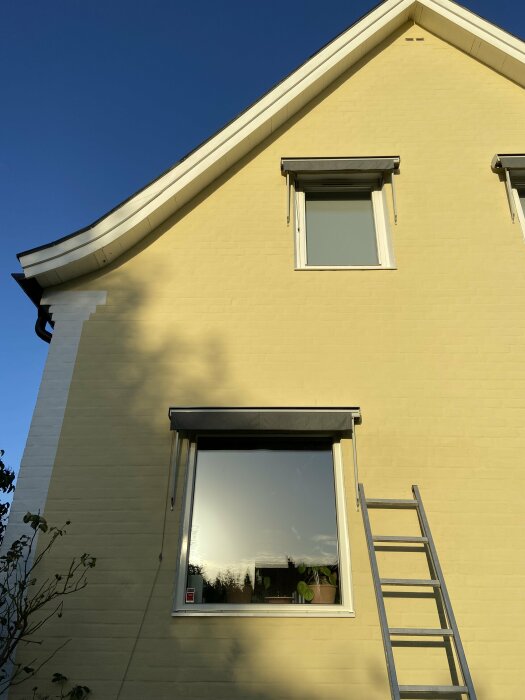
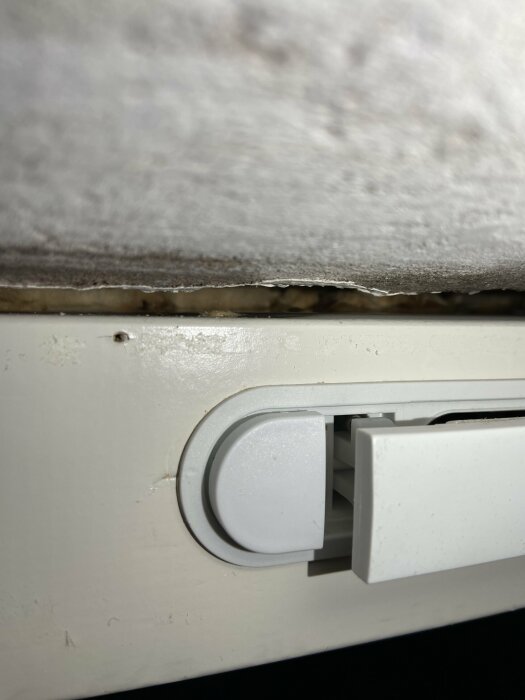
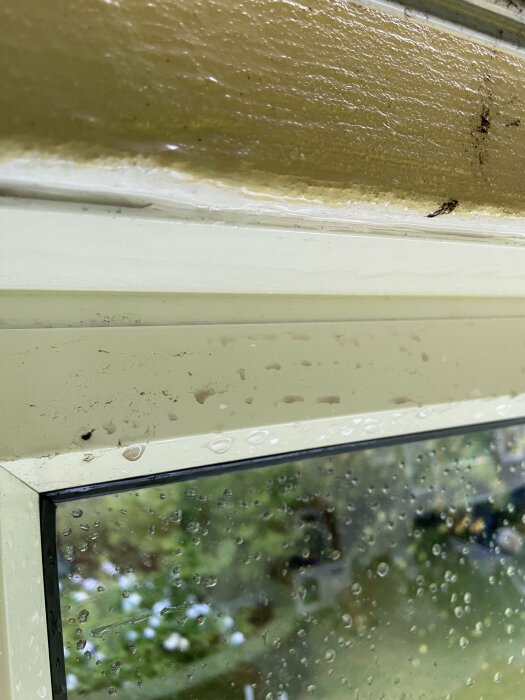
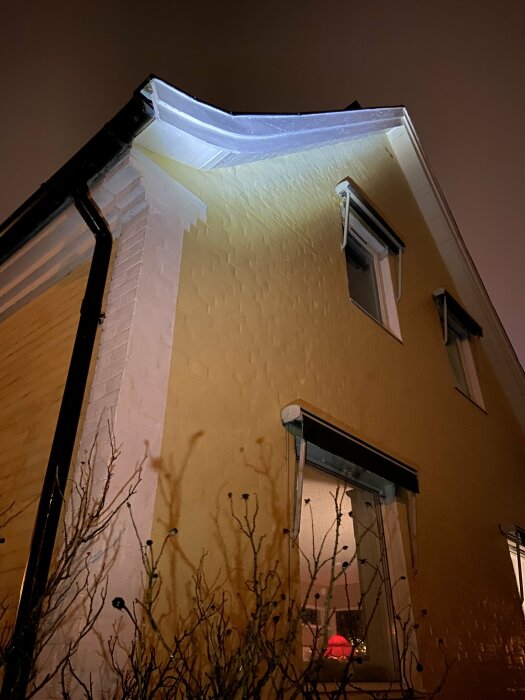
I recently moved into a house where it was noted that water leaks through the drip vent during extreme weather via two windows on the entrance floor. This was something the seller was supposed to fix before the transfer of ownership, but it turns out this wasn't done, and the water is not leaking through the drip vent but entering above the windows.
It has also turned out that the seller has had the problem for a long time and has tried, among other things, repainting the facade with the theory that the wall was "absorbing" water. He has also replaced the window flashings on the upstairs windows. Setting aside the question of responsibility, I am most eager to solve the problem.
Recently, I had a damage technician on site who recommended changing the window flashings upstairs, something my roofer was skeptical about.
The Problem
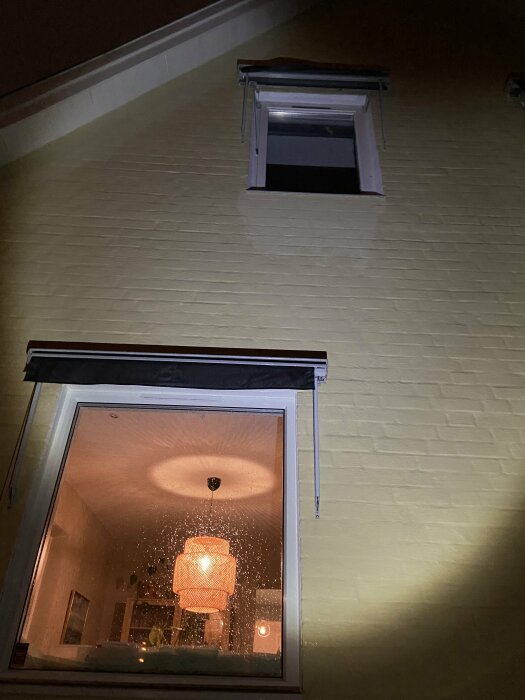
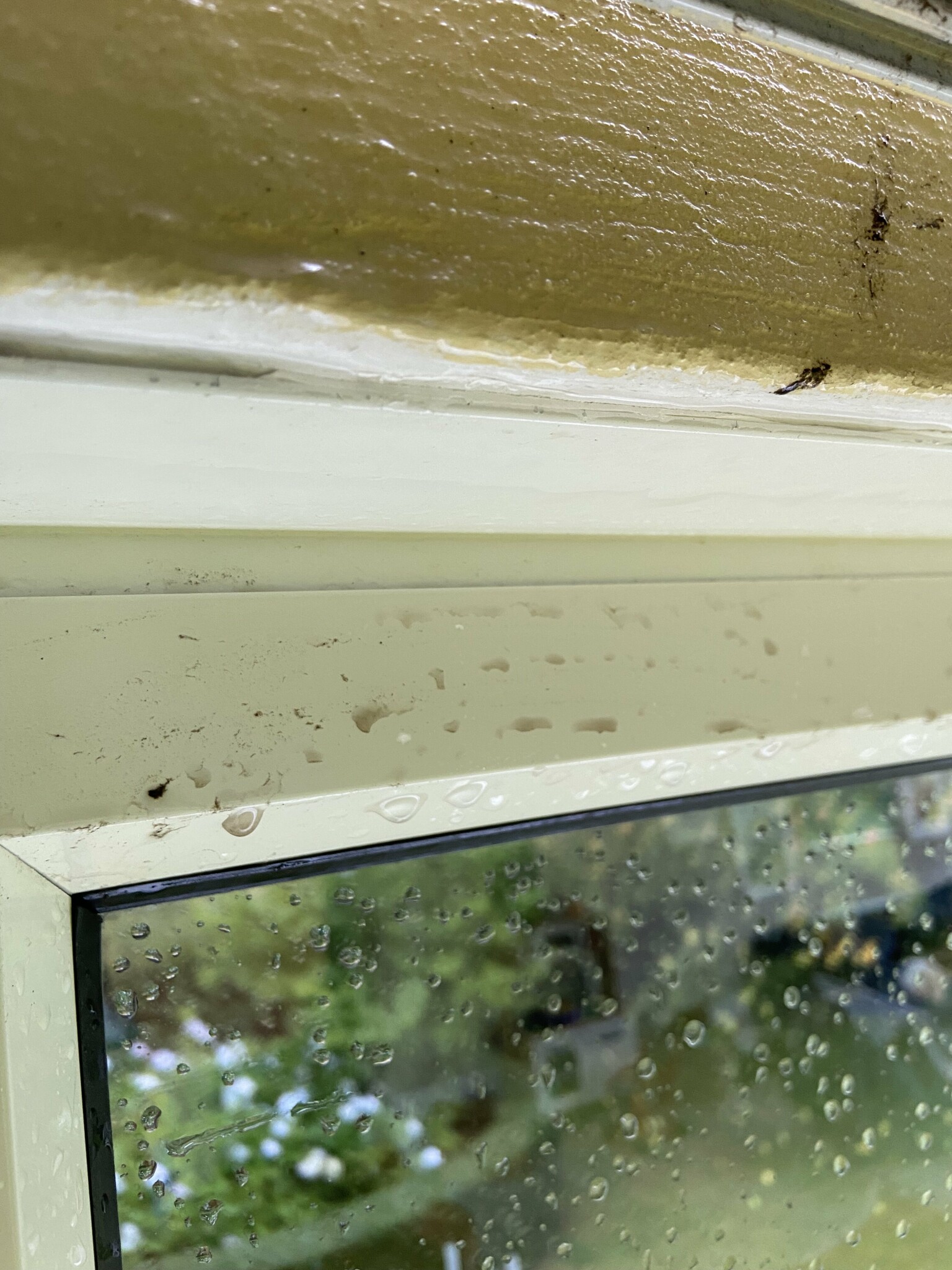
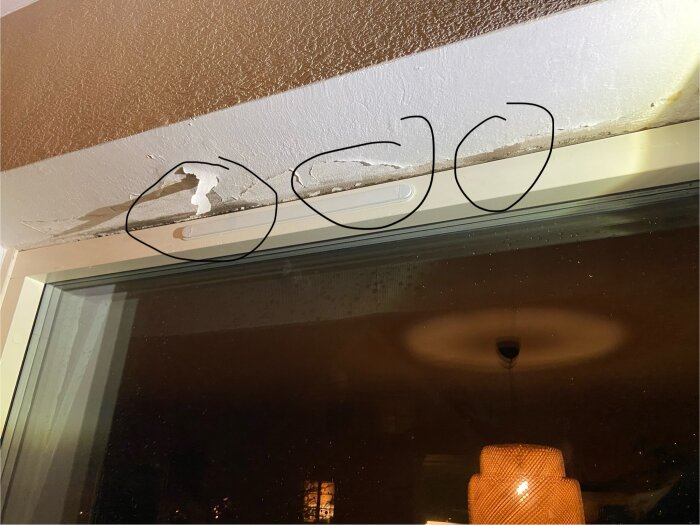
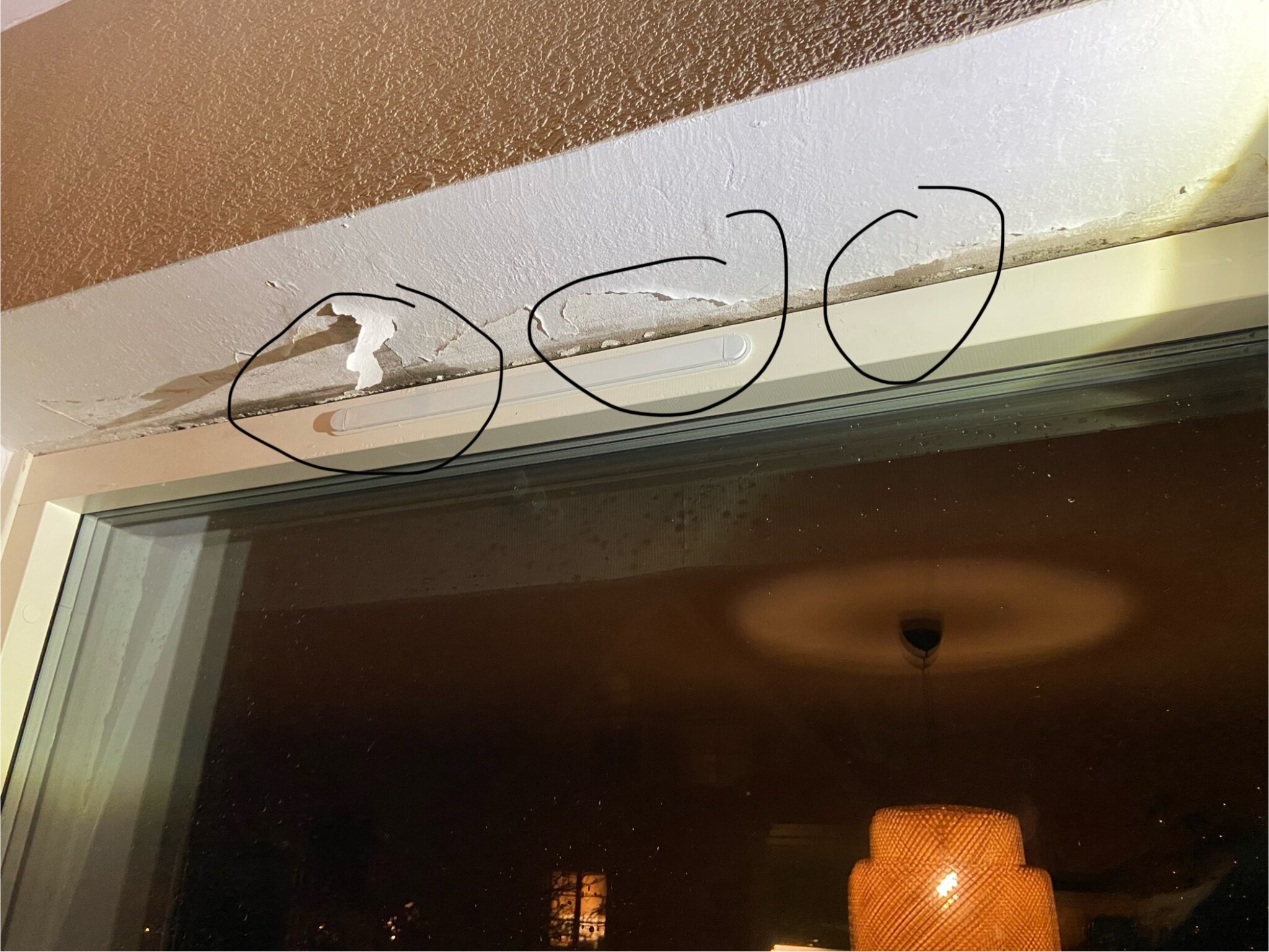
We have two non-openable windows facing west on the entrance floor. With a westerly wind combined with rain, water accumulates above the frame. So much that it drips in (during the Hans storm, it's about 1-2 liters).
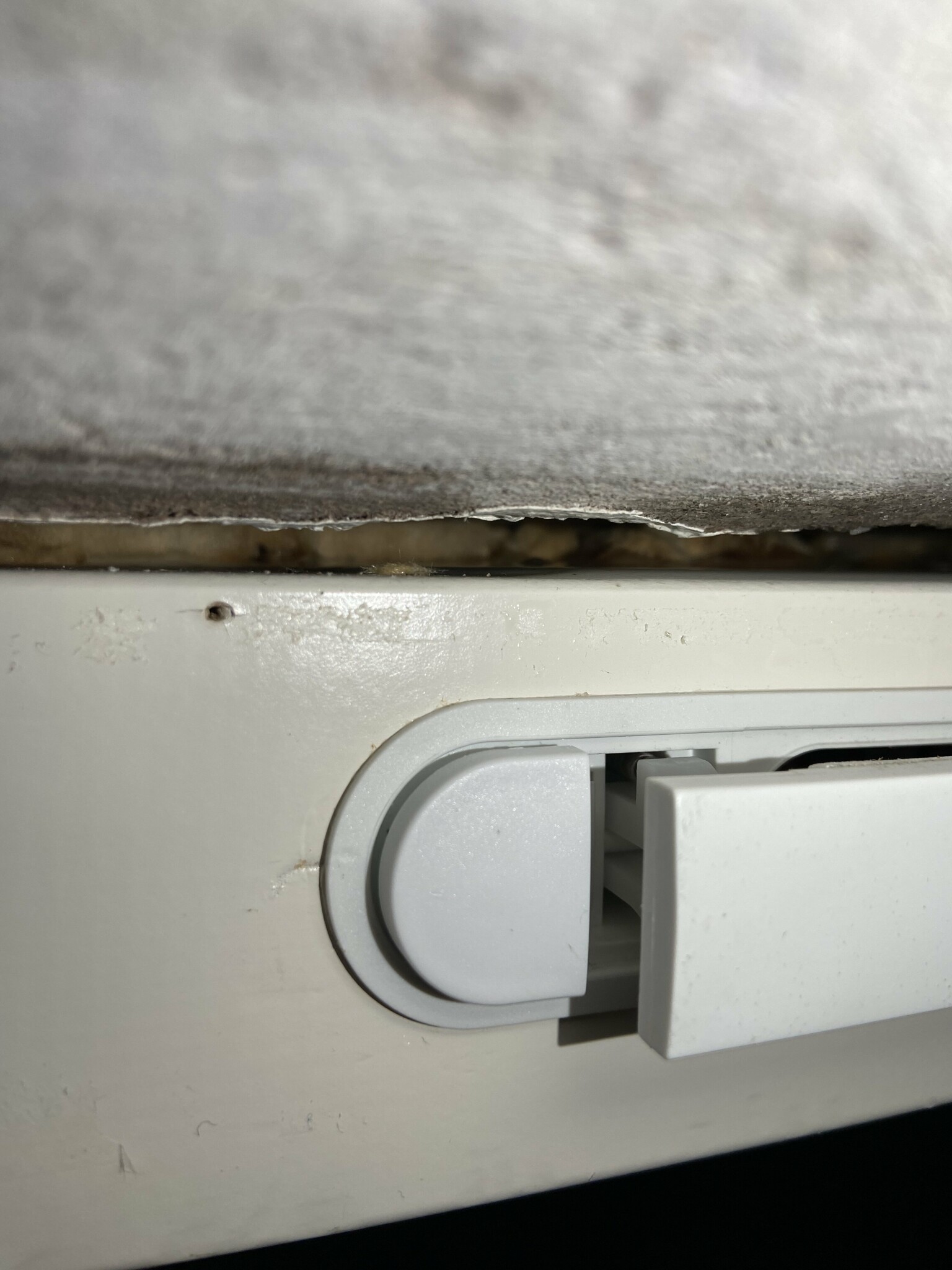
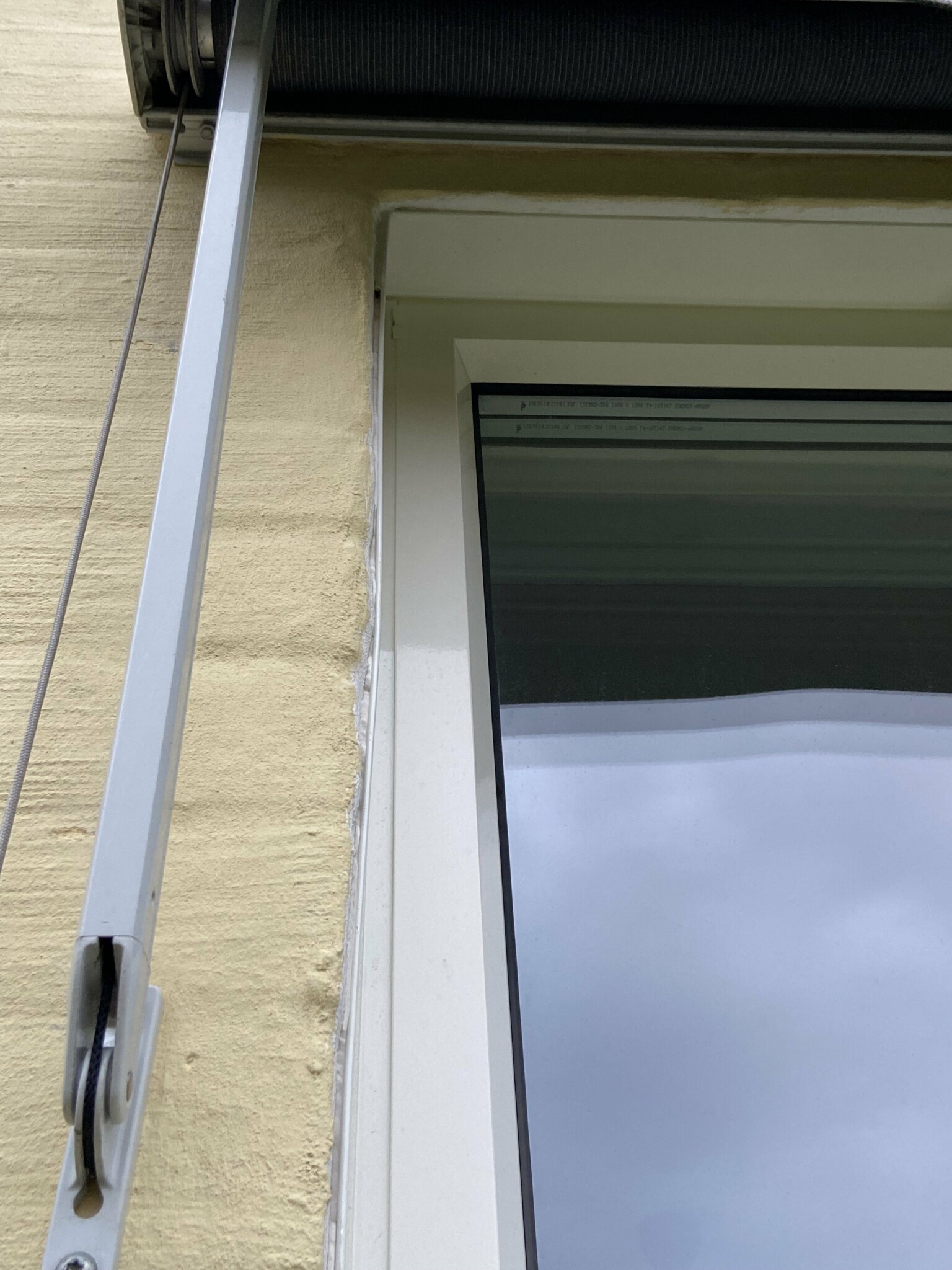
Water accumulates above the window and then drips in - unfortunately very tight between the hole and the frame.
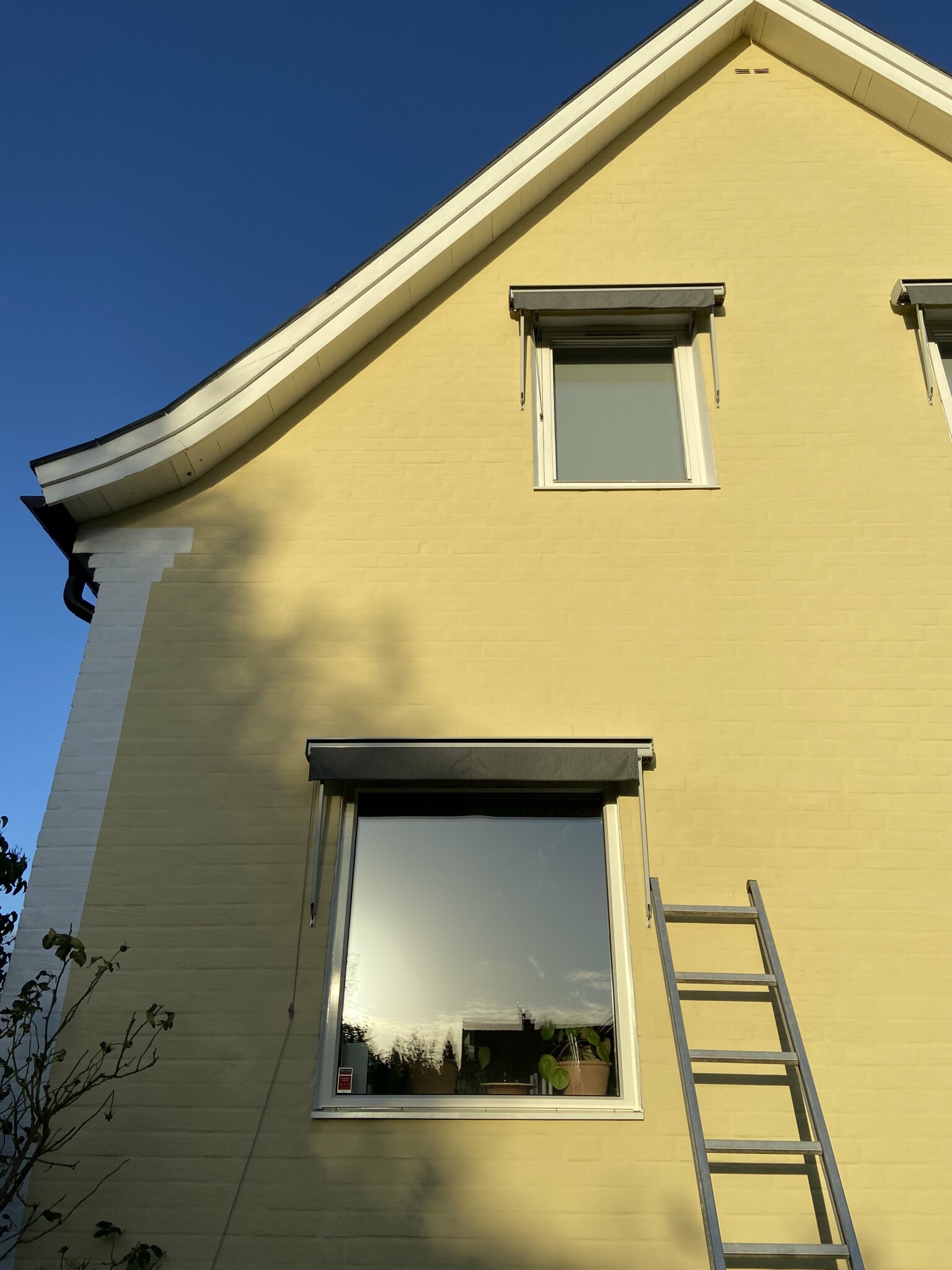
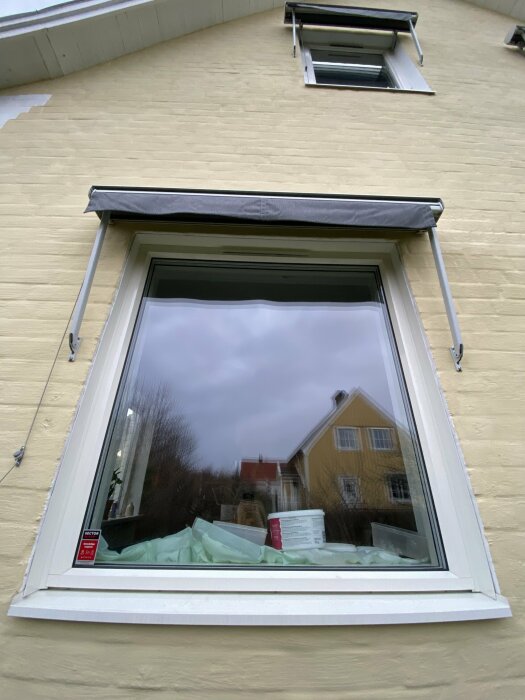
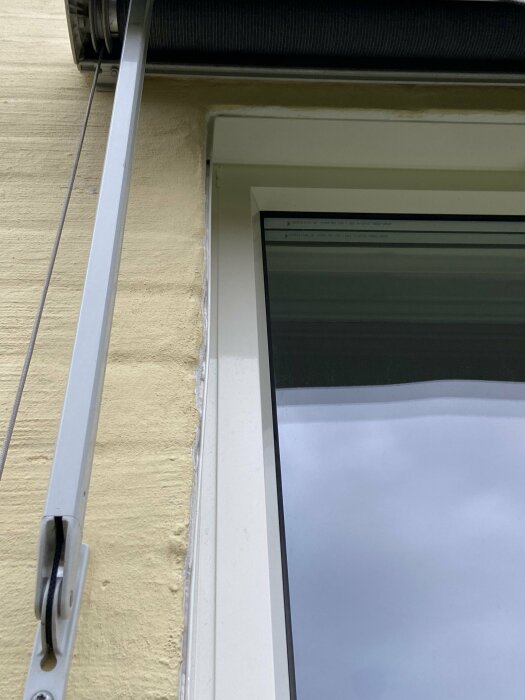
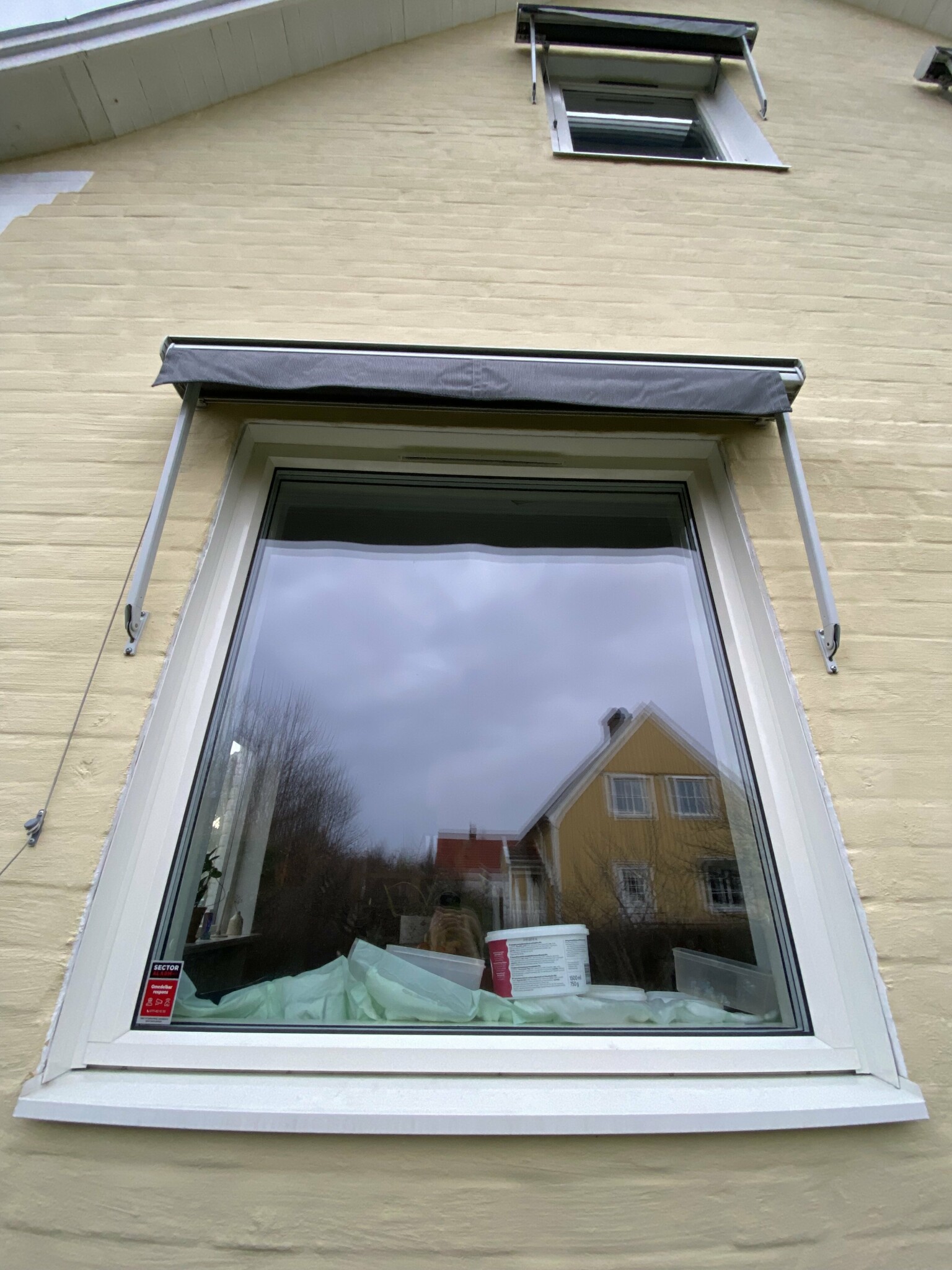
The windows' installation from the outside.
The seller previously repainted the facade and replaced the window flashings on the upstairs windows. As previously mentioned, the damage technician considers the flashings still incorrect, which my roofer was skeptical about, but they will be changed.
Tested Solutions
Today, it was supposed to rain and be windy, so I thought I'd take the opportunity to test a bit.
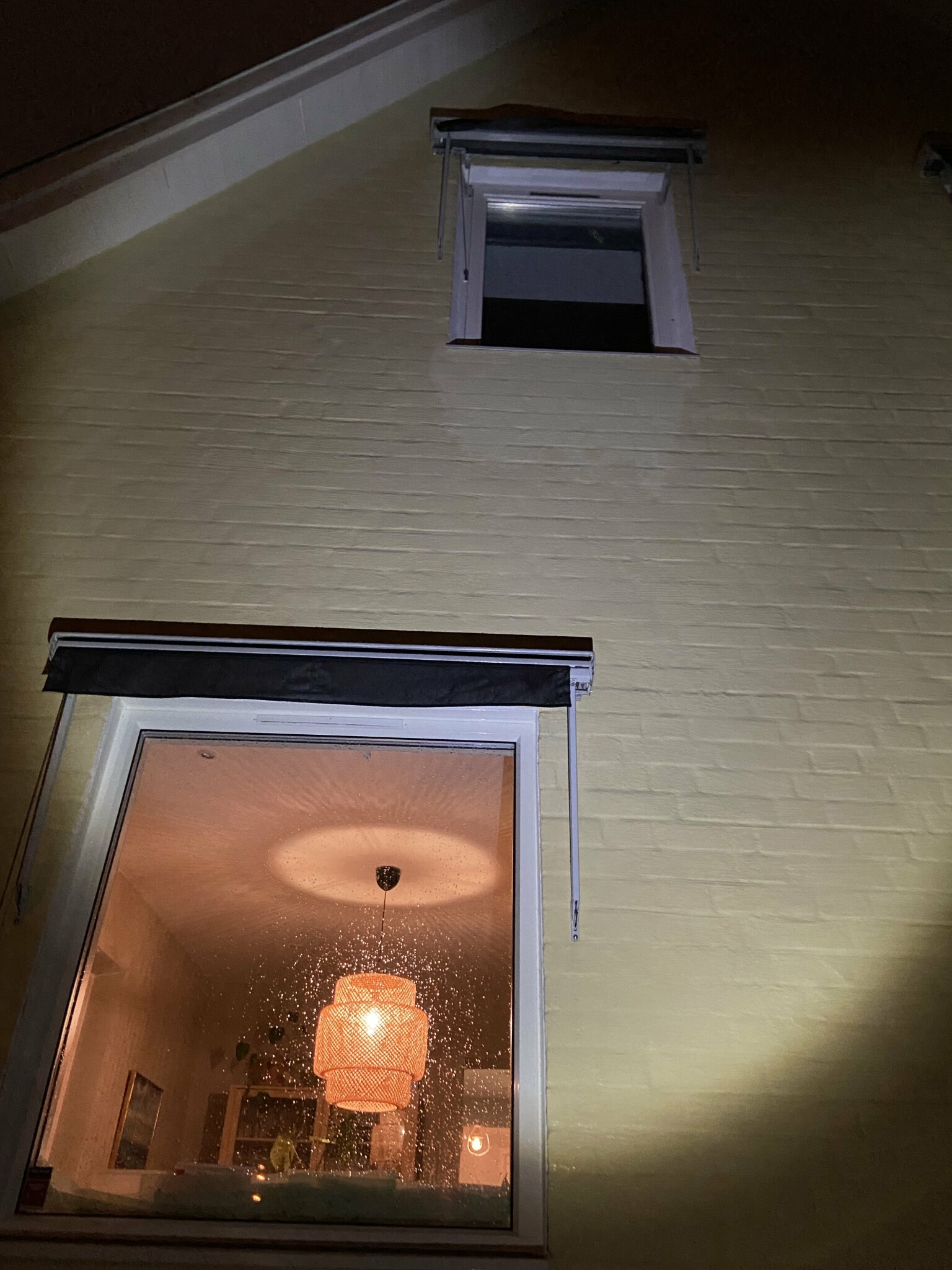
I tried placing a boundary for self-leveling compound under the window flashing to prevent the water - it of course got wet and water still leaks in. However, I took the opportunity to take a picture from the outside during a break in the weather, and it looks very dry under the window upstairs.
I am considering drilling about a 5cm hole on the inside to better see between the interior wall and the facade - but it feels like quite a big project.
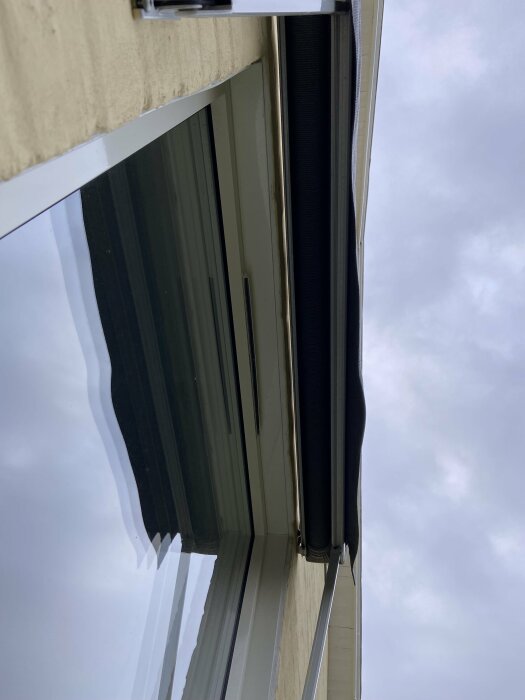
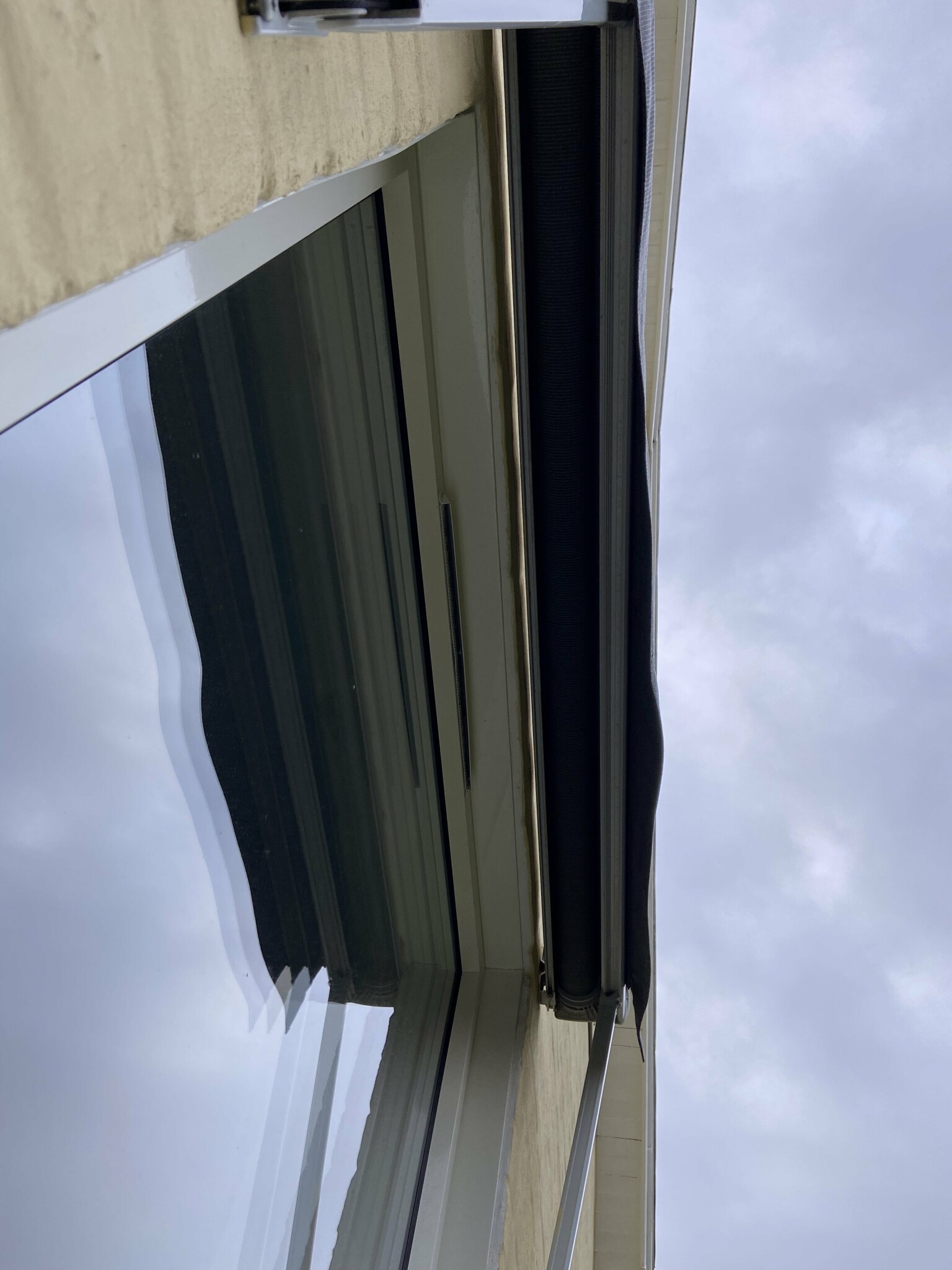
Your awnings are in the way, so I can't really see how the sheets around the top of the window are positioned.
You have a brick wall, and the window should be behind the façade brick as water can run behind the brick and then end up at the top of the window...
After a number of "professionals" had been here to investigate, speculate, and scratch their heads over my roof/wall leaks (which also only occurred under certain weather conditions), I took out the garden hose and simulated a bit of stormy weather. I can recommend that; it became quite apparent how and where the water gets in. One person on the outside systematically spraying water on various suspicious spots, and another person on the inside monitoring when and where the water starts coming through.
It's a bit hard to see in your pictures, but it seems like you only have angle plates at the top and no real flashing. This happens if the driving rain saturates the facade. The awnings might worsen the problem if water accumulates on top and is then pushed in by air pressure during wind and rain.
I had this problem myself with a window during the summer, but I have an unpainted stucco facade, so it gets even worse.
Another thing regarding window sills is that you want them to have sufficient slope and sufficient overhang so that water does not run onto the facade; it becomes problematic if you have a facade that retains moisture. As mentioned, it's a bit difficult to see in your pictures, so I'm not saying your window sills are wrong. Hus AMA mentions 40 mm for a plaster facade, if I remember correctly.
@Rejäl - It is not a massive brick structure. Instead, there is an air gap between the brick and the house body. Added additional images of the awning installation.
As I understood from the seller, the problem existed even before the windows were replaced in 2019 (on the ground floor). The windows on the upper floor are estimated to be from the 70s.
Yesterday when it rained in, it was clear that the water is not coming from the "whole" wall as the mortar is only wet in spots.
@cpalm - That's exactly what the damage technician did (4000kr for a guy who sprayed water..). It leaked in when he sprayed towards the window sills on the upper floor. It can indeed be that this is the "easy" way in - nothing saying there aren't leaks in several places.
@FG - Exactly, at the top edge of the windows there's a sill against the brick filled with silicone (or similar), my personal theory is that water is being forced in there. The damage technician recommended replacing the window sills with at least a 50mm overhang - which the tinsmith is about to fix. He has been here and measured but has not installed the new ones. Tinsmiths are a bit like politicians, you know they exist but you never see them
As I see it, the window sills can lead to increased water on the facade since they do not project 40mm beyond the finished facade.
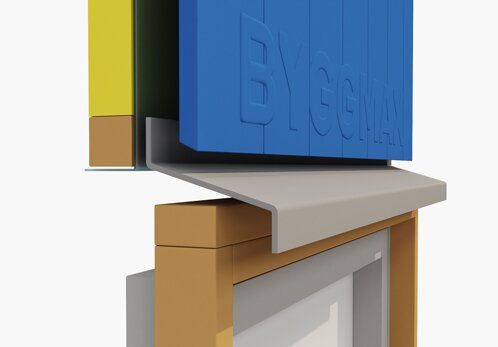
But that's probably not what causes the leakage, instead, you need to have a top flashing that connects tightly to the framework inside the brick above the window, so that the water that comes on the inside of the brick is directed out and does not run against the window frame as it seems to do in your case…
It could indeed be that it's the "easy" way in - nothing saying there isn't leakage in multiple places.
That's definitely possible. In my case, it leaked in a number of places. But it's easy to pinpoint with a narrow stream and in that way locate exactly where the water is entering. The challenge is that it often flows in at one spot and out at a completely different one, and it can take a few seconds before it comes out on the inside. So that's something to keep in mind and take time to do systematically.
It's not entirely easy dealing with water. But your sheet metal on top, sealed with caulk, means that water can only enter the house and not exit if it comes from the air gap. The windows are probably also set too far out in the facade. My guess is that you need to mount the windows further in and have a draining drip edge to lead out any water, but it's not always easy to do afterward.
Are the windows on the ground floor set further out than those on the upper floor?
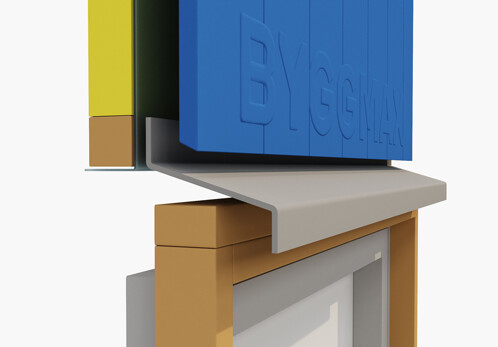
The flashing should capture moisture that enters the air gap behind the brick (blue in the image) and channel it out above the frame. If the frame is placed in the middle of the gap, this moisture will instead flow "through" the frame and inside.
It matters less where the water comes in behind the brick since brick is not waterproof; during rainy periods, the water seeps through the brick. The important thing is to secure above each window so it won't continue to leak in...
Update on the leaking windows, following the first autumn rain.
The metalworker has replaced the window sills according to Polygon's instructions. The overhang is about 70mm and fits tightly against the façade at the bottom. However, it is not sealed with something like silicone.
Now, after the first real rain with westerly winds, we can confirm that it still leaks in. It seems like the amounts are smaller, but it might also be that it's raining less.
The next step in troubleshooting is to improve the silicone around the windows and under the window sills on the upper floor.
As suggested earlier, the best solution might be to have a metal sheet that goes up between the inner façade and the actual brick façade. The challenge is that the existing windows fit so tightly in the window opening that I would have to replace them with a smaller variant, so I am holding off on testing that.
The gift that keeps on giving…
During the summer, I took the hose and watered the windows again, and it became apparent that water was getting in between the window frame and the sheet metal work. I suspected that the silicone seal wasn't tight enough, so I added more silicone. But now in December rain, I can conclude that it wasn't enough.
The next step is to fill soft sealant under the window sills upstairs, but I'm doubtful that it will help...
I'm running out of ideas, soon the windows upstairs will have to go.
Click here to reply
Vi vill skicka notiser för ämnen du bevakar och händelser som berör dig.