
13,734 views ·
17 replies
14k views
17 replies
Why do I have double drywall in ONE wall?
Hello,
I have single gypsum in all exterior and interior walls, except for one wall between two bedrooms, which has double gypsum.
I can't see any reason other than to prevent sound from spreading between the rooms. It's just a bit strange that this is the only wall in the entire house that has double gypsum. Unfortunately, it's still too noisy between these rooms, and the whole reason I opened the wall is to install insulation.
When I close the wall again, should I put double gypsum again as well? Or is the insulation sufficient to notice a difference and make it quieter?
I have single gypsum in all exterior and interior walls, except for one wall between two bedrooms, which has double gypsum.
I can't see any reason other than to prevent sound from spreading between the rooms. It's just a bit strange that this is the only wall in the entire house that has double gypsum. Unfortunately, it's still too noisy between these rooms, and the whole reason I opened the wall is to install insulation.
When I close the wall again, should I put double gypsum again as well? Or is the insulation sufficient to notice a difference and make it quieter?

I think that dubbelgips provides a clear improvement.


And read novels or solve crosswords or sleep after bedtime.
Do nothing louder than eating knäckebröd anyway
Do nothing louder than eating knäckebröd anyway
I see no reason to let it dry before you apply the next layer. The caulking will dry just as quickly anyway, and you are thinking correctly by caulking even the first layer of drywall.
It's striking how much sound can get through a minimal gap in an otherwise completely sealed/insulated construction.
It's striking how much sound can get through a minimal gap in an otherwise completely sealed/insulated construction.

The reason for double plasterboard is either because there are two different fire cells or for soundproofing.
Possibly some more exotic reasons, such as having some boards left over and thinking it was easier to screw them up than to carry them out.
An extra layer of plasterboard provides significantly more soundproofing than filling the space in between with mineral wool. So put the plasterboard back, and feel free to add yet another layer.
Be sure to seal every little gap where sound can leak through. If you can theoretically blow air through, sound will get through.
Sound also travels other ways, such as through ventilation ducts, through piping systems like radiators, etc.
If you have fresh air intakes to the bedrooms that are on the same duct, you may need to install sound dampers in the ducts, most easily flex dampers.
Possibly some more exotic reasons, such as having some boards left over and thinking it was easier to screw them up than to carry them out.
An extra layer of plasterboard provides significantly more soundproofing than filling the space in between with mineral wool. So put the plasterboard back, and feel free to add yet another layer.
Be sure to seal every little gap where sound can leak through. If you can theoretically blow air through, sound will get through.
Sound also travels other ways, such as through ventilation ducts, through piping systems like radiators, etc.
If you have fresh air intakes to the bedrooms that are on the same duct, you may need to install sound dampers in the ducts, most easily flex dampers.

Both yes and no.ronolo said:
If it's about soundproofing between two rooms with a door between them, then it is so.
But if it's a wall without a door and the sound disturbance through the room's door has to travel a long way and possibly through another door, then more soundproofing of the wall is beneficial.

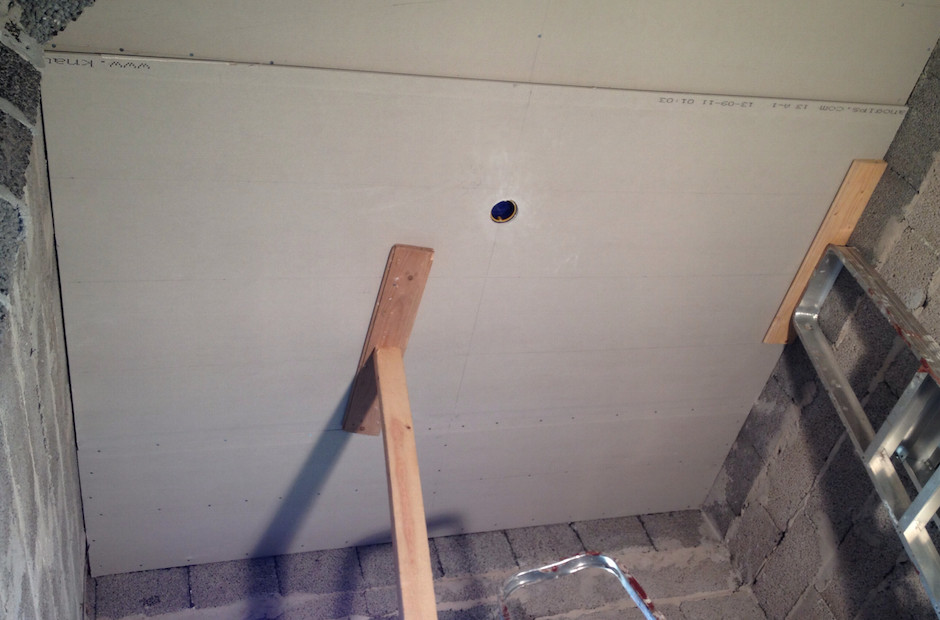
Never heard of this. It's a bit difficult to see on the innermost board, but the one closest to the cameraman seems to extend a lot down into the room. Won’t it result in very wavy moldings if you choose to do it this way?mycke_nu said:
Edit: I see that the board closest is not screwed in yet. But still, won't it be wavy?