
5,193 views ·
7 replies
5k views
7 replies
Which mortar for plastering a basement wall?
Hi,
I live in a house built in 1936 with masonry basement walls. Parts of the basement have been furnished as a family room since god knows when. I've just torn down the floor and walls in one of the rooms, and now the walls behind need a touch-up. I have the following questions that I hope someone dares to answer.
As seen in the pictures below, there are several generations of plaster on the walls. The outermost cement-gray layer was mostly loose behind the walls, and most of what was left could be easily chipped away. It came off in large chunks when I dug a little with the chisel. Could it be that this is a cement mortar that was unsuitable for the softer mortar behind it, causing it to come off now and take parts of the plaster with it?
What is appropriate to plaster the wall with now? Hydraulic lime mortar? The house is drained, but some risk of moisture load can certainly be expected. Or could some kind of C-mortar work?
What do you do with the slightly deeper holes in the wall? When I read about different mortars, a layer thickness is specified that should not be exceeded, but some of the holes are significantly deeper. Even if you apply it in stages, it becomes quite laborious if you have to stick to, for example, 3-6 mm, as for this mortar: https://www.bauhaus.se/hydrauliskt-kalkbruk-cs-ii.
I live in a house built in 1936 with masonry basement walls. Parts of the basement have been furnished as a family room since god knows when. I've just torn down the floor and walls in one of the rooms, and now the walls behind need a touch-up. I have the following questions that I hope someone dares to answer.
As seen in the pictures below, there are several generations of plaster on the walls. The outermost cement-gray layer was mostly loose behind the walls, and most of what was left could be easily chipped away. It came off in large chunks when I dug a little with the chisel. Could it be that this is a cement mortar that was unsuitable for the softer mortar behind it, causing it to come off now and take parts of the plaster with it?
What is appropriate to plaster the wall with now? Hydraulic lime mortar? The house is drained, but some risk of moisture load can certainly be expected. Or could some kind of C-mortar work?
What do you do with the slightly deeper holes in the wall? When I read about different mortars, a layer thickness is specified that should not be exceeded, but some of the holes are significantly deeper. Even if you apply it in stages, it becomes quite laborious if you have to stick to, for example, 3-6 mm, as for this mortar: https://www.bauhaus.se/hydrauliskt-kalkbruk-cs-ii.


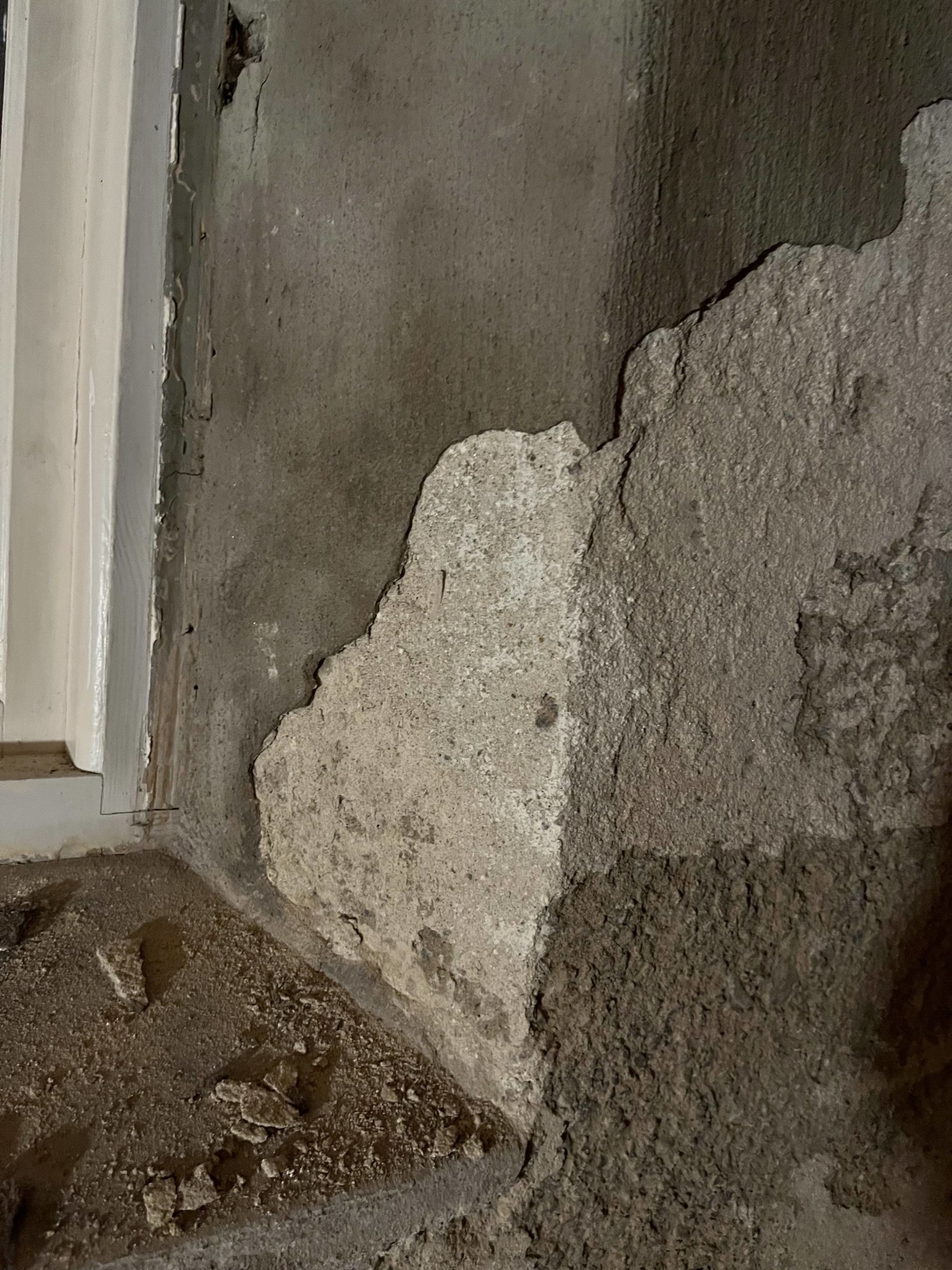

Thanks!B basseman said:
I'm still a bit uncertain though. Render & masonry mortar C sounds good, but I don't see anything about its moisture properties. Can I be confident that it will work in a moisture-exposed environment? And what do I do with the deeper holes in the wall? Do I need to repair them with something else before rendering, or do I fill them with render during the rendering process?
Hello,AJ82 said:
Hello,
I live in a house built in 1936 with brick basement walls. Parts of the basement have been used as a recreation room since God knows when. I've just torn out the floors and walls in one of the rooms, and now the walls behind need to be spruced up. I have the following thoughts that I hope someone dares to answer.
As seen in the pictures below, there are multiple generations of plaster on the walls. The outer cement-gray layer was mostly loose behind the walls, and most of what was left could be knocked down quite easily. It came off in large chunks when I dug a bit with a chisel. Could it be that this is a cement mortar unsuitable for applying to the underlying, softer mortar, and that's why it's coming off now and taking parts of the plaster with it?
What is suitable for plastering the wall with now? Hydraulic lime mortar? The house is drained, but a certain risk of moisture load can surely be expected. Or could some C-mortar work?
How do you handle the slightly deeper holes that exist in the wall? When I read about different mortars, it specifies a layer thickness not to be exceeded, but some of the holes are significantly deeper. Even if applied in stages, it becomes quite tedious to stick to, for example, 3-6 mm, as for this mortar: [link].
We have similar conditions, may I ask what you ended up using for your basement?
//Best regards, GS

Click here to reply