
17,261 views ·
66 replies
17k views
66 replies
Where to buy decent timber?
I have bought all my timber and OSB from XL-Bygg Faringe in Vinsta. Everything is straight and nice, so easy to choose what I want.

Member
· Nuevo Estockholmo
· 3 529 posts
Building with 1/10 mm precision with wooden studs and OSB feels a bit overly ambitious?


Renovator
· Stockholm
· 20 211 posts
1/10mm was a joke  you have to account for the line when measuring, that way you'll at least get it right by the millimeter.
you have to account for the line when measuring, that way you'll at least get it right by the millimeter.
Member
· Nuevo Estockholmo
· 3 529 posts
Well, you never know. I have read and heard a lot of strange things.

Renovator
· Stockholm
· 20 211 posts
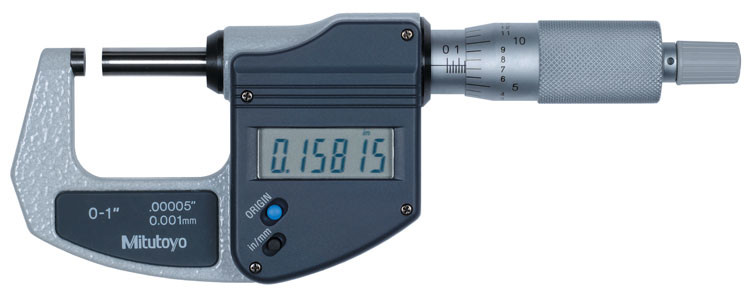
That monstrosity doesn't handle outer dimensions
Edit: I actually have one, but it's not used much for wood constructions
Edit: I actually have one, but it's not used much for wood constructions
Renovator
· Stockholm
· 20 211 posts
It's probably just that you are a bit more meticulous than most people... the rest of us who understand that wood is a living material use shims to compensate for the wood's natural curves...http://biltema.se/sv/Bygg/Fastelement/Ovrigt/Mellanlagg-194741/AndersMalmgren said:
as I said, buy steel studs instead, they are straight and form-stable.
Renovator
· Stockholm
· 20 211 posts
Nope, that trick won't work, those of us who have been around for a while know that the quality was better before. Now the trees are rushed, which makes them warp when they come into the warmth, and the wood is much softer.
Forbo said:
It is also important to know what and where to measure, as well as the approved tolerances for what you are measuring....
If you want a high level of construction with small tolerances, you need to choose materials that can meet these requirements. You cannot choose materials that have tolerances themselves that are far outside the expected final result.
An 11 mm OSB 3 board has, depending on the manufacturer, a range that can be between about 10.2-11.8 mm measured at least 50 mm from the edge. This alone means that a caliper is NOT even a suitable measuring tool. OSB is fundamentally not a precision material.
A planed 45 x 45 stud that is used can be between 44 - 46 mm at a moisture content of 20%. If the wood then comes out of the dryer with 16%, even those values no longer match.
Further, OSB should only be a reinforcement and carrier for another board, most likely gypsum, which itself has a tolerance but is usually quite reasonable. However, since the joint of the gypsum board should not be in the same place as the OSB board and will have its joint in the middle of the OSB, any errors in the thickness of the OSB will not have any significant practical impact.
But as mentioned, if you want to reduce the tolerances, choose different base materials from the start.
If you want a high level of construction with small tolerances, you need to choose materials that can meet these requirements. You cannot choose materials that have tolerances themselves that are far outside the expected final result.
An 11 mm OSB 3 board has, depending on the manufacturer, a range that can be between about 10.2-11.8 mm measured at least 50 mm from the edge. This alone means that a caliper is NOT even a suitable measuring tool. OSB is fundamentally not a precision material.
A planed 45 x 45 stud that is used can be between 44 - 46 mm at a moisture content of 20%. If the wood then comes out of the dryer with 16%, even those values no longer match.
Further, OSB should only be a reinforcement and carrier for another board, most likely gypsum, which itself has a tolerance but is usually quite reasonable. However, since the joint of the gypsum board should not be in the same place as the OSB board and will have its joint in the middle of the OSB, any errors in the thickness of the OSB will not have any significant practical impact.
But as mentioned, if you want to reduce the tolerances, choose different base materials from the start.
Ehm...the trees you’re buying lumber from were planted before you were born, I would guessAndersMalmgren said:
Lumber that is moved between different environments warps, it did so in the past as well. In the past, they weren't so particular when building... take a try square and plumb line with you to a 100-year-old house and see if you can find anything that is straight;-)
Renovator
· Stockholm
· 20 211 posts
I grew up in a renovation project, my dad extended the house in 1987 and back then the timber was much better. You can tell because he's not finished yet so many of the studs are still bluemarked.
Edit: the concrete house I'm renovating is 95 years old and nothing is straight, so it's not just a material issue
Edit: the concrete house I'm renovating is 95 years old and nothing is straight, so it's not just a material issue
Last edited:
Trees grow at about the same rate now as before .
However, there are many other factors that differ, especially the price pressure which makes it difficult to find quality timber at hardware stores, but if you go to a small sawmill, you will see that you can get your timber in exactly the quality you desire. But even in the past, they didn't use heartwood for framing
. However, there are many other factors that differ, especially the price pressure which makes it difficult to find quality timber at hardware stores, but if you go to a small sawmill, you will see that you can get your timber in exactly the quality you desire. But even in the past, they didn't use heartwood for framing