
2,519 views ·
16 replies
3k views
16 replies
Where can you find all the simple rules about building correctly?
Hello!
So, we have a carpenter here working for us.
He refuses to understand that you need to lift the drywall 10mm off the floor. Where can one find information about this?
And about needing to place connectors at each panel joint for the best durability, instead of laying plywood?
I've worked with 4 carpentry companies now where most don't really know what they're doing.
It's terrible that there are so many unprofessional construction companies.
Thanks for the tips.
So, we have a carpenter here working for us.
He refuses to understand that you need to lift the drywall 10mm off the floor. Where can one find information about this?
And about needing to place connectors at each panel joint for the best durability, instead of laying plywood?
I've worked with 4 carpentry companies now where most don't really know what they're doing.
It's terrible that there are so many unprofessional construction companies.
Thanks for the tips.
it could rather be that you don't know what you are doing.swealp said:
Hi!
Well, we have a carpenter here working for us.
He refuses to understand that you need to lift the drywall 10mm from the floor. Where can we find information about this?
Also, that you need to apply joints at every panel joint for the best durability, instead of laying plywood?
I have worked with 4 carpentry companies now where most of them don't know what they're doing.
It's terrible that there are so many untrustworthy construction companies.
Thanks for the tips.
lifting the drywall 10mm is not a construction rule but something you need to order as an extra.
applying joints? what do you even mean?
if you mean crosspieces between every drywall joint, you really shouldn't do that.
seems like 4 carpentry companies are right and you as a happy amateur are completely wrong
Yes, of course. It can be solved in many ways.-RB- said:
The ones you mentioned or t-list work well.
But saying you must place connections (blocking) at every joint is wrong. Above door headers, you might need them, but otherwise not.
Oh, I urge you to swallow your pride and admit the mistake instead of arguing against it since it's obvious you built it wrongH hul said:

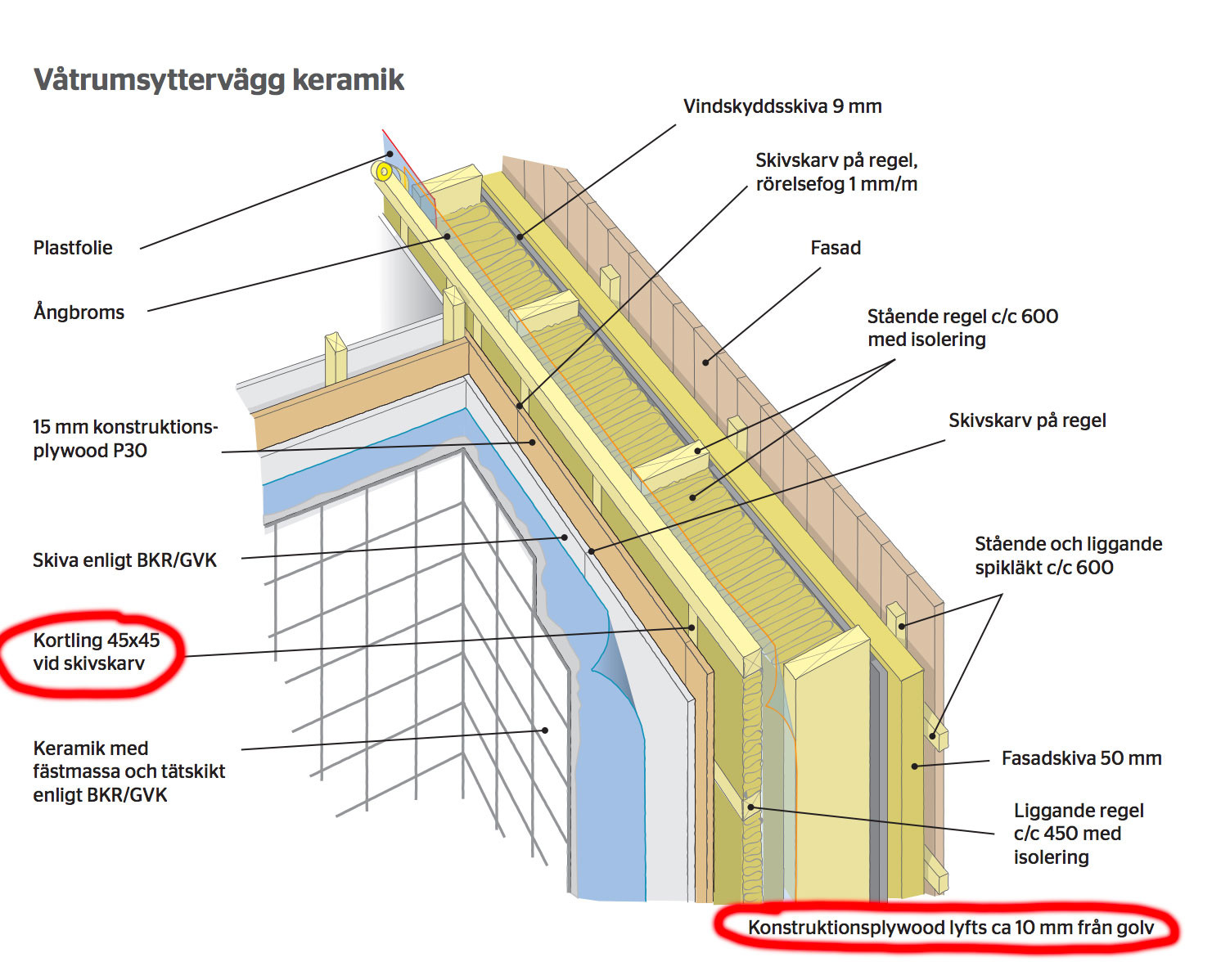

Isn't that Säker vattens construction for wet rooms? Are you building a wet room?
It also states that the plywood should be lifted 10mm, not the gypsum, and if you have plywood behind, nothing else is needed in the gypsum joints.
It feels like a little more info is needed...

Hi best useless!useless said:
I talked to Knauf's Swedish construction engineer who says that even the gypsum board should be raised 10mm so as not to absorb moisture. Even Gyproc's installation manual says so.
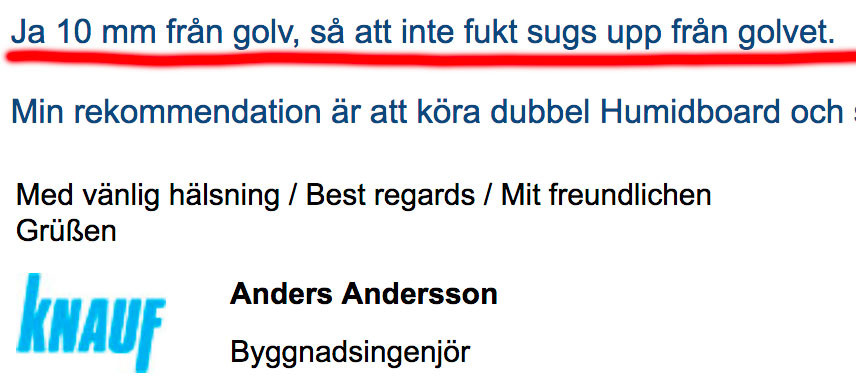

You’re just proving that you’re wrong and we are right.
It very clearly states “SHOULD” so it's not a requirement.
Lifting the plasterboard is not a requirement, but if you want to, it should be ordered.
There are many advantageous things on a construction site, like having 300mm insulation instead of 200mm, but of course, you would have to order
And pay for it.

The Bible when it comes to many questions of execution is otherwise HusAMA.