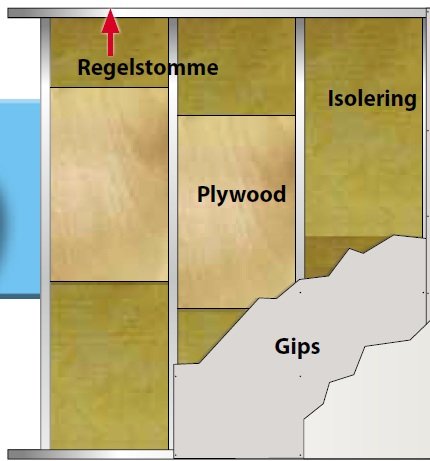
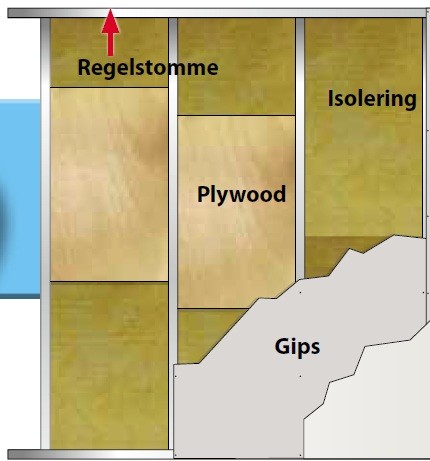
I _think_ that's somewhat crazy. You're exposing the joint of the drywall screw head -> drywall paper to unnecessarily high stresses. And any movement in the OSB boards due to moisture, heat, and the building's movement will transfer to the mentioned screw joint. And just like that, the drywall screws have gone through the paper and started eating into the board.
Note, I have absolutely no other evidence for this than my own thoughts about what could happen. If you have walls that have held up well for many years made with this method, then you have an empirical basis to stand on.
Well, I can't say I have any experience to rely on either, except that I've read many do it that way and it seems to work here on the walls where I've done so.
Regarding the risk of the screws working through the drywall due to moisture movement in the OSB, I don't think it's very large. The movement can, at most, be a few percent of the board's thickness, i.e., about 0.1-0.2 mm, which is unlikely to cause the screws to go through the paper.
Well, I can't say that I have any experience to rely on either, except that I've read that many do it this way and it seems to work on the walls where I have done it.
Regarding the risk of screws working through the drywall due to moisture movements in the OSB, I don't think this risk is very high. The movement can only be a few percent of the thickness of the board, i.e. about 0.1-0.2 mm, which can hardly cause the screws to go through the paper.
As I understand it, each layer should normally be attached separately, i.e. first fasten the OSB/chipboard fully, then the drywall. This is to prevent movements from transferring from one layer to the next. But I have seen several walls that aren't done this way, and they look perfectly okay.
As I wrote, I will not build on the walls with a layer of OSB behind the drywall. I will place an "OSB patch" between the studs behind single drywall. How do I best attach this patch?
To my knowledge, it's a fairly common supplement to drywall when building simply and cheaply?
I think it's quite an unusual construction, but I would probably set a 45regel or lath in the wall stud 11-12mm in and cut the OSB to fit.
Maybe I would have also glued and screwed the OSB board.
Just consider how potential insulation and electrical wiring are affected.
As I wrote, I'm not going to build on the walls with a layer of OSB behind the drywall. I'm going to put an "OSB patch" between the studs behind the single drywall. How do I best attach this patch?
To my knowledge, it is a fairly common complement to drywall when building simply and cheaply?
I can't quite understand what you mean, could be because it's too late as well. Please explain more in detail.
Dvs, fäster OSBn med ett fåtal skruvar, eller tom några skott från spikpickan och skruvar sedan gipsen med långa skruvar genom båda skivorna in i reglarna.
Största risken jag ser med detta förfarande är att gipsskruven "puttar ut" osb skivan någon mm från regeln när skruven tränger igenom, sen när skruvskallen bottnar mot gipsskivan så kommer skruven endast pressa samman gips och osb, inte osb mot träregel eftersom gipsskruvens gänga är i ingrepp i osb-skivan.
Mycket bättra att skruva osb med spånskiveskruv (som saknar gänga under skallen) som drar samman osb och regel på rätt sätt.
But if I'm just going to place a piece of OSB between each stud as a complement to single-layer drywall, how do I best attach them?
I've never heard of doing it that way before.
But it should work by screwing them in with two vertical rows of drywall screws between each stud "from the drywall side."
Screw with cc300 and about 5cm from the edge of the OSB board. You might also want to place 3-4 drywall screws along the middle as well, to prevent the OSB from bulging behind.
When I built my laundry room, there was a small section of wall where we had to save on every mm. Right there, my wife wanted hooks for bathrobes and other stuff.
I then routed a rabbet and recessed a 15mm plywood so that it aligned with the outer edge of the frame.
When I built my laundry room, there was a small section of wall where we had to save every mm. Right there, my wife wanted hooks for bathrobes and other stuff.
So I routed a rebate and recessed a 15mm plywood which ended up flush with the outer edge of the stud.
That was a good idea! Did you use a handheld router on the stud then? I'm also going to put up some hooks where the TV and other things might end up. In other areas, a molly plug works well.
That was a good idea! Did you use the hand router on the beam? I'm also going to put some patches where the TV and a few other things might go. In other areas and edges, a molly plug works well.
If you don't have access to a router, it works just as well to use the circular saw/table saw to rip some strips that you can then nail in place and recess the plywood against.
I'm going to replace a small wall section that's about 3600x600 due to a window section replacement.
The entire section is more or less hidden behind a radiator.
Considering putting obs on the inside without plasterboard due to space constraints.
Does it look stupid to skip the plasterboard for any reason other than aesthetics?
Vi vill skicka notiser för ämnen du bevakar och händelser som berör dig.