
1,720 views ·
9 replies
2k views
9 replies
What is the best solution, ceiling in corridor?
Hello,
I have a hall + corridor where I plan to install a ceiling, preferably gypsum, but I'm open to other suggestions (pre-painted boards like, for example, Huntonit or other ceiling panels). Since the ceiling will be lowered and lighting (downlights) will be recessed, I have some thoughts on the best method for the framework. The corridor is 130 cm wide and about 10 m long (see attached images), so if I choose gypsum, I will need to join them with the "long side" (90 or 120 cm), resulting in about 10 joints that need to be filled/sanded before painting. Whether to include molding or not doesn't really matter.
A builder I spoke with suggested steel studs according to this link https://bolist.se/gor-det-sjalv/inne/innertak/Sänka%20tak/
I feel this solution seems expensive compared to using wooden studs, primarily considering that the corridor is fairly narrow (130 cm), so I think the load on the framework won't be very large.
What are your thoughts on this, and how would you do it?
Grateful for tips and ideas on how this can be done in the most efficient way, that is, as simple and effective as possible. It should look reasonably nice and doesn't have to be the cheapest solution.
Thank you in advance.
I have a hall + corridor where I plan to install a ceiling, preferably gypsum, but I'm open to other suggestions (pre-painted boards like, for example, Huntonit or other ceiling panels). Since the ceiling will be lowered and lighting (downlights) will be recessed, I have some thoughts on the best method for the framework. The corridor is 130 cm wide and about 10 m long (see attached images), so if I choose gypsum, I will need to join them with the "long side" (90 or 120 cm), resulting in about 10 joints that need to be filled/sanded before painting. Whether to include molding or not doesn't really matter.
A builder I spoke with suggested steel studs according to this link https://bolist.se/gor-det-sjalv/inne/innertak/Sänka%20tak/
I feel this solution seems expensive compared to using wooden studs, primarily considering that the corridor is fairly narrow (130 cm), so I think the load on the framework won't be very large.
What are your thoughts on this, and how would you do it?
Grateful for tips and ideas on how this can be done in the most efficient way, that is, as simple and effective as possible. It should look reasonably nice and doesn't have to be the cheapest solution.
Thank you in advance.
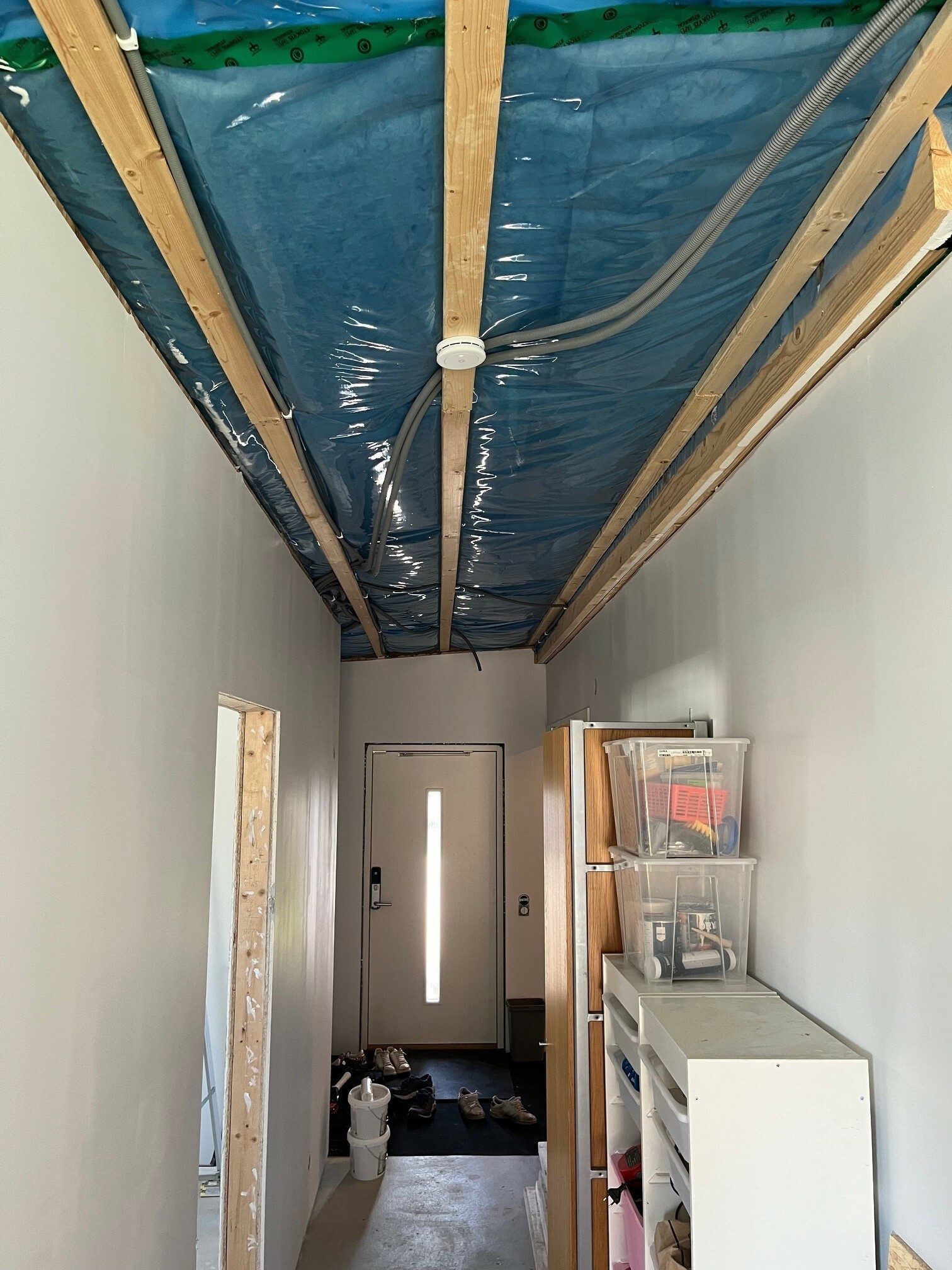
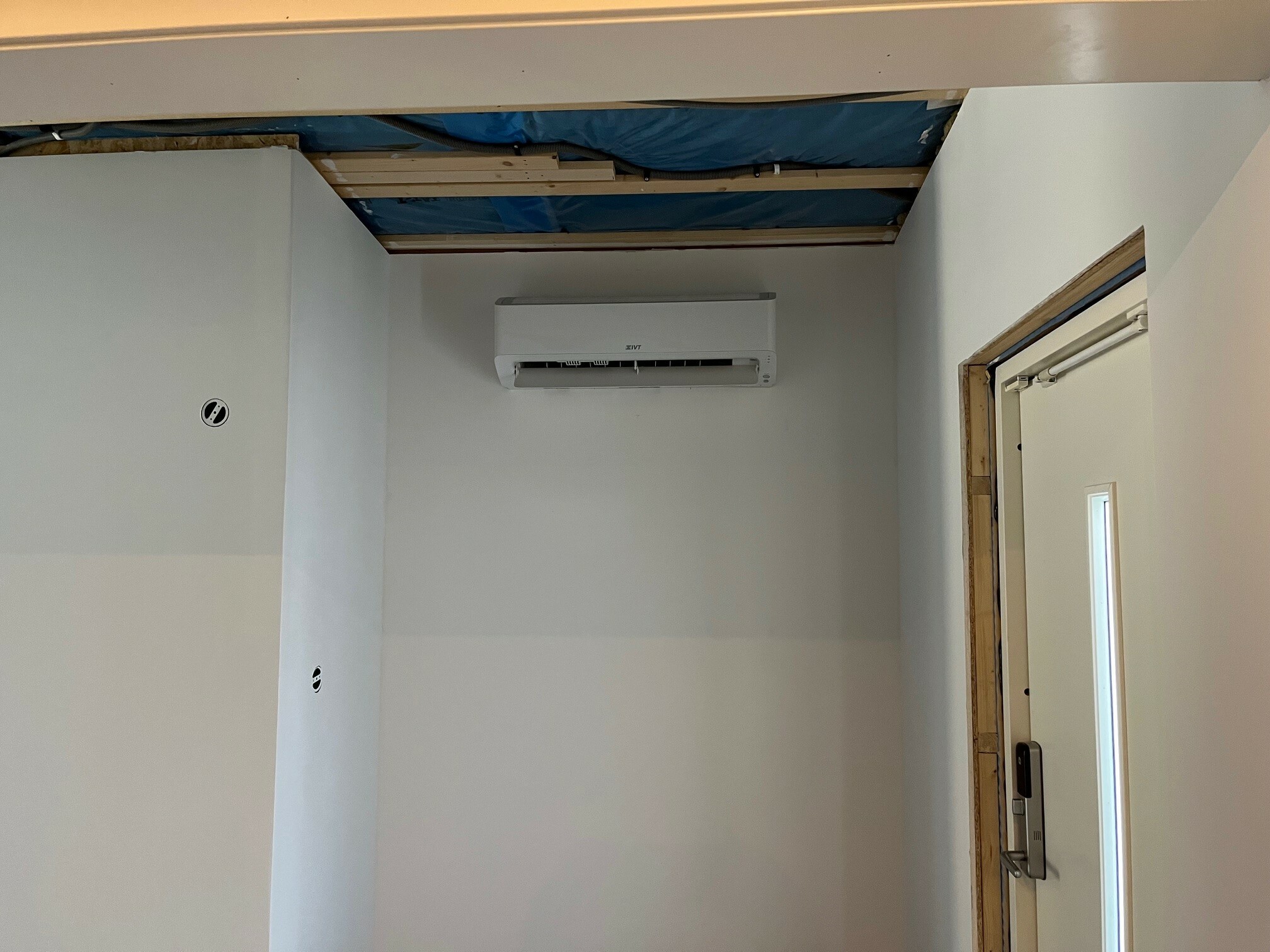
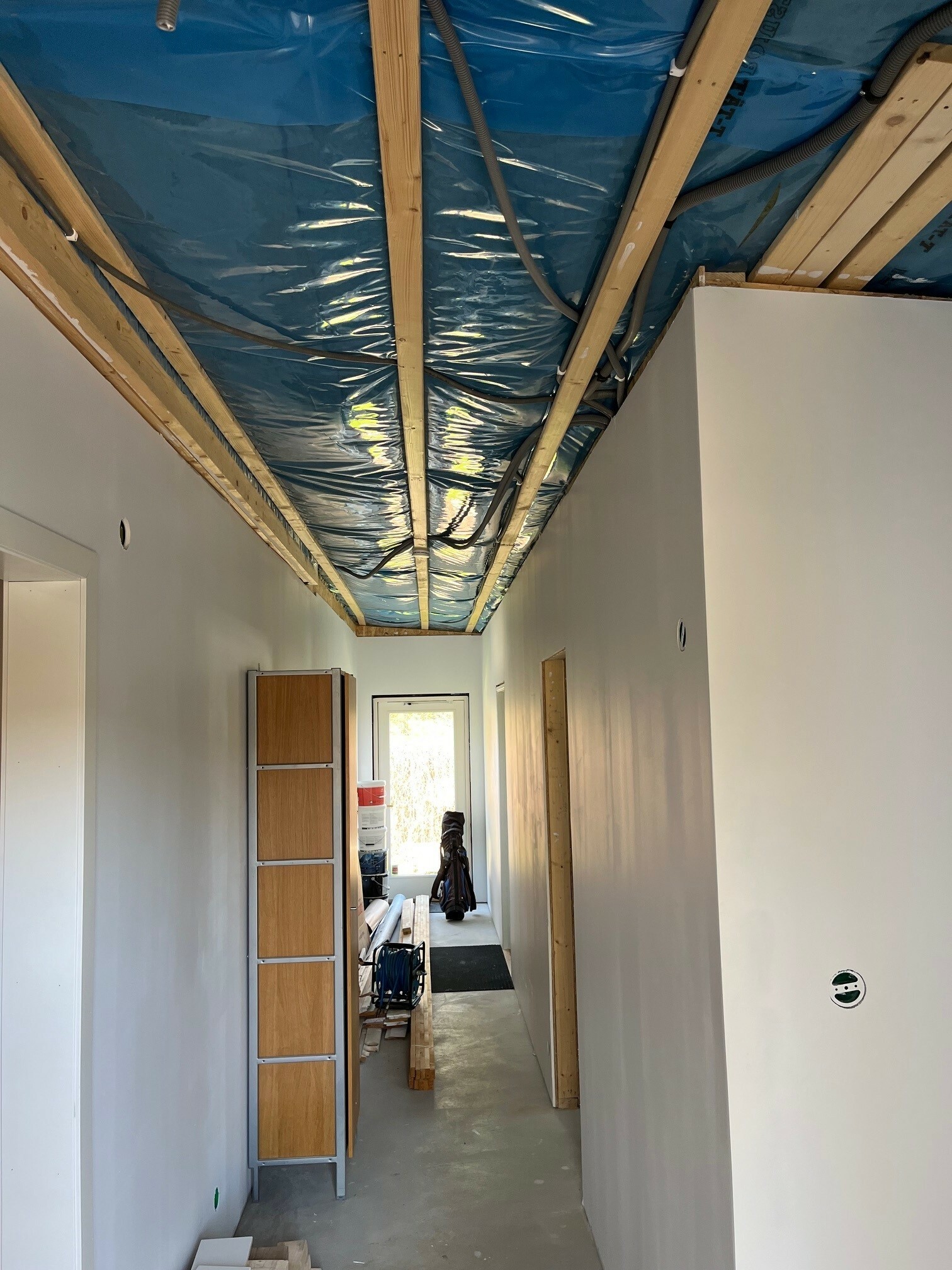

Are you thinking about "pre-painted" panels, so yes that's correct with the dimensions, but don't people usually lay the ceiling/floor in the length direction or the light direction of a room and then these panels would be laid along, which becomes challenging regardless of direction.J jonaserik said:
Any thoughts on the regulations? That was primarily what I wanted tips on
 .
.Stretch ceiling, that's what we've chosen for all our rooms (new build). You avoid all these issues and get a perfect ceiling for less money and time spent. The construction company we hired and which is the general agent for Sweden has some examples of completed work on their facebook page.
No opinion on that, it should be framed according to what the boards require. It's the long sides that should be fastened if they are grooved. Otherwise, frames at every joint.F Fethajja said:If you're thinking about "pre-painted" boards, then yes, that matches the dimensions, but isn't it usually the case that you lay the ceiling/floor in the lengthwise direction or in the direction of light in a room and then these boards would be laid along which becomes challenging regardless of direction.
Any opinions on the regulations? That was primarily what I wanted tips on
Hi, unsure which issues you are referring to? I was looking for some tips and ideas around the framework for the ceiling, i.e., steel vs. wooden beams.MrJay said:
My house is from '68 and had this type of ceiling in all rooms when it was built, back then it was called "barracudatak" and was very fire hazardous so everyone switched to something else eventually. I understand that modern stretch ceilings are both fireproof and water-resistant, but since I'm renovating myself, this option is out of the question for various reasons. But thanks for the tip anyway.
I was referring to the issue with joints and cracking as well as future maintenance of gypsum ceilings, which is hard to avoid, especially in older wooden houses that tend to move more. These "new" stretch ceilings have absolutely nothing in common with old barracudatak except for how they're installed. But sure... go ahead with what you thought 👌F Fethajja said:Hi, unsure as to which issue you're referring to? I was asking for some tips and ideas around the regulations for the roof, i.e., steel vs. wood beams.
My house is from -68 and had this type of ceiling in all rooms when it was built, it was called "barracudatak" and was insanely flammable, so everyone switched to something else when they had enough. I understand that today's stretch ceilings are both fireproof and waterproof, but since I'm renovating myself, this is out of the question for various reasons. But thanks for the tip anyway.
Steel studs are ideal for suspended ceilings. The best results are achieved with double plasterboard.
I've surely built over +10,000 sqm of plaster ceilings with hat profiles.
I've surely built over +10,000 sqm of plaster ceilings with hat profiles.
F Fethajja said:
Click here to reply