
7,320 views ·
12 replies
7k views
12 replies
What is my interior wall made of? HELP! Don't want the cabinets to fall over the kids...

Living in a rental apartment built around the 40s/50s, and it feels like the wall is made of many different materials. Soon the wall will look like Swiss cheese from all the test holes I've tried... 
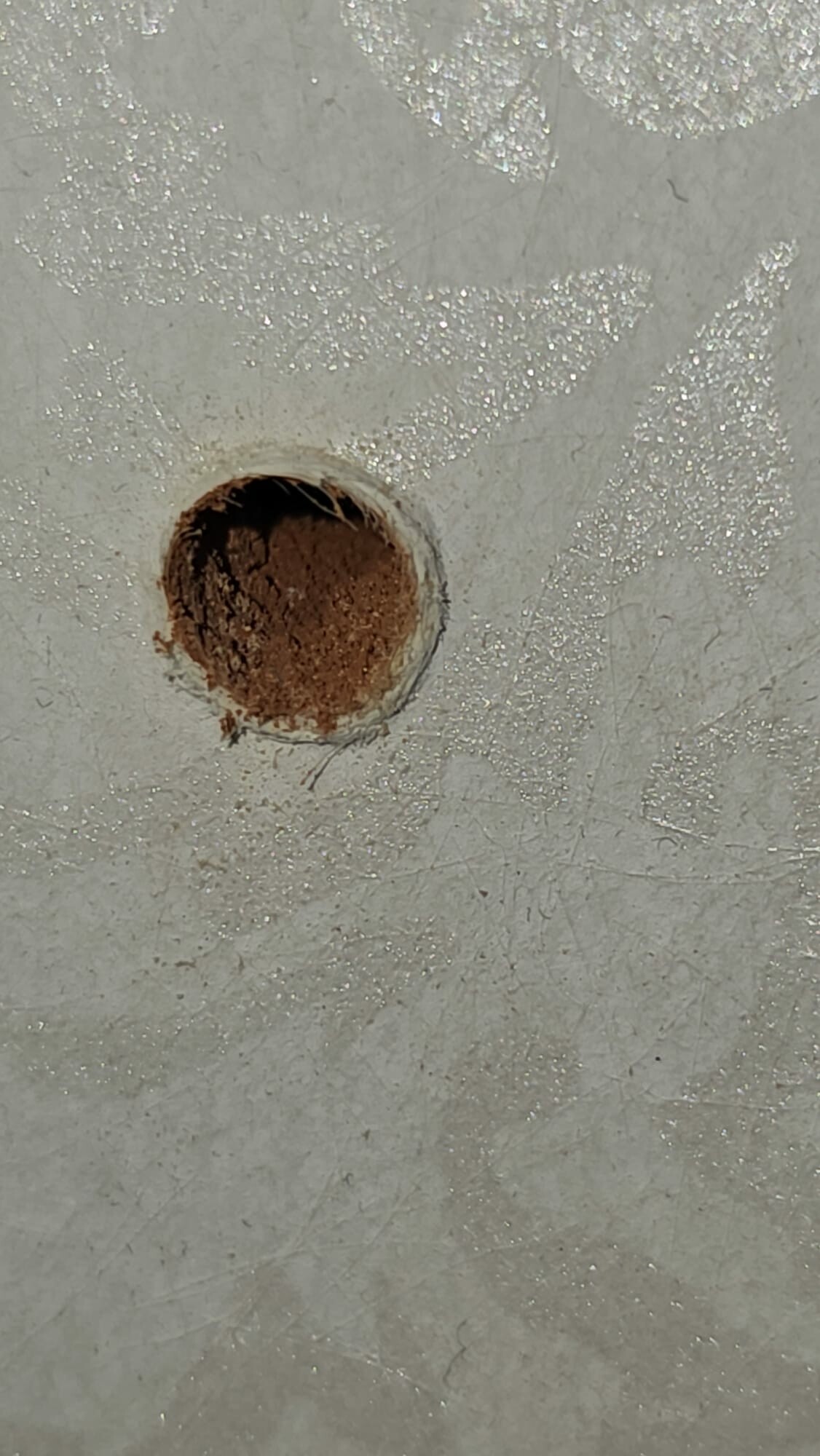
Sometimes I come to parts of the wall where it's relatively easy to drill through a few cm, then it gets really tough, but the hammer drill works great. The color is reddish, rubs off on everything (not fun on white wallpaper), but it's quite obvious it's brick. Though I'm actually unsure if it's solid or hollow at times.
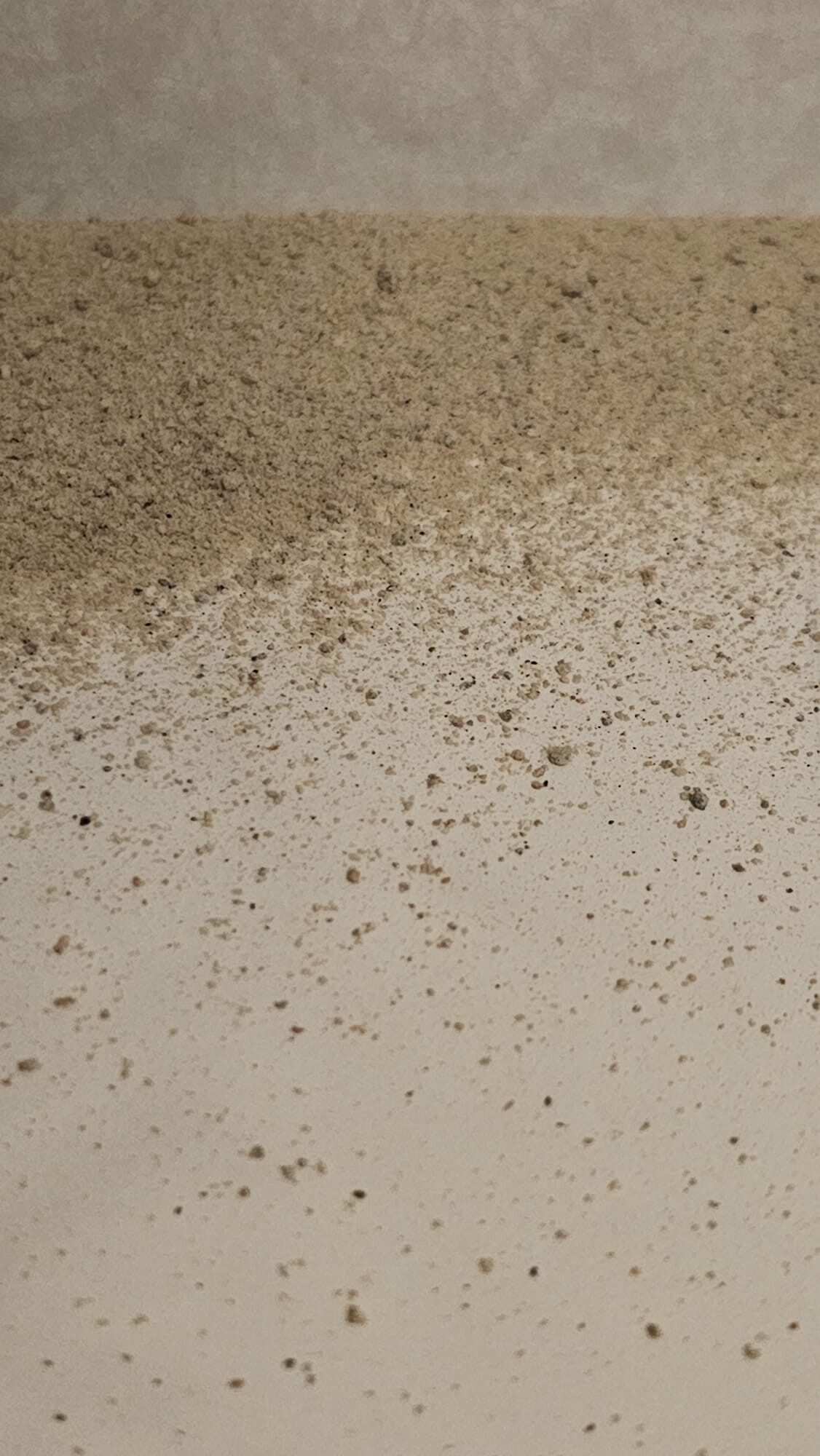
The problem is that almost everywhere (even at different heights) it's super soft and porous. The material that comes out is light gray. A bit like everything is made of plaster... or lightweight concrete, but that can't be the case since I often drill into brick? I understand I might have hit the plaster between the bricks, but nooo. Not so often and at so many different heights just a few cm apart...
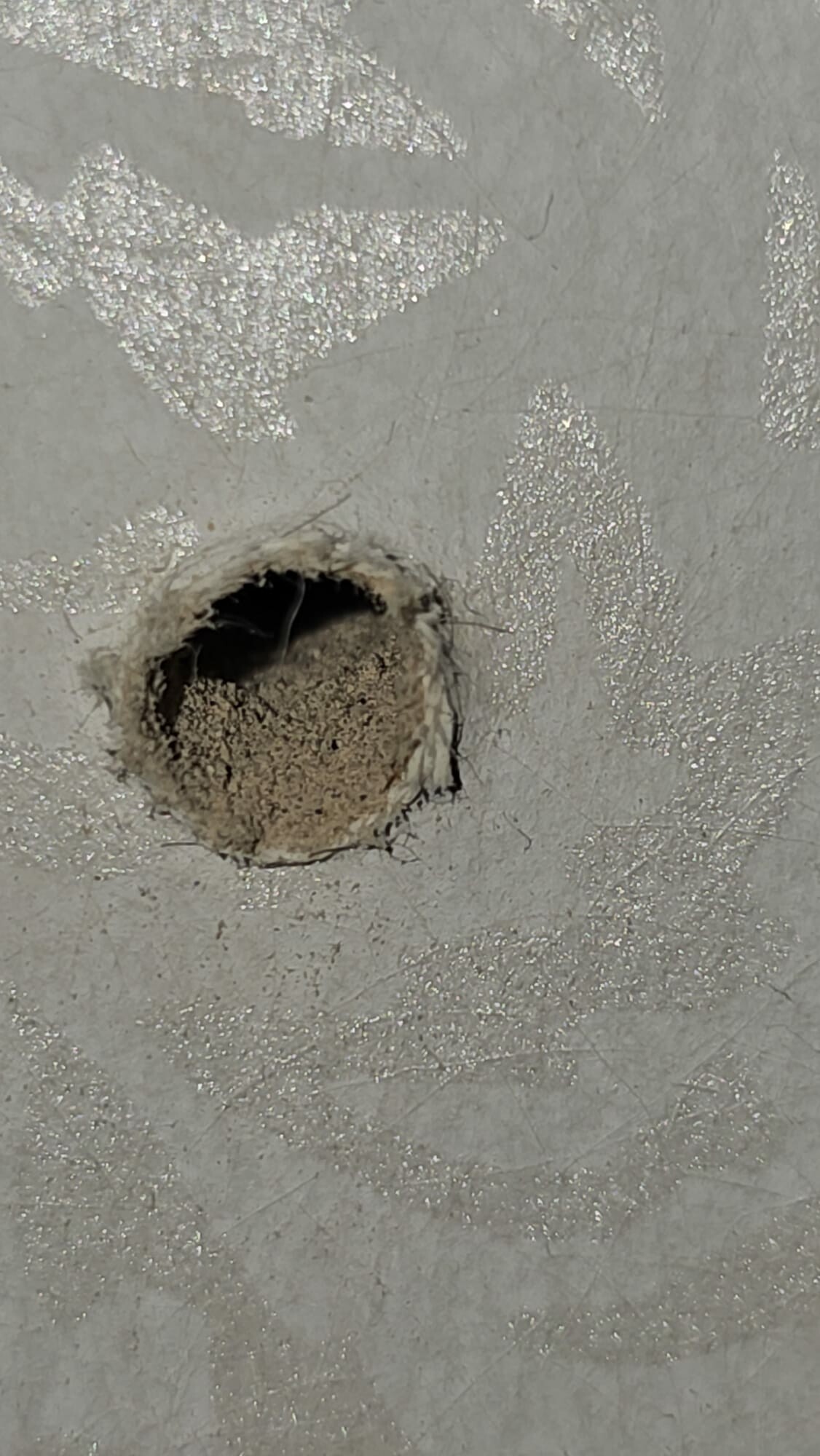
Where it's not brick, I can use a regular screwdriver with a drill bit as if it were butter. But then this just happened when I was taking a picture; the drill moved and created a larger hole. As if there was a little cavity behind it... But I don't know. This has never happened before though.
I want to mount wall-hung cabinets... 300x102 cm. We live super cramped (a 2-room apartment with 2 adults and 4 children, moving is not an option right now because I'm studying at university and one child has adapted schooling with a need to live nearby). However, the plan is to move in 2 years, so anchoring compound is not an option.
What should we do? We need the storage space at high height and have no other wall to hang this on.
Read some threads about nail plugs, but I'm unsure if the porous material is lightweight concrete and then nail plugs are not suitable in just that hole...
Attaching pictures of two of the holes. The red brick and the "porous" material which I also show the color and coarseness of the spill.
Sometimes I come to parts of the wall where it's relatively easy to drill through a few cm, then it gets really tough, but the hammer drill works great. The color is reddish, rubs off on everything (not fun on white wallpaper), but it's quite obvious it's brick. Though I'm actually unsure if it's solid or hollow at times.
The problem is that almost everywhere (even at different heights) it's super soft and porous. The material that comes out is light gray. A bit like everything is made of plaster... or lightweight concrete, but that can't be the case since I often drill into brick? I understand I might have hit the plaster between the bricks, but nooo. Not so often and at so many different heights just a few cm apart...
Where it's not brick, I can use a regular screwdriver with a drill bit as if it were butter. But then this just happened when I was taking a picture; the drill moved and created a larger hole. As if there was a little cavity behind it... But I don't know. This has never happened before though.
I want to mount wall-hung cabinets... 300x102 cm. We live super cramped (a 2-room apartment with 2 adults and 4 children, moving is not an option right now because I'm studying at university and one child has adapted schooling with a need to live nearby). However, the plan is to move in 2 years, so anchoring compound is not an option.
What should we do? We need the storage space at high height and have no other wall to hang this on.
Read some threads about nail plugs, but I'm unsure if the porous material is lightweight concrete and then nail plugs are not suitable in just that hole...
Attaching pictures of two of the holes. The red brick and the "porous" material which I also show the color and coarseness of the spill.
Last edited:
Thanks, I wish that was the case. I only hit bricks on a few parts of the wall. Mostly I hit what we in Sweden call "puts" /plaster. Unfortunately I came to the conclusion that a huge part of the wall consists of plaster.S sturnus said:
I did resolve my problem by building a new wall in front of the old wall.

What diameter did you drill with?
Find the corresponding plug (suitable for hollow brick) and screw that fits the plug's diameter, and it should hold.
If you feel unsure, take an extra one.
If you still feel unsure, don't put up the shelf or bring in a carpenter/friend with more knowledge.
I disclaim all responsibility
Find the corresponding plug (suitable for hollow brick) and screw that fits the plug's diameter, and it should hold.
If you feel unsure, take an extra one.
If you still feel unsure, don't put up the shelf or bring in a carpenter/friend with more knowledge.
I disclaim all responsibility

Drill with perhaps a 2 mm smaller drill than the plug and gently press it in place. Drill without hammer function and use a plug that ties/ fills any cavities. For example, Fischer UX.
It should work. But it's annoying. It could be walls of reed with siporex, which is extremely brittle. Just crumbles all the time.
It should work. But it's annoying. It could be walls of reed with siporex, which is extremely brittle. Just crumbles all the time.

If you get brick dust, then it is a brick wall. Presumably, the brick wall is plastered and possibly with thick plaster in places, which means you get a lot of plaster mixed with the brick.
Here is Essve's guide to brick walls, one of these options should work well.
https://www.essve.com/sv/essve-guid...astning/Montage-i-haltegel-och-betonghalsten/
Here is Essve's guide to brick walls, one of these options should work well.
https://www.essve.com/sv/essve-guid...astning/Montage-i-haltegel-och-betonghalsten/
It can also be "lersten" meaning unburned brick. Very common before, especially in interior walls and southern Sweden. Actually a very good material, but not when you need to hang heavy things. In such a case, you can glue a board to the wall, wallpaper over it, and then attach to the board.
We had similar problems where we lived before. “Flytande plugg” made the wall hard and durable. It required quite a bit for heavier items (like radiators in a waterborne system) and was a bit tricky to work with, but it held.
A funkis house from maybe the 1940s with “porösa betongväggar,” looked exactly like the picture with light material. The house had a brick facade.
A funkis house from maybe the 1940s with “porösa betongväggar,” looked exactly like the picture with light material. The house had a brick facade.

Use a slightly longer facade plug like SXR from Fischer. It will hold nicely regardless of whether it's in the brick or the joint.
https://www.bauhaus.se/fasadplugg-s...6OyJ3sBBtNc089v6vuY9WRQGtbqPYfgRoCP8kQAvD_BwE
https://www.bauhaus.se/fasadplugg-s...6OyJ3sBBtNc089v6vuY9WRQGtbqPYfgRoCP8kQAvD_BwE
Click here to reply