Currently working on a basement project. The old floor has been chipped away, dug out, styrofoam and gravel have been laid, and a new floor has been cast with water-based underfloor heating.
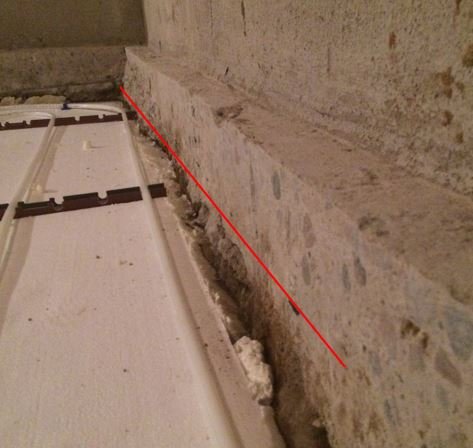
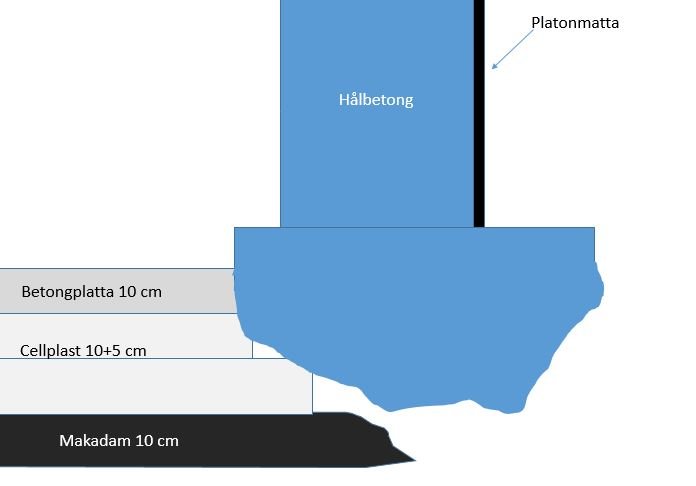
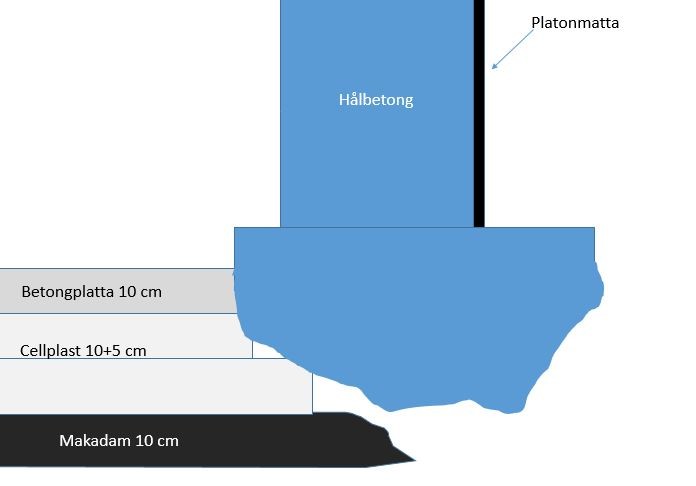
The new floor is 10 cm lower than the old one, and there is a ledge from the cutting of the old floor.
Picture before casting: The new floor is approximately at the level of the red line.
The exterior wall is made of hollow concrete and has a Platon membrane on the outside. I have had ideas about building the interior wall with lecablocks and plastering, then I received a suggestion from a builder to glue a thin layer of styrofoam on the exterior wall, which doesn't feel quite right. Furthermore, I have googled and come across light concrete of the Ytong type with better insulation properties. In total, there are about 45 sqm of interior wall to put up.
Platon with a layer of foam plastic is one approach when draining/insulating. Isodrän is another. You face the choices of leaving the wall as it is and painting it with silicate, lime, or another suitable paint. Or setting steel studs, arranging an air gap, and mounting a new interior wall on that. However, non-organic, even if you use gypsum board, the paper in the board is still organic. With an insulated interior wall, you might get the dew point in the middle of the wall, and that's not fun. I plastered the walls, painted with silicate, and am about to insulate from the outside with pordrän during drainage.
Great job on moving the masses out, really heavy work...
The 10 cm high heel means I have to use some form of block for masonry, it's 8 cm and so thick that it can't be plastered. The house was drained again in 2007 by the previous owner, during which a Platon mat was installed but unfortunately, they skimped on Isodrän
I have been considering a solution with a ventilated inner wall, there are other panels than plasterboard but it doesn't feel good. I will/must build up with some form of block with a minimum thickness of 10 cm and then plaster and paint with silicate on it.
Weber has something they call Isoblock, a lecablock with insulation in the middle you could compare it to, glue 5 cm EPS on the wall and then build with lecablock directly attached. But I don’t think it's good below ground.
Another option that feels better is to build with something like Multipor, plaster, and silicate paint; I want the wall to breathe but also be insulated, which is not simple.
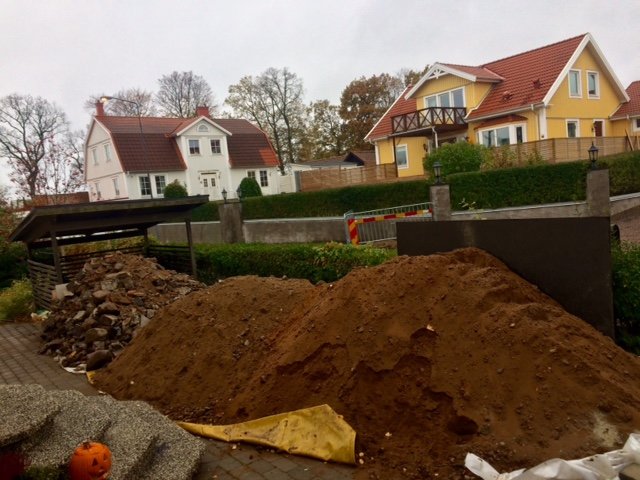
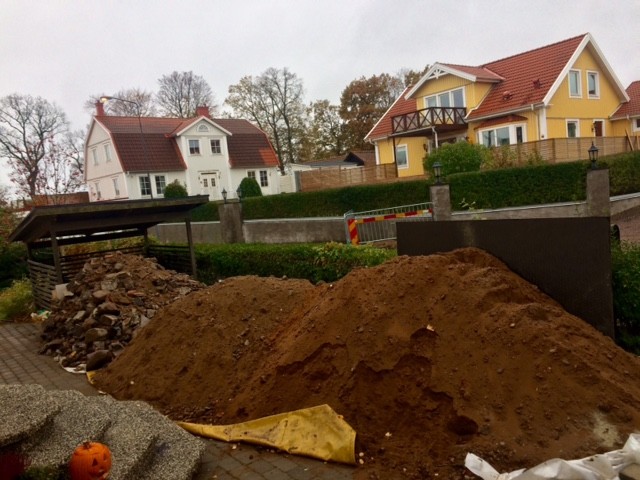
It resulted in quite a lot of soil, about 13 cubic meters were excavated.
Finja says that their isloerblock works well in basements and souterrain houses, so Weber's should also fit. If you choose that method, you get a durable and uniform wall. It's good if you can recess electrical and other cables as needed.
was it just a coincidence that the floor was lower then or a planned operation?
No, not at all. The house was built in 1992 but a part of the basement from the old house was kept, that part was 10 cm higher than the new part. That's why, and because I wanted more space, the new floor is 10 cm lower than the old floor.
A skilled concrete cutter saws that right against the wall
But it costs a bit..
Yes, it wouldn't have been a technical problem, but the house stands on that sokel, so it wasn't an option according to a friend who works as an architect and constructor.
I have used concrete blocks in my basement corresponding to the ledge you have in the picture, it was then easy to plaster, I plastered with gypsum plaster, it has worked great. However, I made the mistake in one of the rooms of having mortar against the original wall on one wall, which you should avoid. On my end, cracks have appeared in a couple of places on that wall (one crack in each place) that are hair-thin. On the other walls, there is no problem.