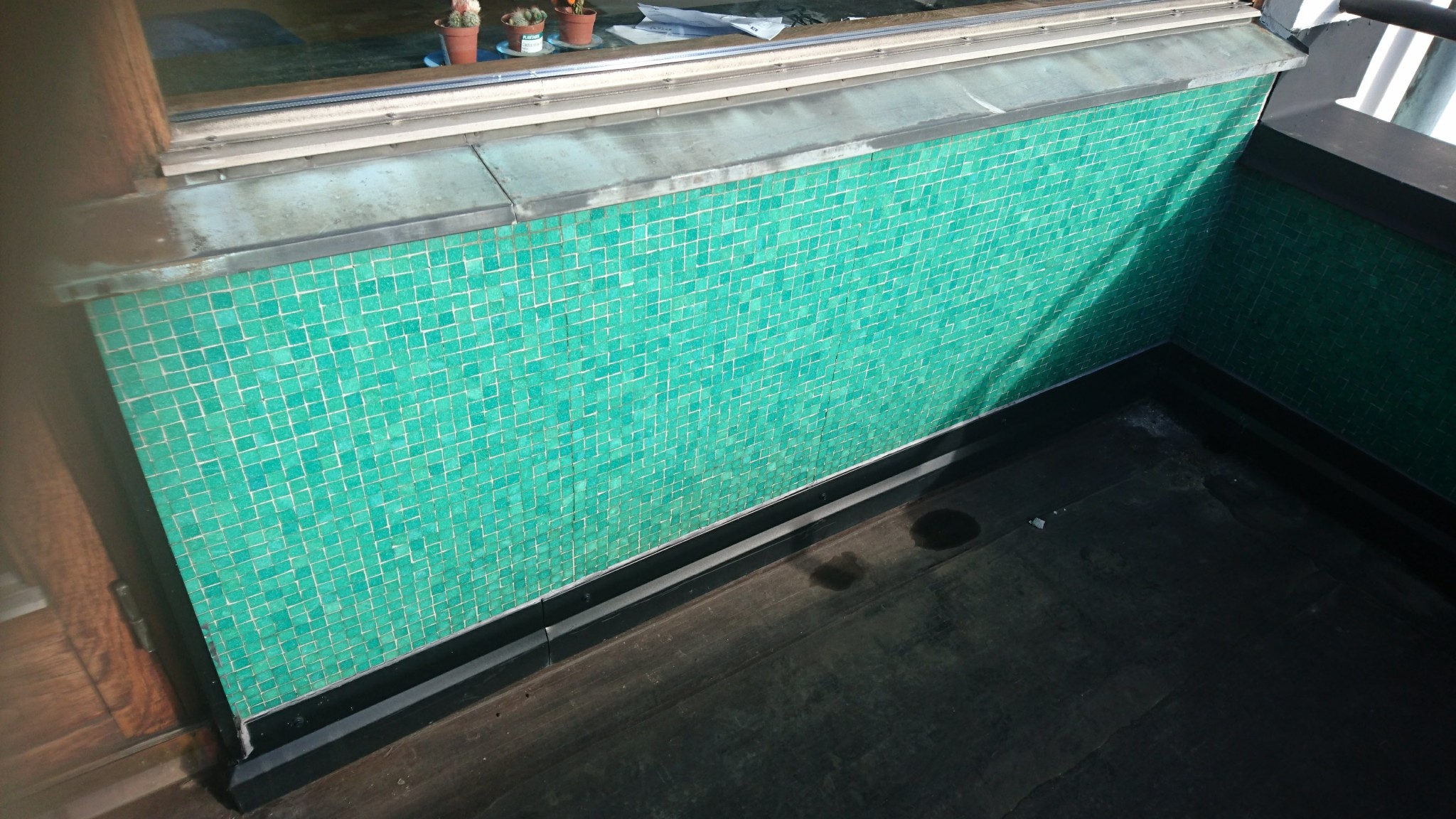
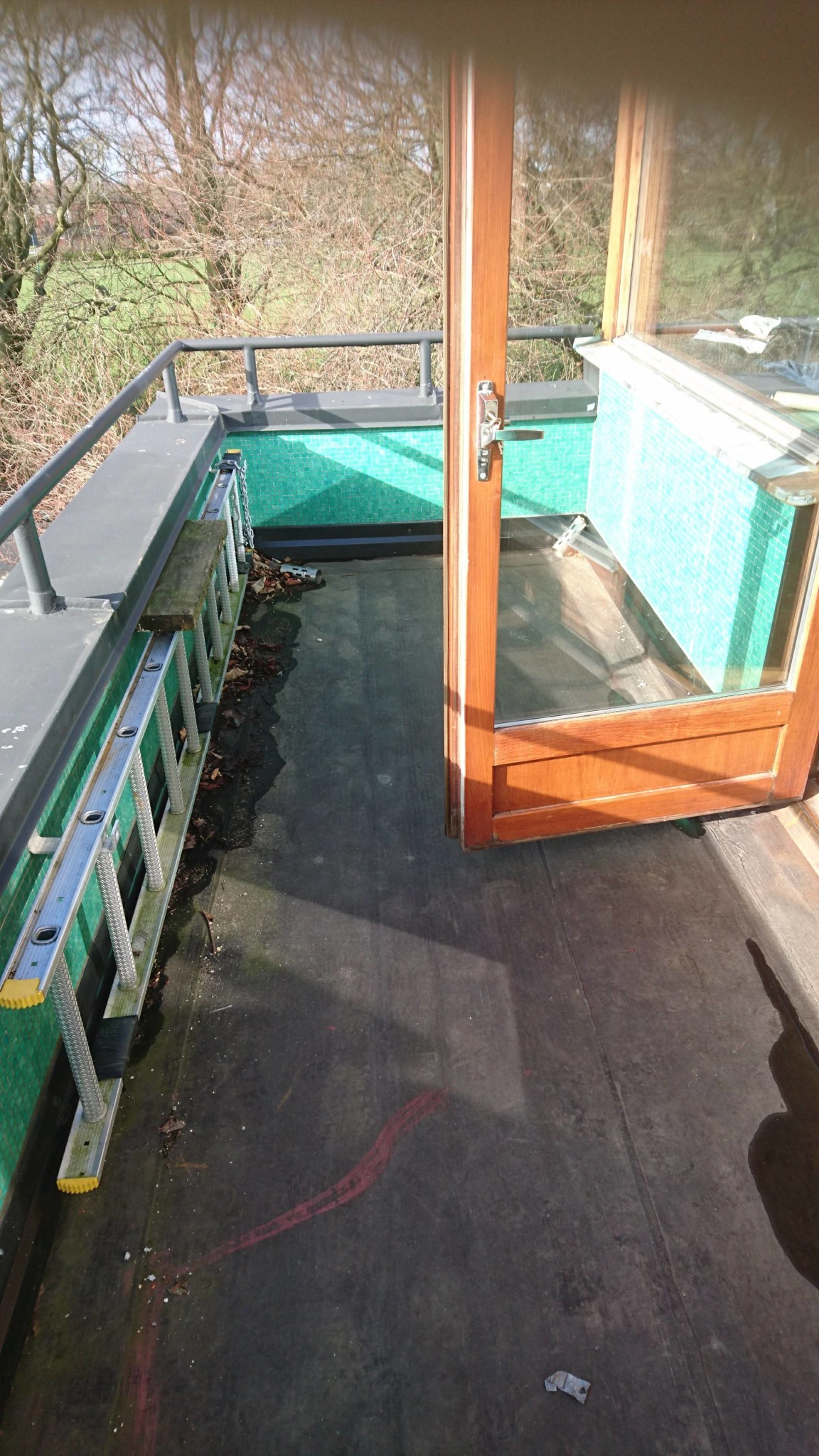
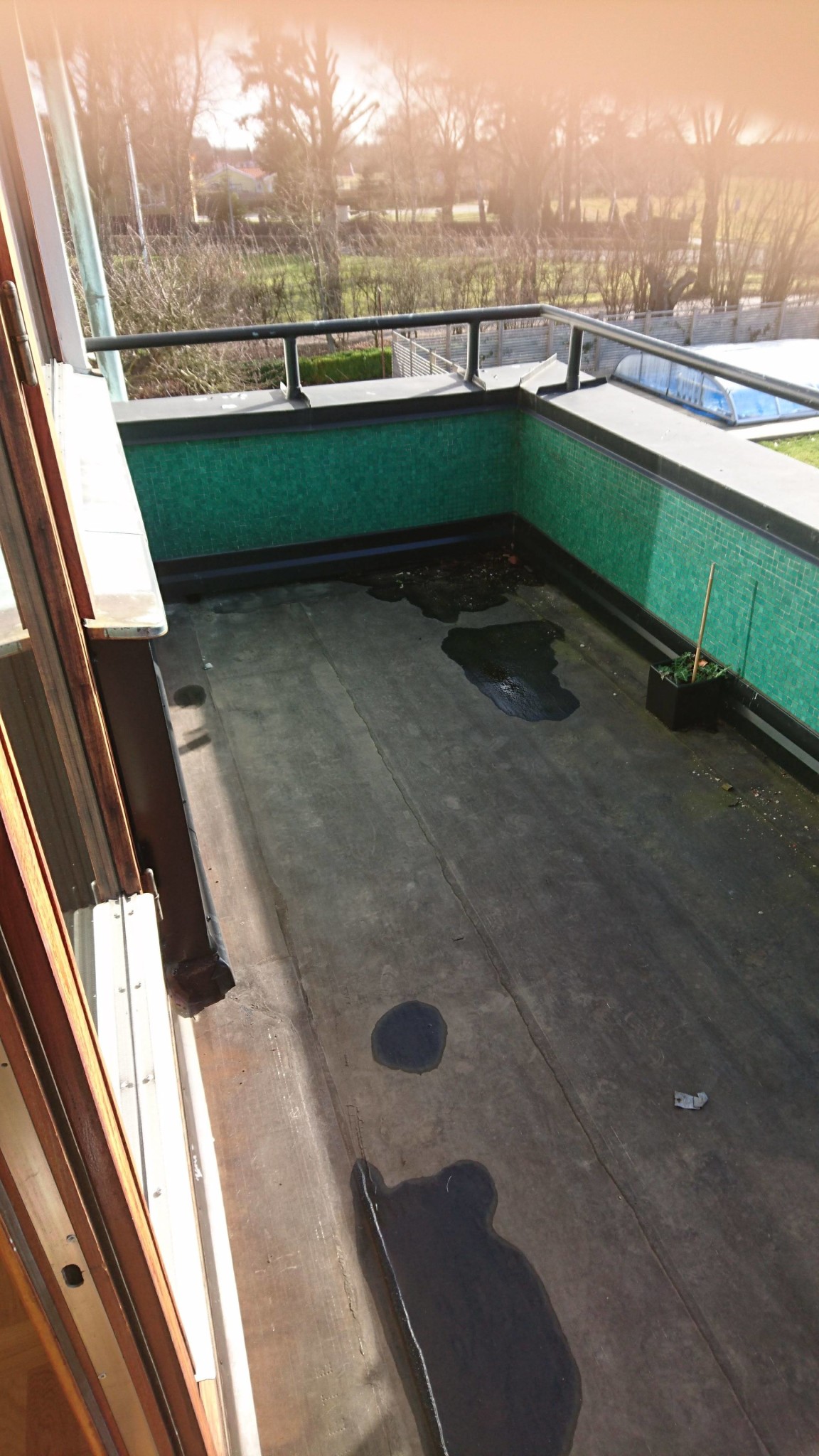
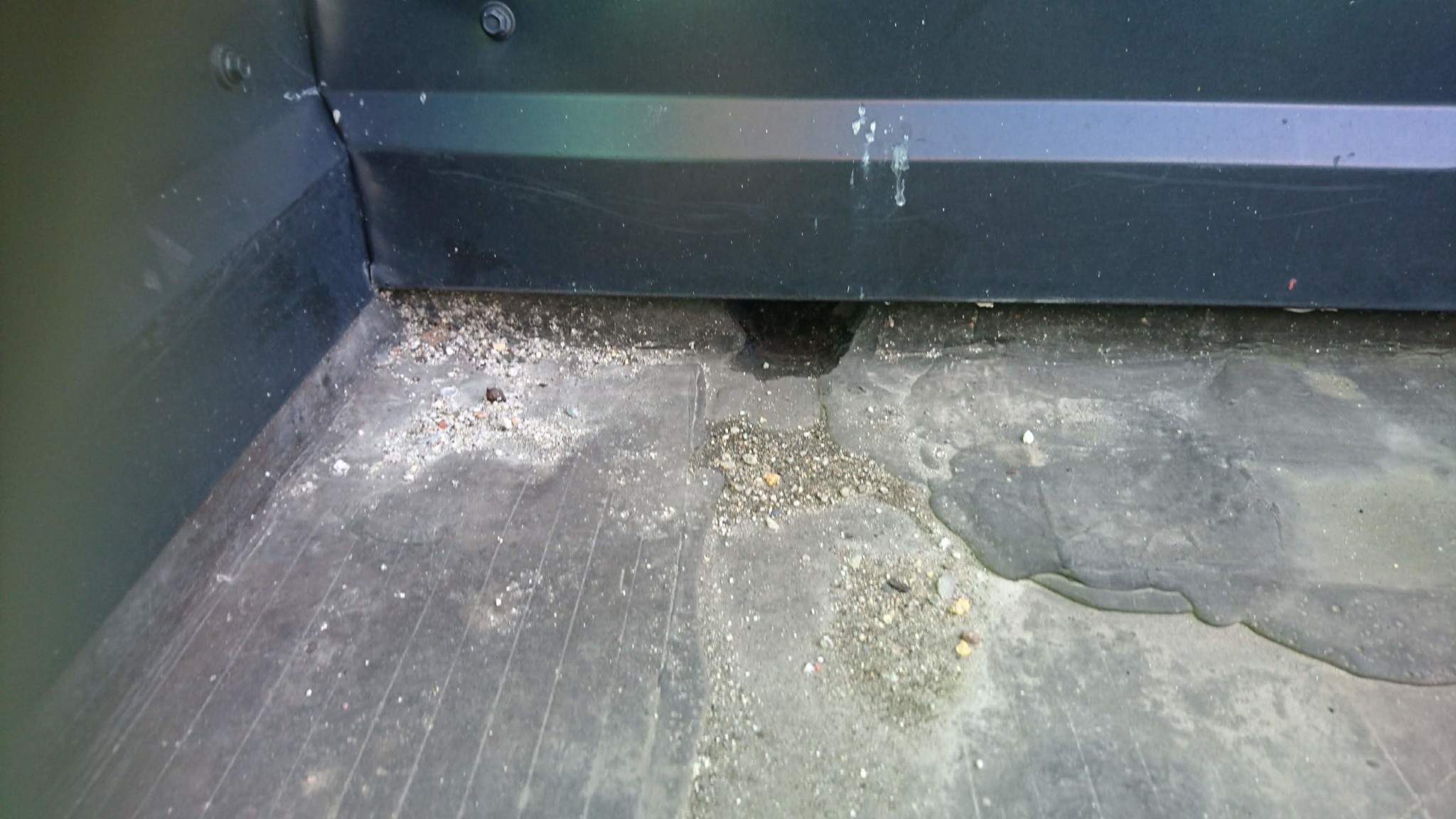
I'm having issues with water leaking through the ceiling in the room under our balcony during heavy rain and wind. The theory is that it seeps through the old mosaic. So, we've decided to redo the balcony to try to resolve the problem.
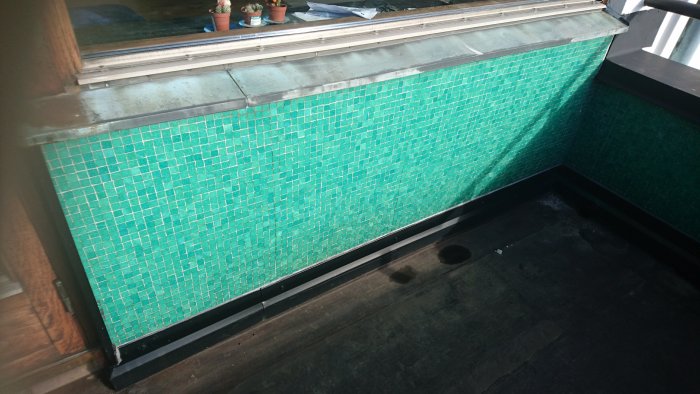
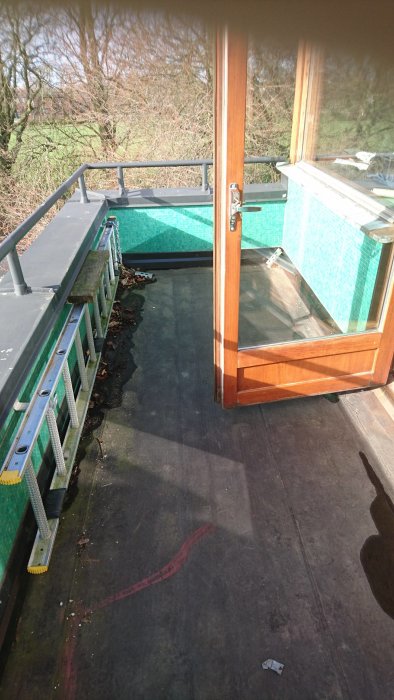
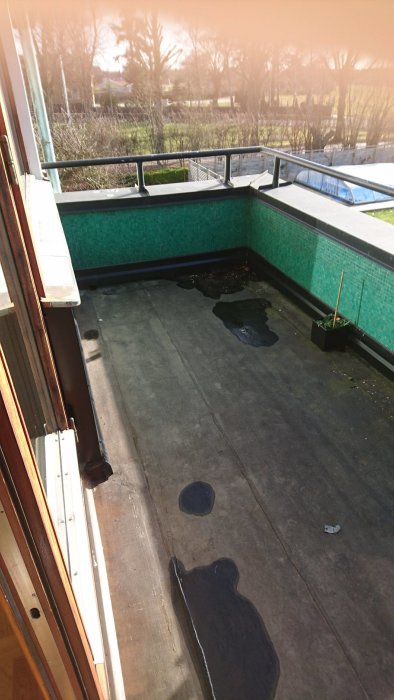
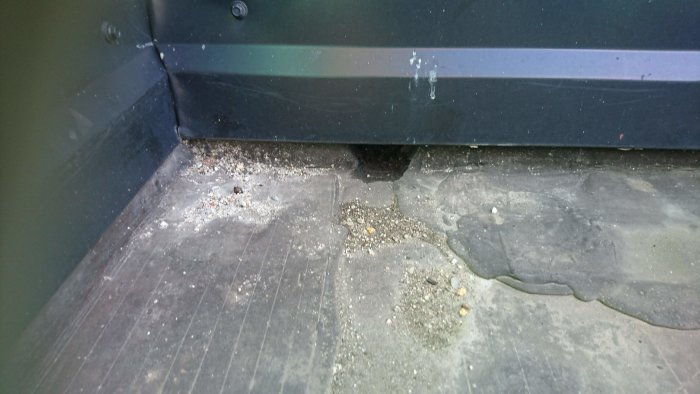
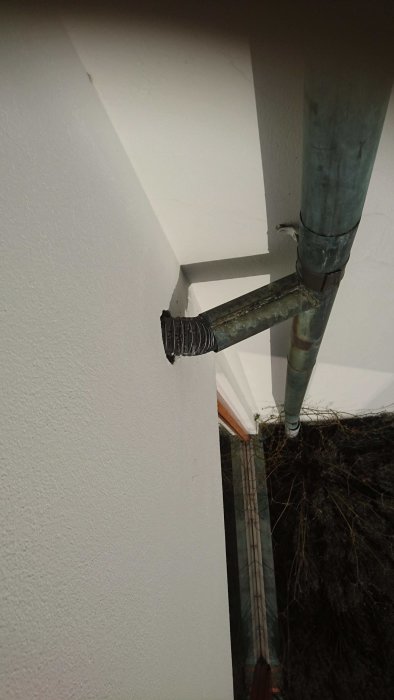
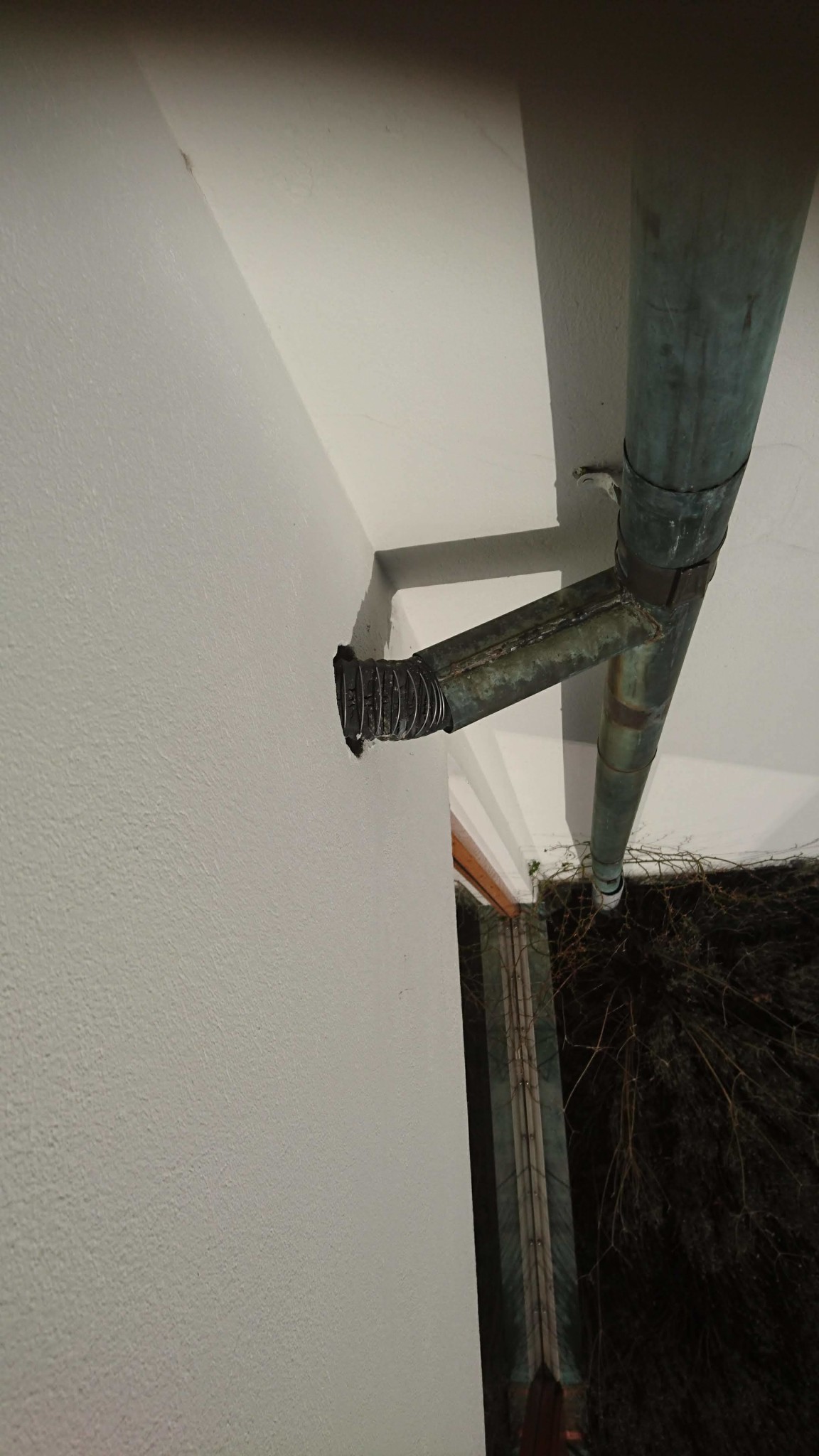
Currently, there is roofing felt on the floor and mosaic on the walls, probably from when the house was built, i.e., late 1930s. In one corner, there is a drain in the wall leading out to a drainpipe. See pictures below.
I've talked to a couple of craftsmen, but so far, only one has come to look at the job. He brought along a guy from PCI who does waterproofing. Their proposed workflow is:
1. Tear off the roofing felt and metalworks on the inside; likely, there is old tile under it too, which will also be removed so we can get to the concrete.
2. Create a proper slope with some outdoor suitable leveling compound (I don’t remember its name)
3. Get roofing guys to lay new roofing felt and make a new drainpipe in the wall
4. Cast 30 mm "self-leveling compound" on top
5. Apply diffusion-open waterproofing from PCI on floors and walls
6. Install tiles (We’re using 90x90 cm porcelain tiles on both floors and walls, white marble imitation)
7. Metalworks
What do you think of this approach? Apparently, PCI does not have waterproofing approved for roofs, they have it for pools, for example, but that's why we need a certified roofing waterproofing on the floor first. It feels frustrating having to spend time and money on double waterproofing + 30 mm extra compound to get the other waterproofing to adhere properly. Does anyone have a better idea?
Should I just skip the roofing felt since it mostly seems to be a formality?
If anyone can recommend good craftsmen in southern Skåne who could take on the entire job, it would be appreciated. I’d prefer not to have to synchronize roofers/tear-off/tile work, etc., myself.
Balcony walls:
Drain and downpipe outside the balcony, as you can see, the rubber connection between them is worn out. The smartest seems to be to have a continuous metal pipe.
Is it really necessary to have a lot of soft joints between a brick wall and concrete slab?
In southernmost Skåne, I wonder how great the risk of frost heaving actually is, a slope of 1:50 gives about 13 cm along the balcony, it feels a lot compared to how it is now.
I would gladly receive tips on other waterproofing solutions for outdoor use.
I have also talked to a third company, unfortunately, they are on vacation now, waiting for a more detailed quote from them and info about the waterproofing layer. They recommended something latex-based system, it would cost around 2500 SEK / sqm, the idea is that it's sealed on top of the tiles instead of underneath.
Has anyone heard of this before and can provide more info? It sounds like an interesting solution, although very expensive. (tiles + labor are additional if I understood the quote correctly)
Click here to reply
Vi vill skicka notiser för ämnen du bevakar och händelser som berör dig.