
2,885 views ·
17 replies
3k views
17 replies
Water freezes in renovated bathroom
Our water has been freezing for the past two years and will soon freeze again if we don’t get a handle on the problem. Theories have abounded but no one wants to take responsibility for fixing the issue - so I’m turning here.
It first freezes at -16, not at warmer temperatures than that. The bathroom is on the upper floor, and it is at least 19 degrees inside.
One theory I have now is that the beam seen running horizontally behind the incoming water is leading in cold. And that there is no insulation between the beam and the pipe, and that the pipe is flush against the beam. It might be possible to access it through the crawl space.
Ideas?
It first freezes at -16, not at warmer temperatures than that. The bathroom is on the upper floor, and it is at least 19 degrees inside.
One theory I have now is that the beam seen running horizontally behind the incoming water is leading in cold. And that there is no insulation between the beam and the pipe, and that the pipe is flush against the beam. It might be possible to access it through the crawl space.
Ideas?

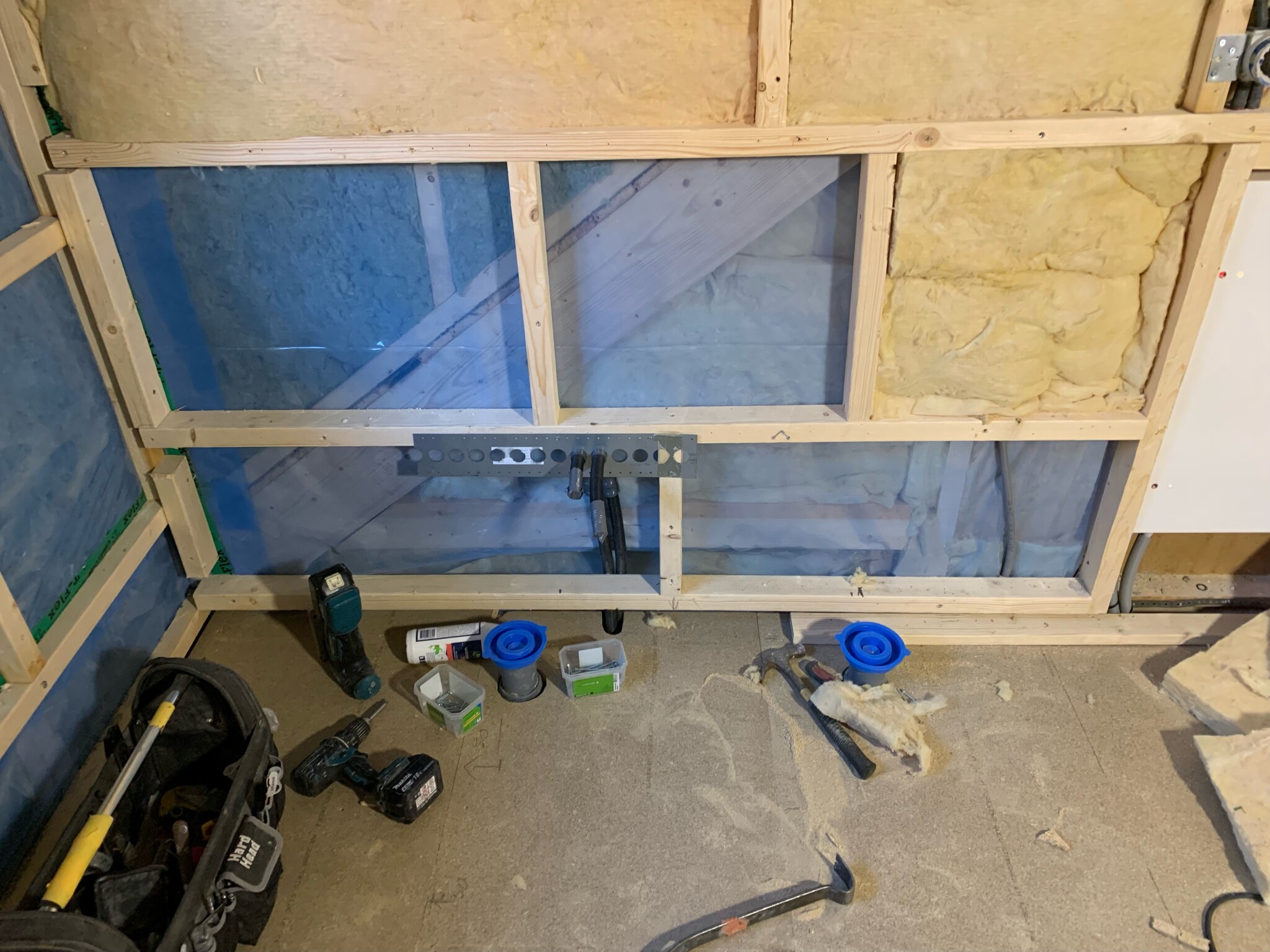

Then it is not good, the attic space freezes at that temperature and with it the pipes. Normally, pipes are located in the wall against the attic space. There might be nothing else to do but try to insulate in the attic space. Then the entire part against the bathroom should be extra insulated. At least 200 mm and a windproof membrane outside towards the cold. Also, press insulation all the way down to the floor and under the beam there. Cold has a tendency to find small holes to rush into, and then it can freeze. Also, the wall must have proper insulation; it cannot just be 45 mm, it works with 45 mm between the studs if insulated as written above. Pack tightly at the floor otherwise cold floors. Are you going to have electric or water underfloor heating?
Thanks for the input! I’ll give it a try tomorrow and see how well I can reach. It’s supposed to be -16 at the beginning of next week here, so hopefully, I'll see right away if it worked.J jonaserik said:Then it's not good, the crawl space will freeze at that temperature and with it, the pipes. Normally, pipes are located in the wall against the crawl space. There's probably nothing else to do but try to insulate in the crawl space. Then the entire part against the bathroom should be extra insulated. At least 200 mm and a windproof membrane outside towards the cold. Also, press insulation all the way down to the floor and under the beam there. Cold tends to find small holes to breeze through, and then it can freeze. Additionally, the wall must have proper insulation; you can't just have 45 mm. It works with 45 mm between the studs if it's insulated as described above. Pack tightly near the floor, otherwise, cold floors. Are you going to have electric or water-based underfloor heating?
There is water-based heating in the floor. The bathroom is already finished, which makes it a bit more tricky to tackle the problem since we’d rather not open up right in the bathroom. However, there isn't much heat in the floor despite thinking we've tried to turn it up.

GV in the floor, then it's important that it's really tight from the attic into the floor. Just press down as much as possible in the fold down towards the floor in the attic. If cold air is coming in, the floor will be cold, and even if it's as thin as a pencil against a GV pipe, it can freeze. So you've got a bit to tackle now. But be careful with the insulation, so there are no gaps anywhere. I empathize with you.J Josefined said:Thanks for the input! I'll try it tomorrow and see how well I can access it. It's going to be -16 at the beginning of next week here, so hopefully, I'll see right away if it worked.
There's waterborne heating in the floor. The bathroom is already finished, hence a bit of extra hassle to fix the problem as we don't want to open it up in the bathroom. However, there's not much heat in the floor even though I thought we tried to turn it up.