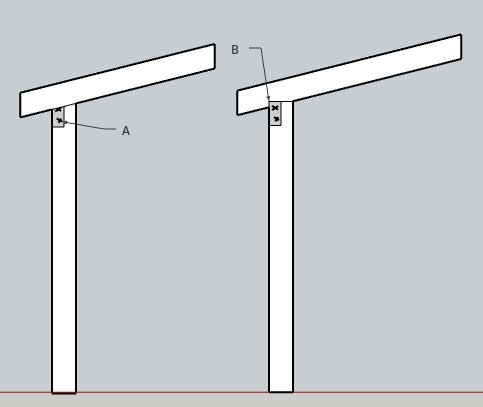
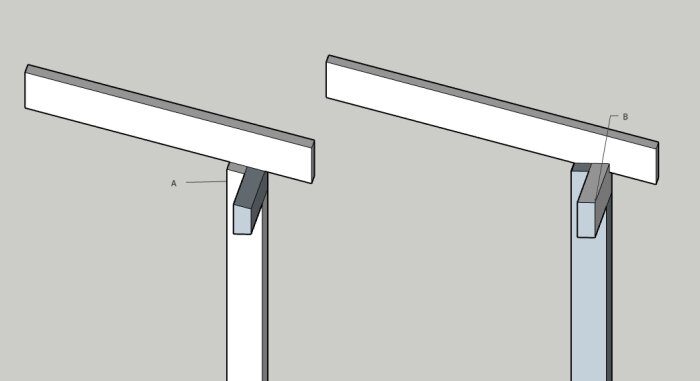
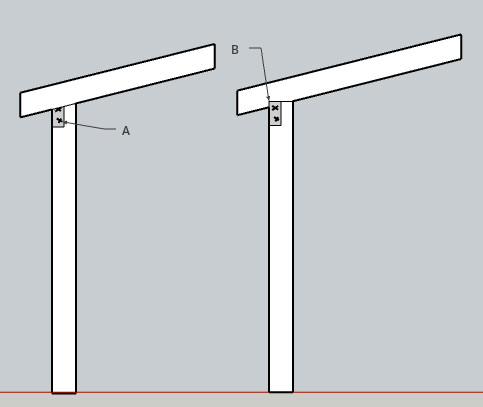
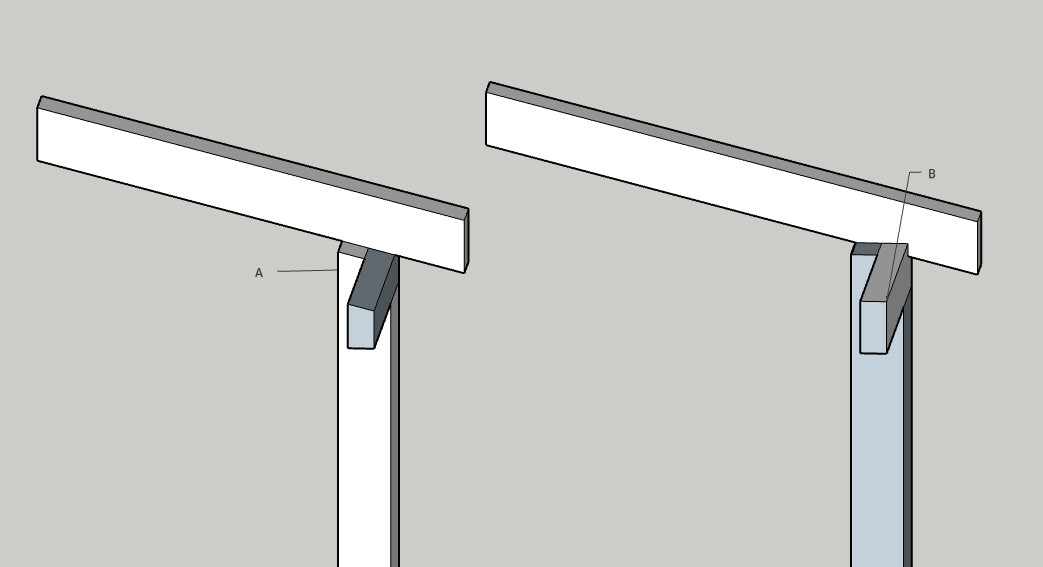
In option A below, the post and beam are beveled so that they have the same slope as the roof.
In option B, the post and top beam are straight but the roof beam is notched ("birdsmouth" in English, what's it called in Swedish?).
Option A provides the advantage for the pergola that water does not remain on the beam and post. However, there will be a force going inward on the posts instead of straight down. I'm especially considering if I add roof plastic in the future as it might add some weight. The roof slopes about 10 degrees.
Is B then preferable, or is there so little difference that it doesn't matter?
If you put a roof on, there will be no water standing on option A.
I would go with option A because it's easier to saw to the right angle than to notch out and get a tight fit.
You are making a fallacy regarding the force you're talking about. You are assuming that the parts are not fixed to each other and can slide. But reasonably, they should be screwed/nail together. The forces will be the same in both cases, except in the joint itself, and that is not reasonably the weak point.
If you add a roof, there will be no standing water on option A.
I would go with option A because it's easier to saw to the right angle than to notch out and get a tight fit.
Yes, however, it's not certain that there will be a roof in the future. It's good then that option A with a beveled slope on the beam is a reasonable solution. 🙂
You are making an error in thinking about the force you're talking about. You're assuming that the parts are not fixed to each other and can slide. But reasonably, they should be screwed/nail together. The same forces will be in both cases, except at the joint itself, and reasonably, that is not the weak point.
I had a feeling that might be the case but wasn't sure.
Not directly related to the main question, but how would you go about nailing the roof beams to the top plate in a hidden way?
Hidden, I would not have done that; you have some lift capacity in the construction..
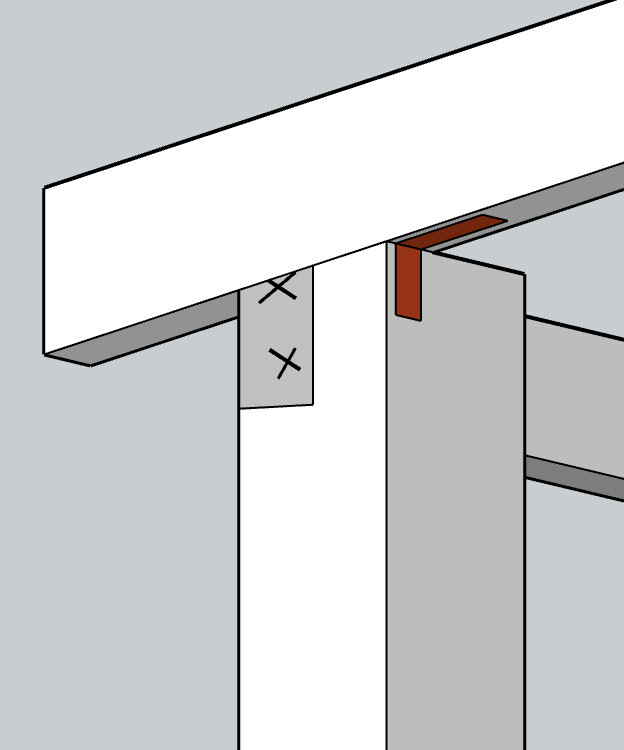
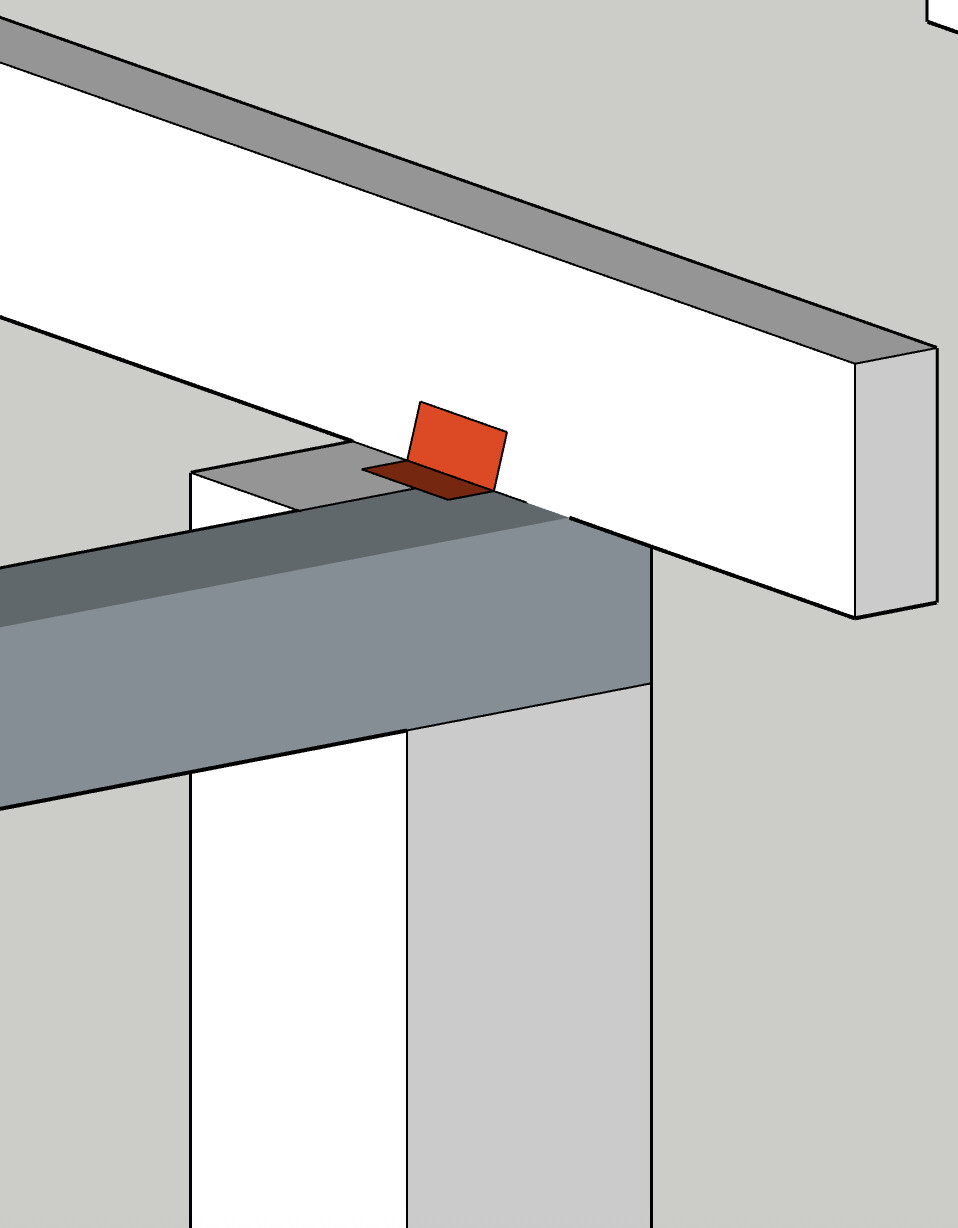
Attach building brackets with anchor screws that you paint into the construction..
Hidden I wouldn't have done, you have some lifting force in the construction..
Place building angles with anchor screws that you paint into the construction..
Even before a possible roof, I have probably thought about installing an awning in the pergola, so some lifting forces might occur almost from the start.
Something like this with the red-colored angle bracket? It will then have an angle slightly larger than 90 degrees, but they might flex a bit?

maah said: