I'm planning to remove about 2 meters of wall between the kitchen and the living room this weekend. I would like a second opinion on whether you think it's safe to take it down or not. I've been informed by a structural engineer that it's not load-bearing, but since it feels like quite a drastic thing (and I'm a bit anxious), I thought I'd ask here as well.
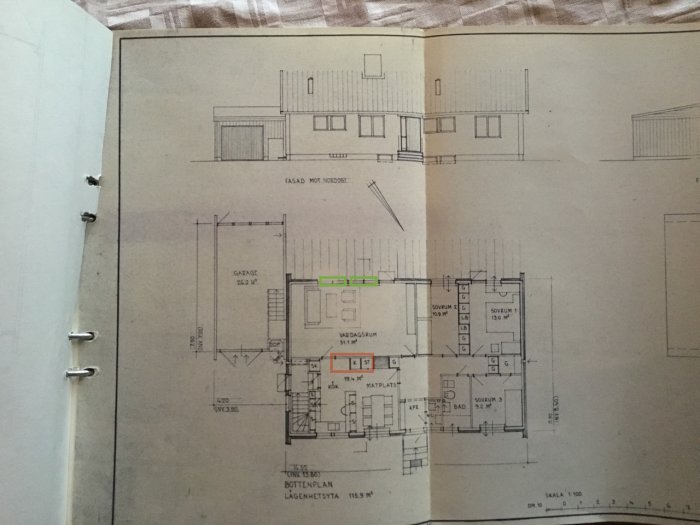
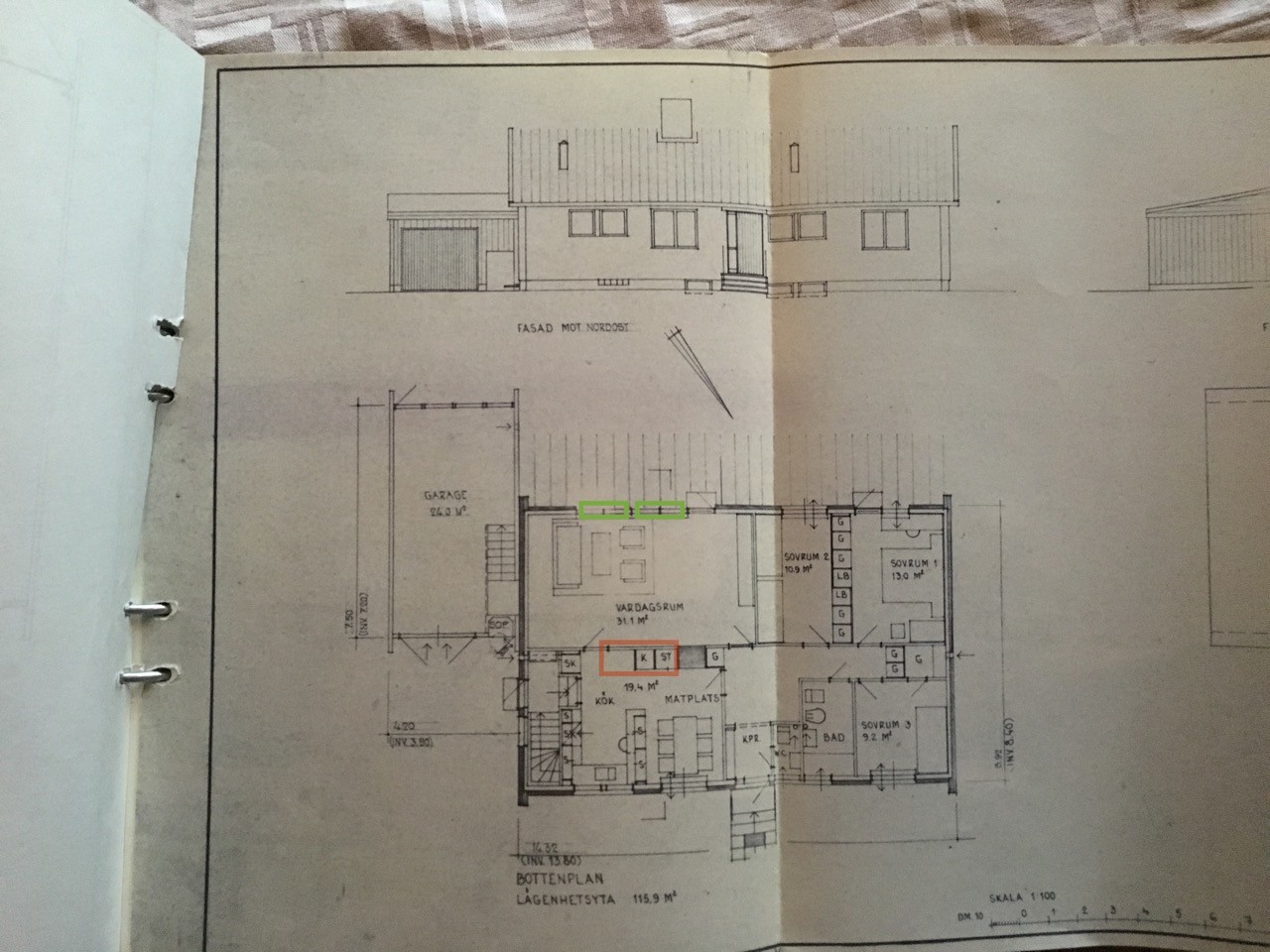
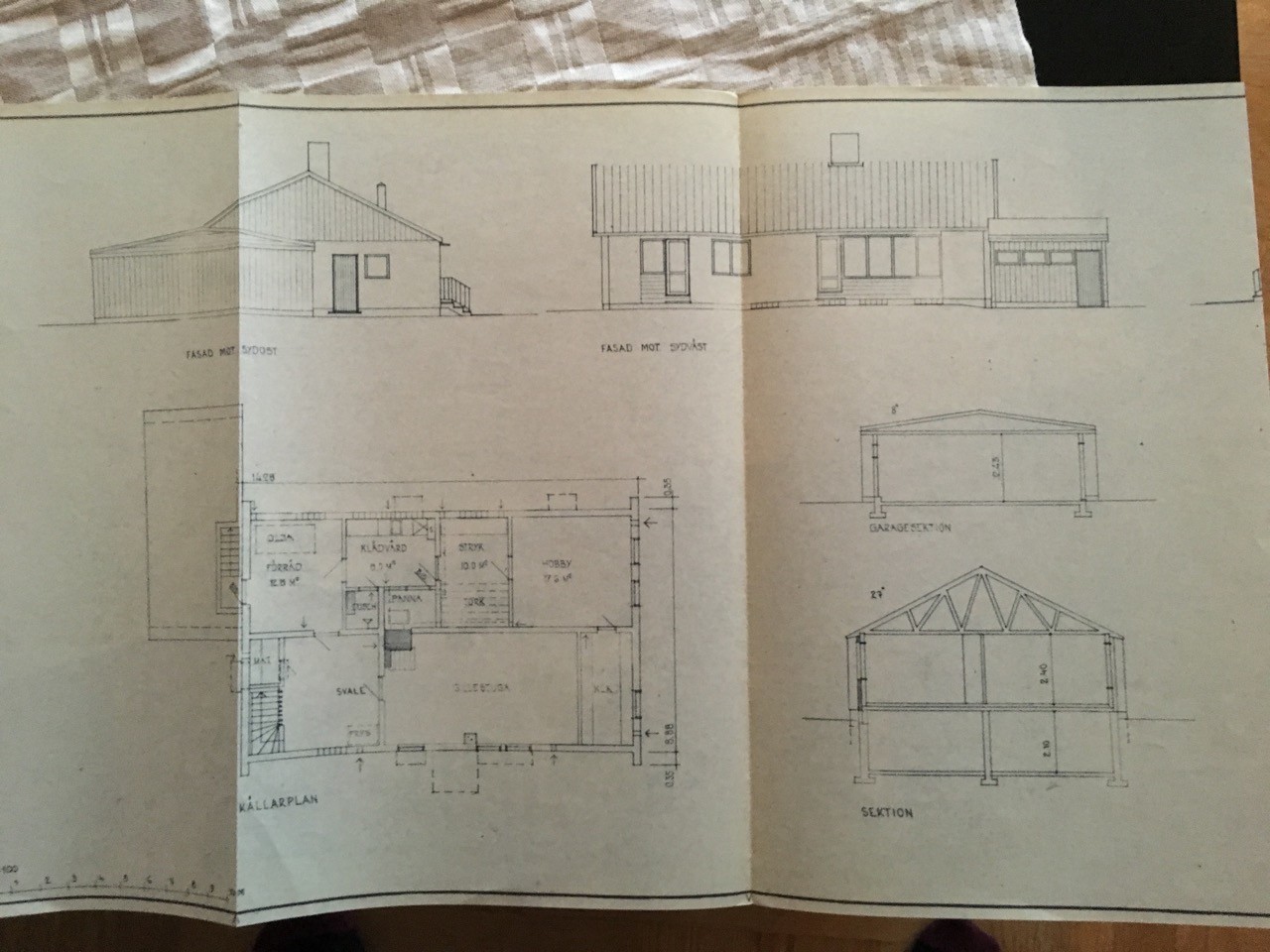
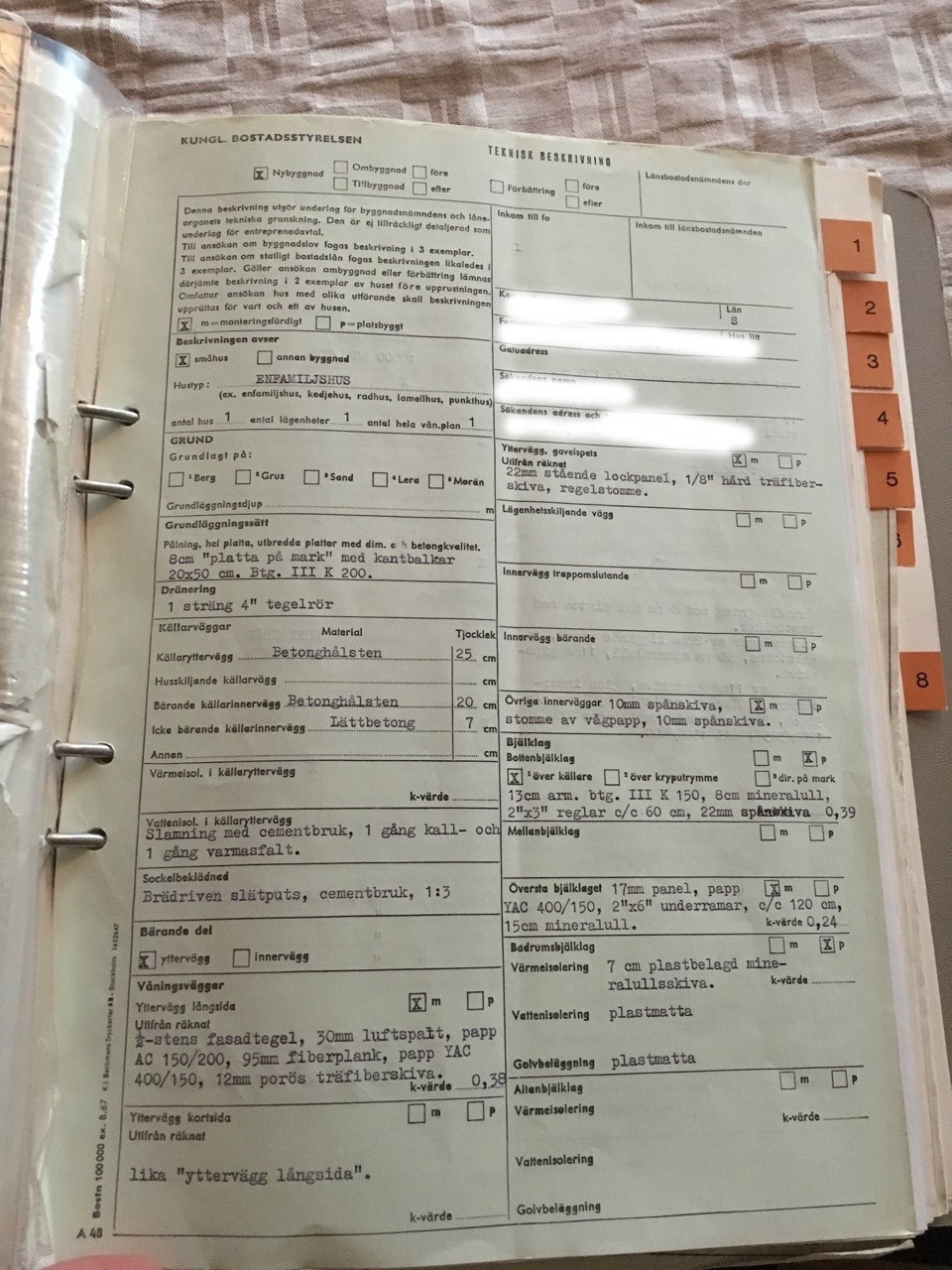
I've attached the floor plan where I've marked the section of the wall we plan to remove in orange. In the house's technical description, there's nothing filled in under the "load-bearing interior wall" section, but what makes me a bit worried is that the drawing labeled "section," which shows the house in profile, includes the interior wall that runs through the entire house. That makes me think it might be important in some way?
It is not load-bearing if the drawing is correct. The truss is self-supporting. To be on the safe side, you can go up to the attic and check that the trusses look like the drawing.
Agree with f91jsw. Also, if you're still unsure, you can either reinforce the affected rafters a bit and/or place a board/beam across the affected rafters' collar ties and suspend them against the beam. It then serves the same function as a beam against the ceiling, with the difference that you avoid seeing the beam in the ceiling.
The tie beam obviously also carries load. Otherwise, it could have been replaced with a 6mm strip...
Since there is no information about a "load-bearing internal wall" but it does say what the "other internal walls" contain, it indicates that the truss can support the roof even if the wall is removed.
The collar tie does not carry vertical load, only horizontal tensile load. What is underneath the collar tie has no impact on the truss's strength. In principle, the collar tie can be replaced with a wire. Ideally, in practice, it of course bears the load of the ceiling and insulation. In an ideal truss, there are no moment loads, only tensile or compressive loads between the nodes.
But the braces/innanmätet in the roof truss must surely have something to "stand" on to be able to support the top chord?
Or do you mean that they simply function as cross braces that prevent the top chord from bending in the middle?
The outer braces "stand" on the node at the tie beam and the inner braces, which take up tensile loads. The load from the outer brace is thus transferred up towards the ridge and out to the eaves, not downwards as a bending moment in the tie beam.