
8,757 views ·
15 replies
9k views
15 replies
Wall end material selection
I have built a freestanding wall between the kitchen and hall, meaning you can see both ends of the wall. The wall is constructed with 45*70 studs and with plywood and drywall on both sides.
How do I finish the ends of the wall most attractively?
Since it is a vulnerable position considering children/dog, I have been considering MDF. How do you handle the seam between the MDF and the bevel on the drywall? Should this be filled or is there a risk of cracks so that some form of silicone bead should be applied?
The wall covering will be painted later.
I also have the same problem in an existing wall where I have removed a door and opened it all the way to the ceiling.
How do I finish the ends of the wall most attractively?
Since it is a vulnerable position considering children/dog, I have been considering MDF. How do you handle the seam between the MDF and the bevel on the drywall? Should this be filled or is there a risk of cracks so that some form of silicone bead should be applied?
The wall covering will be painted later.
I also have the same problem in an existing wall where I have removed a door and opened it all the way to the ceiling.
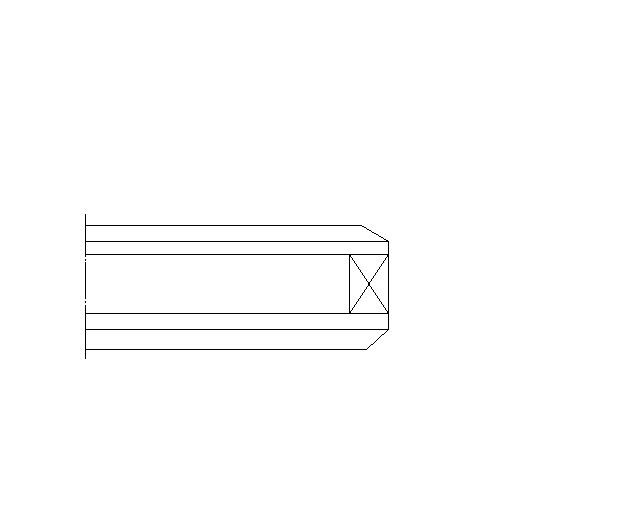

If you want to make it simple, screw an MDF board as wide as the wall, fill with filler and then use a paper strip that is planed so you get a strong corner and a neat finish. Then there are some special products but it feels unnecessary. Avoid fiberglass strips as I think they create cracks more easily and if the paper strip doesn't hold, it wouldn't have made any difference with the fiberglass.
You can always install plywood and drywall or, as you considered, MDF and then drywall corners. Metal profiles that cover the entire corner from top to bottom, which can advantageously be screwed in and then plastered over. I bought mine at K-rauta for 25 kronor each (2.5 m). I think they were called corner brackets there.
Alternatively, you can install a nice board in any color or wood type.
Alternatively, you can install a nice board in any color or wood type.


What solutions do you have for window recesses in the rest of the house? Trim or putty against the recess.
Option 1. Take a planed board without knots and do as ByggPutte writes. The board can protrude 1cm on each side without looking strange.
Option 2. Take MDF or a board that is as wide as the wall and attach trim around it.
/CC
Option 1. Take a planed board without knots and do as ByggPutte writes. The board can protrude 1cm on each side without looking strange.
Option 2. Take MDF or a board that is as wide as the wall and attach trim around it.
/CC
What is it that makes an MDF board not work as material?styrman1 said:
Is it the filling to get a smooth edge between wood and plaster?
I've used the corner protections on some exposed outer corners and they work excellently. In this case, it's about getting a nice surface that's relatively easy to achieve. I was thinking of attaching the wood panel after laying tiles on the floor to cover the tile joint against the wall.
No, you're thinking wrong. If the joint is 1 mm, it can move 0.2 millimeters without cracking. If the joint is 2 mm, it can move 0.4 mm without cracking, and so on.MrMagic said:
It's not that the latex itself moves 20% and causes cracks. It can absorb movements up to 20% without cracking.
What I mean is that if it moves, it surely moves more than 0.2 mm, and then it becomes a crack. I may have been a bit unclear there.... I also believe that 20% is quite generous, I've seen as much as 15% on quality sealant, cheaper masses often become almost completely rigid.
 )
)