Background:
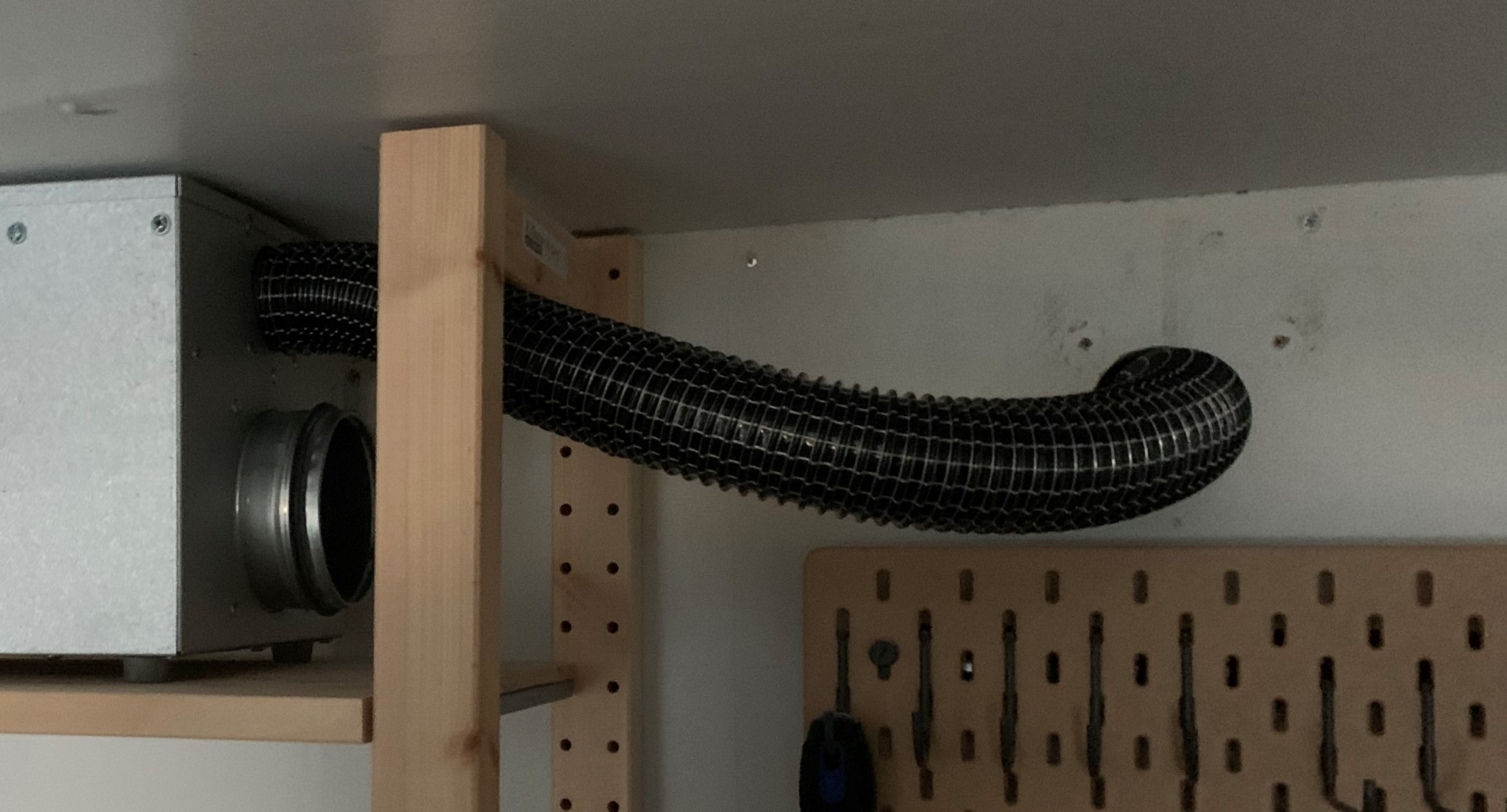
After we replaced the garage door with a new motorized door that seals tightly against the frame and started parking the car in the garage during winter, we encountered mold issues on items in the garage. The old door left about a 2 cm gap underneath it along its entire length, resulting in a lot of leaves and other debris blowing in. Currently, there's an air intake vent low on the wall next to the door, and an exhaust vent high on the opposite short side of the door but all the way inside. Since the garage hasn't been heated beyond the warmth the car provides, it seems this created insufficient circulation with excessively high humidity. I've now purchased and installed a Sorption dehumidifier from Acetec, chosen based on the criteria that I don't want a tank to empty (no floor drain) and it must withstand cold temperatures since it isn't heated.
Question:
When I drilled a hole in the wall for the wet gas hose, I discovered that a vapor barrier has been installed inside the insulation (probably only 10 cm thick). Should I have tried to tape and extend this vapor barrier around the pipe somehow, or should I just leave it and have my hose go straight through? The hole is 6 cm in diameter, and the hose is 5 cm, so there are a few millimeters of space around the hose.