Hello
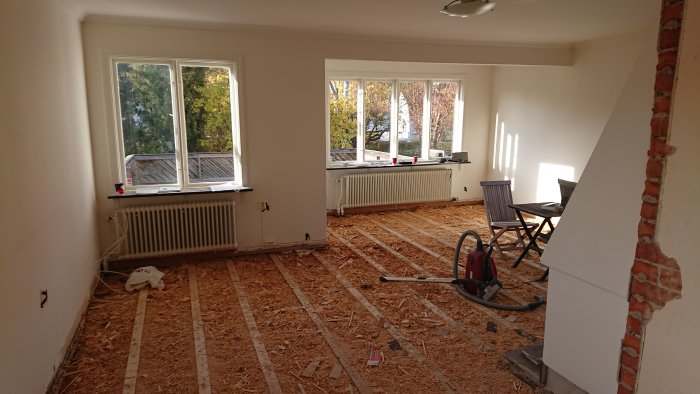
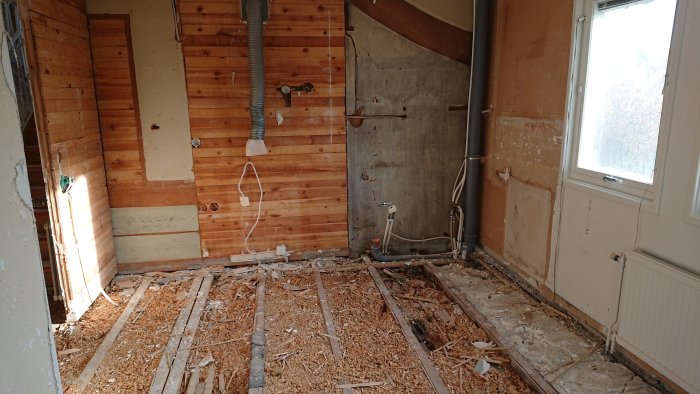
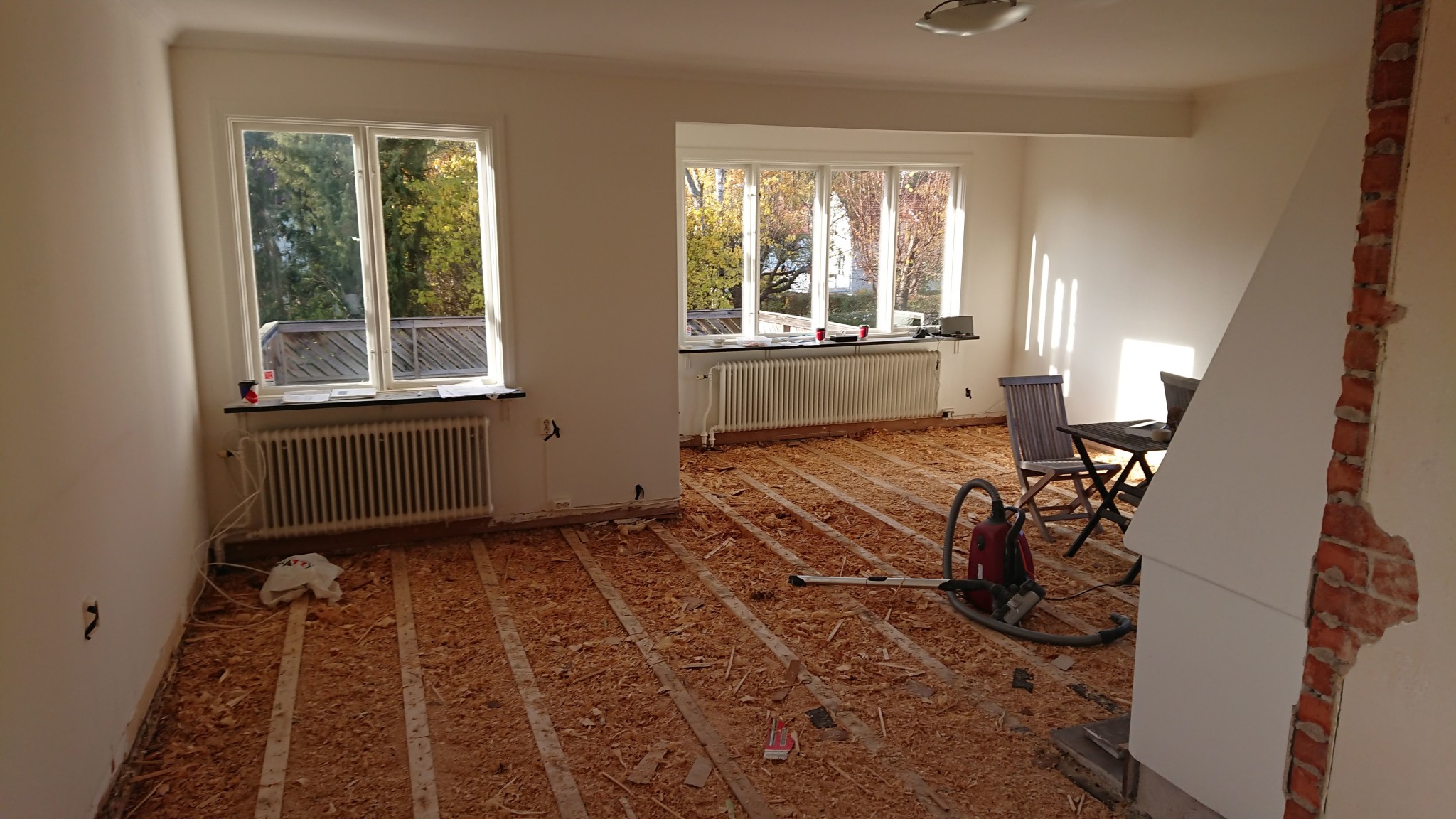
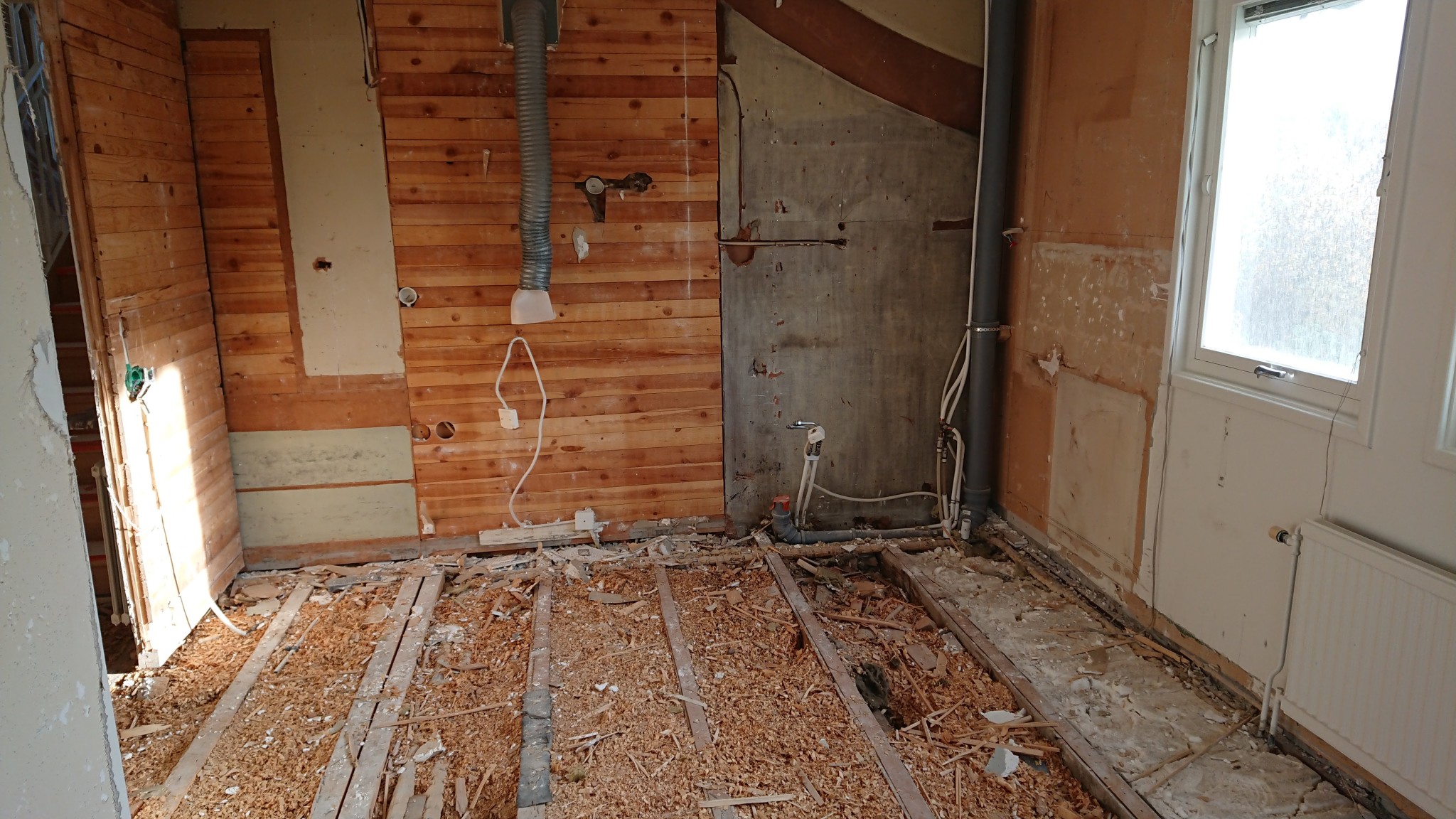
I'm planning to install waterborne underfloor heating with supporting tracks/chipboard in a house from the 1930s.
The rooms in question are the kitchen and living room on a middle floor with a wooden joist system that has sawdust as insulation against the underlying partially uninsulated basement.
I'm instructed to build the construction in this order:
- Supporting track board 22 mm (with pre-made tracks for underfloor heating pipes)
- Vapor barrier ("plastic film" folded up a couple of centimeters against the wall)
- Floor foam 2 mm
- Parquet floor (Tarkett)
- Ventilated floor skirting
When I ask some others, they say you can skip the vapor barrier and use regular floor skirting?
What's actually true? My gut feeling is that it's wrong to "trap" moisture in the joist system?!
What is meant by a partially uninsulated basement? Most basements in houses from the 1930s are uninsulated. However, they are not unheated. Your house does not have a vapor barrier anywhere but has still stood for more than 80 years. Vapor barriers started being used only when mineral wool insulation became common. A vapor barrier on top of this floor structure does no good, but could potentially cause some harm if things go badly.
However, I am wondering if it is suitable to lay grooved chipboard on top of the floor joists. There seems to be quite a large span in the far part. You might suspect that you would need to glue and screw a massive chipboard to reduce the deflection of the floor structure. What are the maximum lengths and cross-sectional dimensions of the floor joists? They are probably three inches wide.
Hi @justusandersson, thanks for the response.
One half of the basement has been converted into a spa area and laundry room, and in that part, the floor has been dug out, insulated, and underfloor heating added. In the other half (the one under the living room) is the old original garage.
The floor joists are probably about 7 cm (just under 3 inches) wide. The center-to-center distance is just under 60 cm, and both Uponor and LK's groove boards at 22 mm are marketed as supporting? I am trying to maintain the ceiling height as much as possible.
Okay, so it's better to skip the vapor barrier? Despite the "flooring industry's" recommendations.
Which recommendations are you referring to? In the cases I've seen recommendations for moisture barriers, it has been about applying them to basement concrete floors. In your application, you wouldn't benefit from a moisture barrier. But even the foam is quite dense.
are you referring to. The situations I have seen recommendations for a moisture barrier have been about laying it on concrete basement floors. In your application, you have no use for a moisture barrier. But even the foam is quite dense.[/QUOTE]