
7,796 views ·
17 replies
8k views
17 replies
Vapor barrier or not in unheated space.
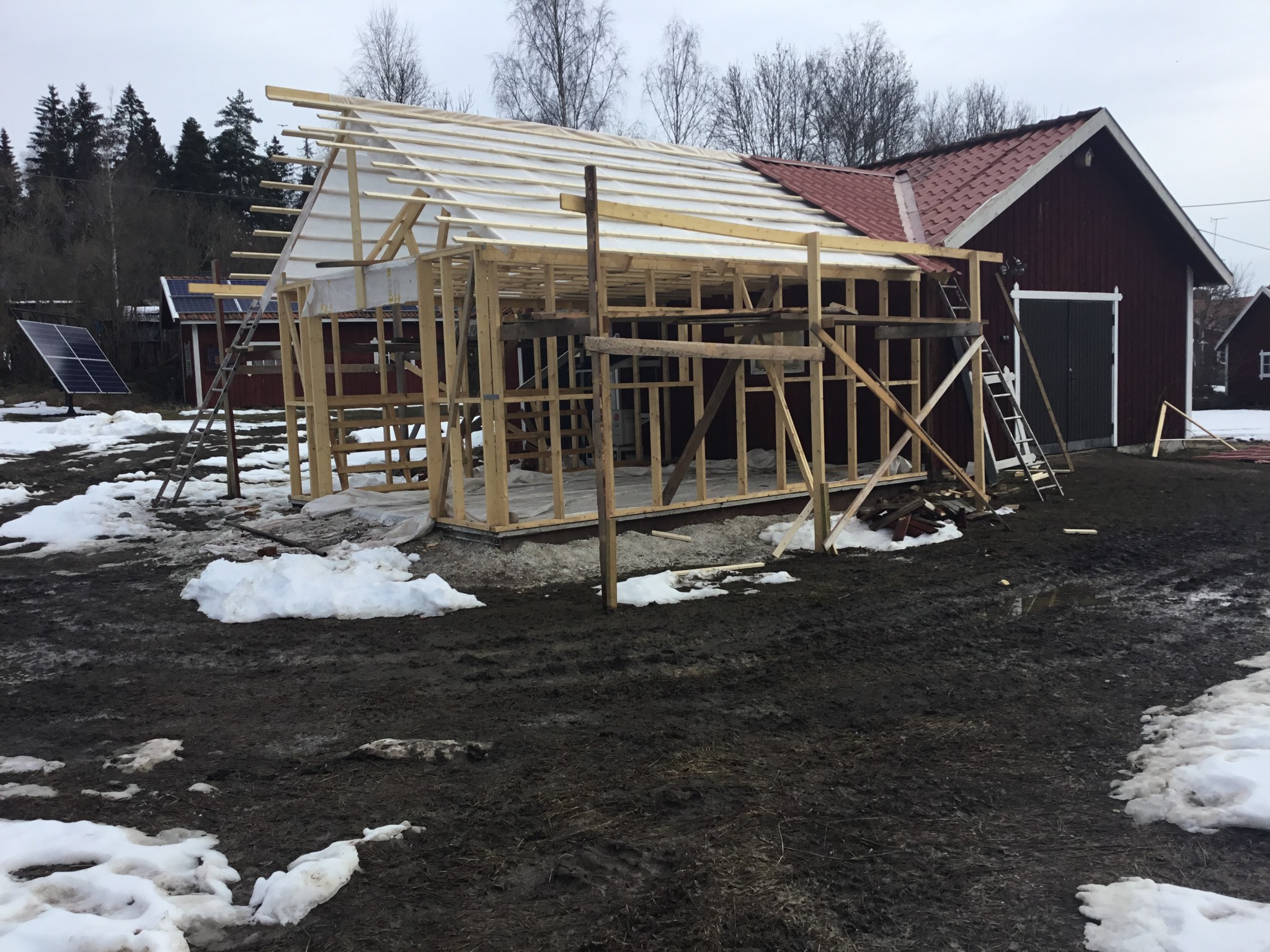
I have read many threads but can't find a clear answer. I understand it's necessary in homes, but I'm expanding the workshop and wonder whether to put building plastic behind the OSB or not. The building will be unheated 98% of the time but will be heated with an air source heat pump when tinkering/carpentry is going on. No moisture-intensive activities in the area, just screwing and woodworking. No wet cars or anything like that. 95mm mineral wool in the walls and 195mm in the ceiling. Wind barrier and wooden panel on the outside. Concrete slab for the foundation. The building plastic is already purchased, but I've read that outdoor moisture can be trapped against the plastic as it moves through the wall when it's colder indoors than outdoors, which often happens as the area is unheated. This could lead to mold, so I'm hesitant to use the plastic.
What would you do?
What would you do?
You are putting yourself in an impossible situation. It doesn't work to have a house with moisture-sensitive insulation that is sometimes heated, sometimes not. You must either have it permanently heated, insulated, and with a vapor barrier. Or you have it uninsulated with varying temperature.L Lars-Erik said:I have read many threads but don't get a clear answer. I understand it is necessary in homes, but I am expanding the workshop and wondering if I should put construction foil behind the OSB or not. The building will be unheated 98% of the time but will be heated with an air heat pump when doing mechanical/woodworking. No humid activities in the premises, just screwing and woodworking. No wet cars or anything. 95mm mineral wool in the walls and 195mm in the roof. Wind barrier and wood panel on the outside. Concrete slab as the foundation. The construction foil has already been purchased, but I have read that outdoor moisture can stop against the plastic during its journey through the wall when it's colder indoors than outdoors, which often happens when the premises are unheated. Then it can mold, so I hesitate to use the foil. How would you have done?


It doesn't need to be permanently heated to a high and even temperature. A small heat source that can maintain the temperature a few degrees above the outdoor temperature is sufficient. But the fundamental problem, as mentioned, is that you can never completely cold-store it.


It also depends on where in Sweden it is. But with so little insulation in the wall, it's just a matter of using a vapor retarder instead of the diff. If you want extra security, you can use wood fiber insulation or similar, but otherwise mineral wool should work well.
Thanks for all the great responses.
I should have searched my own memory before asking. Over 40 years ago, I built my own garage with building foil behind the gypsum and 140mm mineral wool. Unheated 99.9% of the time. No mold problems at all, as far as I can tell. My neighbor built his garage in the early '70s, without building foil and with 100mm mineral wool. Unheated 100% of the time. I helped to insert a passage door in the wall a few years ago, and not the slightest sign of mold as far as I could notice.
So it is far from certain that unheated and mineral wool cause problems.
I should have searched my own memory before asking. Over 40 years ago, I built my own garage with building foil behind the gypsum and 140mm mineral wool. Unheated 99.9% of the time. No mold problems at all, as far as I can tell. My neighbor built his garage in the early '70s, without building foil and with 100mm mineral wool. Unheated 100% of the time. I helped to insert a passage door in the wall a few years ago, and not the slightest sign of mold as far as I could notice.
So it is far from certain that unheated and mineral wool cause problems.
Member
· Etelä Pohjanmaa
· 2 465 posts
No plastic, it only causes problems. The walls I've torn down where there was mold have all had plastic. Mineral wool is airy (glass wool) and inorganic, it doesn't mold.
It's some thing now that everything should be ruined with plastic, just like in the 70s with plastic paints.
It's some thing now that everything should be ruined with plastic, just like in the 70s with plastic paints.
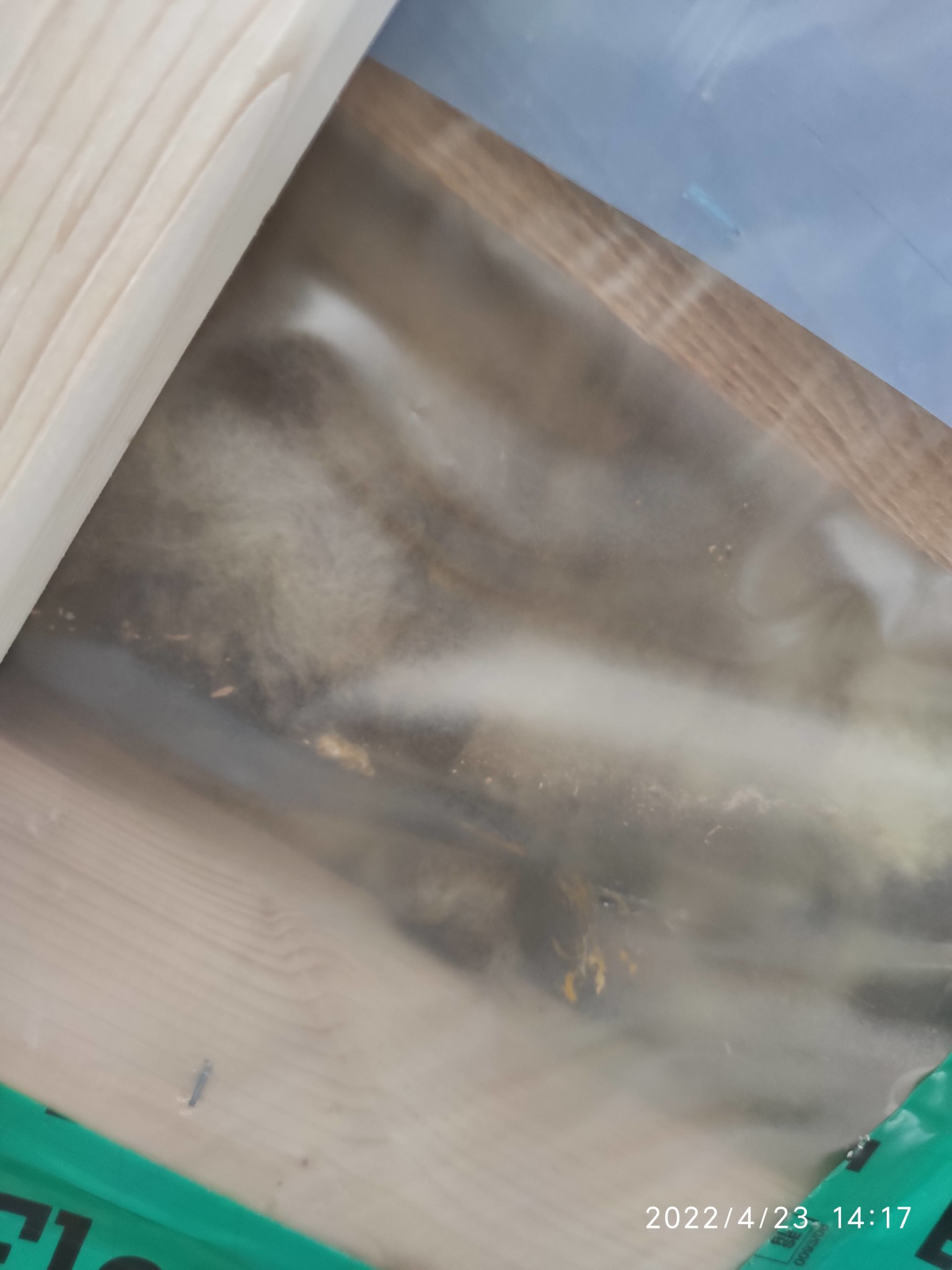
Here you can see my ceiling being renovated. Behind the old plastic, you see glass wool. 70 shades of yellow to pitch black.F Finndjävel said:

Member
· Etelä Pohjanmaa
· 2 465 posts
It's not the fiberglass that's molded but construction dust that's stuck to it. All the surrounding material looks really good, so what are you complaining about?D Davion said:

The risk without a vapor barrier would likely be in the winter, when warm indoor air without a vapor barrier would condense against cooler materials between the inner wall and the outer wall. But in this space, they won't be heated during the winter. It just feels like the plastic here can trap moisture?
To my knowledge, I'm not complaining one bit, actually.F Finndjävel said:
I'm just attaching a picture along with a clarifying text that refutes your statement about the universal truth that fiberglass doesn't mold.
It's not construction dust.
The picture itself might not be particularly clear, but the picture combined with my text is clear. And the approximately 15 m2 of my ceiling made of fiberglass, which ranges in all shades from pitch black to sunshine yellow, speaks for itself, combined with the craftsmen I've had at home who have also confirmed that it's mold.
So, no complaints, no construction dust. Just plain facts. No one is bothered by its appearance anyway - it's harmless as long as no one decides to lick it randomly, since there's new plastic and a layer of plasterboard in between.
Member
· Etelä Pohjanmaa
· 2 465 posts
Ok, so you obviously don't understand physics. Only organic materials can mold. You can google that. I think the level in this forum is dropping all the time.D Davion said:As far as I know, I'm not complaining at all, actually.
I'm just attaching a picture along with an explanatory text that refutes your claim about the universal truth that fiberglass wool doesn't mold.
It's not construction dust.
The image itself might not be particularly clear, but the picture combined with my text is clear. And the approximately 15 m2 of my ceiling made of fiberglass wool that shifts in every shade between pitch black and sunshine yellow speaks for itself, combined with the tradesmen I've had at home who have also confirmed that it is mold.
So, no whining, no construction dust. Just plain facts. No one is bothered by how it looks anyway - it's harmless as long as no one decides to lick it in any case, since there's new plastic and a layer of drywall in between.
You don't seem to understand what I am conveying to you in writing.F Finndjävel said:
I understand your initial claim - dead material/non-organic substances can mold.
However, you don't seem to grasp what follows thereafter - various mold or other types of growth can thrive on, in, or at glass wool as well. It is not necessarily just a surface layer of dust that explains it all. There can be other reasons for discolorations and mold occurring, other than "just dust." I'm not saying it can't be dust in some other case, and as you correctly say, plastic can be a problem.
Here is another thread where a response more or less verbatim describes the diagnosis made by an inspector about the situation that also fits in my current house. Svart isolering - alltid lika kul | Byggahus.se, and it matches the claim made by the craftsmen here at home. It's not particularly difficult.
The irony is that you are the one contributing to a lousy atmosphere when you immediately suggest that I'm whining when I just attach a picture and a brief explanation that good old insulation can have mold at or in it, and then you cry about low level when an additional explanation is given and your claim that plastic can cause problems is correct. Good day sir. You can try to be a bit nice, and you'll see that the level isn't so low after all.
Last edited: