Hello!
Bought a house and are renovating the upper floor. The previous owner has removed all the wood chips and laid a vapor retarder, then blown in cellulose insulation.
We have a sloped roof with slanted ceilings inside on the upper floor. We have torn down all the tretex on the walls and intend to continue with a vapor retarder, then an installation layer, and OSB + gypsum on that.
Went up to the attic to check and they have put the vapor retarder from above "over" the rafters and taped it well. So I naturally want to connect the wall with the roof's vapor retarder to make it as tight as possible.
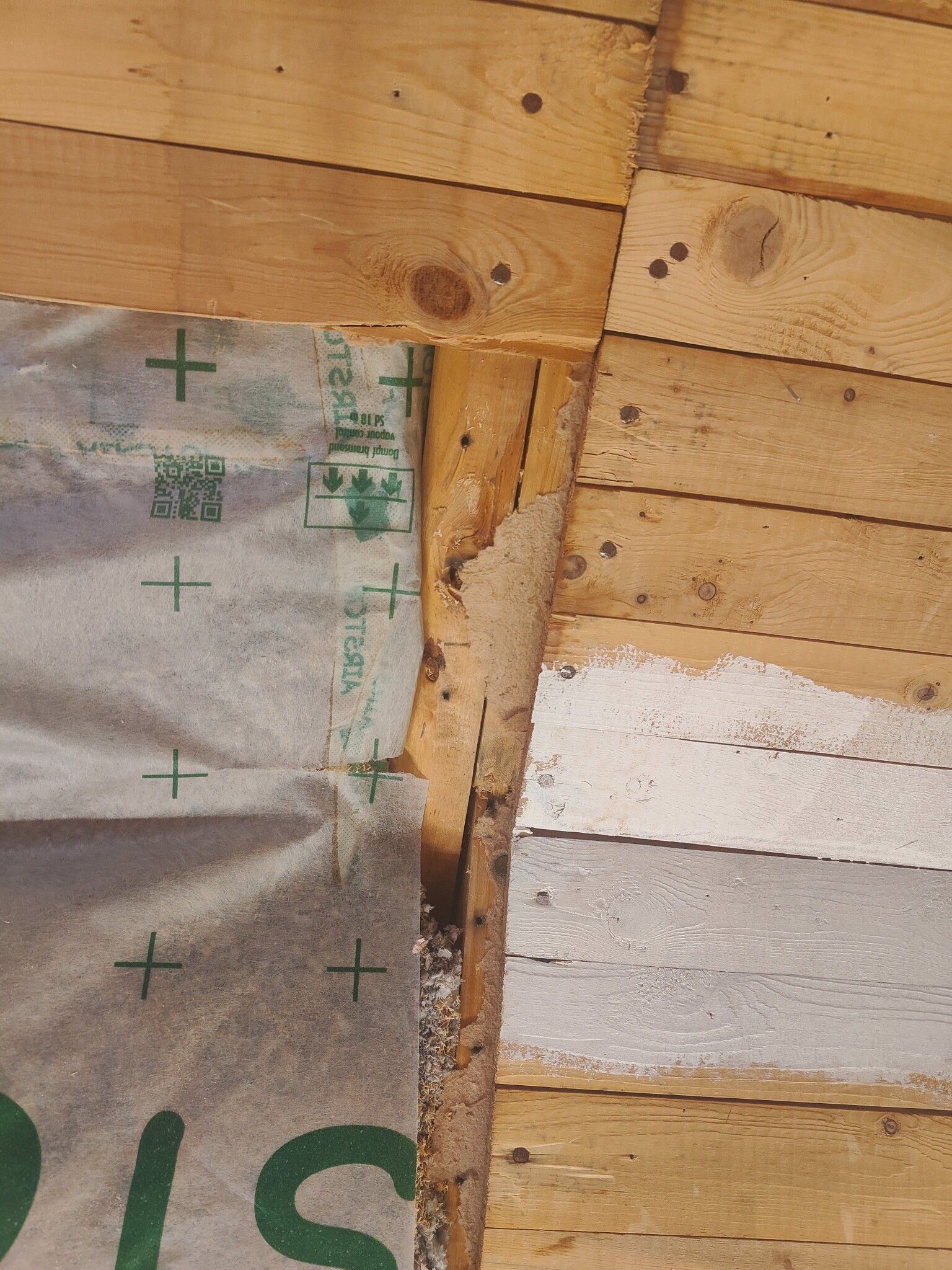
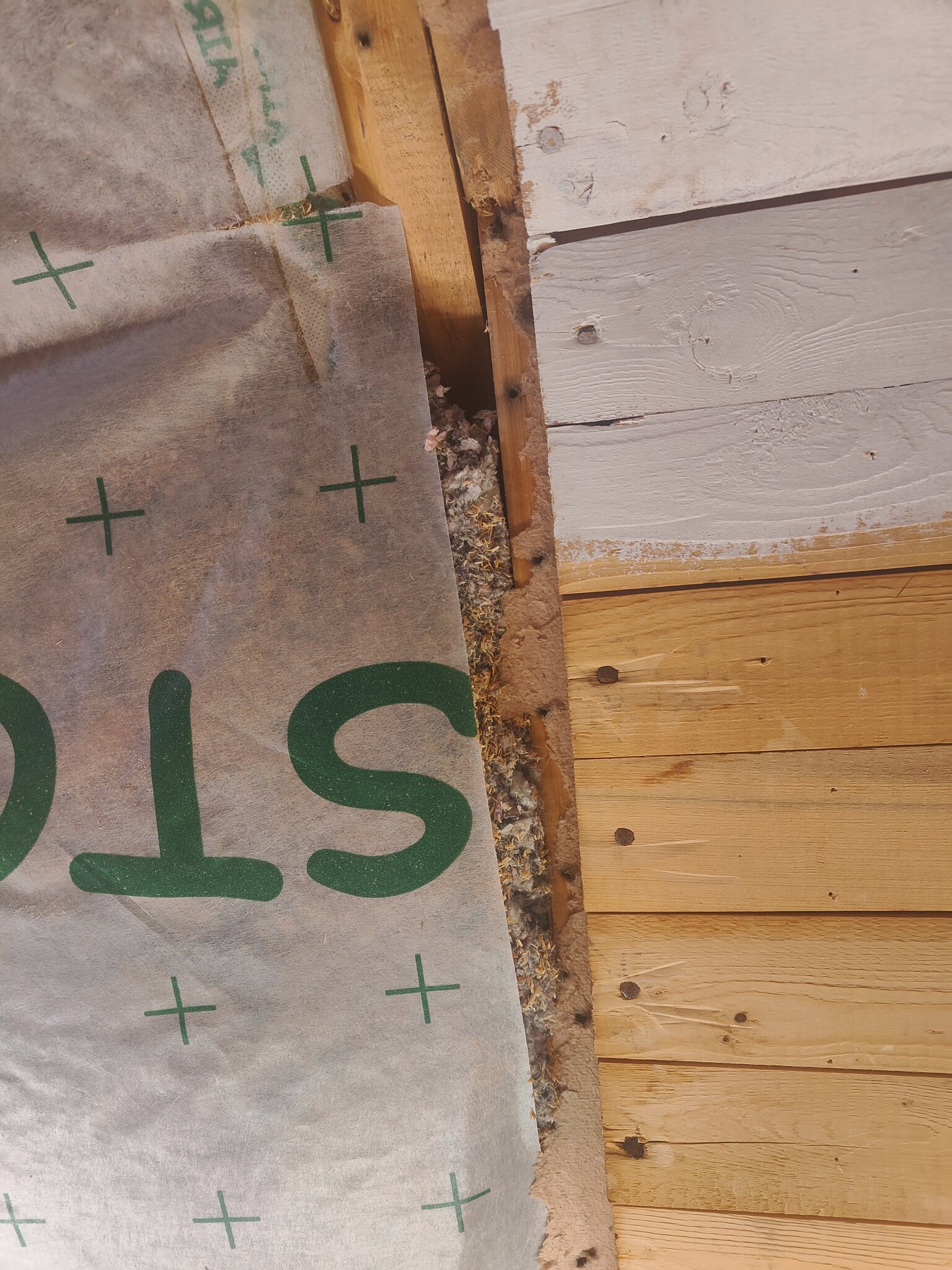
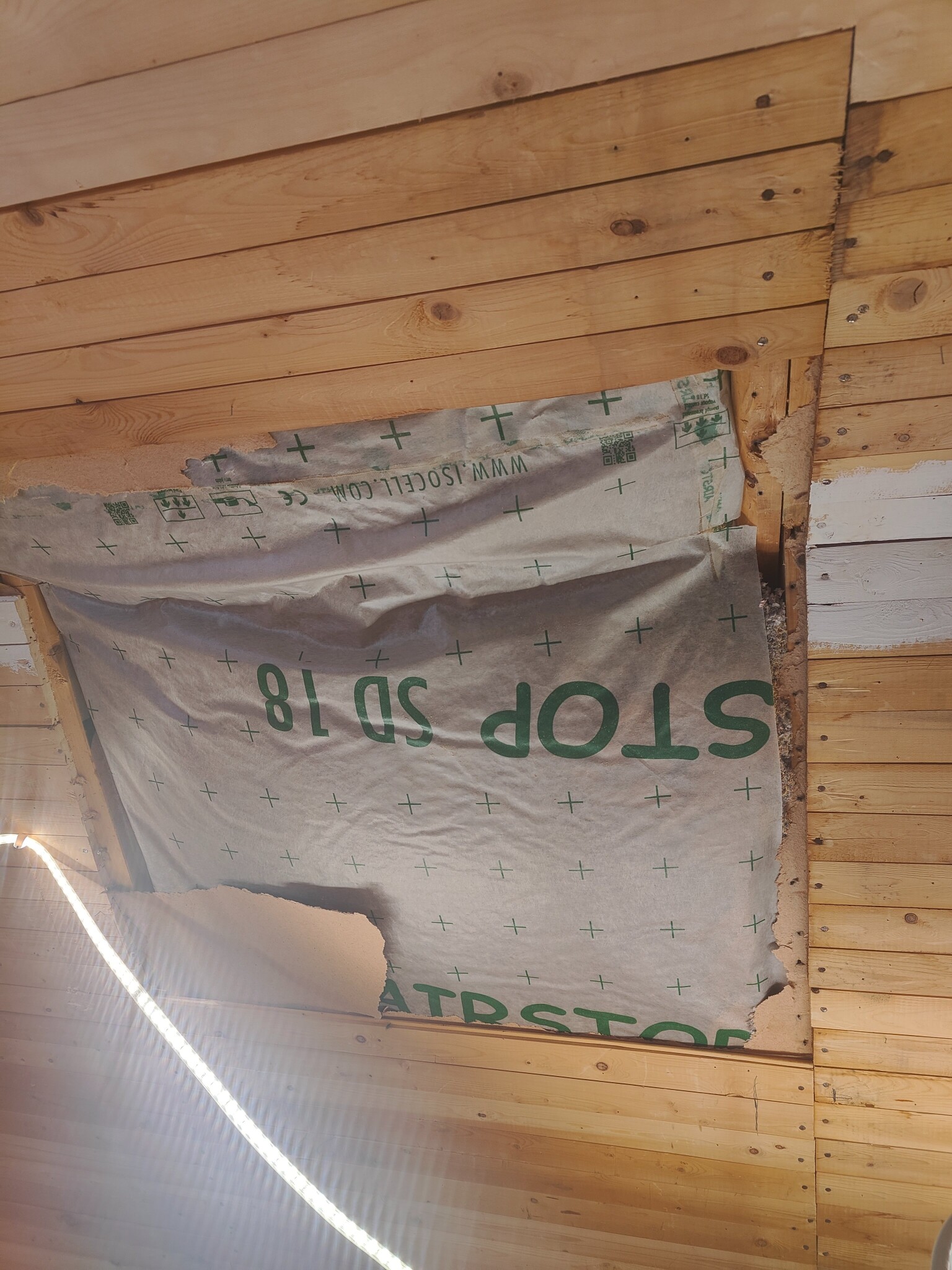
Started tearing down the ceiling to see where they stopped and realized they have rolled down the vapor retarder between the roof rafters in the sloped ceiling. This means it's not particularly tight against the rafters.
My question is if I can just remove some boards in the ceiling and tape new vapor retarder against the sloped ceiling down to the walls, or if I have to remove the old one? (Due to the issue of having 2 vapor retarders with material in between)
A few pictures of a section I removed a bit where you can see the connection downward is not particularly tight:
It should be added that if I connect the wall vapor barrier in the ceiling angle and put a new one on the boards up on the slanted roof, it will only be the old under-roof that ends up between 2 vapor barriers.
And that one of these vapor barriers isn't very tight, I'm also thinking that the barrier is meant to breathe a little, so maybe it's not a problem?
Click here to reply
Vi vill skicka notiser för ämnen du bevakar och händelser som berör dig.