
3,629 views ·
9 replies
4k views
9 replies
Underfloor heating for conservatory
Hello.
We have just built a conservatory of about 21m2. What remains to be done is to lay tiles on the floor.
We have poured a slab on which the conservatory is built. We chose not to install underfloor heating in the slab because we didn't feel that we would need it.
However, now the requirements have changed, which means we need help figuring out what options we have.
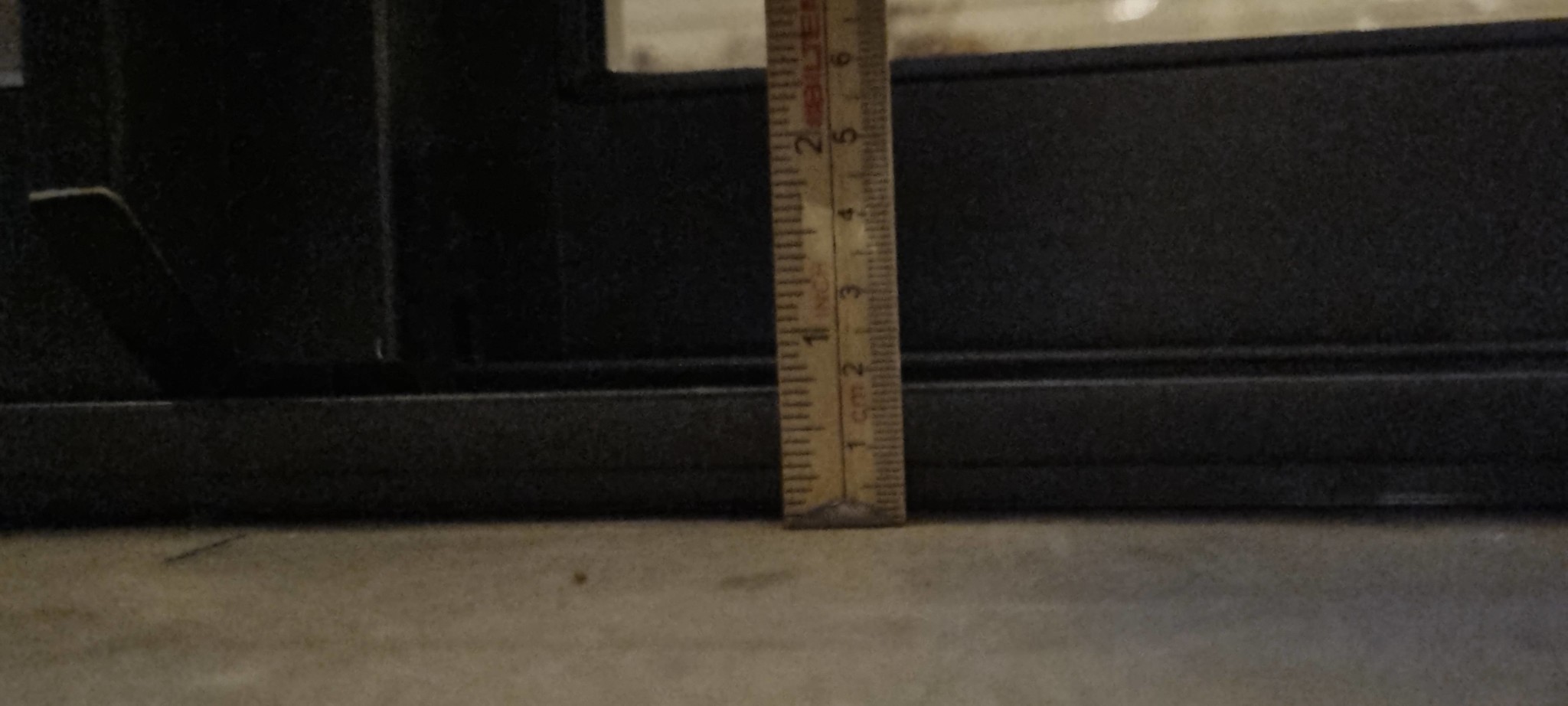
There are about 17-18mm between the slab and the upper edge of the rails for the doors.
Is it possible to install electric underfloor heating and then tiles without exceeding this edge?
Or is it just a matter of laying down the request again?
Best regards,
Linus
We have just built a conservatory of about 21m2. What remains to be done is to lay tiles on the floor.
We have poured a slab on which the conservatory is built. We chose not to install underfloor heating in the slab because we didn't feel that we would need it.
However, now the requirements have changed, which means we need help figuring out what options we have.
There are about 17-18mm between the slab and the upper edge of the rails for the doors.
Is it possible to install electric underfloor heating and then tiles without exceeding this edge?
Or is it just a matter of laying down the request again?
Best regards,
Linus
If you use T2 Quicknet which is 3mm, you can lay tiles directly on it, meaning it doesn't need to be embedded in screed. This would allow you to meet the construction height with a good margin. Cost-wise, you also save on the work of screeding. However, the tiling might be more difficult, but the heating cable is approved for this.

It might work, but it is not according to the manufacturer's instructions to apply spackle that thinly. There is also a heating cable with a grid, so the spackle doesn’t adhere across the entire surface. The risk is that it does not adhere properly and will eventually crack over time. Those of you who say otherwise, do you have any experience or are you just going by feeling?
A grid, it has holes in it and any putty/self-leveling compound attaches in the holes in the net, in relation to cm2 a lot adheres, I see no problems with that. Regarding a manufacturer's info on minimum depth, it is to ensure that the heat spreads and the floor does not get heat streaks if a heating cable is shallow.
Doesn't it depend on the manufacturer? You can't refer to a specific instruction and claim they are universally applicable, can you? But of course, TS should search around until they find a product that works.J Johan456 said:
Click here to reply