At first, I thought it looked like a stairwell with about 90 degrees between the walls and then a staircase down. In that case, a connecting piece is required. Now I'm unsure how it looks. Can you post an overview image?
Initially, I thought it looked like a staircase with about 90 degrees between the walls and then a staircase downward. In that case, a middle piece is required. Now I'm unsure how it looks. Can you post an overview image?
It's that corner that's my headache.
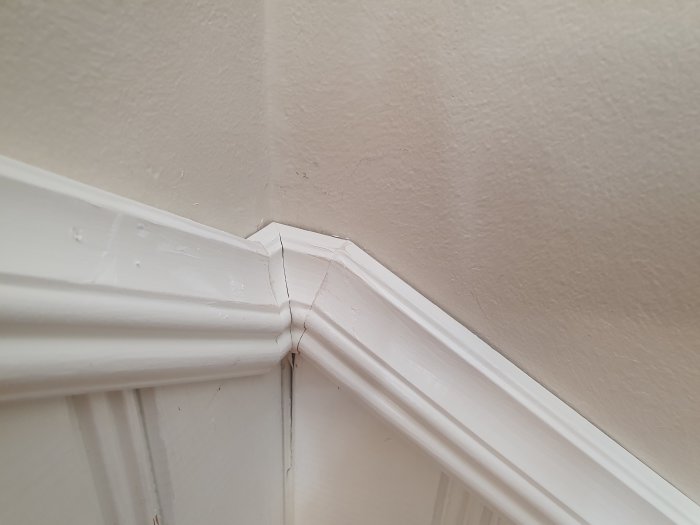
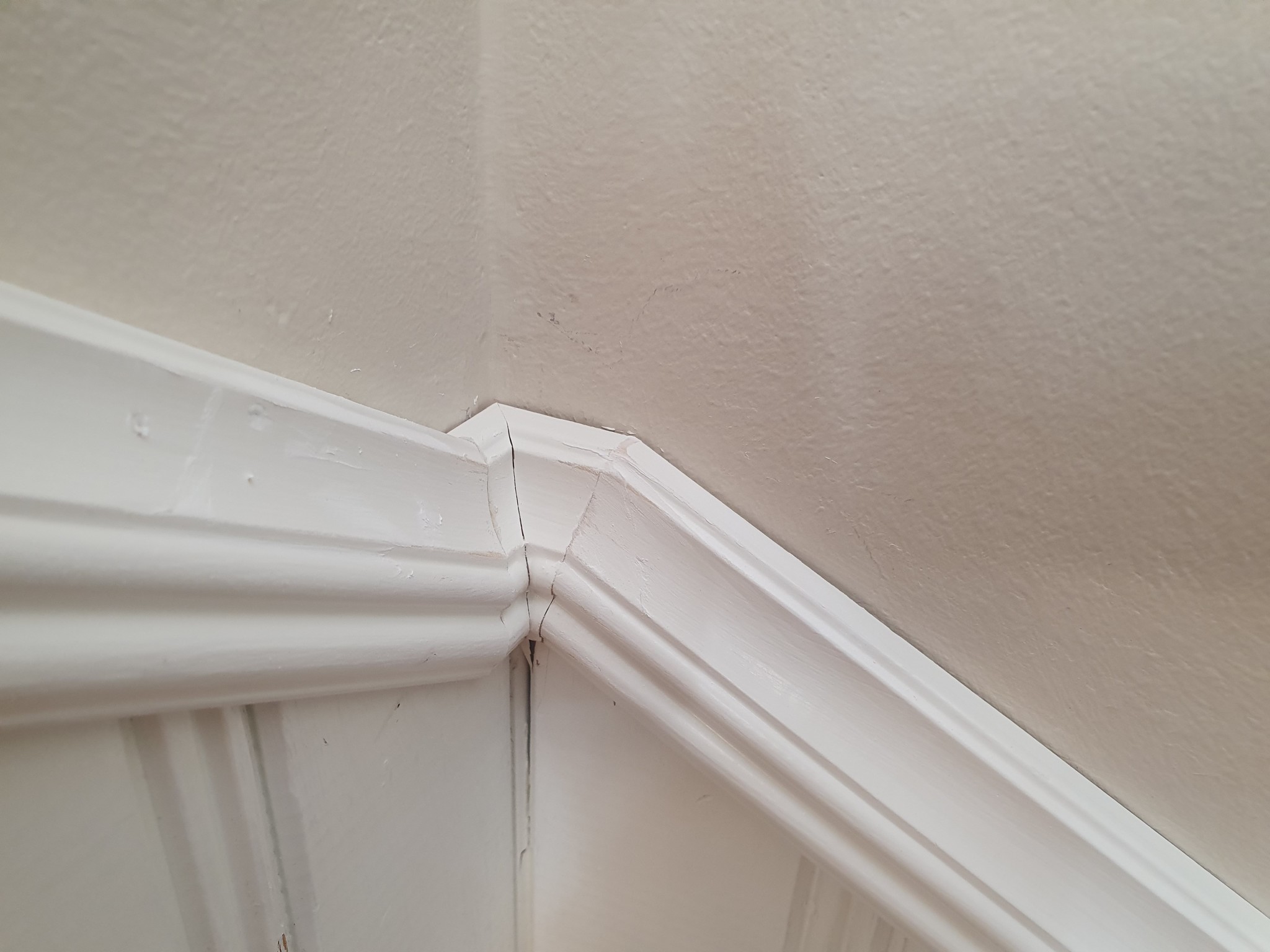
It's 90 degrees between the walls but the panel slopes at 22 degrees.
If both moldings are slanted, you will have to make two filler pieces.
You should cut the joint between the molding and the filler pieces to half the angle. Where the filler pieces meet, it will just be a 45-degree cut (assuming the corner is 90 degrees).
If both moldings are angled, you need to make two transition pieces.
You need to cut the joint between the molding and the transition pieces at half the angle. Where the transition pieces meet, it will just be a 45-degree cut (assuming the corner is 90).
How do you prevent the transition pieces from looking like they do in the picture?
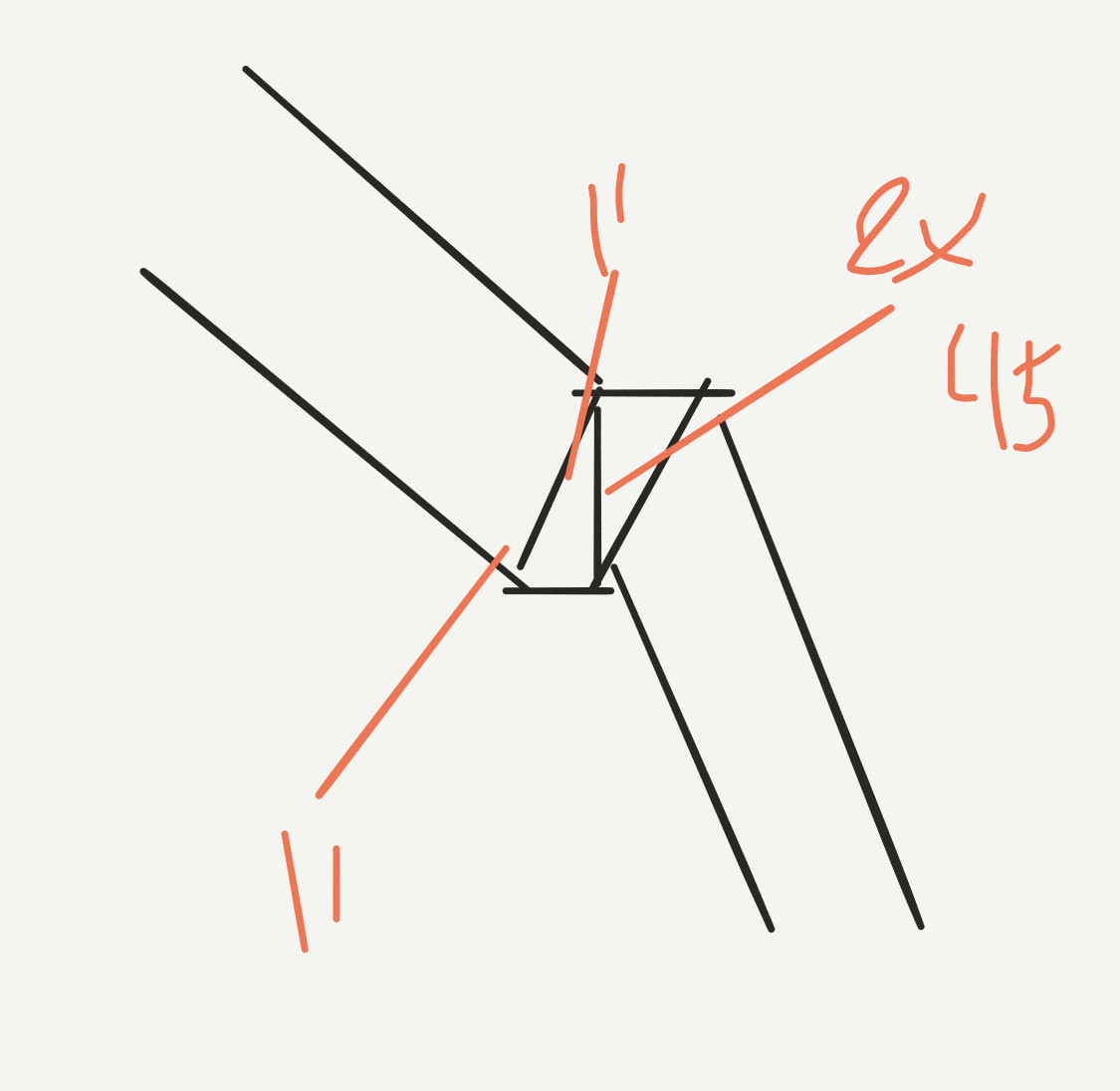
11 on both long pieces, and (if you saw on the flat) 11(ger)-45(angle) on the left middle piece and 45(angle)-11(ger) on the right. With your saw, you must turn the molding upside-down when sawing 45 on the left piece.
11 on both of the long pieces, and (if you cut on the flat side) 11(miter)-45(bevel) on the left intermediate piece and 45(bevel)-11(miter) on the right one. With your saw, you need to turn the molding upside down when you cut 45 on the left piece.
Either you handle half of the slope on both top and bottom, which requires more cuts but gives a smoother transition, or you handle the entire slope on one side and divide into two angles with a wedge instead of two. It's a matter of preference. But you will never be able to fit those two angles acceptably with that molding profile.
11 on both long pieces, and (if you are cutting on the flat) 11(miter)-45(bevel) on the left middle piece and 45(bevel)-11(miter) on the right. With your saw, you need to turn the molding upside down when cutting 45 on the left piece.
Should the 45 cuts also have an 11-degree miter, or have I completely misunderstood this?
Should the 45 cuts also have 11 degrees of bevel or have I misunderstood this completely?
If you check my previous post, "gerning" means you're turning the saw table. "Lutning" means you're tilting the blade. I'll try to make a rough sketch if possible
Ok, I sawed with both lut and bevel when I cut the 45s. That explains why it turned out terrible. You don't need to make a sketch, thanks for the response!
I just did the version with two spacer pieces and I think it turned out well! Here is a picture before caulking and painting, glued the small pieces with superglue.
Click here to reply
Vi vill skicka notiser för ämnen du bevakar och händelser som berör dig.

mattiasp said: