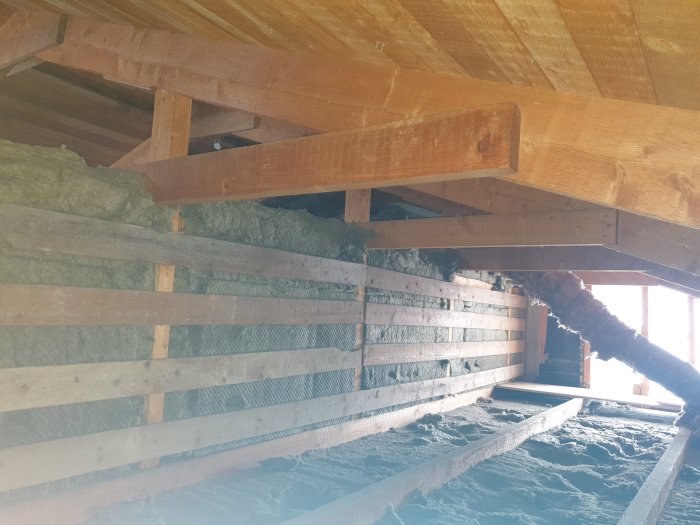
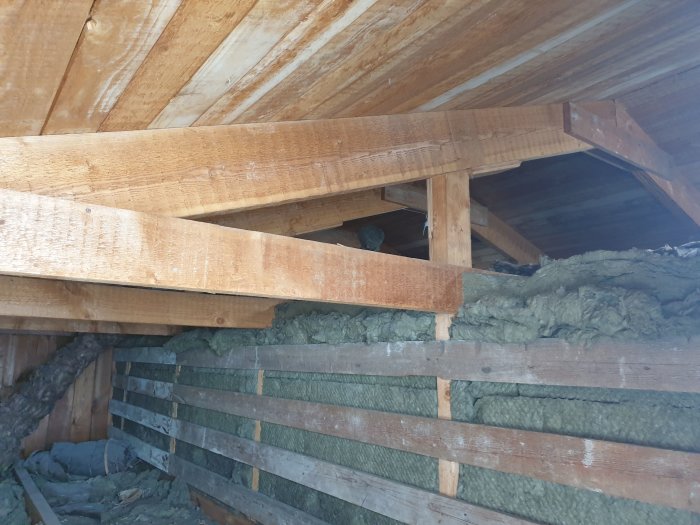
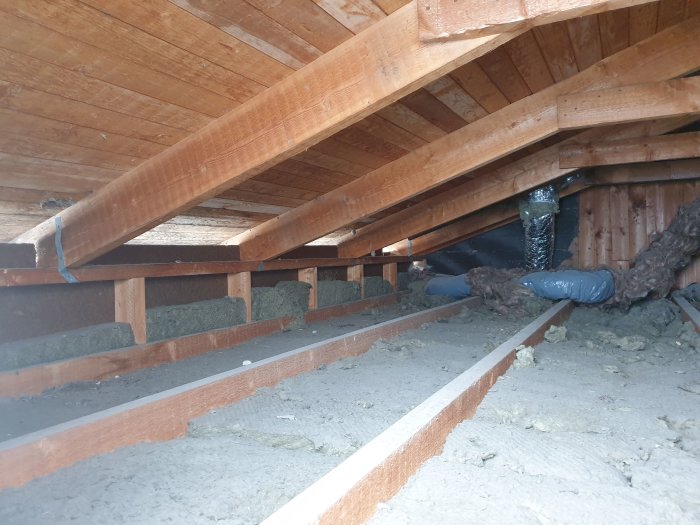
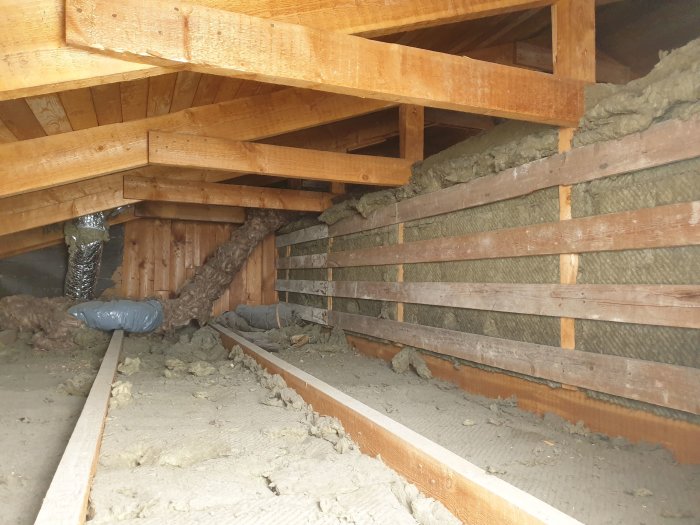
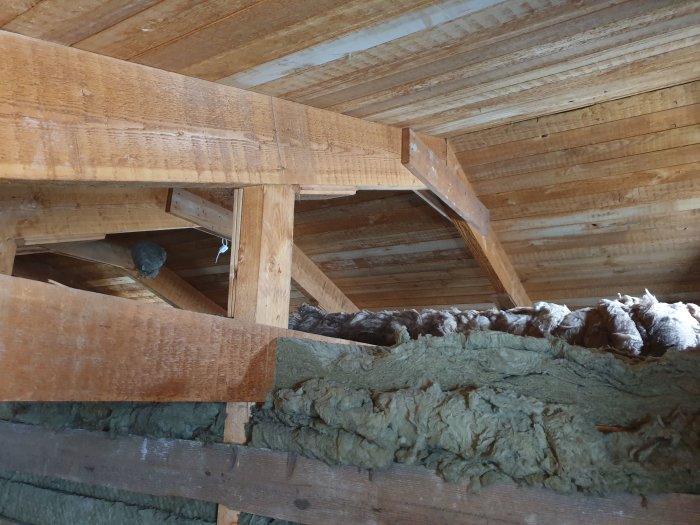
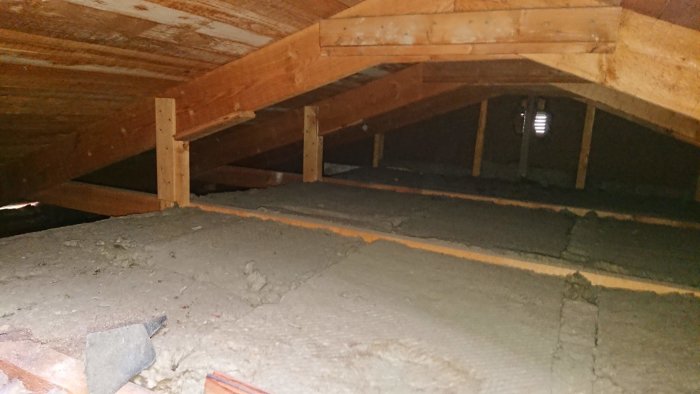
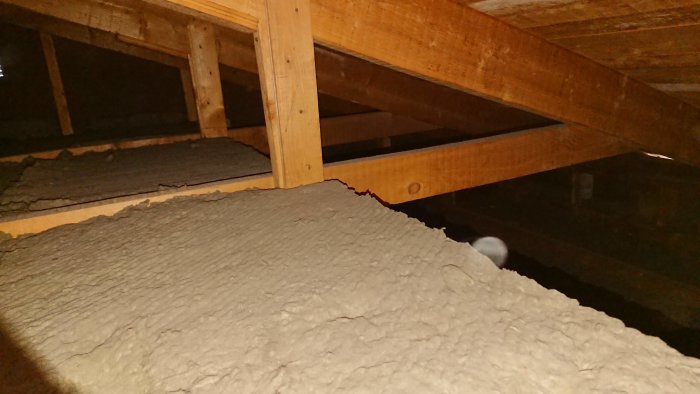
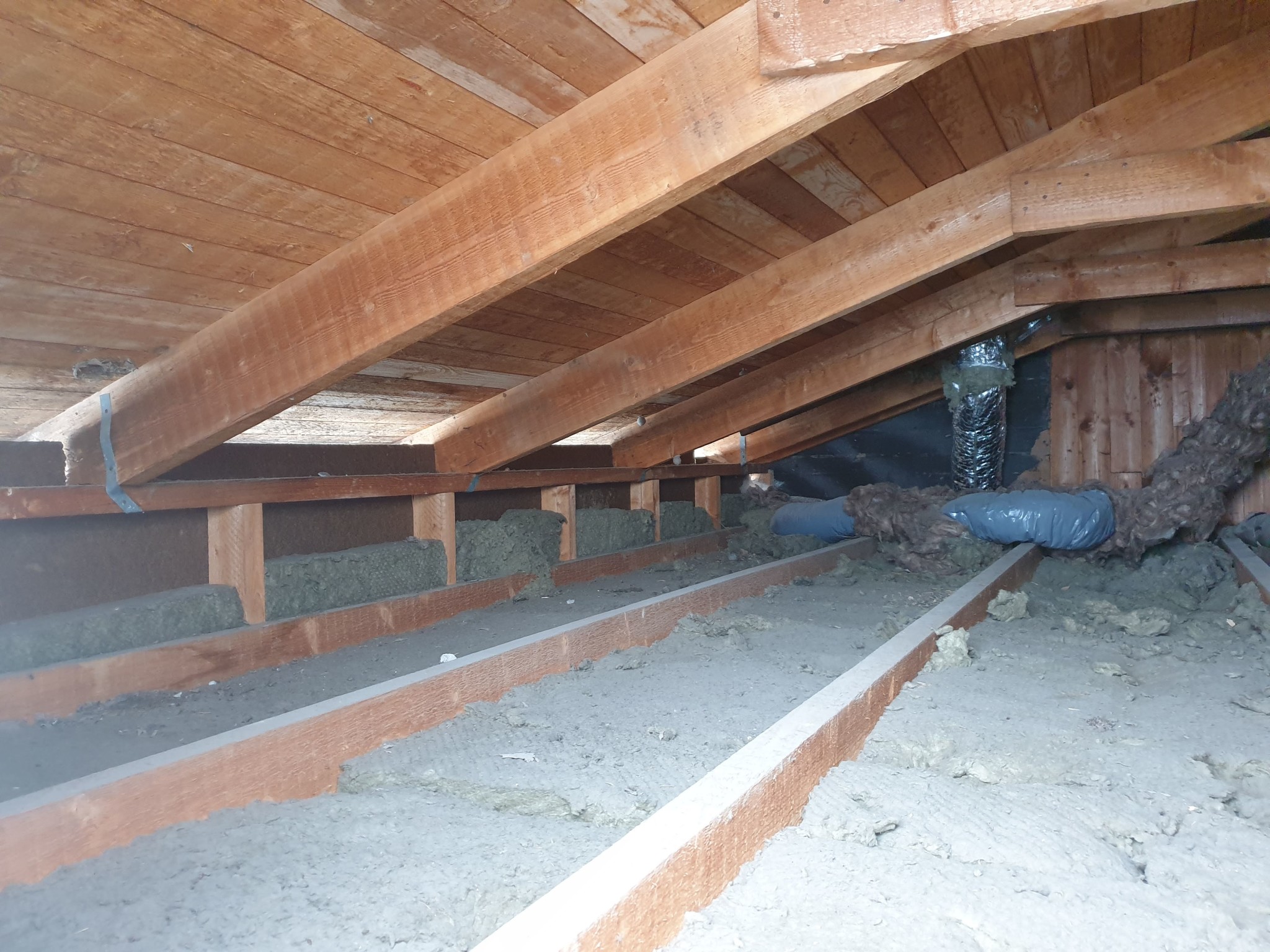
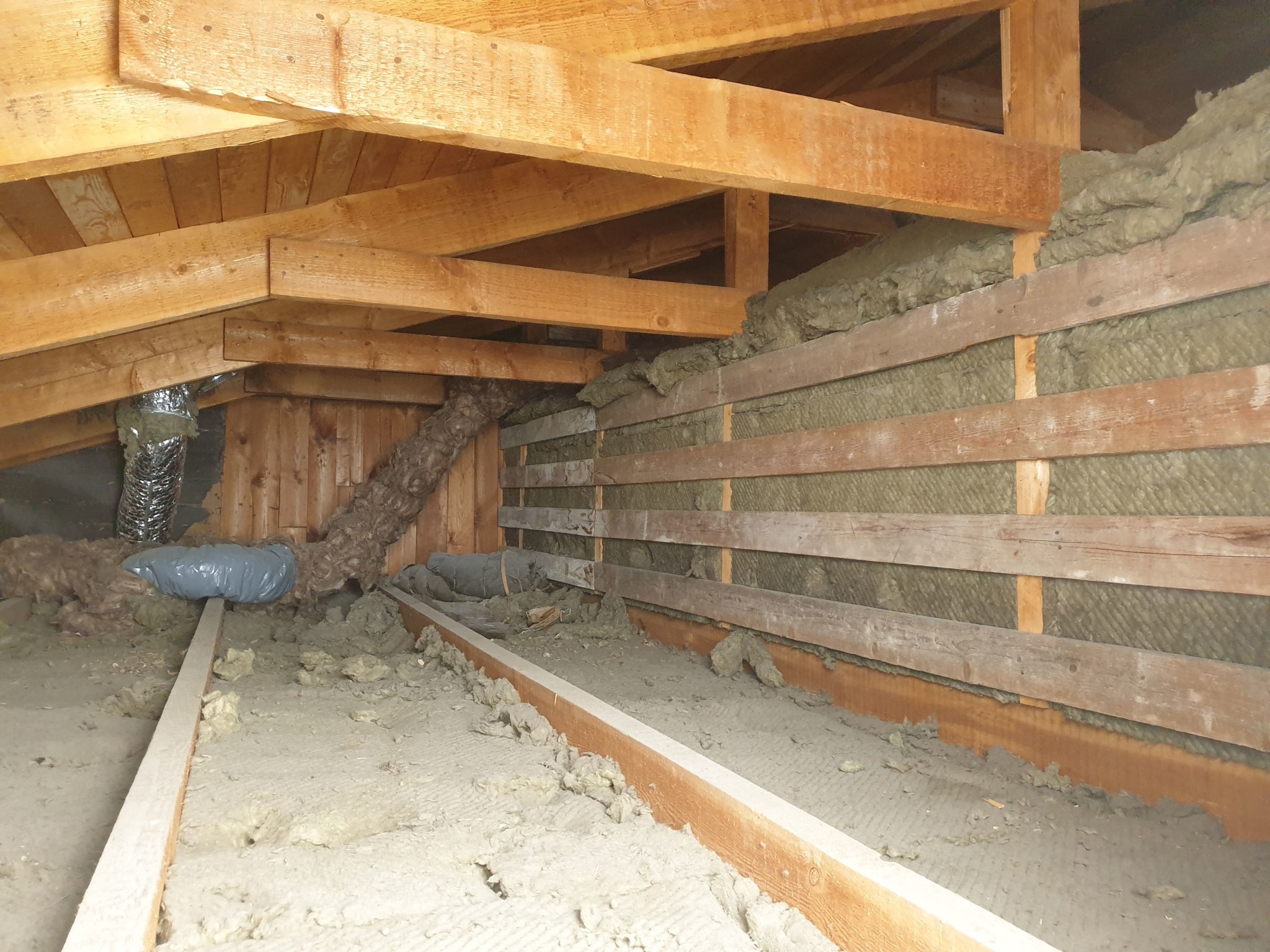
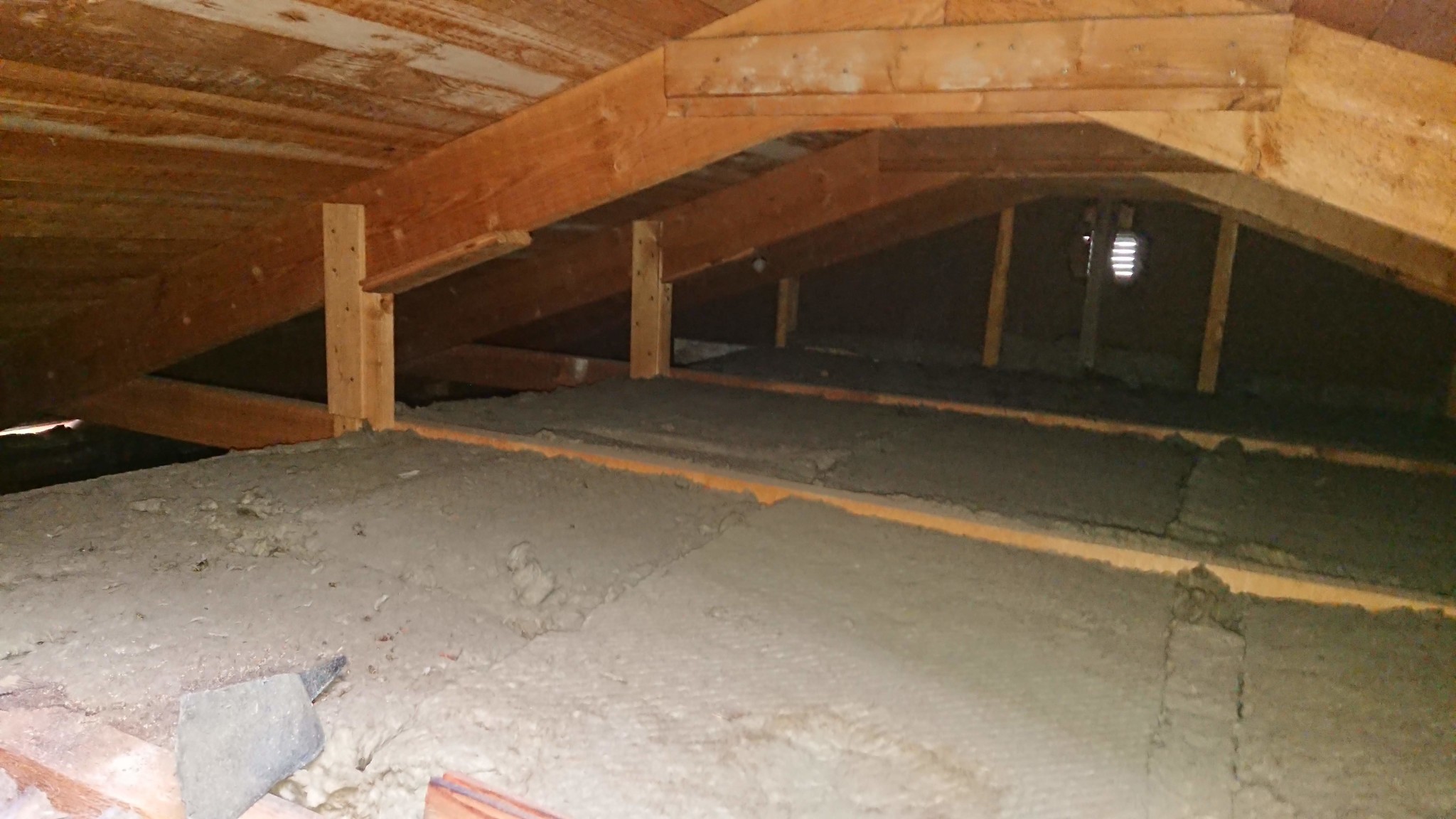
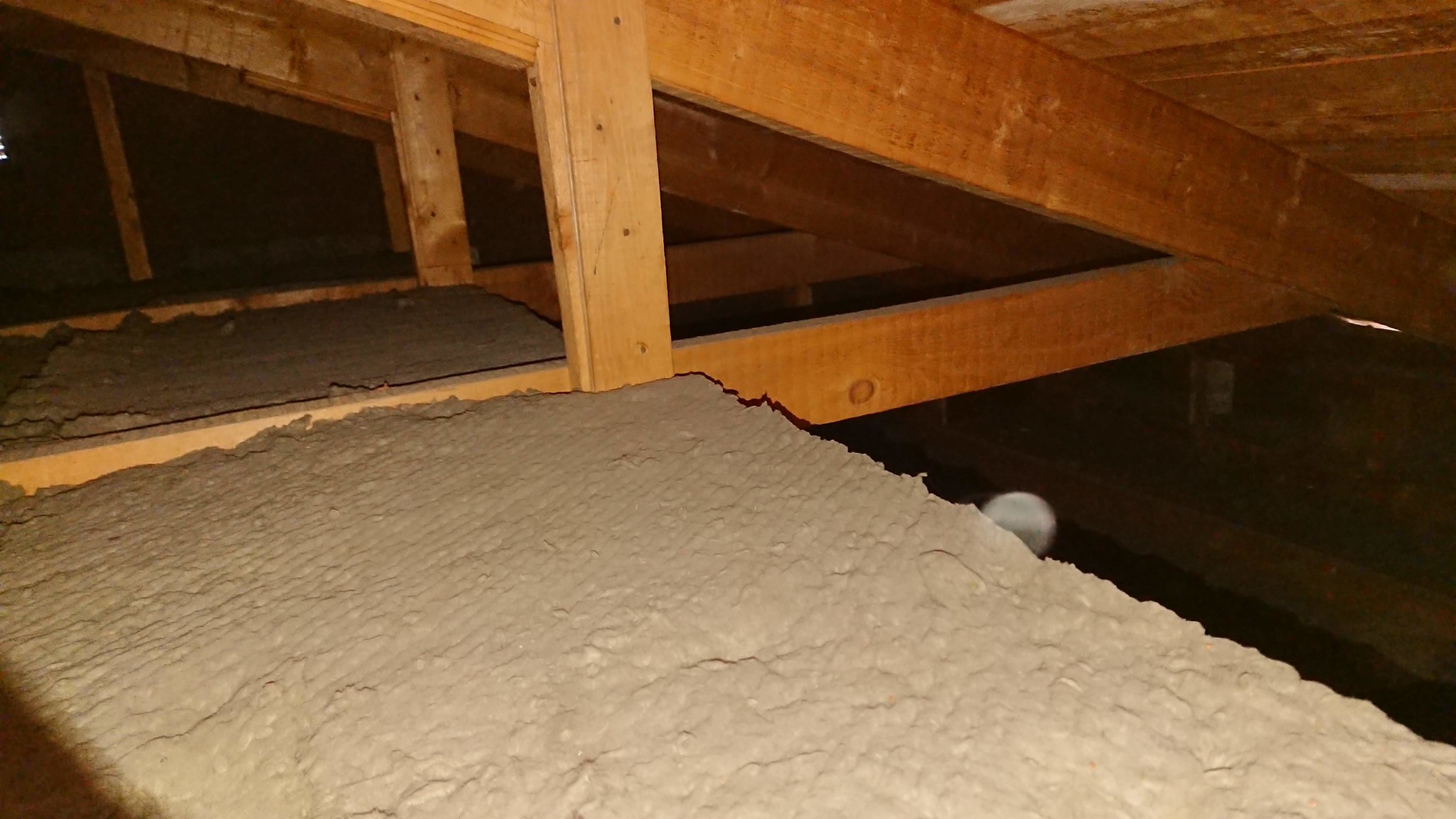
2-story extension from 1970 that is being renovated and now have the opportunity to inspect the rafters.
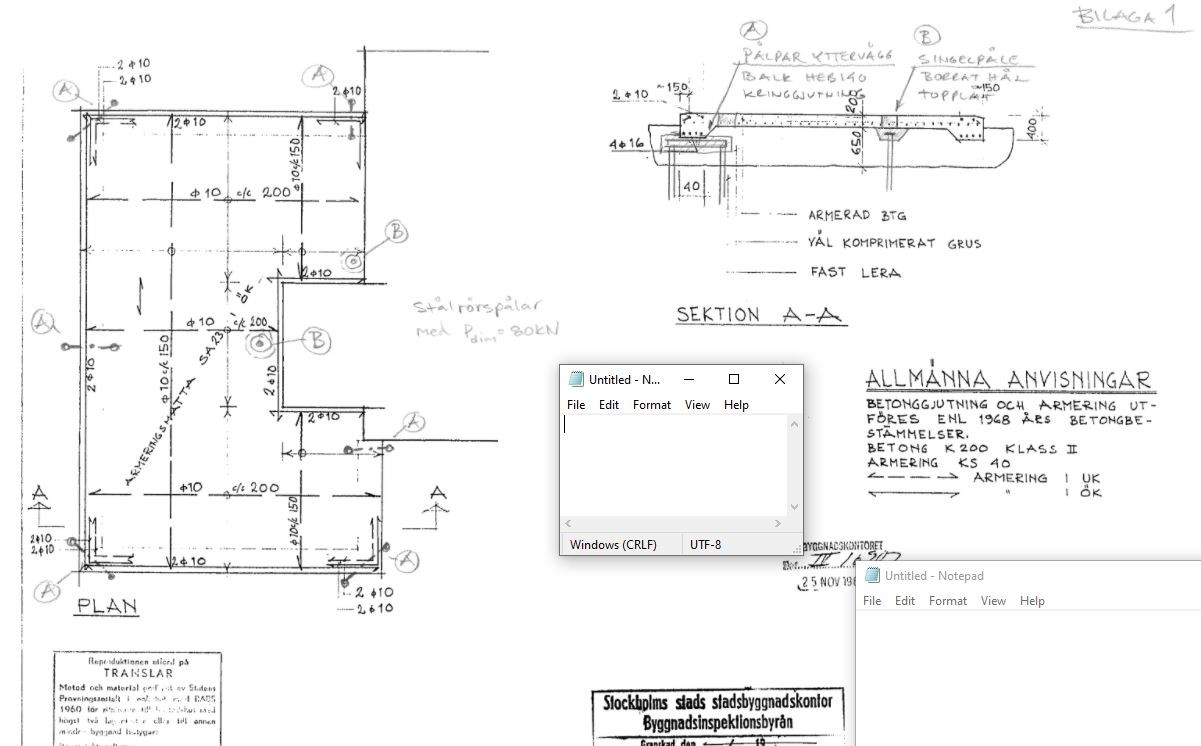
Edge-reinforced slab on ground that has been piled and would like to relieve the joists as some beams hang on the original house's facade.
The 2 beams in the intermediate floor that still "hang" on the original house's facade are the ones that "frame" the staircase as you can see in the pictures from the attic in the middle (the part that is clad with vertical insulation in the pictures).
The purlins feel well-dimensioned to me and with the collar ties mounted as they are now, perhaps the loads are already well distributed to the outer wall? The roof slope is 20 degrees.
What do you think about the current construction and is there any way to improve it, which could move more load towards the exterior walls, or just improve it in general?
If the building is piled, the piles are positioned according to how the loads are transferred down into the foundation. If you intend to move the load solely to the outer walls, there is a risk that the piles will become overloaded. If there is any information regarding the piling and the reinforcement in the edge beams, there is the possibility to perform control calculations on the structure.
If the building is piled, the piles are placed according to how the loads come down into the foundation. If you move the load to only the outer walls, there is a risk that the piles will become overloaded. If there is any information regarding the piling and the reinforcement in the edge beams, it is possible to check the structure.
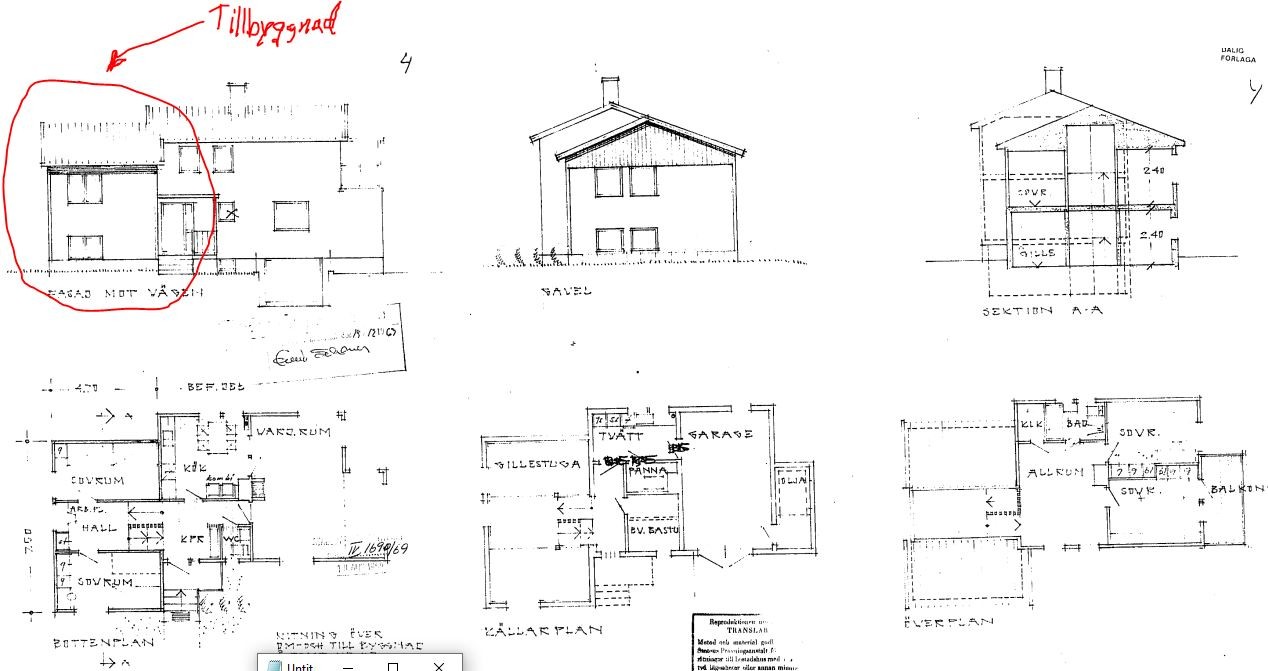
Thank you for the response, yes, there isn't much documented about how the extension is constructed other than what is seen in the drawing below and the construction of the slab itself, but we did the piling in recent years and there is a piling plan, attaching an image of it, but then I don't know if it is possible to see in the drawing below what is load-bearing in the current construction?
So the question about the rafters is more about whether their load-bearing capacity can be improved and where the loads usually land when the roof trusses look like the images and with a roof pitch of 20 degrees.
If the piling was done recently, you can check with the designer how they have calculated the loads from the roof. That's the first thing to sort out. Regarding the roof spans, they currently go down into the exterior walls as well as the two vertical studs closer to the ridge. To rebuild these, an underframe at the height of the wall plates is needed, along with the addition of diagonals.
Thanks, okay, does it look somewhat okay otherwise with "laskar", joints and connections considering the construction year 1970? Or anything you would improve while you have the chance/opened facade gable?
Click here to reply
Vi vill skicka notiser för ämnen du bevakar och händelser som berör dig.