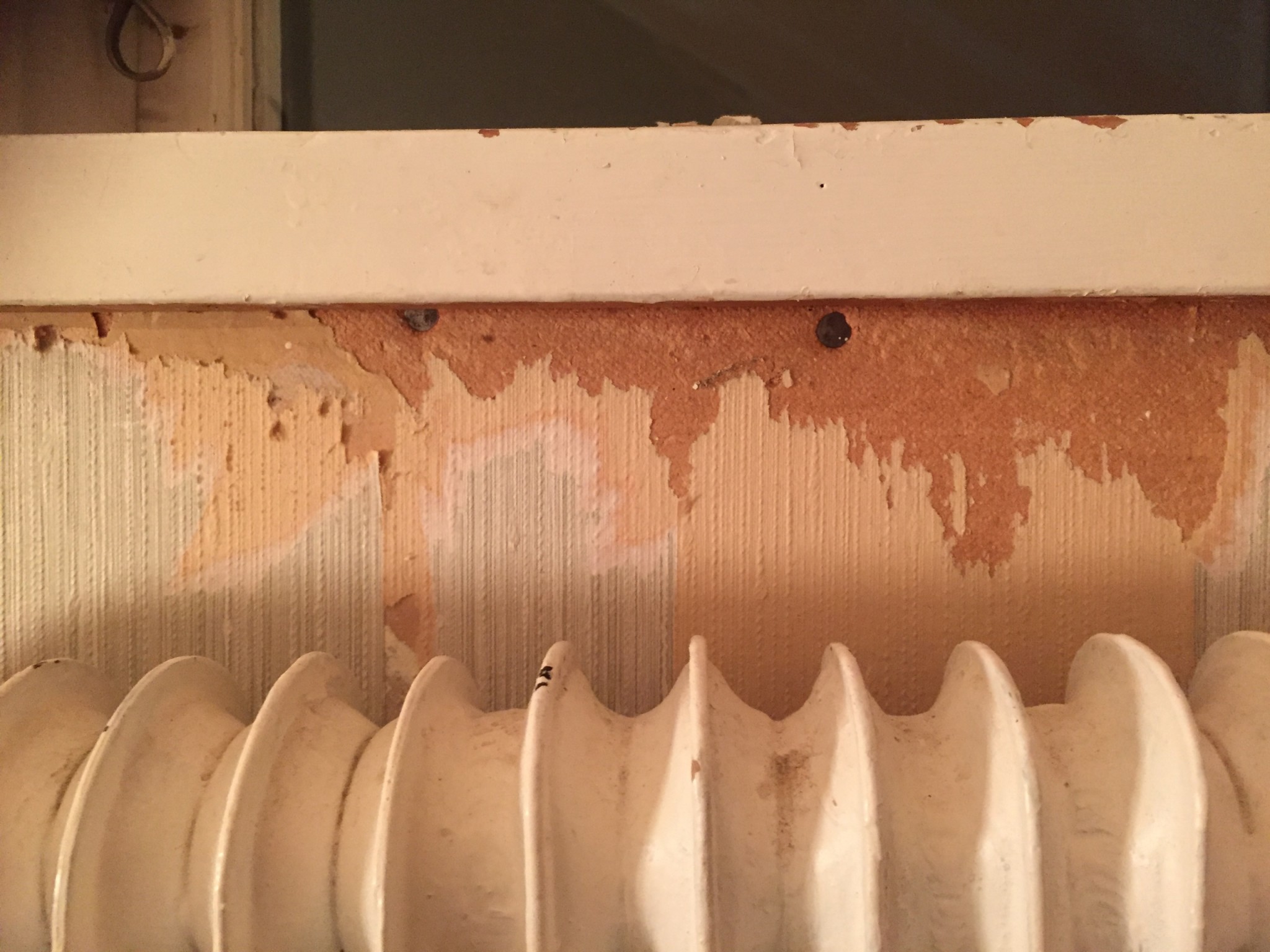
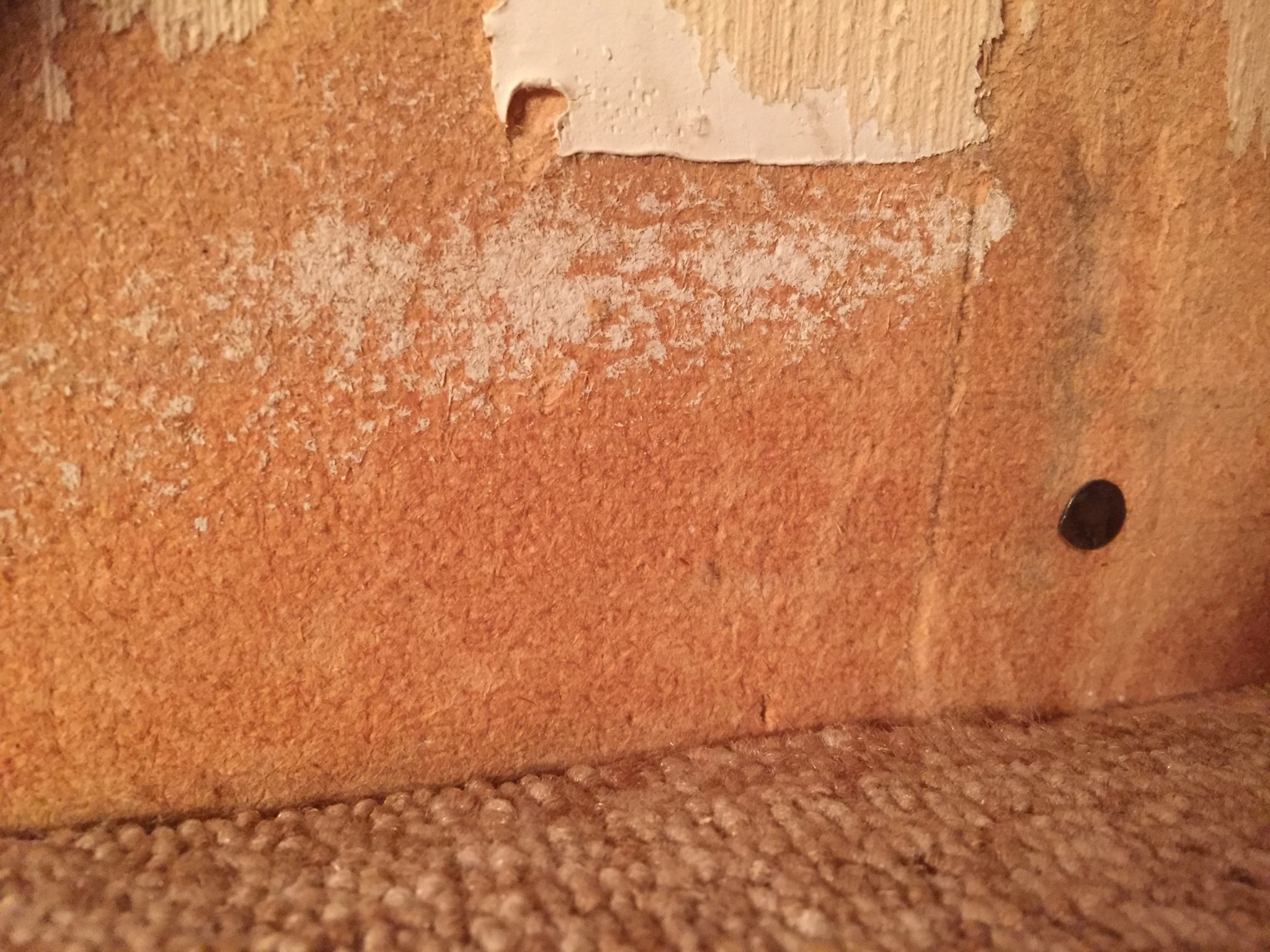
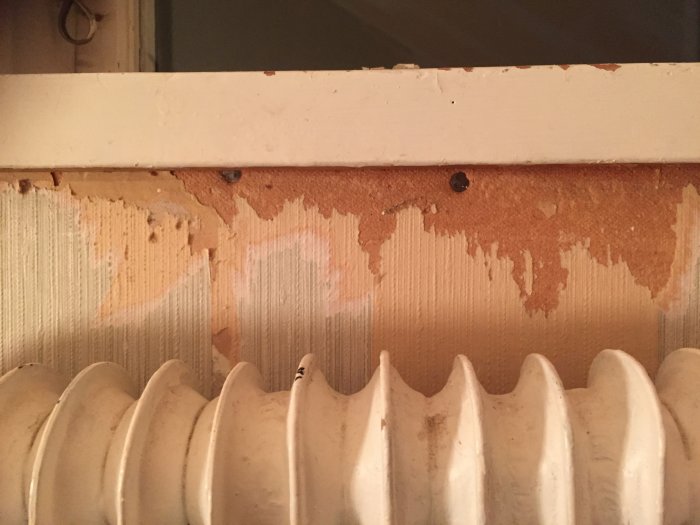
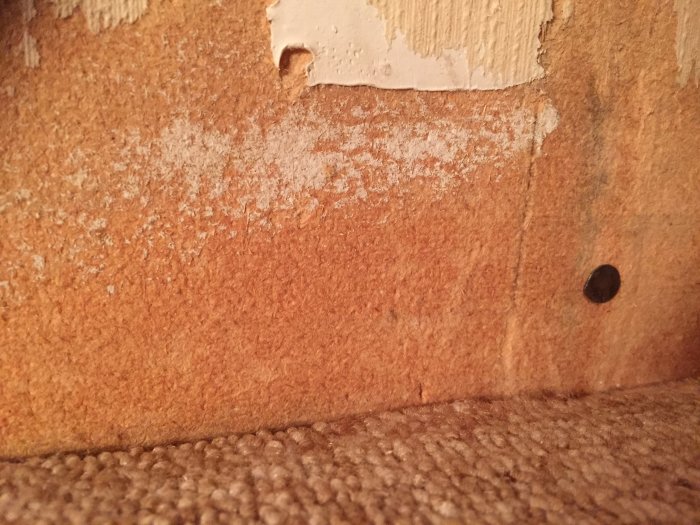
We have just started renovating the newly acquired villa from the late 1800s/early 1900s and, as expected, we encounter some things we might not exactly be thrilled about. The house was renovated and extended in the 1940s, and in several rooms, there are some type of board walls. I assumed it was treetex, but when I read about it, the general consensus is that treetex is very porous, which our boards are not. (Sure, you probably wouldn't hang a flat-screen TV on it, but you definitely can't push your thumb through it.)
Does anyone have any tips on what this might be?
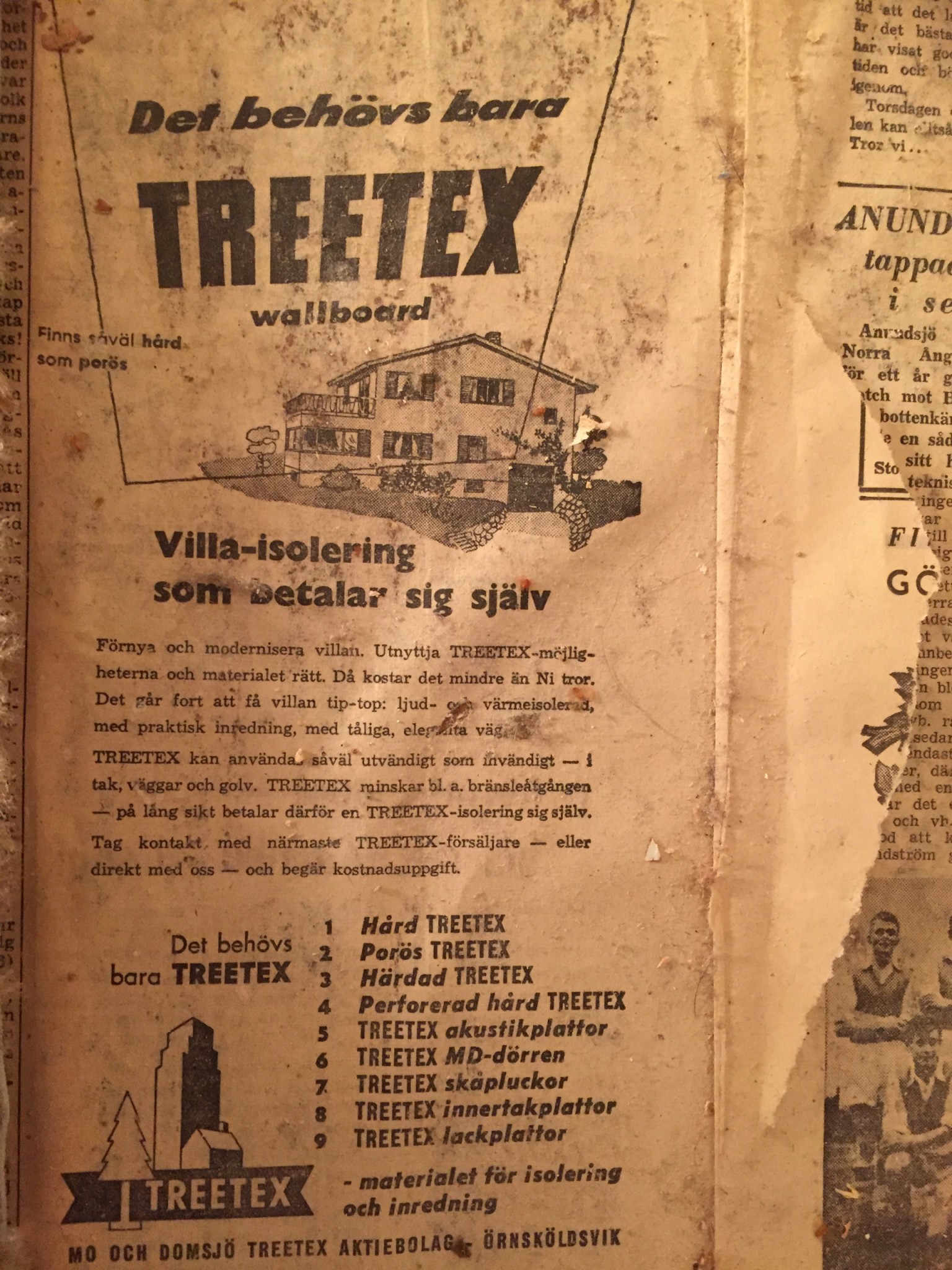
This newspaper ad is conveniently glued to the subfloor in the same room where the pictures were taken That's what happens when you live in the golden birthplace of treetex!
Interesting by the way. I have always seen it referred to as tretex, and thought you were spelling it wrong.
Yes, the idea that it might be hard or hardened treetex has strangely crossed my mind too
However, "everyone" seems to agree on how porous the treetex should be, hence the curiosity. The hard and hardened might have just been bestsellers around the factory here.
You can press your nail into it and it's just right for putting thumbtacks in.
That's a bit of a maybe on that You can't press your nail into the board, and if you want to insert a nail or thumbtack, you'll probably have to fetch the hammer. Maybe it's simply the hard type
"Vanlig" treetex is about one cm thick, and you can press a thumbtack into it very easily. Treetex is actually really excellent for making bulletin boards where you want to pin needles and thumbtacks.
On the other end of the scale, there is masonite of various forms, really hard pressed. (Yes, technically, HDF followed by MDF are the hardest pressed wood fiber boards).
But there have surely been experiments with various building boards that have been pressed to all possible hardness levels between treetex and masonite - I guess.
What a fantastic time document, save that picture of the ad!
Now I understand how they thought. In my house, which was originally built in 1939, I have found both porous "bulletin board treetex" back then (in the attic floor for simultaneous sealing and insulation under the wood shavings), and "hard treetex," which is almost like a 13mm masonite board. It was apparently popular around 1965 when all interior wall surfaces got new wallpapers, etc.
Treetex was simply the first smooth building board + some other "features" like "thin insulation"...etc...
A funny anecdote is that when I was little (in the 70s), I went to a hardware store and wanted a sheet of treetex because I had read in an old book about model railroads that it could be used to build mountains and the like, easy to break into "natural" contours, paint on and so on... They had no idea what I was talking about and suggested gypsum board instead...
Thank you so much for all the answers, building a house is probably the friendliest forum I've ever seen! Even though it's not an important question, it's great that people get involved
Karlmb: Cool timeline you found. I can add that the old treetex factory was demolished in 06 or 07 to make room for a new cogeneration plant; as a cheeky youth, one would gladly sneak around the abandoned factory and explore during bright summer nights
The project of modeling a landscape from a plasterboard sounded much more difficult than from a porous fiberboard...
treetex is just a brand. Soft/porous wood fiberboards are the trade name for them, but since they are not used in the same way nowadays, the supply is limited. However, they are commonly used in southern Europe and in Poland, where most boards are manufactured today. They are available in a variety of densities, i.e., "hardness levels."
Click here to reply
Vi vill skicka notiser för ämnen du bevakar och händelser som berör dig.


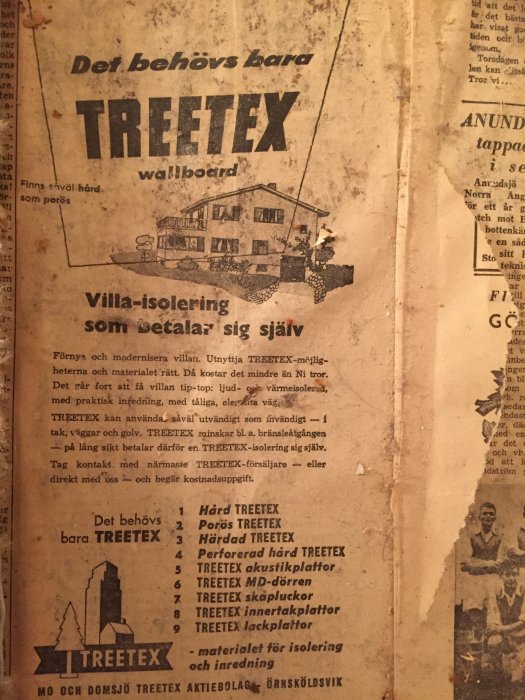
 That's what happens when you live in the golden birthplace of treetex!