I have just bought a house built in 1910 in Skåne. It is a stuccoed brick house with 10 cm insulation in the walls. Built on a concrete slab directly on the ground. There are no visible vents in the house either on the outside or inside. The house upstairs is open to the ridge with unknown insulation. A large fireplace with an installed stove is located on the ground floor.
The house is to be renovated and I want to do the right things in the right order.
The biggest problem right now is that there's quite a bit of draft everywhere. If I open a floorboard, fresh cold air blows from the floor. There's a hole in the base under the kitchen cabinets where it drafts like crazy.
In gaps and corners where it's not sealed in the hall, it drafts the same way. Draft is perhaps an understatement. Blows is more accurate.
I'm a bit worried about sealing from the inside due to moisture and condensation, is that a valid concern?
At the same time, I have installed a heat pump, so now I have heat in the house, but... without vents, is it the salvation that the house is so drafty? While cold air drafts in from all possible directions, the heat pump sends in warm air that needs to get out somewhere...
What would you think, should I wait until the snow is gone to inspect the house from the outside or do I need to open up vents immediately...
It might take a while for the snow to go away as the garden attracts all the snow swirling around and I have between 1.2 to 2.2 meters of snow in the garden which is absolutely rock hard and not "shovelable". So the snow is piled up high against the facade facing the garden.
How bad is it that there's so much snow against the facade?
First of all, if it has been standing since 1910, the ventilation works. That there are no vents is of course not a coincidence; it is designed that way.
I would be careful with what I changed when something has obviously worked for over 100 years...🤔
First of all, if it's been standing since 1910, the ventilation works. The fact that there are no vents is obviously not a coincidence, it's designed that way.
I would be careful about changing something when it has apparently worked for over 100 years...🤔
But for over 100 years there was no built-in stove or heat pump. The open fireplace that existed back then was probably enough to ventilate the house, but with a new pipe in the chimney and a stove, that path is more or less closed nowadays. The draft I have also significantly cools down the house, which is evident on the electricity bill.
Hence my question... but maybe you're right that it's normal for there to be such a strong draft in the floor joists, I don't know but I find it strange. I've had old houses before but never experienced it so much.
so the heat pump sends in warm air that should go out somewhere ...
I don't believe that unless you have a very unique variant.
The heat pump sucks air from inside, heats it, and blows it back into the house. No outside air is blown in.
Snow-free might take a while as the garden attracts all the snow swirling around and I have between 1.2 up to 2.2 meters of snow
Do you have 1m of snow against the facade around the entire house and still have drafts at floor level? That was a bit odd. "In the past" they shoveled snow around the foundation to insulate and prevent drafts.
I don't think so unless you have a very unique variant.
The heat pump sucks air from inside, warms it, and blows it back into the house. No outside air is blown in.
😆 no, I don't think I have that, it's probably quite normal. But without vents, I'm worried that it forces the heat into the construction, which I think is definitely not good. Because where does the heat go otherwise, but I'm absolutely no expert. I just want to know ...
Do you have 1m of snow against the facade around the whole house and still draft at floor level? That was a bit unusual. "In the past," people used to shovel snow around the foundation to insulate and avoid drafts.
Ok, I didn't know that.
No, I don't have it around the whole house, just on two sides and maybe 3 dm on the others.
Maybe I should shovel some there instead then?
😀
😆 no, I don't think I have, it's probably quite normal. But without vents, I'm worried that it forces the heat into the structure, which I think is definitely not good. Because where else would the heat go, but I'm absolutely not an expert. Just want to know...
The heat definitely goes out into the walls, it can't be avoided and it's not dangerous.
But it doesn't create overpressure inside. That would have been bad.
There should absolutely not be cold air coming in from the foundation/floor joists. If it does, it shows that it is not airtight against the outside.
However, the house has been standing since 1910, so there is no urgent panic. Wait until spring and examine the house and its construction/function. First, you need to know what you have before you start tinkering. Once you know what you have, you can start thinking about your needs and prioritize among them.
I would, however, seal the floor against drafts by caulking as best as possible right away. No matter how much you seal, it is almost impossible to make an old drafty house completely airtight.
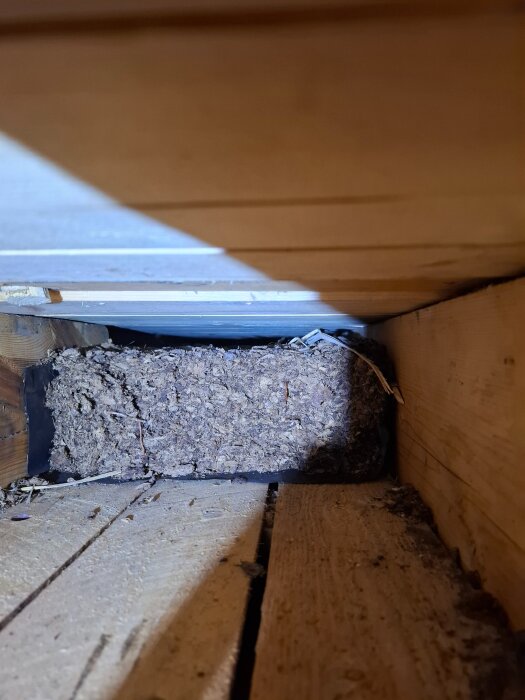
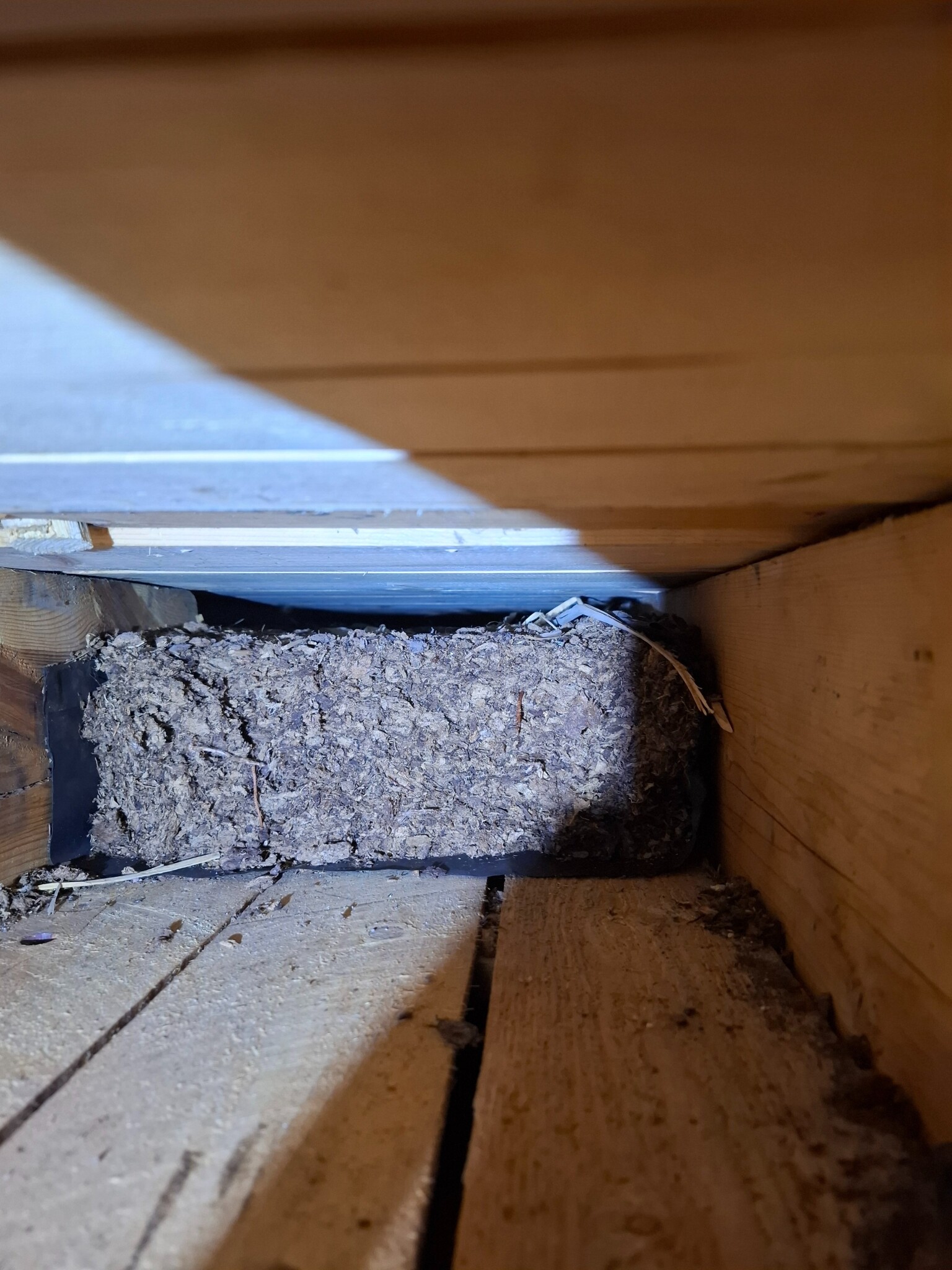
We have a house from the 1930s and our floors on the ground floor used to get ice cold whenever there was even a slight breeze in winter. I suspected that the insulation in the floor joists might not be the best, so I started tearing down the basement ceiling. I then discovered that the insulation was old peat that had settled, creating a 3-5 cm air gap under the floor where drafts flowed freely from the sparse outer walls.
Now I have installed underfloor heating and insulated properly, which made a big difference. Next up are the outer walls in the kitchen, which seem to be insulated with something like a cardboard sheet.
The biggest problem right now is that it pulls quite a bit both here and there. If I open a floorboard, cold air blows fresh from the floor. There is a hole in the baseboard under the kitchen cabinets where it's really draughty.
There's a reason there were rya rugs everywhere in old houses 😉
These helped a lot in the wintertime.
We have a house from the 30s, and our floors on the ground floor used to get ice-cold with even the slightest wind in winter. I suspected that the insulation in the joist might not be the best, so I started pulling down the ceiling from the basement. I then realized that the insulation was old peat that had settled, leaving a 3-5cm air gap under the floor where the cold air blew through the sparse outer walls.
[image]
Now I've installed underfloor heating and insulated properly, which made a big difference. Next up are the outer walls in the kitchen, which seem to be insulated with something like a cardboard sheet.
I'm considering that when I renovate the kitchen, I'll lift up the floor and see how it looks, and if needed, I'll add new insulation.
Sounds a bit strange that you're lifting floorboards and getting drafts when the house is built on a slab. You write that it’s plastered brick on the exterior walls with 10 cm insulation. What type of insulation is it and where is it located?
The stove, does it use indoor air or outdoor air for its combustion? If it uses indoor air, it creates a negative pressure which causes outdoor air to be drawn in through gaps and crevices.
The stove, does it use indoor air or outdoor air for its combustion? If it uses indoor air, it creates a negative pressure that causes outdoor air to be drawn in through gaps and cracks.
Plus on that. In the military service in Boden, we quickly learned the difference in temperature by bringing extra stove pipes to place from under the stove and out under the tent fabric so that the stove used outdoor air instead of the heated air inside the tent.
Click here to reply
Vi vill skicka notiser för ämnen du bevakar och händelser som berör dig.

Farstatjej90 said: