
18,290 views ·
7 replies
18k views
7 replies
Tear down walled fireplace? Load bearing?
We are in the process of converting a recreation room into a bedroom where there is currently a brick open fireplace that we have never used and never will use. The fireplace is masonry and is part of the entire chimney structure up to the chimney.
If we tear it down, we understand that the chimney will be kind of 'hanging.' But isn't there a way to demolish it and brace it just like tearing down a load-bearing wall?
Alternatively, can it be enclosed? Frame it in and then put up drywall? If so, do we need a ventilation hatch there?
Grateful for answers!
If we tear it down, we understand that the chimney will be kind of 'hanging.' But isn't there a way to demolish it and brace it just like tearing down a load-bearing wall?
Alternatively, can it be enclosed? Frame it in and then put up drywall? If so, do we need a ventilation hatch there?
Grateful for answers!
Do you have any pictures?E eemmy said:We are in the process of converting a den into a bedroom where we currently have a built-in open fireplace that we have never used and never will use. The fireplace is built-in and is part of the entire chimney structure up to the chimney.
If we tear it down, we understand that the chimney would be 'hanging'. But isn't there a way to tear it down and support it like you do when tearing down a load-bearing wall?
Alternatively, can it be enclosed? Frame it up and then put up plasterboard? In that case, do you need some kind of ventilation hatch there?
Grateful for answers!


Why do you want to keep the chimney if it no longer serves a purpose?
I think "suspending" it in the framework can be risky. Brick chimneys are heavy.
But be careful! It may happen that part of the floor structure is supported by the chimney.
I think "suspending" it in the framework can be risky. Brick chimneys are heavy.
But be careful! It may happen that part of the floor structure is supported by the chimney.
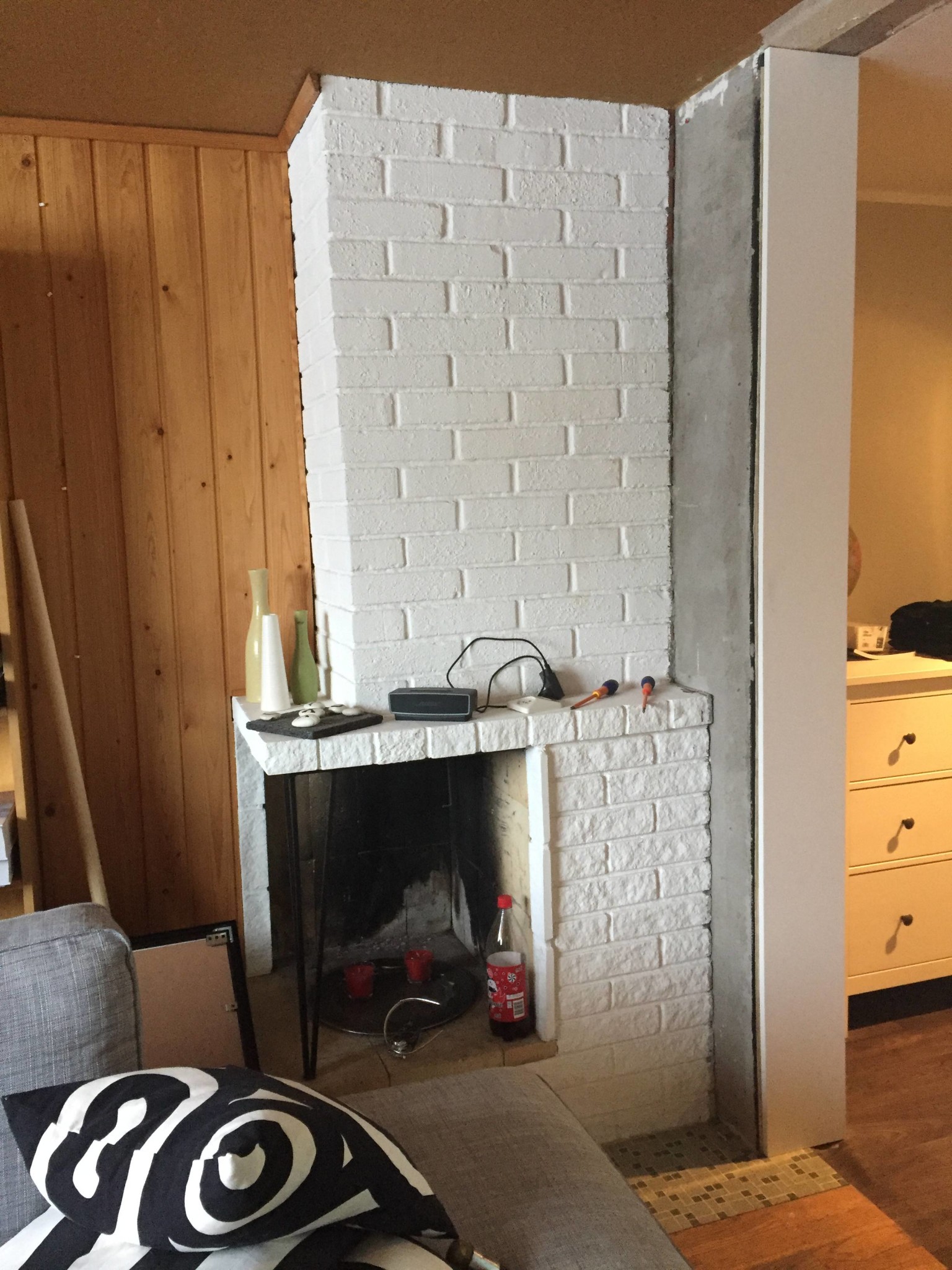
Do you know what the chimney looks like one floor up? It is not at all certain that what appears to be the chimney actually is.


Did you plan to use the same flue in the chimney for your future fireplace in the living room?
If so:
Knock down all parts of the fireplace that protrude outside the chimney. Seal off what's left of the fireplace opening. Use, for example, the bricks that were left over when you knocked down the protruding parts. Plaster everything so it looks like any other wall in the house. If there are no other flues in the chimney from, for example, a boiler in the basement, it is of course also possible to put up a frame and panels, but this mostly just takes up unnecessary space.
When you are ready to reuse the chimney for the living room's fireplace, you create an opening into the flue at an appropriate height. Then you shovel in sand, brick shards, or whatever you happen to have access to in the flue and fill it up to just below the lower edge of the new opening. Then you create a plug with mortar and perhaps a couple of bricks as the new bottom of the flue.
In older houses with a bunch of flues in the chimney, it's often done exactly this way - all the flues go down to the bottom of the chimney and are then filled and plugged to the height they actually need.
If so:
Knock down all parts of the fireplace that protrude outside the chimney. Seal off what's left of the fireplace opening. Use, for example, the bricks that were left over when you knocked down the protruding parts. Plaster everything so it looks like any other wall in the house. If there are no other flues in the chimney from, for example, a boiler in the basement, it is of course also possible to put up a frame and panels, but this mostly just takes up unnecessary space.
When you are ready to reuse the chimney for the living room's fireplace, you create an opening into the flue at an appropriate height. Then you shovel in sand, brick shards, or whatever you happen to have access to in the flue and fill it up to just below the lower edge of the new opening. Then you create a plug with mortar and perhaps a couple of bricks as the new bottom of the flue.
In older houses with a bunch of flues in the chimney, it's often done exactly this way - all the flues go down to the bottom of the chimney and are then filled and plugged to the height they actually need.
Click here to reply