
2,115 views ·
3 replies
2k views
3 replies
Tear down internal plaster in old house?
I am in the process of renovating a bedroom. The house is from 1918. The ceiling is "plastered" and in the edges between the ceiling/wall, it is rounded. Above this, it seems to be timber. I have torn down an old ceiling drop of 50 cm+ and will make a framework to conceal the wiring and install plasterboards. For this, I would like to remove the rounded corners as they take up 5 cm.
Maybe one might as well chip away the plaster on the ceiling? Or do they have a structural function? I'm wondering if the structural integrity will be affected if I knock down the edges. Regarding soundproofing, I intend to insulate instead.
Regards
Maybe one might as well chip away the plaster on the ceiling? Or do they have a structural function? I'm wondering if the structural integrity will be affected if I knock down the edges. Regarding soundproofing, I intend to insulate instead.
Regards
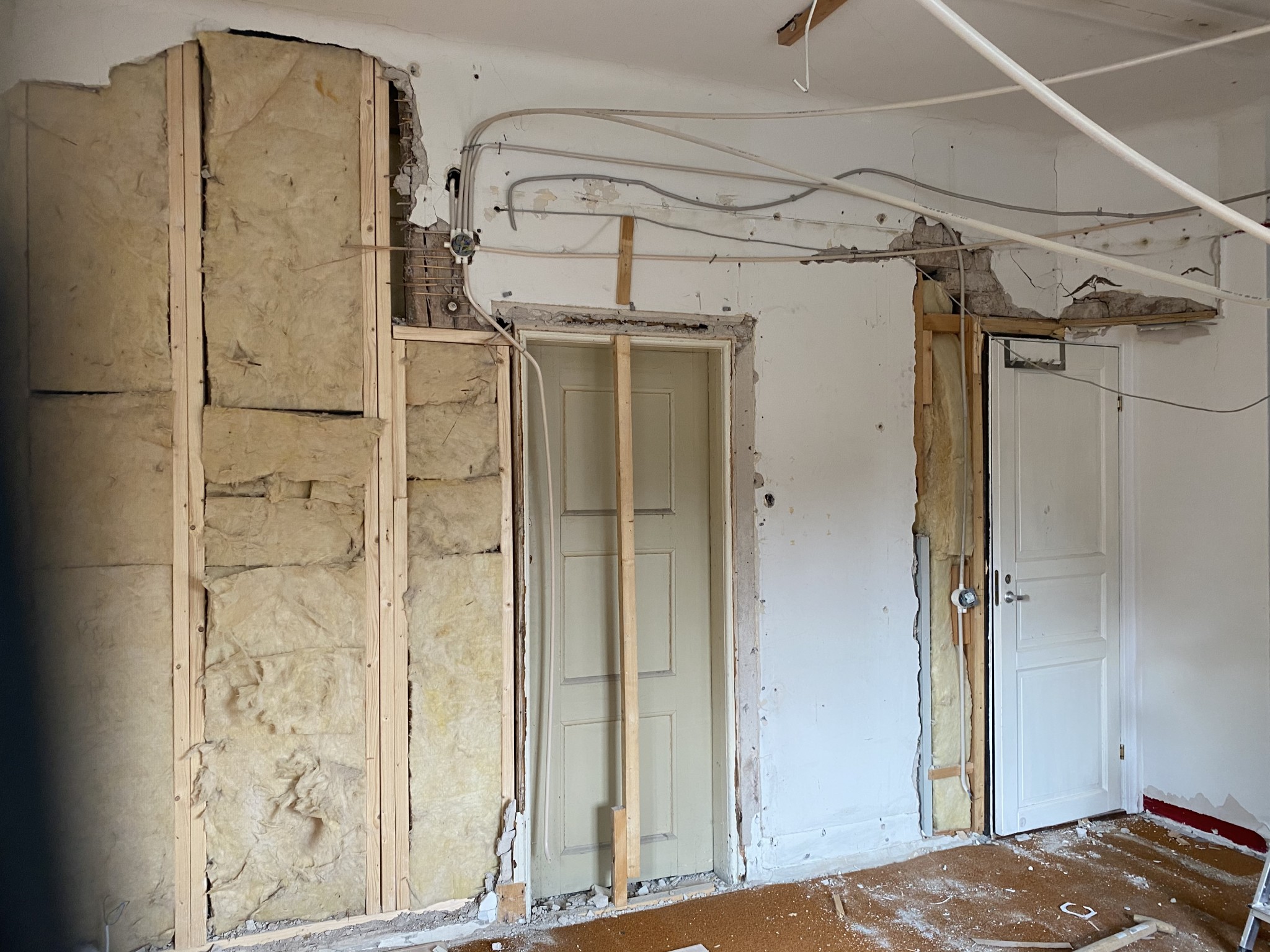
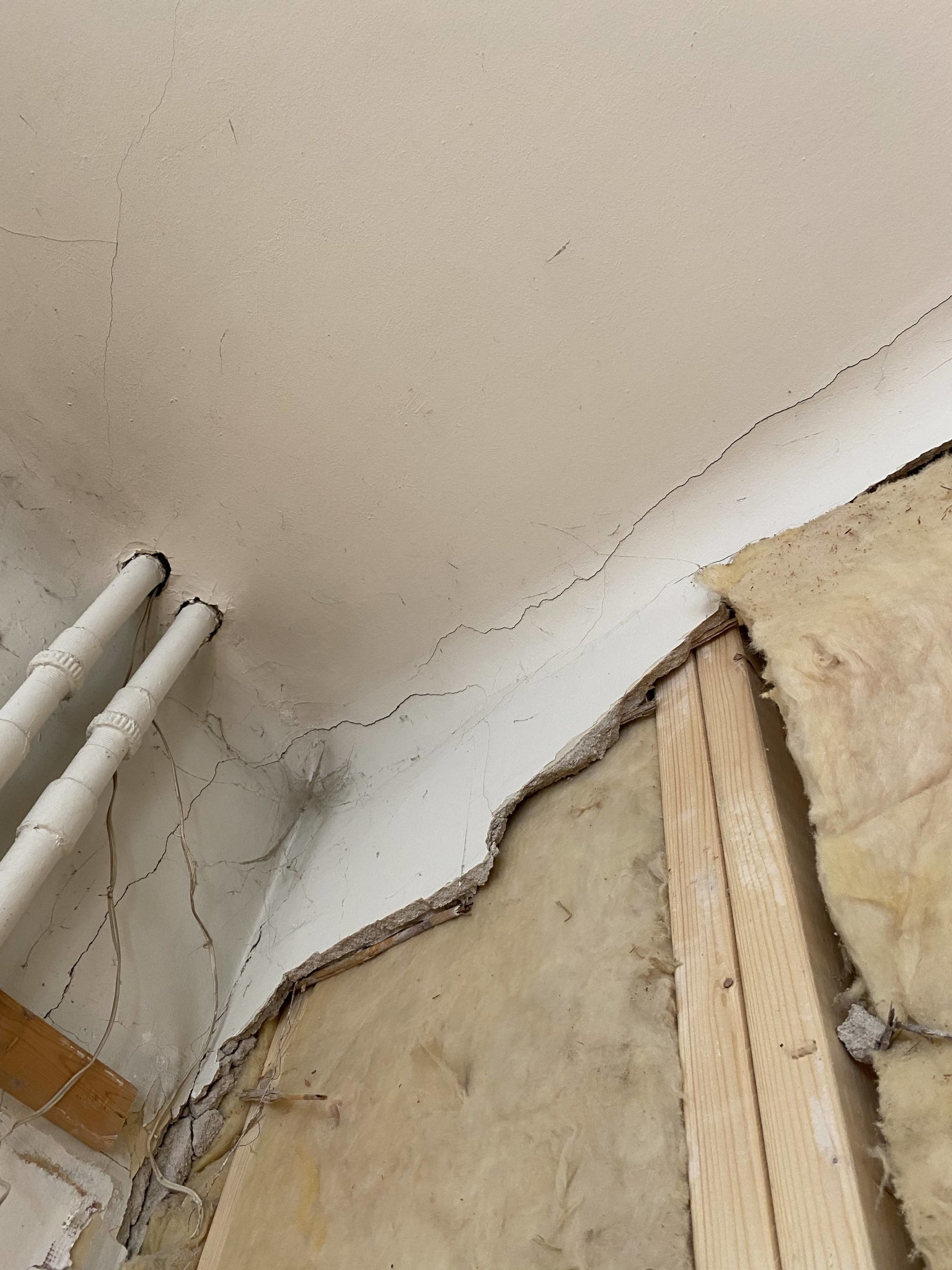
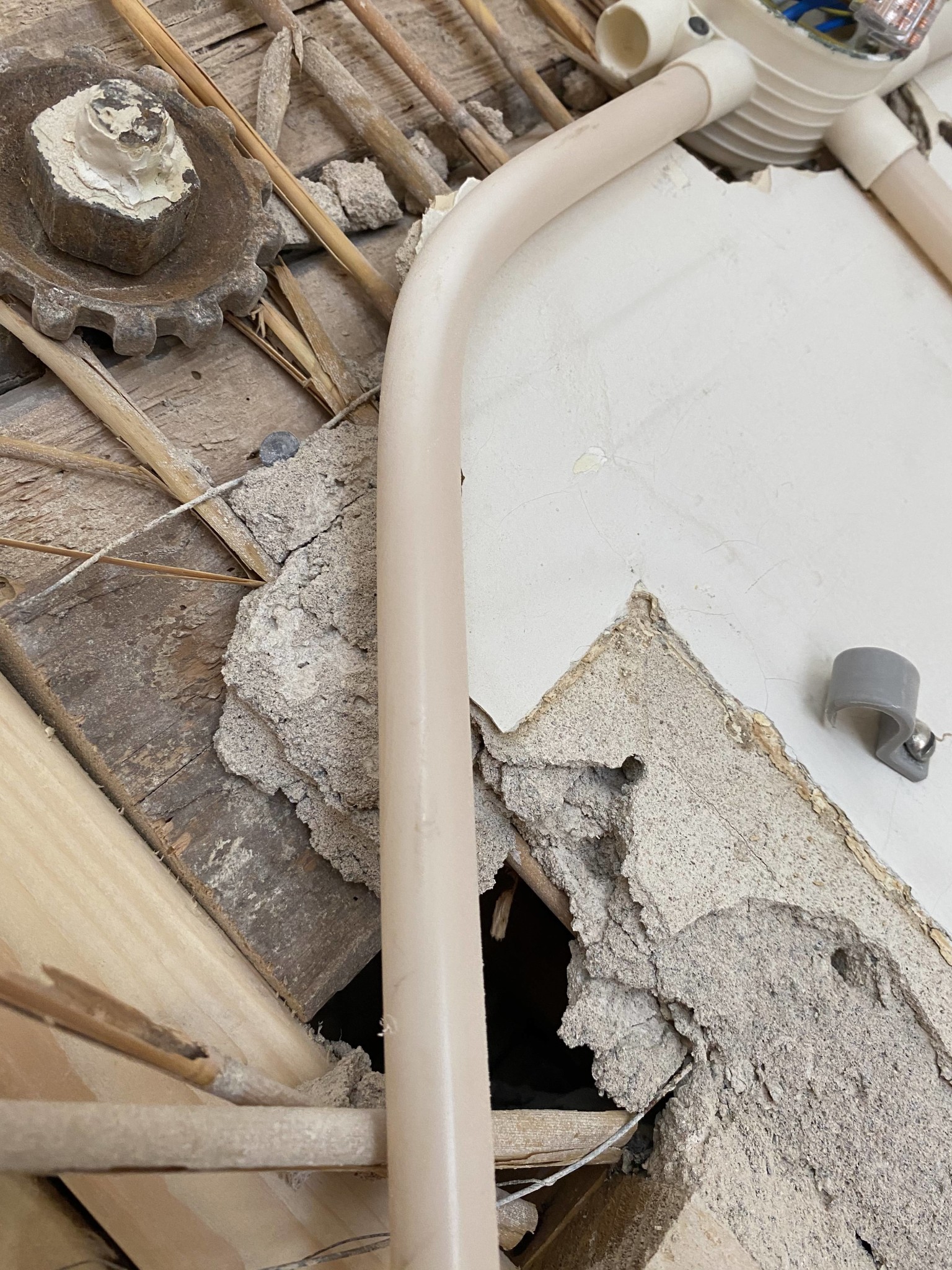

I've realized that there is so-called kloasong on both the walls and the ceiling.
I'm considering if I should:
1) Groove the ceiling to hide wires and then cover the grooves and possibly repair damages with gypsum plaster. Then repair and skim coat the walls.
2) Install Norgips flex steel framing and then mount drywall. Preferably avoided due to delivery and general hassle.
Personally, I would rather try option 1) as I find it fun to preserve. But maybe I'm getting into something hopeless?
I'm considering if I should:
1) Groove the ceiling to hide wires and then cover the grooves and possibly repair damages with gypsum plaster. Then repair and skim coat the walls.
2) Install Norgips flex steel framing and then mount drywall. Preferably avoided due to delivery and general hassle.
Personally, I would rather try option 1) as I find it fun to preserve. But maybe I'm getting into something hopeless?
Click here to reply
Similar threads
-
Tilläggsisolera tegelvägg invändigt, mura lättbetong mot puts?
Stenhus -
Bästa verktyg/metod för att riva invändigt?
Byggnadsvård -
Källaren väggar , invändigt , puts
Stenhus -
Putsa, ny tapet eller riva?
Färg, Måla & Tapetsera -
Lecamuren längst ned invändigt i garage - plåt/putsa?
Attefallshus, friggebod, garage & andra småhus