
Can we demolish the color-marked basement wall without worry? Why/why not?
We live in a two-family house (villa) from the year 1947.
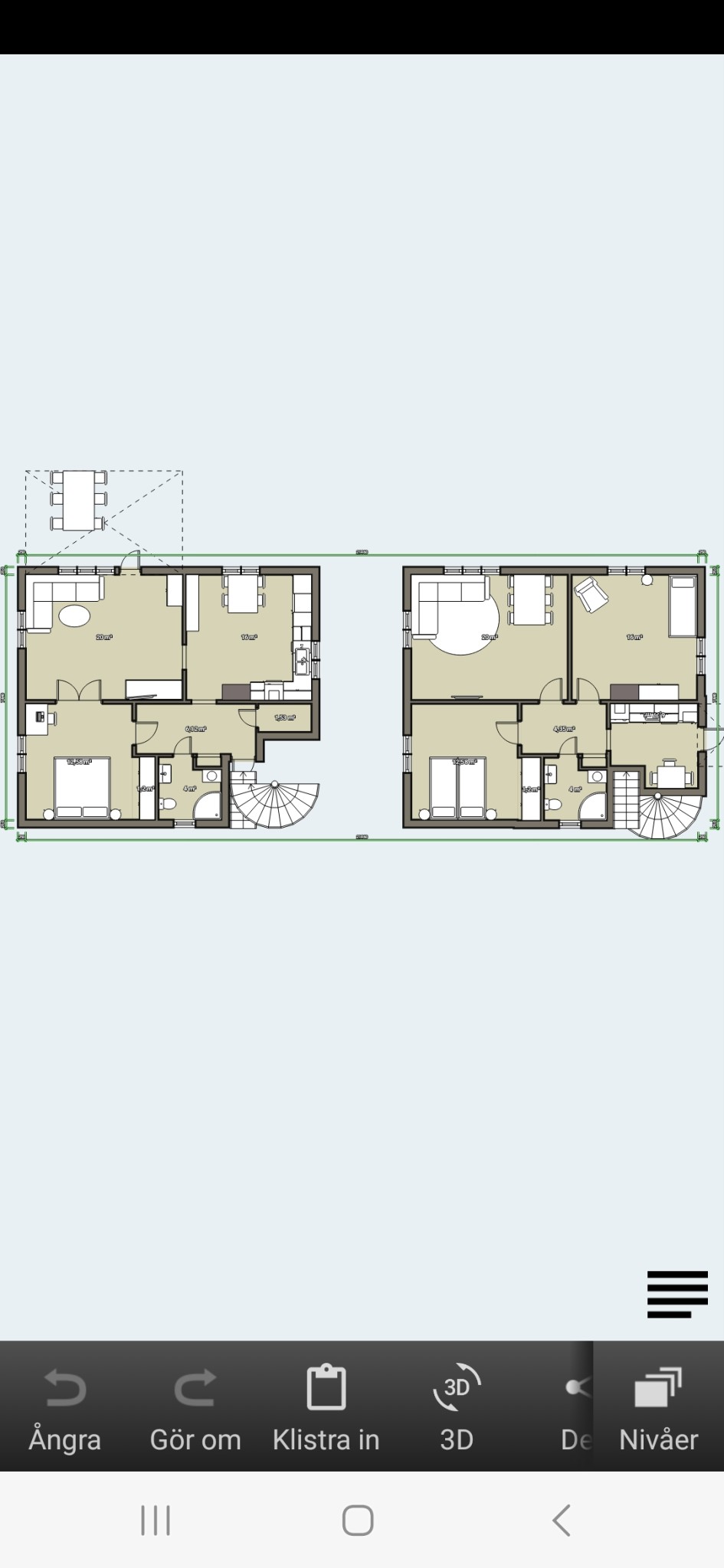
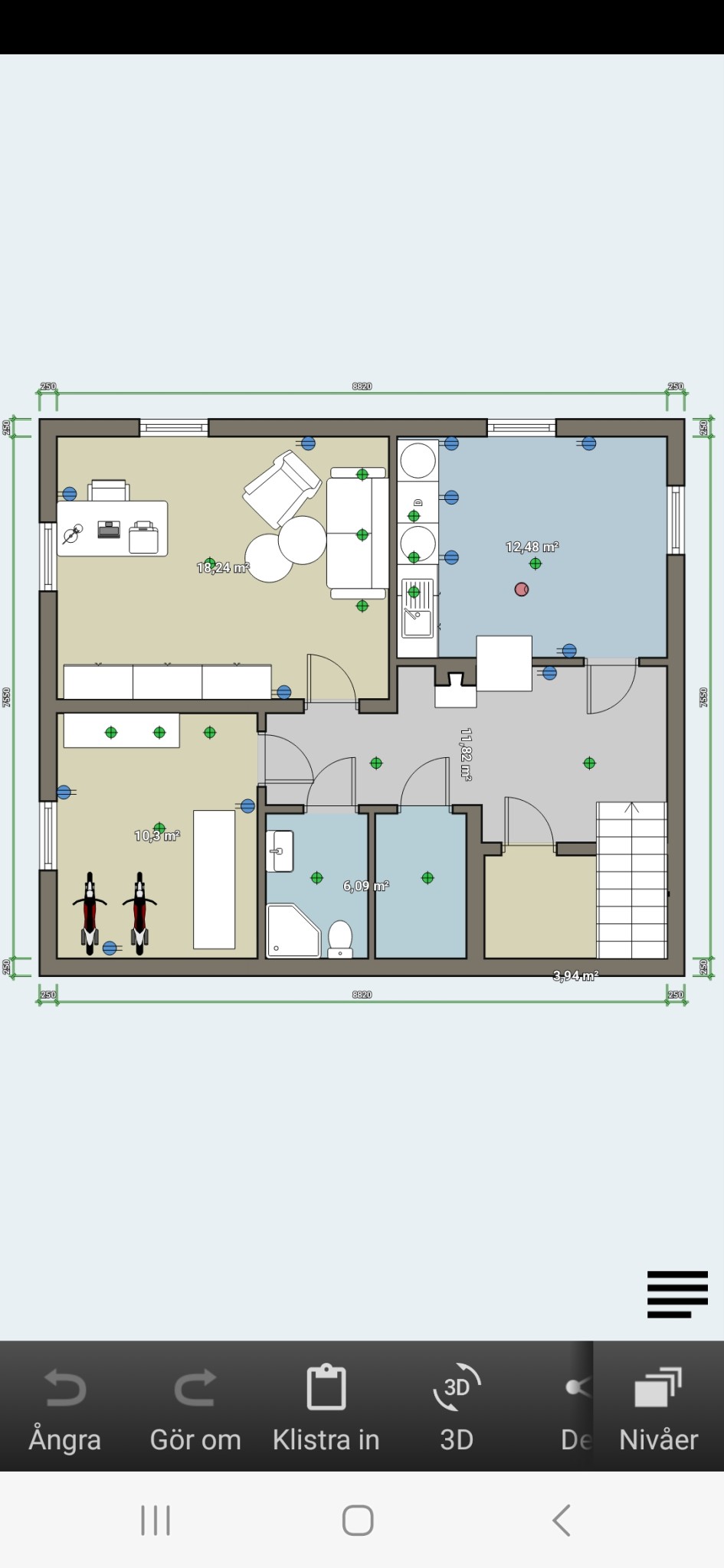
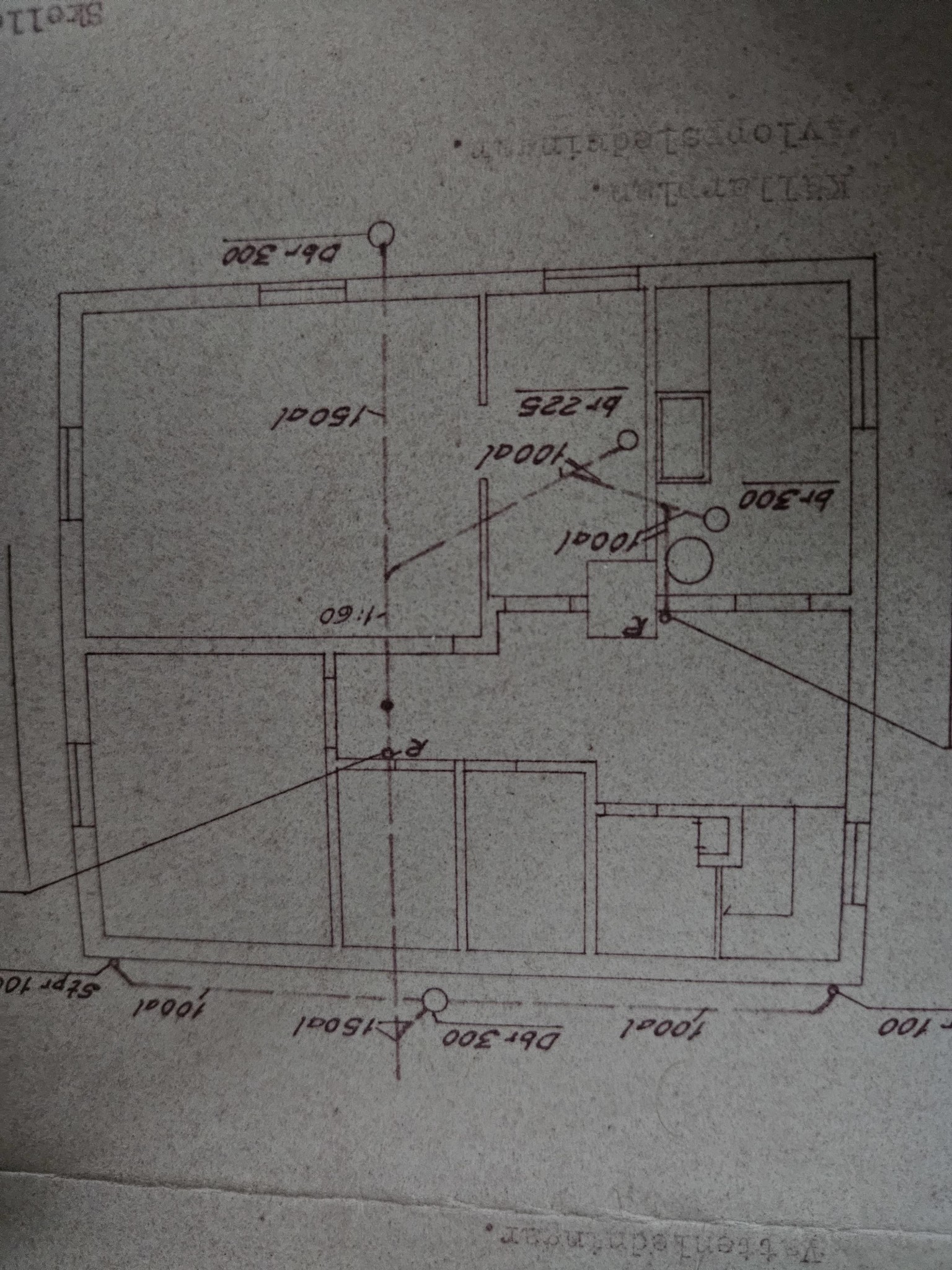
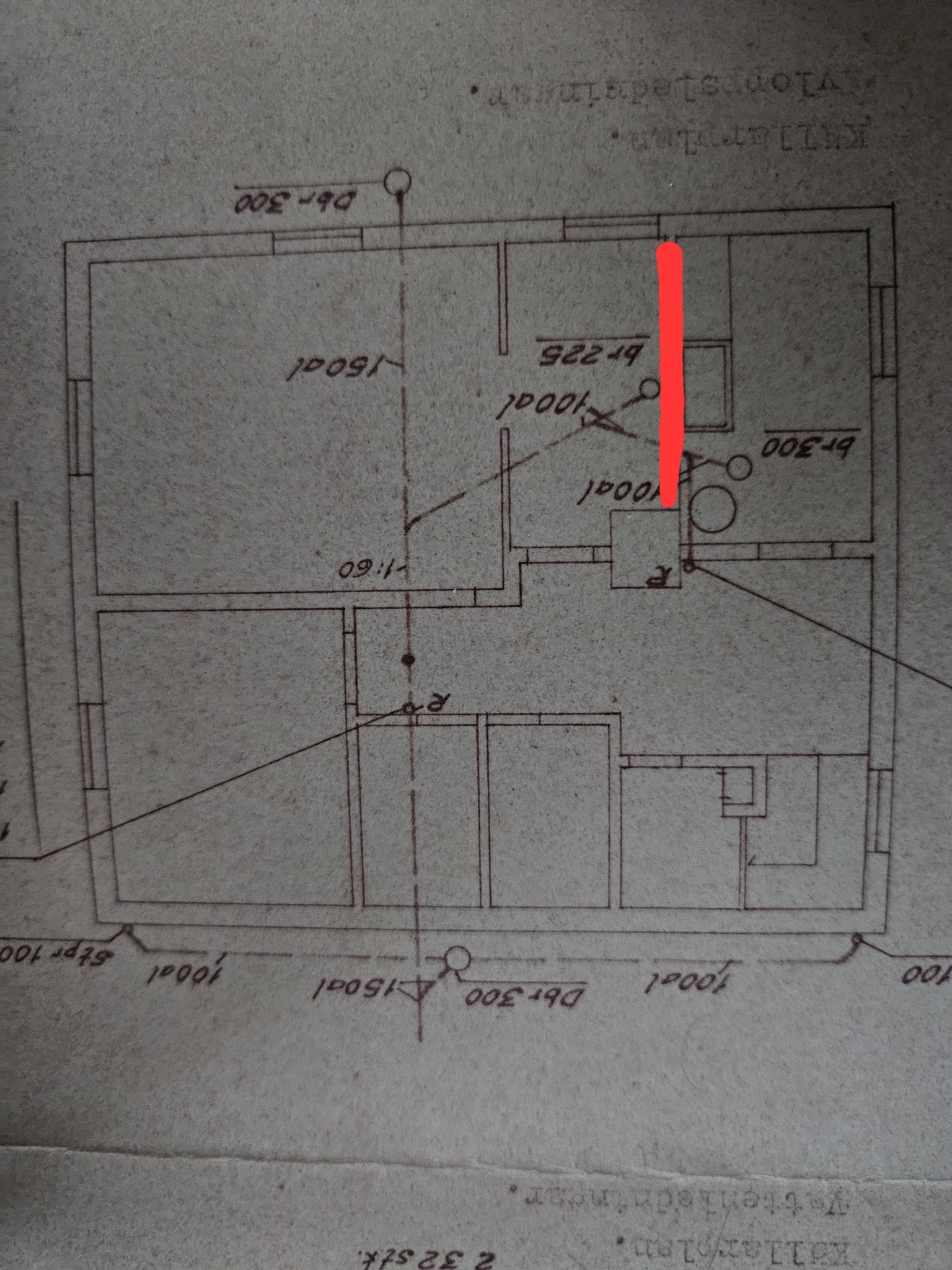
I am attaching blueprints for the basement floor (concrete basement), floor 1, and floor 2. There are no building plans other than these related to the sewage system. Floors 1 and 2 are identical in terms of construction with walls/electric wiring/VA, etc. Floor 1 + 2 are described in the drawing with 2 floors. The basement floor is shown in the sewage drawing with one drawing unmarked and one drawing with a red marking for the wall to be removed (inverted to show all drawings from the same direction). The sketch for the floor plan is our plan for the basement with the new laundry room. Note that all floors have this main wall across the house with an angle (it's just that I've made the sketches for floors 1 and 2 carelessly, but this angle is present on all floors).
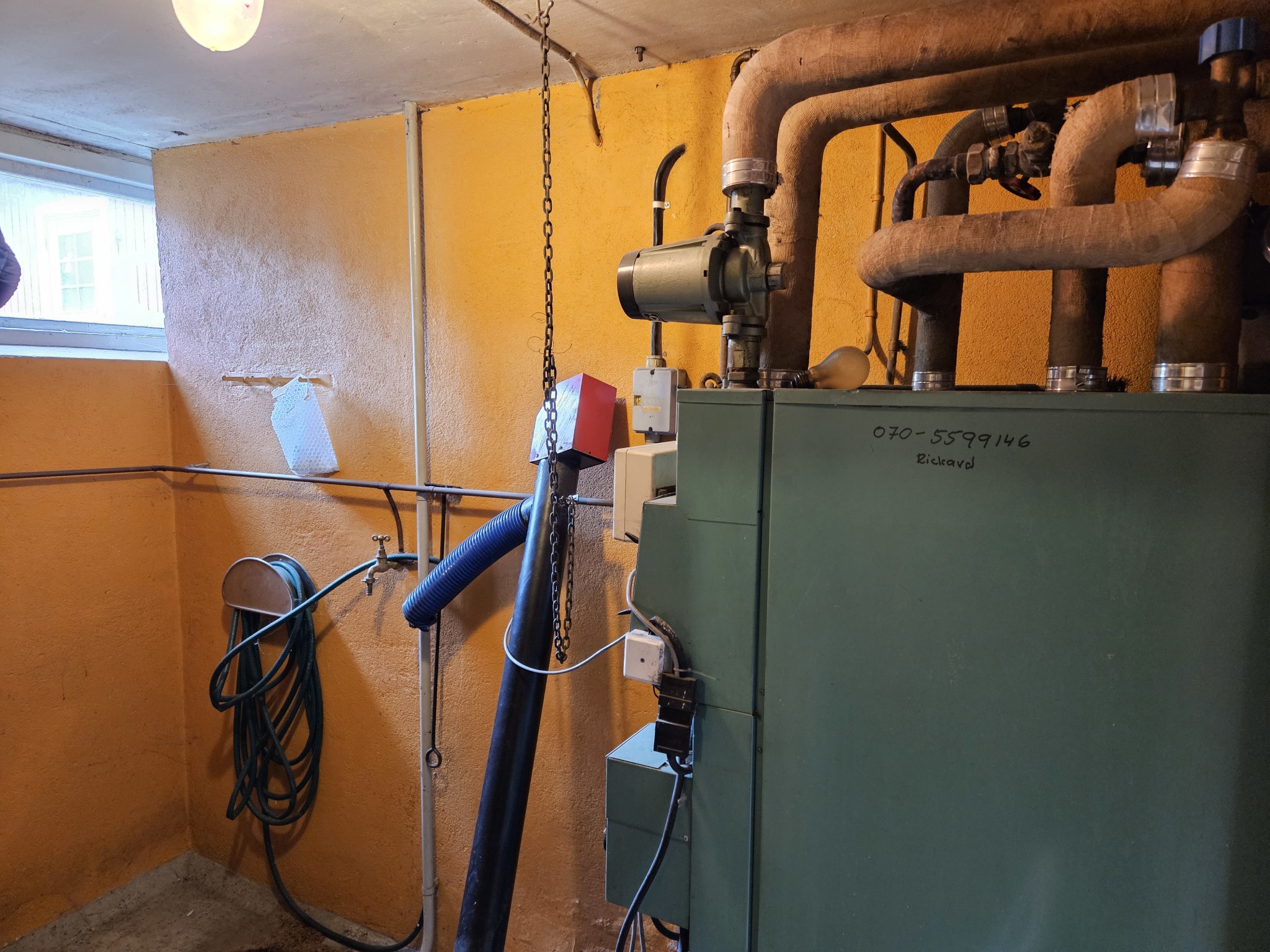
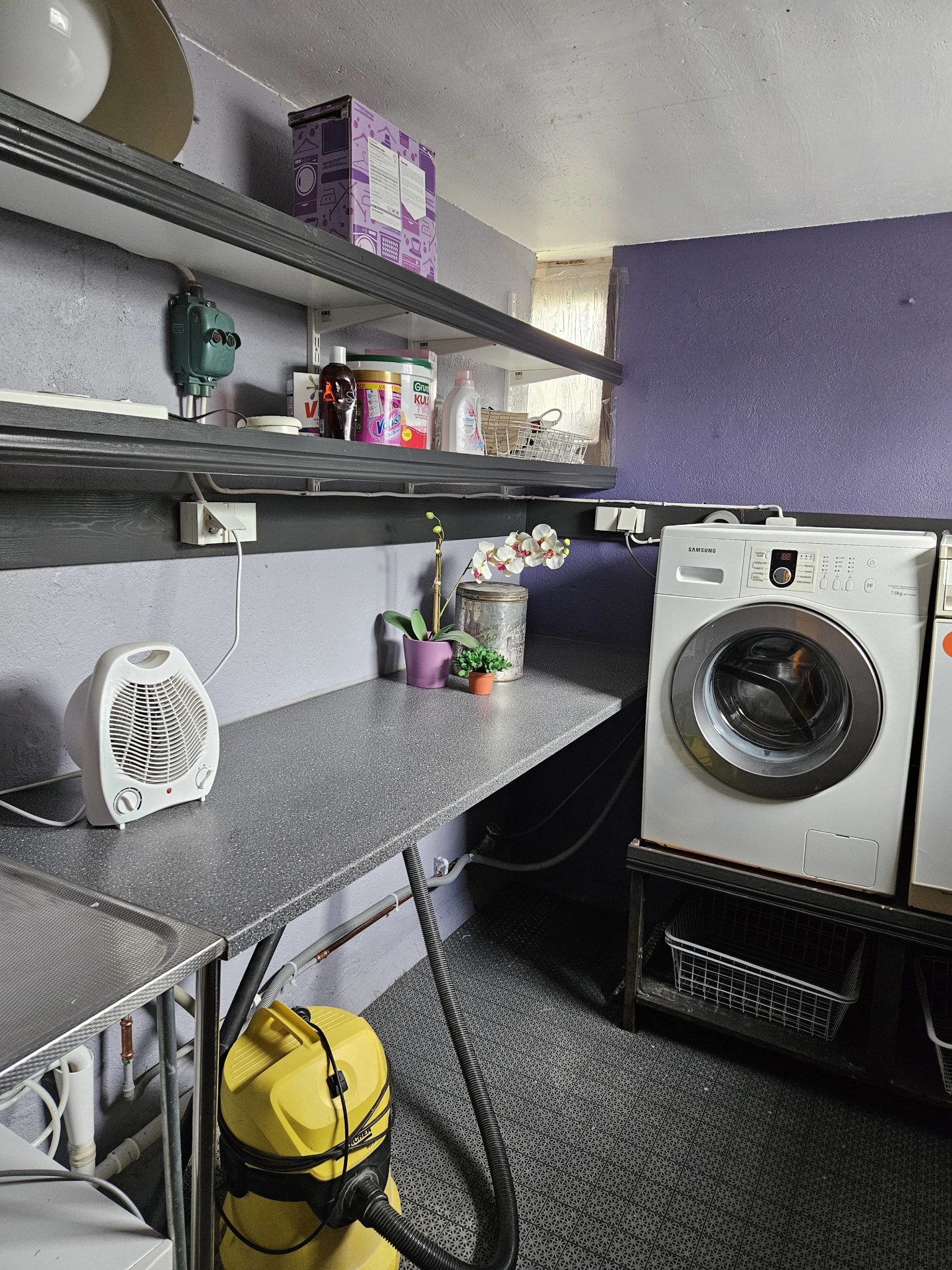
The main wall across the house that meets the chimney from two directions is 28 cm thick. The wall we plan to tear down is 10 cm thick, built with some form of blocks. It meets the chimney but also goes across a window, i.e., part of the window is visible on one side and the other part of the window is visible on the other side (see these 2 photographs).
The wall separates a dirty old-fashioned furnace room (combination furnace) and a laundry room. With plans for a new heating solution, there is no longer a need for a furnace room, and we want a large laundry room where the heat pump can also be placed.
We live in a two-family house (villa) from the year 1947.
I am attaching blueprints for the basement floor (concrete basement), floor 1, and floor 2. There are no building plans other than these related to the sewage system. Floors 1 and 2 are identical in terms of construction with walls/electric wiring/VA, etc. Floor 1 + 2 are described in the drawing with 2 floors. The basement floor is shown in the sewage drawing with one drawing unmarked and one drawing with a red marking for the wall to be removed (inverted to show all drawings from the same direction). The sketch for the floor plan is our plan for the basement with the new laundry room. Note that all floors have this main wall across the house with an angle (it's just that I've made the sketches for floors 1 and 2 carelessly, but this angle is present on all floors).
The main wall across the house that meets the chimney from two directions is 28 cm thick. The wall we plan to tear down is 10 cm thick, built with some form of blocks. It meets the chimney but also goes across a window, i.e., part of the window is visible on one side and the other part of the window is visible on the other side (see these 2 photographs).
The wall separates a dirty old-fashioned furnace room (combination furnace) and a laundry room. With plans for a new heating solution, there is no longer a need for a furnace room, and we want a large laundry room where the heat pump can also be placed.
Last edited:

According to the drawing, the wall is next to the window. Has the wall been moved sideways at any point to create a larger laundry room? Can you measure to see if today's wall is the original?
Don't forget that there might be eternit sheets with asbestos in and near old boiler rooms.
However, the wall is probably not load-bearing, but it could be stabilizing, in this case to prevent the earth masses outside from pushing the outer wall inward. This means it might be good to have half a meter of wall somewhere in the new laundry room to ensure it remains 90 degrees between the floor and outer wall, as well as between the ceiling and outer wall.
Don't forget that there might be eternit sheets with asbestos in and near old boiler rooms.
However, the wall is probably not load-bearing, but it could be stabilizing, in this case to prevent the earth masses outside from pushing the outer wall inward. This means it might be good to have half a meter of wall somewhere in the new laundry room to ensure it remains 90 degrees between the floor and outer wall, as well as between the ceiling and outer wall.
Thank you for your response!BirgitS said:
According to the drawing, the wall is next to the window. Has the wall ever been moved sideways to create a larger laundry room?
Can you measure to see if today's wall is the original one?
Don't forget that there may be asbestos panels in and near old boiler rooms.
But the wall is probably not load-bearing, however, it may be stabilizing, in this case to prevent the soil outside from pushing the outer wall inward. This means that it may be good to have a half-meter wall somewhere in the new laundry room to ensure that the angle remains 90 degrees between the floor and the outer wall, and between the ceiling and the outer wall.
No, the wall has never been moved (the drainage plan is from 1952) and it is still aligned with the chimney (the ventilation is on the laundry room side, maybe this was previously some kind of bathroom). The basement windows have also never been replaced unless it was improbably done sometime in the 1960s. However, they all appear to be 1940s originals. I suspect the drawing was made a bit incorrectly?
We are the 3rd owners of the house. The previous owners had bought the house within the family and have barely done anything in the past 20 years they lived here. In the 90s it was renovated internally.
Do you think we should leave the part that is towards the window? Or the one towards the chimney? I trust what you say. Thank you so much!
Last edited:
Is it possible to move the stabilizing part so that it is next to the window? Cast a type of pillar next to the existing wall and then demolish this wall. That way, the window won't be covered. Thanks for the help!According to the drawing, the wall is next to the window. At some point, has the wall been moved sideways to make the laundry room larger?
Can you measure to see if today's wall is the original one?
Don't forget that there may be louvers with asbestos in and near old boiler rooms.
But the wall is probably not load-bearing, however, it might be stabilizing, in this case to prevent the earth masses outside from pushing the outer wall inward. This means it might be good to have half a meter of wall somewhere in the new laundry room to ensure it remains 90 degrees between the floor and the outer wall and between the ceiling and the outer wall.
Since it looks somewhat strange with a wall in front of the window, I would prefer a new small wall to the right of the window, but you can certainly keep a part of the current wall in front of the window as well. It’s the outer wall that needs to be supported.
It wasn't exactly uncommon to have a bathtub standing in what was otherwise used as a tvättstuga, water as water, you know On the drainage plan, it looks like a tvättstuga in any case.
It wasn't exactly uncommon to have a bathtub standing in what was otherwise used as a tvättstuga, water as water, you know
On the drainage plan, it looks like a tvättstuga in any case.Thanks!! Yes, right? It looks completely crazy as it is nowSince it looks somewhat strange with a wall in front of the window, I would certainly prefer a new little wall to the right of the window, but you can indeed keep a bit of the current wall in front of the window as well. It is the exterior wall that needs to be supported.
It was not exactly uncommon to have a bathtub standing in what was otherwise used as a laundry room, water is water after all
On the drainage plan, it looks like a laundry room anyway.
The whole boiler room, by the way, is like an orange war bunker, so you can probably understand the desire to fix it up...
Click here to reply