
887 views ·
6 replies
887 views
6 replies
Tar boiler/tar paper under casting in a house from 1964 – risk of asbestos
Hello!
I have a house built in 1964 in Stockholm. An authorized asbestos removal company has removed tiles, adhesive, grout, carpet glue, and carpet in the laundry room. Analysis showed asbestos in the tile grout on top of the overlay.
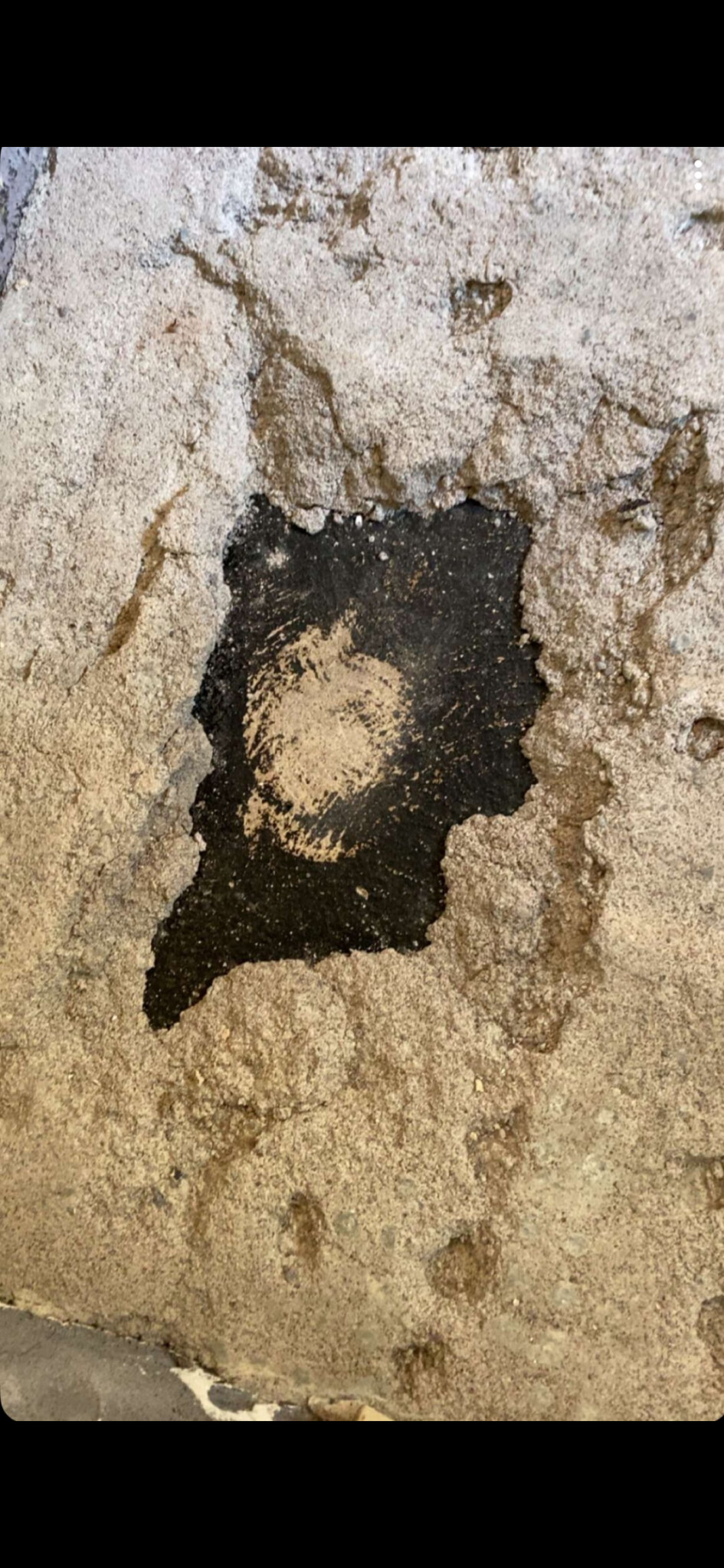
Under the overlay, there is a black layer that looks like tar compound or tar paper, directly against the concrete slab. It is not the black adhesive under the tiles, but a separate layer at the bottom. When the removal company took away the upper layers, they left this layer exposed without taking a sample and without informing me about any potential asbestos risk.
I wonder:
I have a house built in 1964 in Stockholm. An authorized asbestos removal company has removed tiles, adhesive, grout, carpet glue, and carpet in the laundry room. Analysis showed asbestos in the tile grout on top of the overlay.
Under the overlay, there is a black layer that looks like tar compound or tar paper, directly against the concrete slab. It is not the black adhesive under the tiles, but a separate layer at the bottom. When the removal company took away the upper layers, they left this layer exposed without taking a sample and without informing me about any potential asbestos risk.
I wonder:
- How common is it for tar compound or tar paper from that time to contain asbestos in residential buildings?
- Have you seen asbestos in similar constructions?
- Is the removal company obliged to take a sample when they expose the layer?
- If they suspect asbestos, must they inform me?
- Are they responsible for removing this layer, or is it not automatically included?
Don't worry about asbestos; it's asphalt that was used as moisture barrier, what we today call a waterproofing layer, found in all bathrooms from the 50s-60s.
Asbestos is not dangerous! It's only at high concentrations during manufacturing or if you sand or demolish in dry conditions.
Warning! Don't take the Stockholm subway; it is full of asbestos fibers from brake linings.
AI. Asbestos was banned in brake linings for vehicles, including subway cars, in Sweden in 1982. This ban also covered other types of friction linings like clutch linings!
But the dust remains!
It's a wonder that Stockholm residents are still alive.😂😪🤔
Asbestos is not dangerous! It's only at high concentrations during manufacturing or if you sand or demolish in dry conditions.
Warning! Don't take the Stockholm subway; it is full of asbestos fibers from brake linings.
AI. Asbestos was banned in brake linings for vehicles, including subway cars, in Sweden in 1982. This ban also covered other types of friction linings like clutch linings!
But the dust remains!
It's a wonder that Stockholm residents are still alive.😂😪🤔
Thank you for your response!
My question is whether these materials contain asbestos. I don't have the energy to take more samples. I have already hired a remediation company, but they haven't done their full job and only removed the outer layer with detectable asbestos.
Now there is asphalt left in the laundry room under the casting that they have exposed, and tar paper under the casting in the bathroom. Do these materials usually contain asbestos according to your experience?
Do I need to take precautions when renovating and removing all the casting down to the base plate, or is it unnecessary? That was my question.
My question is whether these materials contain asbestos. I don't have the energy to take more samples. I have already hired a remediation company, but they haven't done their full job and only removed the outer layer with detectable asbestos.
Now there is asphalt left in the laundry room under the casting that they have exposed, and tar paper under the casting in the bathroom. Do these materials usually contain asbestos according to your experience?
Do I need to take precautions when renovating and removing all the casting down to the base plate, or is it unnecessary? That was my question.


Homeowner
· Småländska höglandet
· 5 086 posts
No, the black material likely does not contain asbestos. However, it probably contains coal tar, considering the construction year.
During all demolition work, one should use a water hose with a fine spray to dampen what is being demolished to eliminate dust. It prevents the entire house/apartment from becoming covered in dust.
The remediation company had, among other things, HEPA filter vacuums and air purifiers. Do I need to use the same equipment myself now? I don't understand why they couldn't remove it when they were here from the start 🙃🙃🙃🙃🙃🙃Stefan N said:
Click here to reply
Similar threads
-
Old-fashioned tar paper vs underlay paper
Building Materials and Construction Technology -
Tjärpapp under trossbotten?
Golv -
Bitumen paper under post larger than the post or just under the post
Building Materials and Construction Technology -
Falsat Plåt tak med tjärpapp under = Kondens
Tak & Vind -
Lägga ny underlagspapp ovanpå befintligt Tjärpapp?
Tak & Vind