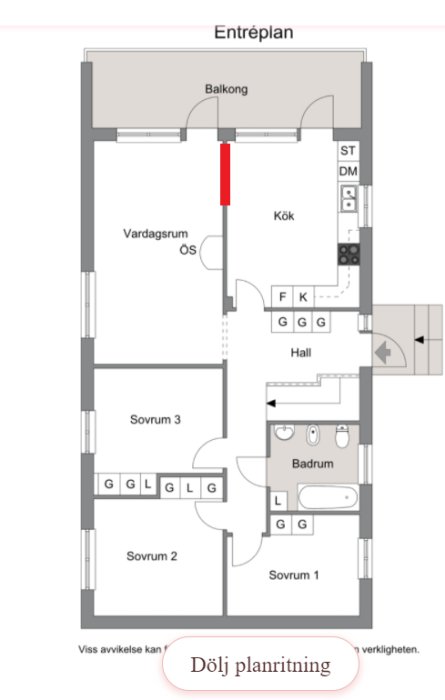
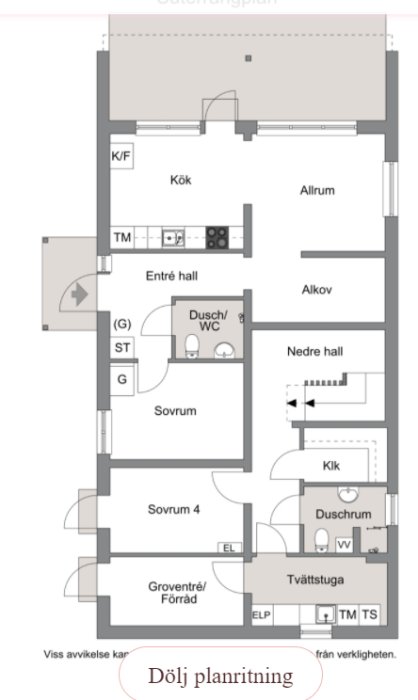
We have finally managed to buy a nice house to move into during the spring. It has a previous owner (estate), a Hjältevadshus built in 1981. I have several binders with good information and drawings. Most of it is original and needs renovation. In step 1, we plan to renovate the upper floor, and what I need help with is figuring out if it would be easy to open up a substantial arch between the kitchen and living room to achieve an open floor plan.
How on earth do I determine if the wall is load-bearing? The interior walls are made of wood everywhere. Can anyone comment based on the construction type? I'm attaching some scanned drawings, a catalog from Hjältevadshus with the house type, and the real estate agent's floor plan. On the ground floor, it's already opened between "kitchen" and "family room," which is directly below where I plan to open on the upper floor, if that makes any difference?
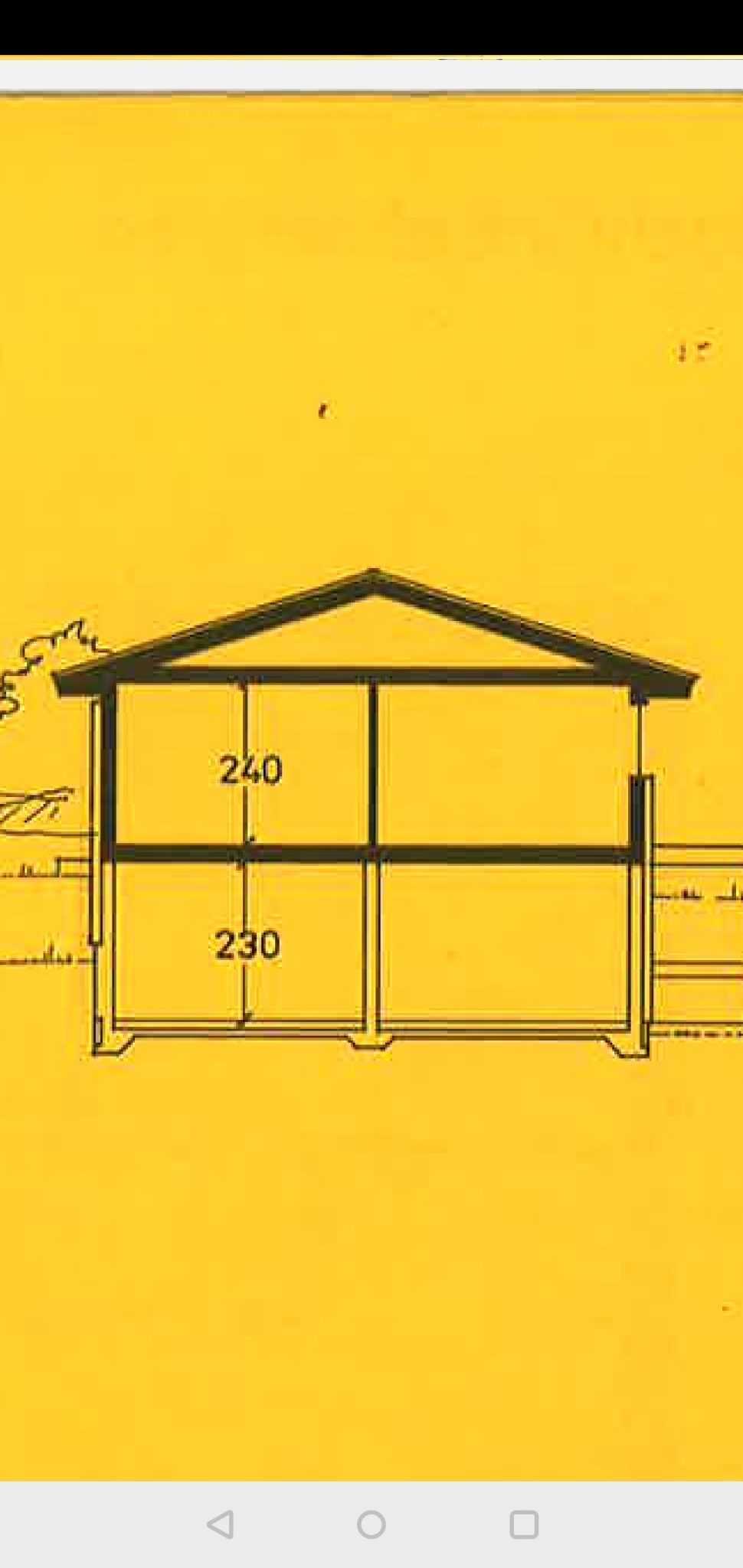
Hi, I haven't found a proper drawing of it yet (but I still have a few more binders to go through), however, there's this picture in the product sheet of the house. If that says anything? And a picture from inside the attic, which is accessible from the house's balcony.
What a strange layout. I assume it's a separate apartment on the ground floor?
What's referred to as a "stödbensvägg" in the description I would say is the heart wall, i.e., the one you want to cut into. It can be done, of course, but it must be properly reinforced. If you check the corresponding place on the lower floor, you can probably see a recessed beam there; that's something you'll need to do.
Thank you for your answers! Yes, the floor plan is a bit strange, the basement was built with a separate apartment for an old grandfather. If I brace it properly, do I need to be worried about the wall being opened even directly underneath? I'll try to research whether the house was built that way from the start or if it was altered by previous owners.
Despite the photo from the attic being unnecessarily tightly cropped and page 2 of the technical description missing, I believe that the house has w-trusses, which means that no interior walls on the upper floor are load-bearing. The initial realtor drawings are quite useless, but the brochure from Hjältevadshus explains a lot.
Despite the fact that the photo from the attic is unnecessarily tightly cropped and page 2 of the technical description is missing, I believe that the house has w-trusses, which means that no partition walls on the upper floor are load-bearing. The initial realtor drawings are quite useless, but the brochure from Hjältevadshus explains a lot.
Hi, thanks for the response! I have obtained page 2 of the technical description. It's not easy to arrange a new photo from the attic as we do not have access yet. Can more be figured out from the description?
This suffices. It is clear that the trusses are a lattice structure, so no interior walls on the upper floor are load-bearing.
Thanks, read your article about how trusses work! Feels like you're the right person to answer this question. Can I draw any conclusions about the walls on the lower floor based on the reasoning above? It might be relevant to open an archway on the lower floor from the stair hall into the separate apartment. Happy Lucia!
How great that you have read the roof truss article! The only benefit you get from the roof construction in terms of partition walls on the lower floor is that they do not need to handle any roof loads. The long wall that runs through the middle of the house (hjärtväggen) is load-bearing and must be reinforced if you want to make openings. There is probably already a beam there, which can affect the conditions if you want to widen an opening. This must be examined carefully.
How great that you have read the truss article! The only benefit you have from the roof construction when it comes to partitions on the lower floor is that they don't need to take care of any roof loads. The long wall that goes all the way in the middle of the house (the heart wall) is load-bearing and must be compensated if you want to make openings. There is probably already some beam there, which can affect the conditions if you want to widen an opening. You need to investigate this carefully.
Thanks, I will! Took a peek up in the attic today during the inspection and it seems to match the truss.
This will suffice. It is clear that the trusses are a framework construction, so no interior walls on the upper floor are load-bearing.
Hi, we are getting the keys to the house in a week and plans are starting to take shape! The contractor we have brought in to renovate the kitchen and open up to the living room seems to want to install a beam for safety, despite us having determined that the house has a W-truss. He claims that given the house is 8m wide, it's not certain that the truss can support itself. I have now obtained some better drawings in case it makes any difference. It would be unfortunate to make an unnecessary installation that both costs money and takes away some space in the vault.
Should I let him do it or can you convince me that I'm right in not needing to install a beam for that wall?
Can you access the measurement of the truss dimensions? 8 meters is usually not a remarkable span for a W-truss. It is the upper plane we're talking about, right?
Vi vill skicka notiser för ämnen du bevakar och händelser som berör dig.