
7,984 views ·
5 replies
8k views
5 replies
Steel studs and bathroom fixtures....

Currently working on framing for shower corners and wall-hung toilets, etc. I've read up as much as possible and concluded that steel studs and some form of wet room board are needed. I've purchased Gyproc's glass fiber reinforced board and I'm now wondering if a single layer is sufficient or if it should be double plasterboard when the studs are spaced at 300 mm centers.
But that's not the main cause of my headache. No, this is about how on earth to go about blocking/bracing for the sink, etc. Ideally (and more simply), it would be to set an OSB board or equivalent and then the wet room board. But apparently, that's not allowed? No wood/organic material behind the board? I've read up in both BKR and GVK but none the wiser. So how do I proceed? I need substantial anchoring for the sink + shower walls (Macros Skagen round HLY888).
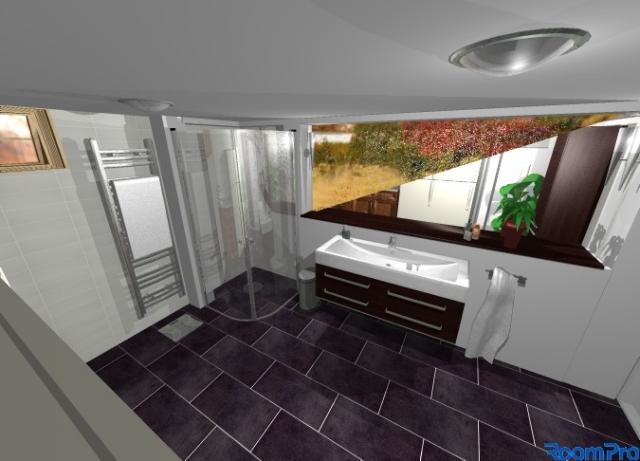
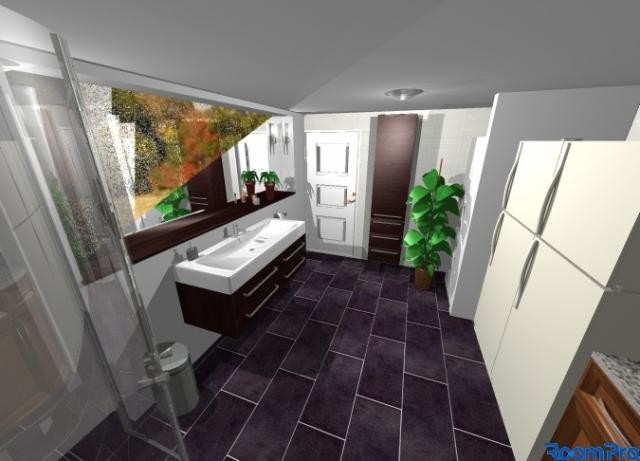
It looks a bit strange in the picture, but the plan is for a fully recessed mirror (glued to the outer wall), the posts around the shower are to conceal rising pipes, etc. Inspection hatches will be placed near the ceiling so that connections remain accessible. Similarly, below the sink where the drain and pipes come up from the floor. All posts + the wall/shelf behind the sink will be tiled.
But that's not the main cause of my headache. No, this is about how on earth to go about blocking/bracing for the sink, etc. Ideally (and more simply), it would be to set an OSB board or equivalent and then the wet room board. But apparently, that's not allowed? No wood/organic material behind the board? I've read up in both BKR and GVK but none the wiser. So how do I proceed? I need substantial anchoring for the sink + shower walls (Macros Skagen round HLY888).
It looks a bit strange in the picture, but the plan is for a fully recessed mirror (glued to the outer wall), the posts around the shower are to conceal rising pipes, etc. Inspection hatches will be placed near the ceiling so that connections remain accessible. Similarly, below the sink where the drain and pipes come up from the floor. All posts + the wall/shelf behind the sink will be tiled.
Hello,
I was in the same situation as you when I built our bathroom. I tried using kortla and it went so-so. The thing is that those studs/tracks don't become particularly stable and are almost more in the way. Especially when you are drilling holes for the plugs, the kortlingar you might have made with tracks will block on the backside and even bend inward, so you will never get through and they are in the way of the plugs. In hindsight, I would have skipped them in many places. With hindsight, I think cc30 and Ivarit boards became extremely stable to screw into. A few months later, everything mounted on the wall is still hanging as it should. However, I did place a wooden stud inside the steel track where the shower door is. Regardless of what the rules say, I didn't want to risk a glass door suddenly falling over someone.
I was in the same situation as you when I built our bathroom. I tried using kortla and it went so-so. The thing is that those studs/tracks don't become particularly stable and are almost more in the way. Especially when you are drilling holes for the plugs, the kortlingar you might have made with tracks will block on the backside and even bend inward, so you will never get through and they are in the way of the plugs. In hindsight, I would have skipped them in many places. With hindsight, I think cc30 and Ivarit boards became extremely stable to screw into. A few months later, everything mounted on the wall is still hanging as it should. However, I did place a wooden stud inside the steel track where the shower door is. Regardless of what the rules say, I didn't want to risk a glass door suddenly falling over someone.
You can use wooden studs if you want, there is nothing in the "regulations" that says otherwise! If you feel it is scary/difficult to work with wooden studs, you can mix and set wood plus noggins in wood where required, for example behind the sink and so on...
You can have studs and noggins made of wood. It's the OBS, etc. that you can't have. If you read under Bathroom in the pinned thread "read this before..." it explains this somewhat.
So my suggestion is to use wooden noggins where you will have the bathroom fittings.
So my suggestion is to use wooden noggins where you will have the bathroom fittings.

Hello! Mount, for example, 45x145 kortlingar for the sink. Place the kortlingar on the sill and about one meter up, fasten the piece with drywall screws. Wall-mounted toilets require proper gear.
Click here to reply