
3,663 views ·
6 replies
4k views
6 replies
Stable enough for wall-mounted toilet?
Hello,
Unfortunately, I didn't get any answers in the bathroom section, so I'm trying here instead.
We are in the process of building a toilet on our upper floor. Only a sink and toilet, so not a wet room.
The toilet is under a sloping roof with an interior wall 140 cm high (attic space outside). On this low wall, we planned to have a wall-hung toilet, not only because it's practical and stylish but also because I had to run the plumbing outside in the attic. Couldn't go straight down with the plumbing without rebuilding the entire lower floor, and running the plumbing 4-5 meters sideways wasn't possible without cutting so many floor joists that the whole house would collapse.
The wall where the toilet will hang is made with regular 2"x3" studs and braced at 60 c/c. I don't want the setup to wobble when my 120kg brother-in-law comes and throws himself down on it. What do you think of my solution, will it be stable enough?
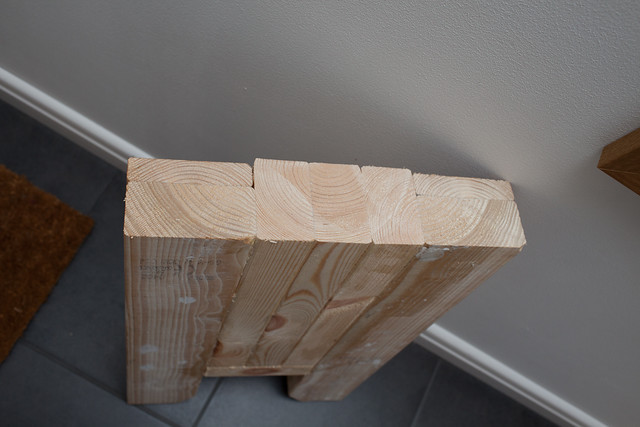
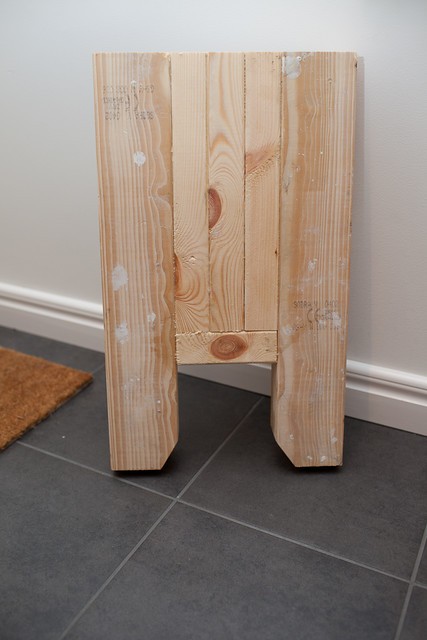
1. Homemade fixture in wood, glued and screwed.
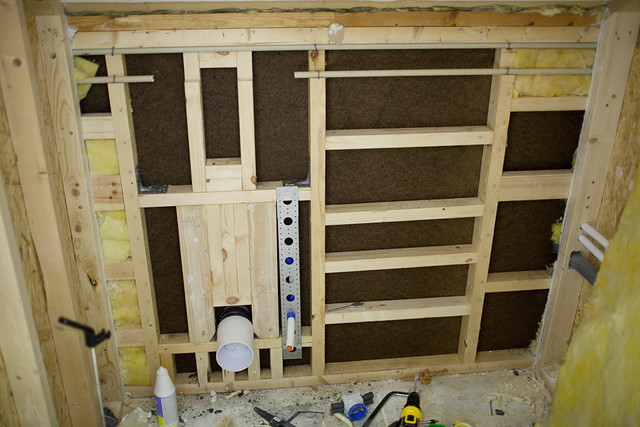
2. Heavily battened and reinforced. Only the three standing studs were there before.
All new studs are both glued and screwed with 100mm screws.
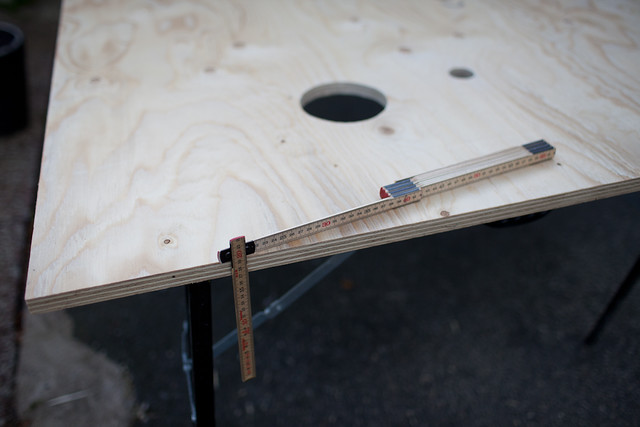
3. 21mm P30-rated construction plywood glued and screwed to all studs.
I imagine this will make everything really solid.
So, is this sufficient to hang a wall-hung toilet (IFÖ) without any wobble or, God forbid, cracked tiles?
I can, without much difficulty, remove the fiberboard on the back and put in a couple of standing 2"x8" attached to the wall, floor joists, and rafters, but the question is, is it needed?
Unfortunately, I didn't get any answers in the bathroom section, so I'm trying here instead.
We are in the process of building a toilet on our upper floor. Only a sink and toilet, so not a wet room.
The toilet is under a sloping roof with an interior wall 140 cm high (attic space outside). On this low wall, we planned to have a wall-hung toilet, not only because it's practical and stylish but also because I had to run the plumbing outside in the attic. Couldn't go straight down with the plumbing without rebuilding the entire lower floor, and running the plumbing 4-5 meters sideways wasn't possible without cutting so many floor joists that the whole house would collapse.
The wall where the toilet will hang is made with regular 2"x3" studs and braced at 60 c/c. I don't want the setup to wobble when my 120kg brother-in-law comes and throws himself down on it. What do you think of my solution, will it be stable enough?
1. Homemade fixture in wood, glued and screwed.
2. Heavily battened and reinforced. Only the three standing studs were there before.
All new studs are both glued and screwed with 100mm screws.
3. 21mm P30-rated construction plywood glued and screwed to all studs.
I imagine this will make everything really solid.
So, is this sufficient to hang a wall-hung toilet (IFÖ) without any wobble or, God forbid, cracked tiles?
I can, without much difficulty, remove the fiberboard on the back and put in a couple of standing 2"x8" attached to the wall, floor joists, and rafters, but the question is, is it needed?
For several reasons.hakaner said:
1. It is deeper than my existing wall so I would have had to rebuild the entire wall.
2. It costs 800 SEK.
3. I had studs at home, but no fixture when I started with this.
4. Feels better with wood than steel for some strange reason?


The wall has been there since the house was built and was previously nailed (with damn sturdy nails) through both the studs and into the rafters (2 of them on this part). I've added 3-4 more sturdy 120mm screws afterward. Then I believe that the two perpendicular walls, especially the left one in the picture, do a lot to counteract the force on the rear wall outward.titanium said:
Since I took the photo and wrote above, I've reinforced with a couple more studs, completed the wiring, insulated, and screw-glued the plywood. I've also added, on the backside (crawl space), 2 of the largest angle irons I could find as support between the floor and wall, screwed through the floorboard and down into the floor joists (45x210mm).
All this combined (mainly the plywood, I believe) made everything feel extremely stable; it almost feels like hitting a concrete wall when I knock on the wall.
Click here to reply