
Hello,
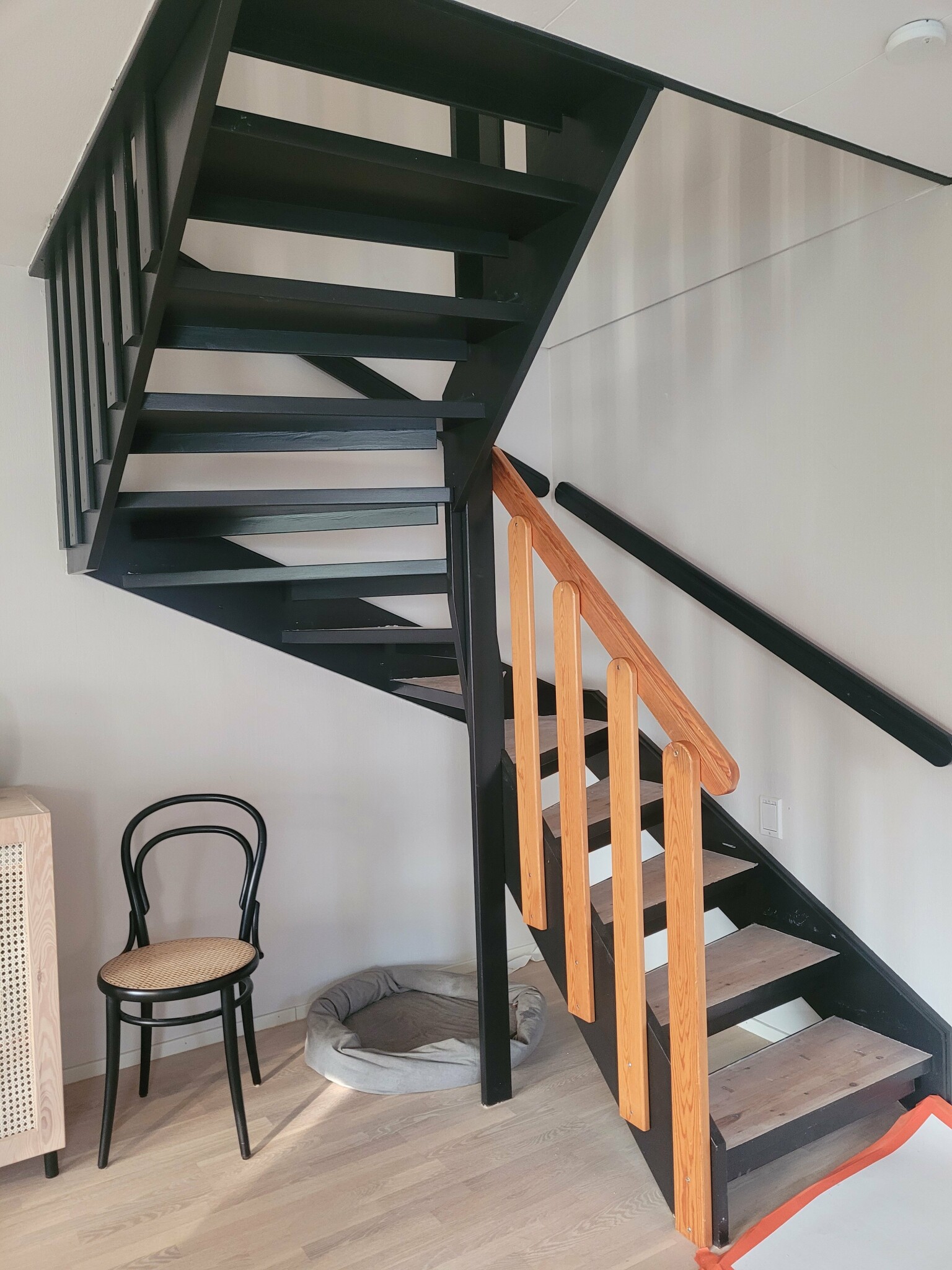
We are recently moved into our (first) house and early on tackled the pine staircase with needle-felted steps. The needle felts came off after some work and then we lightly sanded the staircase with a machine sander. Finally, it got a few layers of paint. The steps are treated with hard wax oil (the result is highly debatable..). Before we started, we removed the railing that sits at the lower part.
After our operation, we have discovered that the staircase creaks on every step. It sounds like the entire step is creaking, and this applies to all steps, and the "volume" of the creak is the same on each. We tried to reinstall the railing, without mitigating the creak.
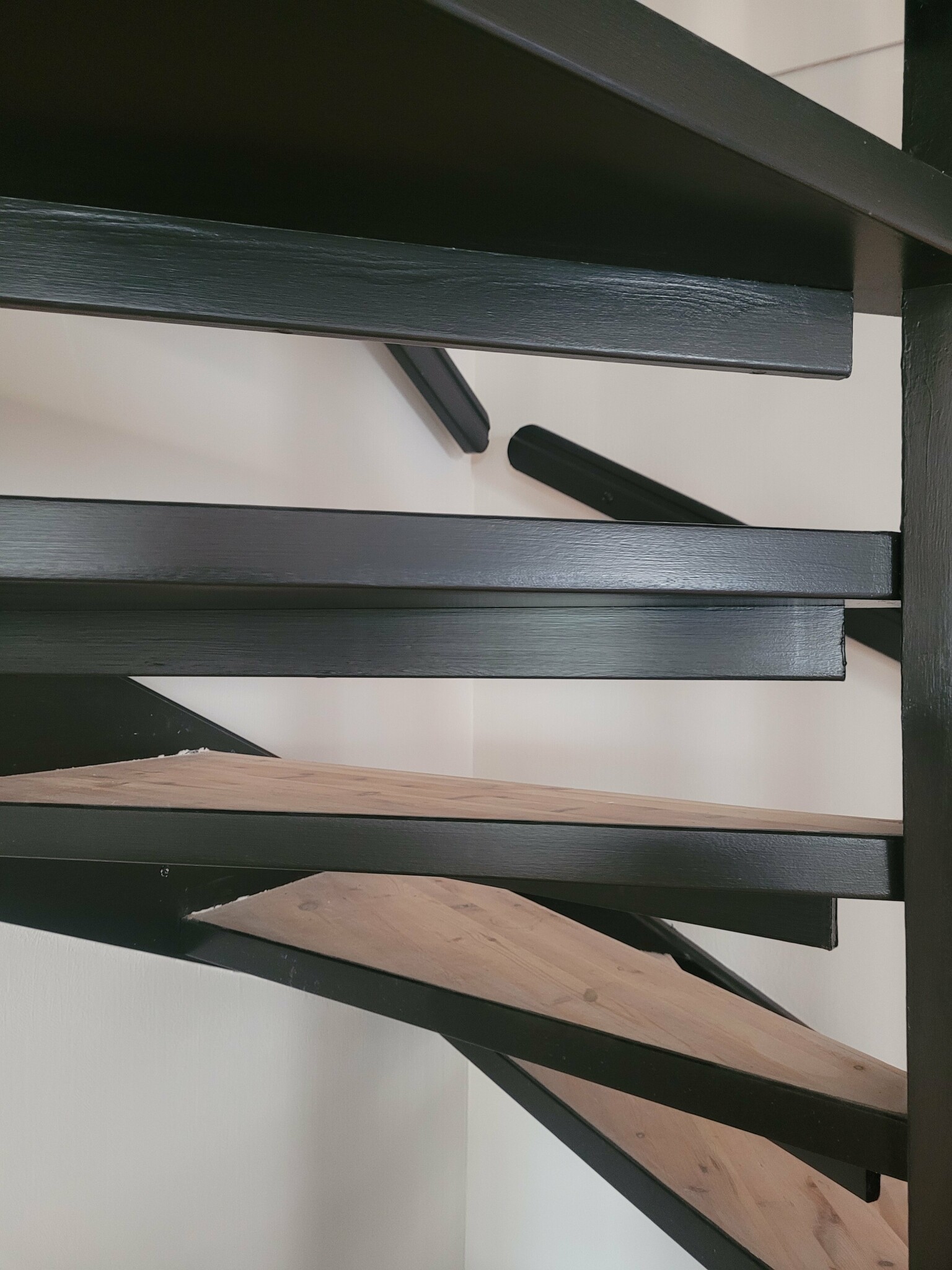
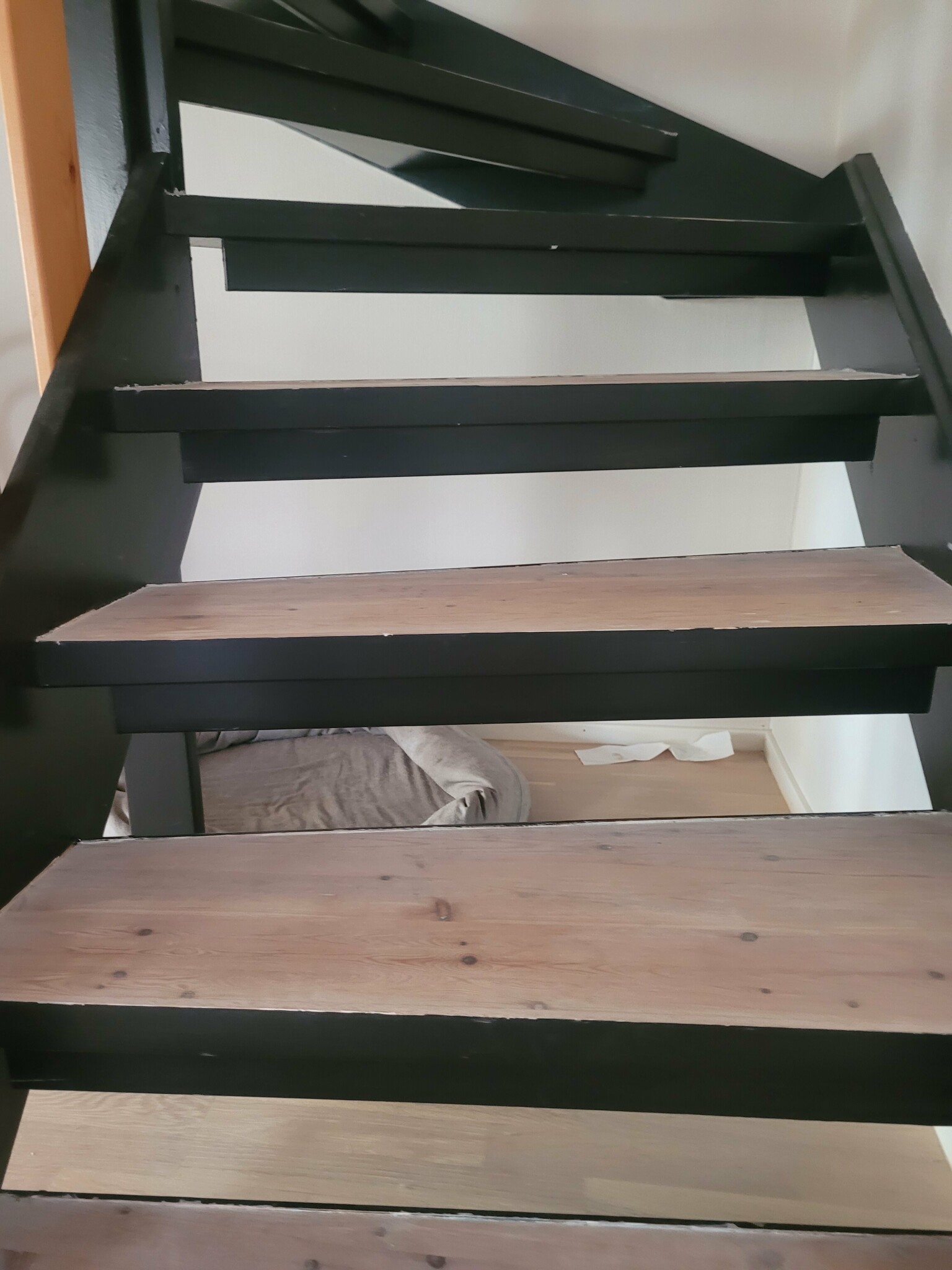
Otherwise, we have not loosened or otherwise affected the staircase's construction. On each step, there is a strip on the front side of the step that previously extended over the needle felt, which is sanded down a few millimeters to level the steps.
I have searched for previous similar threads but unfortunately can't find anything that, with my (very) limited knowledge and experience, points me toward any clear solution.
Many thanks in advance, and thanks for all the fantastic threads available here for a new homeowner.
We are recently moved into our (first) house and early on tackled the pine staircase with needle-felted steps. The needle felts came off after some work and then we lightly sanded the staircase with a machine sander. Finally, it got a few layers of paint. The steps are treated with hard wax oil (the result is highly debatable..). Before we started, we removed the railing that sits at the lower part.
After our operation, we have discovered that the staircase creaks on every step. It sounds like the entire step is creaking, and this applies to all steps, and the "volume" of the creak is the same on each. We tried to reinstall the railing, without mitigating the creak.
Otherwise, we have not loosened or otherwise affected the staircase's construction. On each step, there is a strip on the front side of the step that previously extended over the needle felt, which is sanded down a few millimeters to level the steps.
I have searched for previous similar threads but unfortunately can't find anything that, with my (very) limited knowledge and experience, points me toward any clear solution.
Many thanks in advance, and thanks for all the fantastic threads available here for a new homeowner.

Düsseldorff
Building conservationist
· Bromma
· 3 331 posts
Düsseldorff
Building conservationist
- Bromma
- 3,331 posts
Wait at least a year so that you can follow up on how the trappjävel behaves during different seasons. It is quite possible that it creaks a bit during the summer months but not during the rest of the year. That's how my stairs behave.
Thanks for the answer! There you go. The needle felt and an initial sanding of the steps was completed early May. The rest of the sanding and painting was finished on 20/5. Memory fails, but we are fairly sure that no creaking could be heard then, but it has developed gradually since mid-June. How does that sound?
Thanks again, hope it's okay that I trouble you with one last question. The trellis was removed before painting (hence it's unpainted in the picture). The creaking appeared and now the trellis was put back on without any improvement. Can we, in good conscience, remove it again and wait, without the risk that the absence of the trellis is part of the problem? That is, can we perform the "waiting troubleshooting" without having to disfigure the home with this awful construction?
And finally, for the sake of form, is it a hidden defect (😜).
Düsseldorff
Building conservationist
· Bromma
· 3 331 posts
Düsseldorff
Building conservationist
- Bromma
- 3,331 posts
Remove the damn trellis, it has nothing to do with the creaking.
No, the creaking is not a hidden defect, but the stairs are probably full of asbestos and radon and need to be drained.
No, the creaking is not a hidden defect, but the stairs are probably full of asbestos and radon and need to be drained.


Creaks in the stairs are due to wood rubbing against wood. To make them quiet, you have to ensure in any way you choose that the wood cannot move and rub against other wood.
I would guess that closed stairs (anti-footbreakers) are easier to reinforce than the open variants you have.
I would guess that closed stairs (anti-footbreakers) are easier to reinforce than the open variants you have.
Click here to reply