
3,566 views ·
25 replies
4k views
25 replies
Splitting a board lengthwise like a long wedge with a table saw?

Hello, I need to rip a long beam (70x45 mm) about 2 meters in length, but tapering. It will be used under IKEA modules that I'm using to build a custom bookshelf. Since the floor is not level, the beam and covering plinth will need to be ripped lengthwise, but tapering, i.e., about 69 mm at one end and 55 mm at the other end. I bought a cheap table saw for this purpose, but I'm starting to wonder if I can use it. I also own a circular saw and a track saw. I have a 3-meter rail for the track saw. Can I use my newly purchased table saw for this?
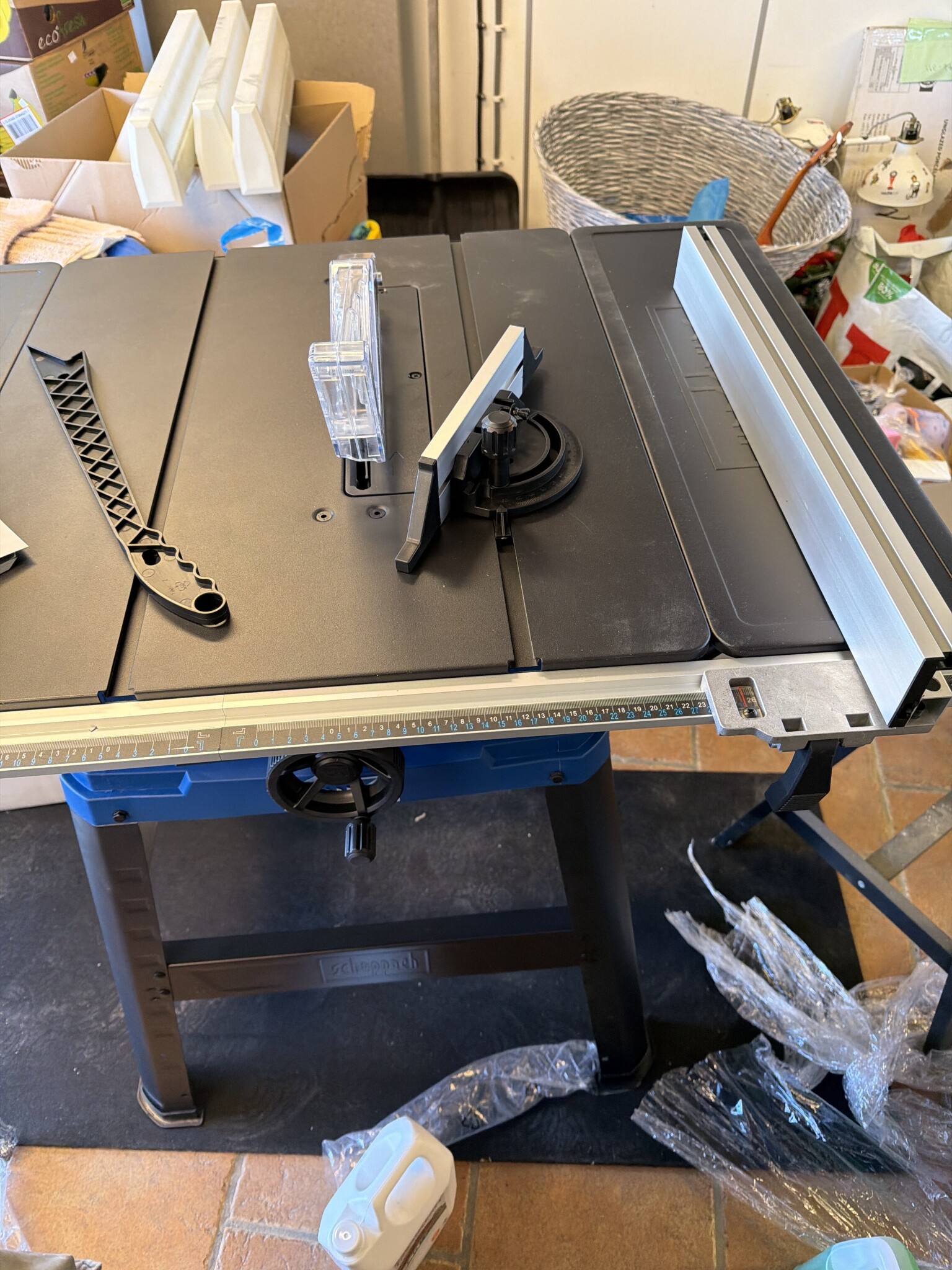
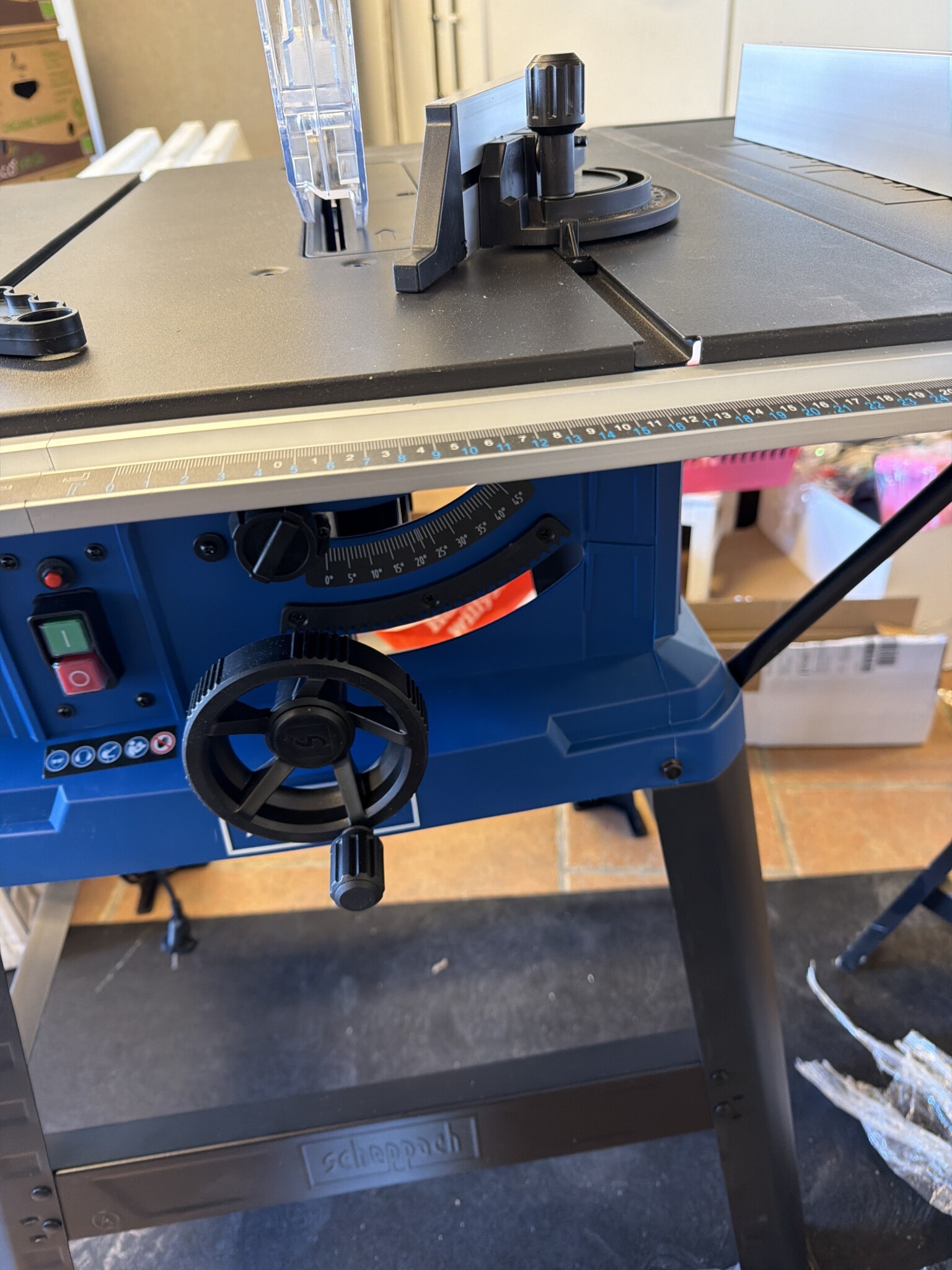

I have also done it several times, but freehand, it works perfectly fine to follow a pencil line as long as you have support with guide rollers or an extension table.
If precision is extremely important, you can cut with a couple of millimeters margin and then plane the rest, but it is usually unnecessary.
If precision is extremely important, you can cut with a couple of millimeters margin and then plane the rest, but it is usually unnecessary.
Ok, I need to partially apologize, as it might have sounded a bit dumb. But it wasn't entirely wrong.TorpAnders said:
The fence ensures that you stay along a straight line. If you're cutting a thin board freehand, you might end up with a slightly uneven cut if you wobble a bit (I've done it myself - both cut freehand and wobbled), but if you wobble with a thicker plank, it pinches and burns if the riving knife is doing its job. If the blade and riving knife don't match, or if it's a lousy saw, you might get kickback, and that's really dumb.
There's a small risk of something happening, and with thin boards, it's small enough to just go for it. But since I don't know anything about either the saw or TS, I chose to become a grumpy old man.

The answer is a "taper jig". Easy to make yourself. https://www.google.com/search?q=table+saw+diy+taper+jig&sca_esv=0baaa2d5d8a71e57&rlz=1CDGOYI_enSE838SE897&hl=sv&sxsrf=ANbL-n4bSErKuKElboPHsjoSmtjpRnzJBQ:1775935356507&ei=fJ_aaZTJHqGmwPAPrLWKmAE&biw=402&bih=684&oq=table+saw+diy+taper+jig&gs_lp=EhNtb2JpbGUtZ3dzLXdpei1zZXJwIhd0YWJsZSBzYXcgZGl5IHRhcGVyIGppZzIGEAAYCBgeMgYQABgIGB4yCBAAGIAEGKIEMggQABiABBiiBEifUFC4KVjhS3ADeAGQAQCYAXKgAY4DqgEDNC4xuAEDyAEA-AEBmAIIoAKlA8ICChAAGLADGNYEGEfCAgYQABgHGB7CAgUQABiABMICBBAAGB7CAggQABgHGAgYHsICBRAAGO8FwgIIEAAYCBgNGB6YAwCIBgGQBgiSBwM3LjGgB64RsgcDNC4xuAeYA8IHBTEuNC4zyAcUgAgA&sclient=mobile-gws-wiz-serp
Length can be tricky. But it's possible. However, nothing AV would agree to.
Length can be tricky. But it's possible. However, nothing AV would agree to.
It's fine, if you've never sawed or are generally uncertain, then a freehand rip of coarse wood is not something to take on regardless.Hep said:
Ok, I must partially apologize, as it might have sounded a bit silly. But it wasn't entirely wrong.
The fence ensures you stay along a straight line. If you saw a thin slice freehand, the cut will be slightly uneven if you wobble a bit (I've done it myself - both sawing freehand and wobbling), but if you wobble with a thicker plank, it can pinch and burn if the riving knife does its job. If the blade and riving knife don't match, or if it's a junk saw, you can get kickback, and that's really stupid.
There's a small risk that something might happen, and with boards, it's small enough to just go for it. But I don't know anything about either the saw or the TS, so I opted to be a grumpy old man.
The baseboard is easier and safer to cut with a plunge saw, alternatively "scribe" and then with a jigsaw. Google scribe baseboard to floor
The rule that should be wedge-shaped feels unnecessary? Easier to get flat by propping up with spacers so it becomes flat, like plastic shims
The rule that should be wedge-shaped feels unnecessary? Easier to get flat by propping up with spacers so it becomes flat, like plastic shims
Many advocate for the plunge saw in various contexts.L lakman said:
Safer, absolutely, it almost guarantees that the body and particularly the paws are in a safe place.
But when it comes to narrow/short/small workpieces or when there are obstacles that prevent the rail from being laid out and fully supported by the material, they are often very impractical and require a lot of improvisation with support and fixing of the workpiece.
Circular saw and pencil lines work excellently. Done on two wooden beams that were to be wedge-shaped. Over the weekend.
If it needs to be nicer, you can use a hand plane a little.
You could build a jig for the table saw, but it seems unnecessary.
If it needs to be nicer, you can use a hand plane a little.
You could build a jig for the table saw, but it seems unnecessary.
I've done it with such a saw several times. Draw a line that you can follow, then it's just a matter of splitting. Unfortunately, I don't have any experience with a plunge saw, but it can probably also be convenient if you attach it to another beam to get some width.