Hello! Background info first: I am inexperienced/uninformed, so please respond simply and without assuming I understand anything unsaid.
1. I need an outdoor staircase. I've found ready-made stair stringers at places like Bauhaus, NTR A, up to 7 steps. I need, if I've calculated correctly, about 16-17 steps. At Bauhaus it says "yes, they can be joined," but not how... Can you overlap them by a step and use some threaded rods/bolts? (Saw a picture on Google, dangerous for people with little knowledge! ) Should you support it with something that goes longer (several steps) and bolt through everything? Glue (plus screwing then)?
2. Once there's a staircase (fingers crossed), I need a floor. There's an old wooden floor, but it's quite shaky in places. Can I lay thin (10mm) chipboard across and make it more stable that way? It's a cold space, but at least directly dry from rain (humidity is another matter). On the second floor, so no ground moisture from below (I hope). It will be a hobby room, so no heavier load than people walking there.
I have a very limited budget, so my direction is definitely "cheapest I can get away with," unfortunately not "best"... I understand that this is probably very frustrating, but I don't have more money for it.
Splicing stringers is no problem, but it's a long staircase so support in the middle is a must, and where the splices are, it's best to splice right over the post.
Then with the landing, it's a bit shaky now, you say, so you should probably redo it.
Take one or more pictures so it's visible what you want to do.
Splicing stringers is no problem, but it's a long staircase so support in the middle is a must, and that's where these should be spliced, ideally right over the post.
As for the landing, it's a bit shaky now you say so you should probably redo it.
Take one or more pictures so it's visible what you want to do
Aha, so you need to have a post under the stairs? Darn, that makes it more difficult... Well, it should work somehow.
What is a landing? Do you mean the floor? Why redo instead of just laying on top?
I'll see if I can get some pictures tonight if it hasn't gotten too dark.
The length of the staircase is long and therefore there must be support for both stringers, as they will be spliced, it is difficult to keep them stable without support. The landing is the part you reach, the staircase must be securely attached there, so it must be absolutely strong there, no wobbling.
The length of the staircase is long, and therefore there must be support for both stringers, they need to be spliced, hard to keep them stable without support. The landing is the part you reach, the staircase must be firmly attached there, so it must be absolutely strong, no wobbling.
There will be three stringers, according to the spec there should be a maximum of 60cm between them, which makes the staircase too narrow, so adding one in the middle too, will it make any difference? You say splicing can be done, but how do you do that?
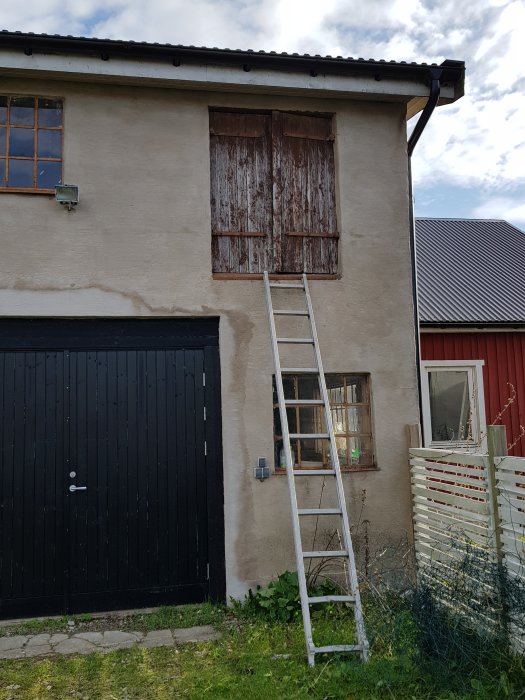
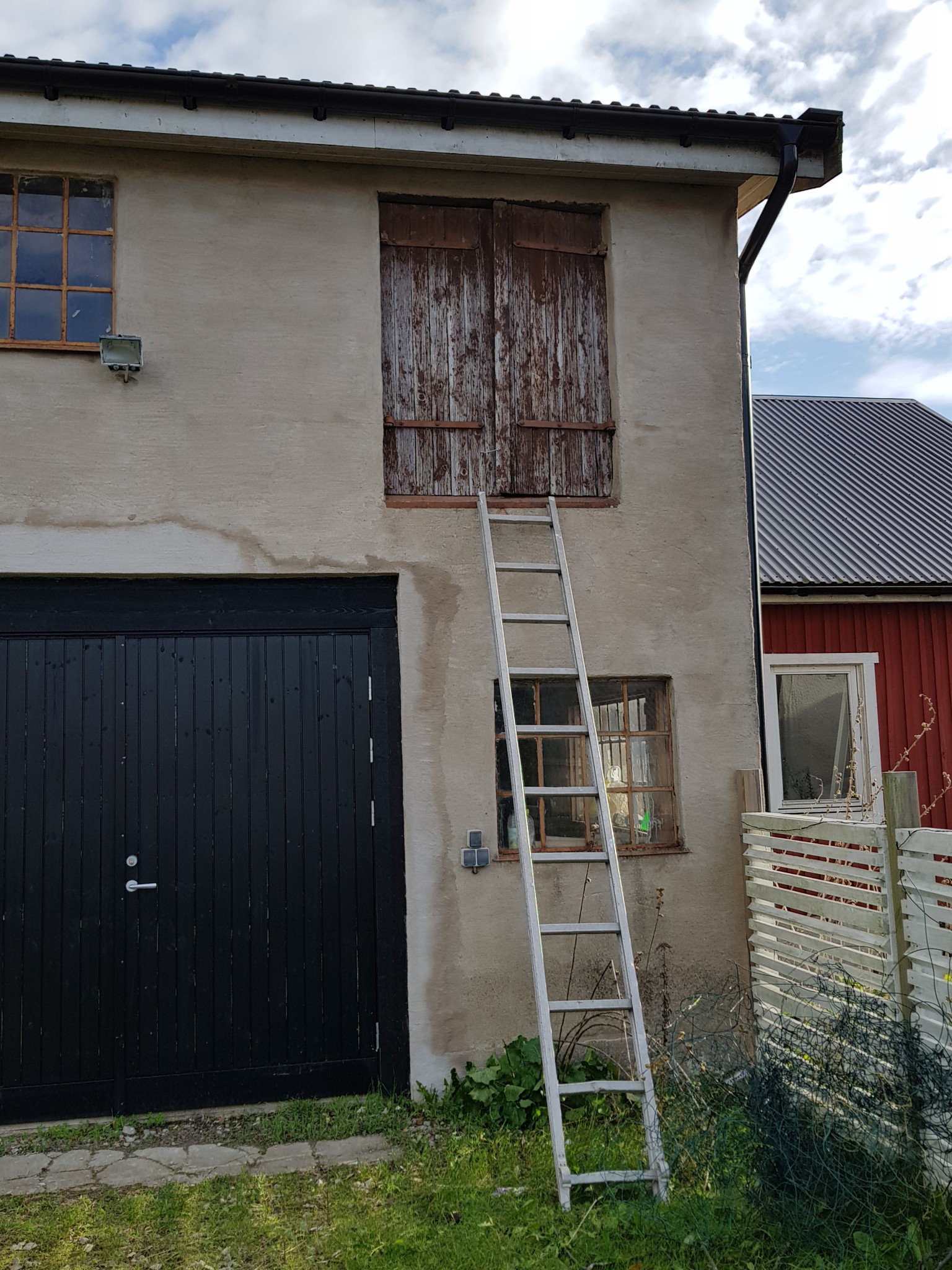
The staircase is supposed to be attached to the wall, it's an outdoor staircase, right? The wall is brick and plaster. What am I missing/thinking wrong?
Landing is the correct spelling, i.e. where one stops. If you have a platform on the way, it's called a standing platform.
Can't you post a picture of how it looks where you need your stairs?
As mentioned, support is needed along the way, and/or reinforcements; it cannot hang freely in the air and be attached only at the top, the forces on the screws you're attaching it with would be too large.
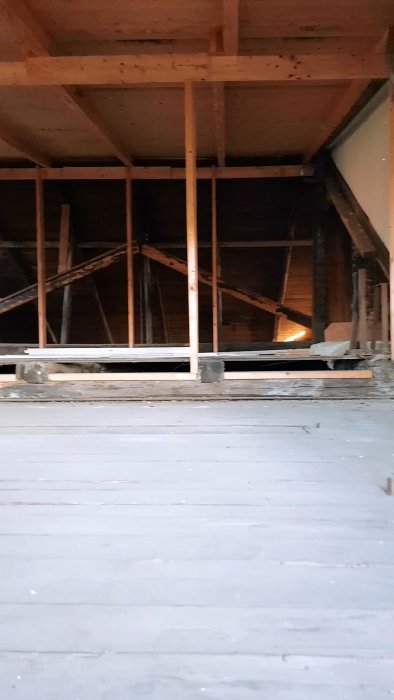
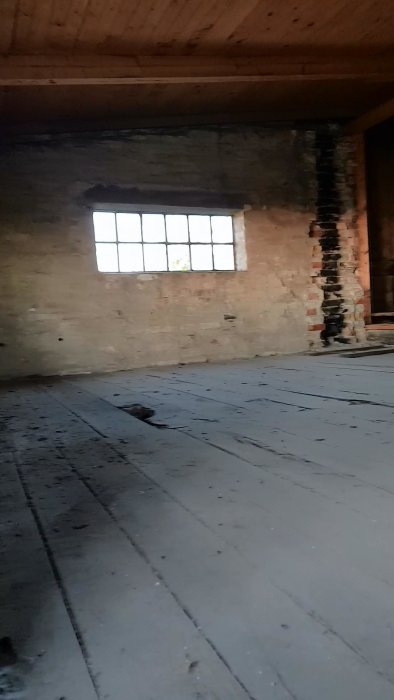
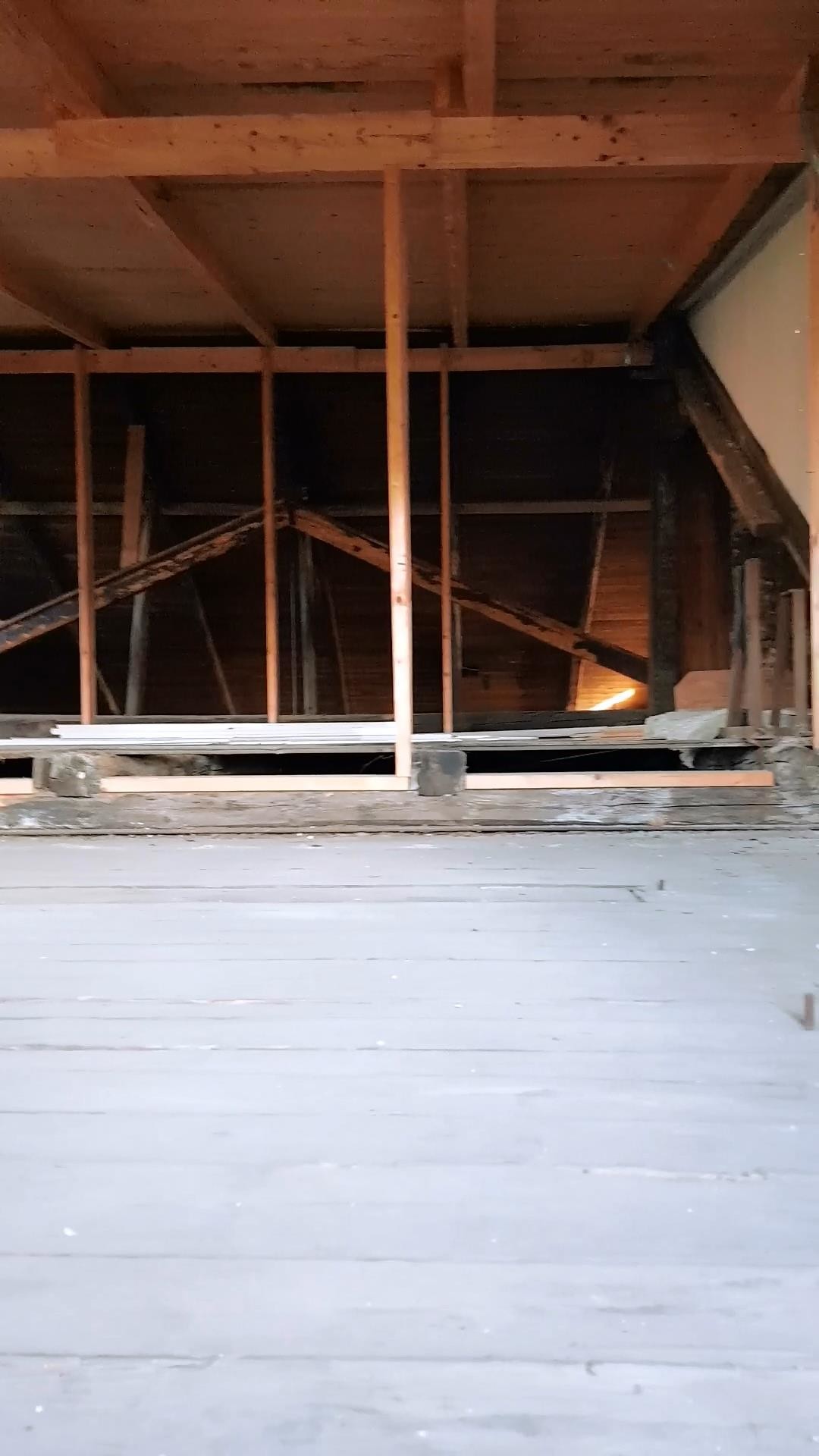
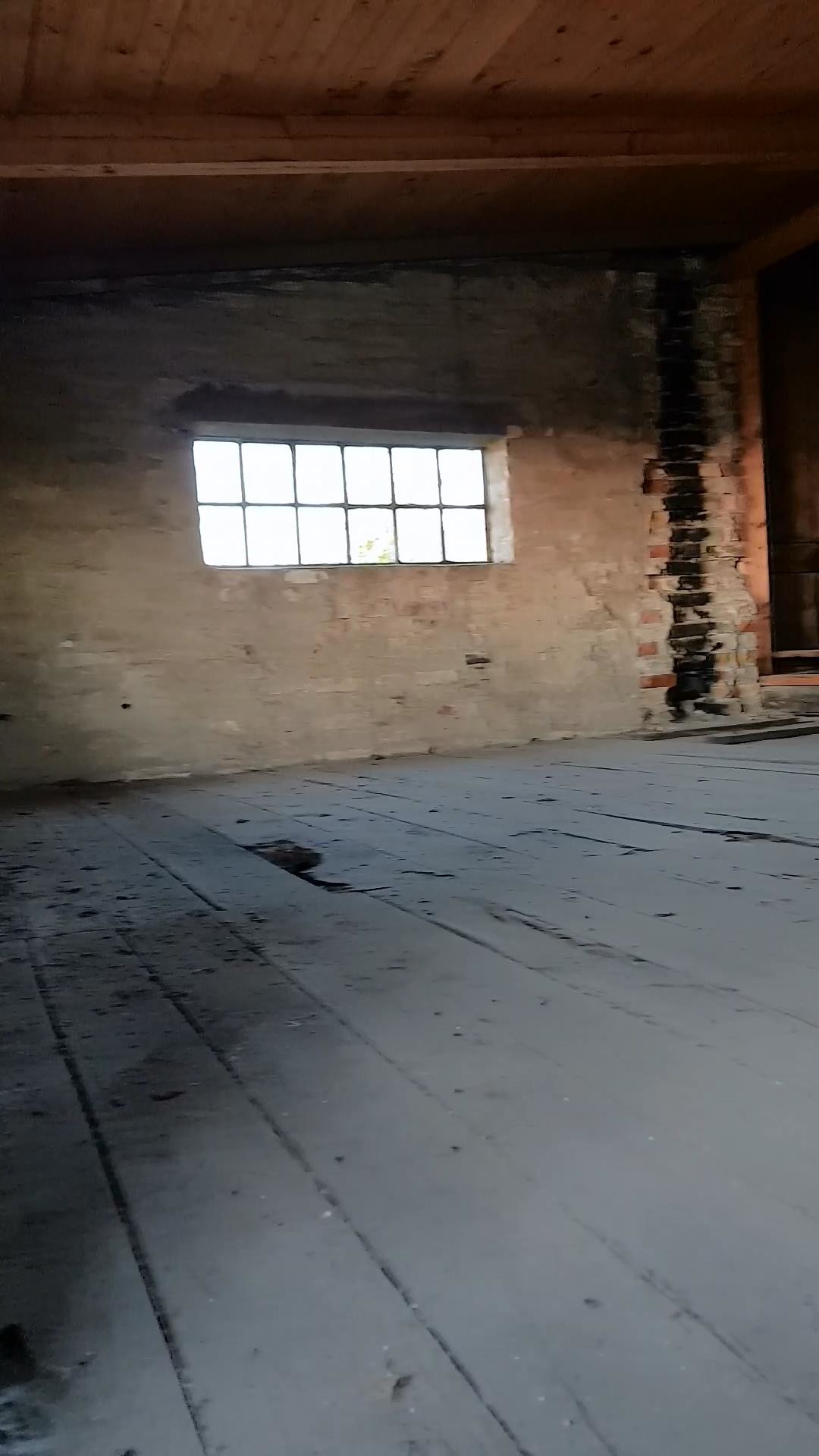
Regarding the floor, you need to find out why it's swaying: are the old boards worn out, or is it too sparse between the joists? Remove one of the boards and take a look at what's underneath.
I can't get in without a ladder, so this is the best I can do. But since it's open at the edge in the level differences, you can at least see the floor beams, does that help? I think the floor mainly sags because it's old and quite thin.
I don't mind if it doesn't become completely rigid in the future, or if it creaks and what not. As long as you don't fall down to the lower floor or something.
Addition, for mounting the stairs into the wall, I was simply planning to go straight through the wall, is that wrong?
There's quite a bit to tackle, it will be sturdy, and dig out a bit, fill with crushed stone and place a stone slab as support against the ground. Just consider the angle up the stairs so it doesn't become too steep.
There's quite a bit to tackle; it becomes steady and dig out a piece, fill with crushed stone and lay a stone slab for support against the ground. Just consider the angle up on the stairs so it doesn't become too steep.
You mean it becomes steady to attach directly through the wall? That sounds good then.
The angle will follow the pre-made stringers' own angle, which was about 36 degrees if I remember correctly. So a fairly flat staircase, which is great (it needs to be easy to walk on!), but of course, a disadvantage is that it then needs to be supported underneath instead.
Considering both the window and the door, I had hoped to be able to "disturb" as little as possible with the staircase. With posts underneath, it takes up much more space...
You'll manage the door, but the window might get a bit obscured, you'll have to live with that,
Such a narrow staircase that fits between the door and window is probably on the small side
A splicing of the stringers, a must, then you can place a plank on the outside, about 1 meter preferably 1.5 on each side of the splice and secure with strong bolts (carriage bolts)
I think it will hold then
The staircase will be a bit wobbly sideways at that length, so you need to brace it underneath
The gate you will manage, but the window will be slightly obscured, you'll have to live with that,
Such a narrow staircase that fits between the gate and window is probably a bit on the small side
A splicing of the carriage beams is a must, then you can attach a plank on the outside, about 1 meter, preferably 1.5 on each side of the splice and tighten with strong bolts (carriage bolts)
I think it will hold then
The staircase will be a bit shaky sideways at that length, so you must reinforce it underneath
The issue with posts related to the gate is primarily about it becoming narrower to get in there with a car, I think...
Do you mean that I should splice without overlap? I don't think that's possible; it doesn't look from the pictures like the bottom and top fit together without there being an extra step either in height or depth. So, the idea was to overlap a step, possibly also glue there, and maybe as you suggest (I think) also have an extra piece a bit over the splice.
I think I understand what you mean by shaky sideways; I should be able to do that...