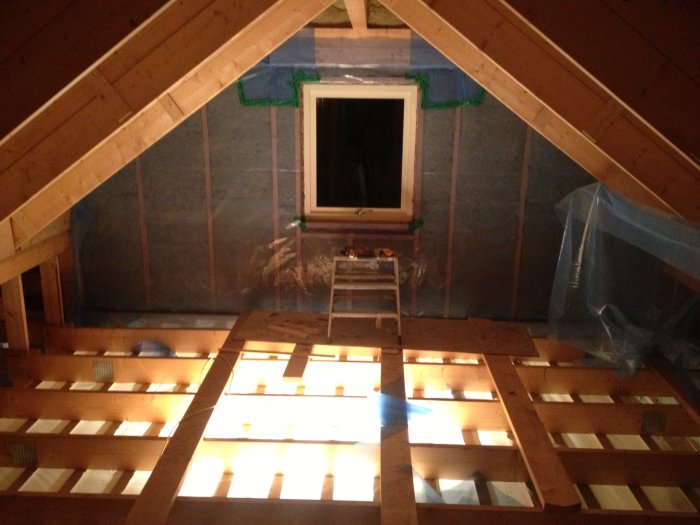
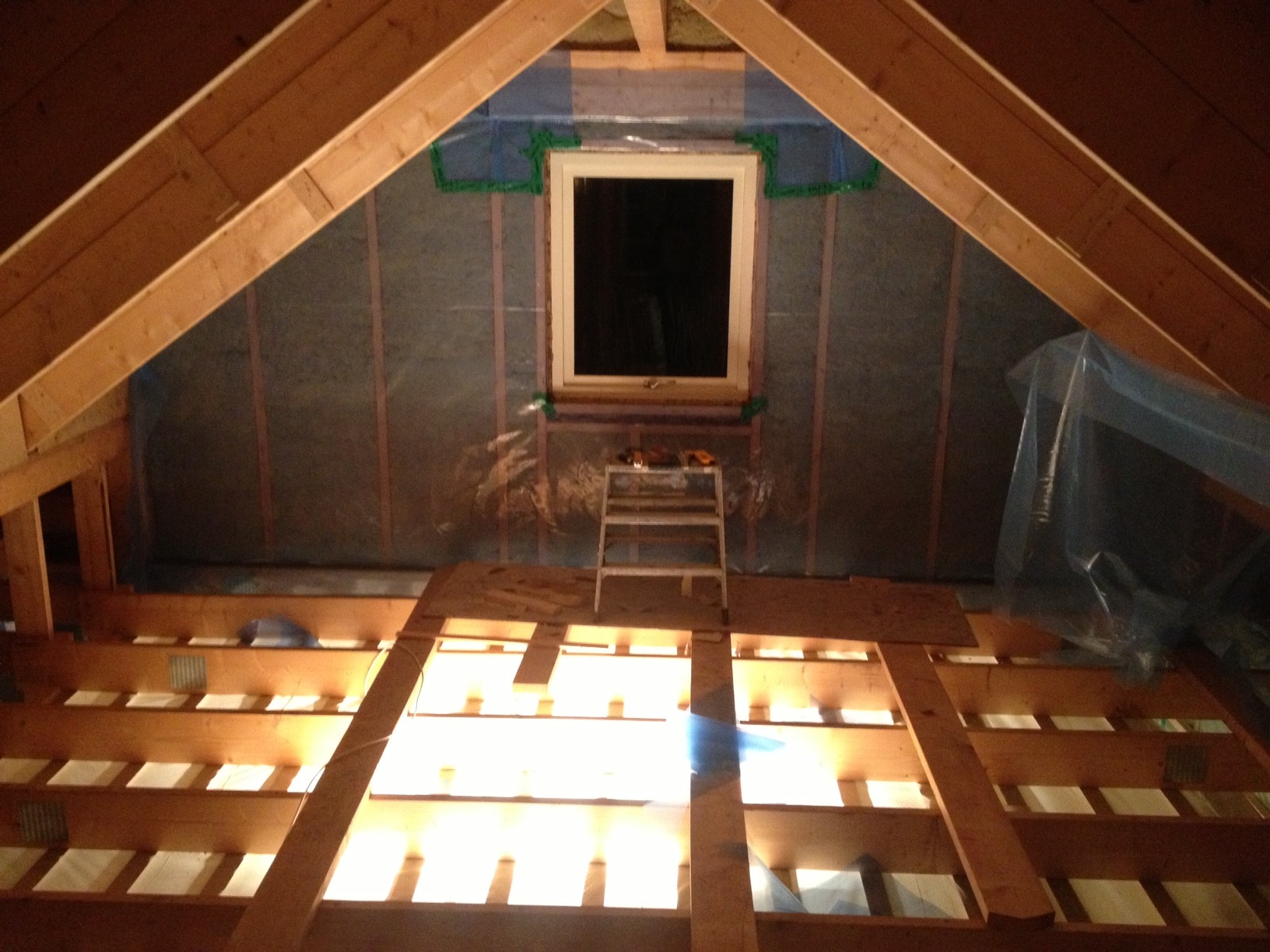
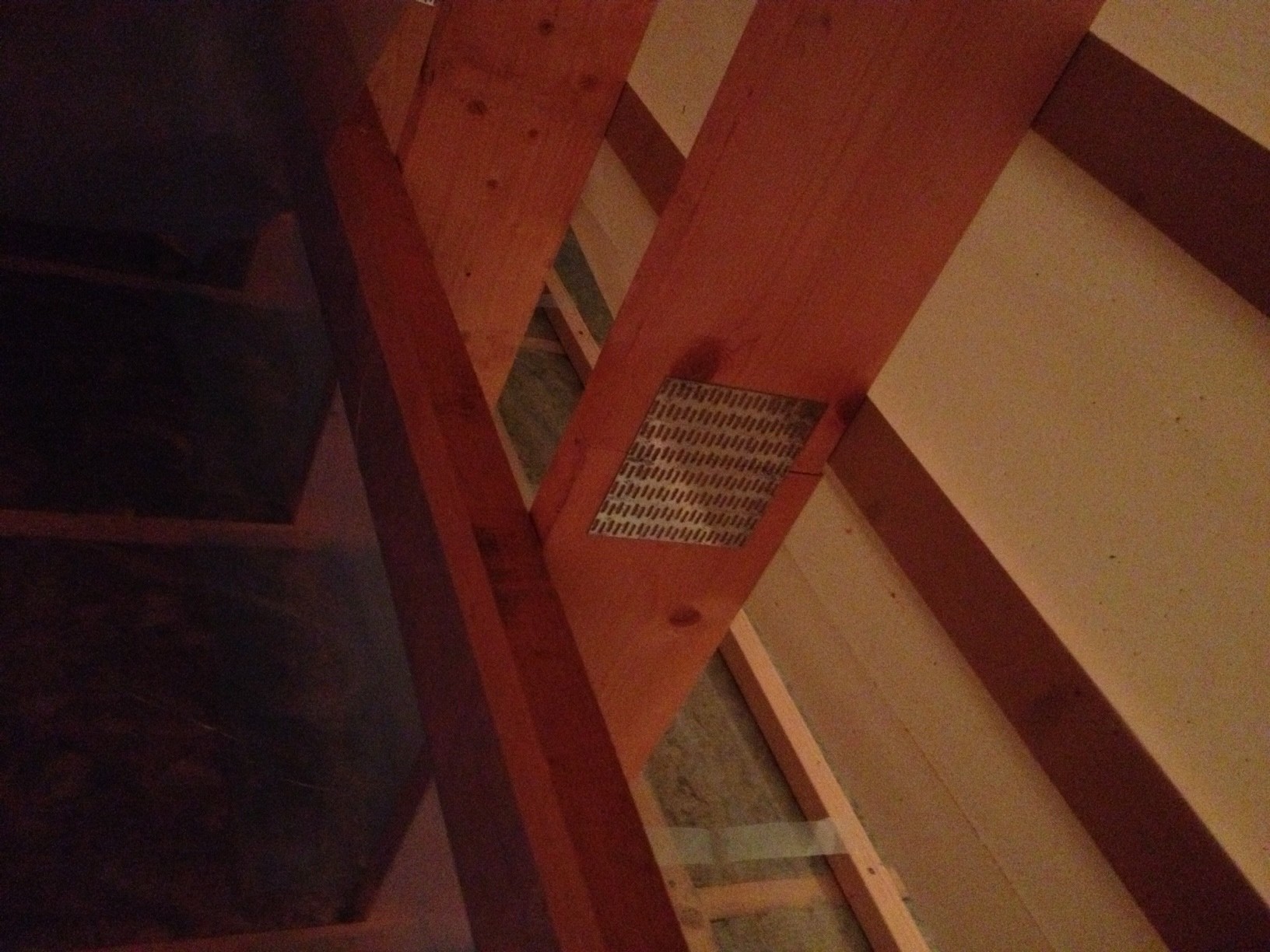
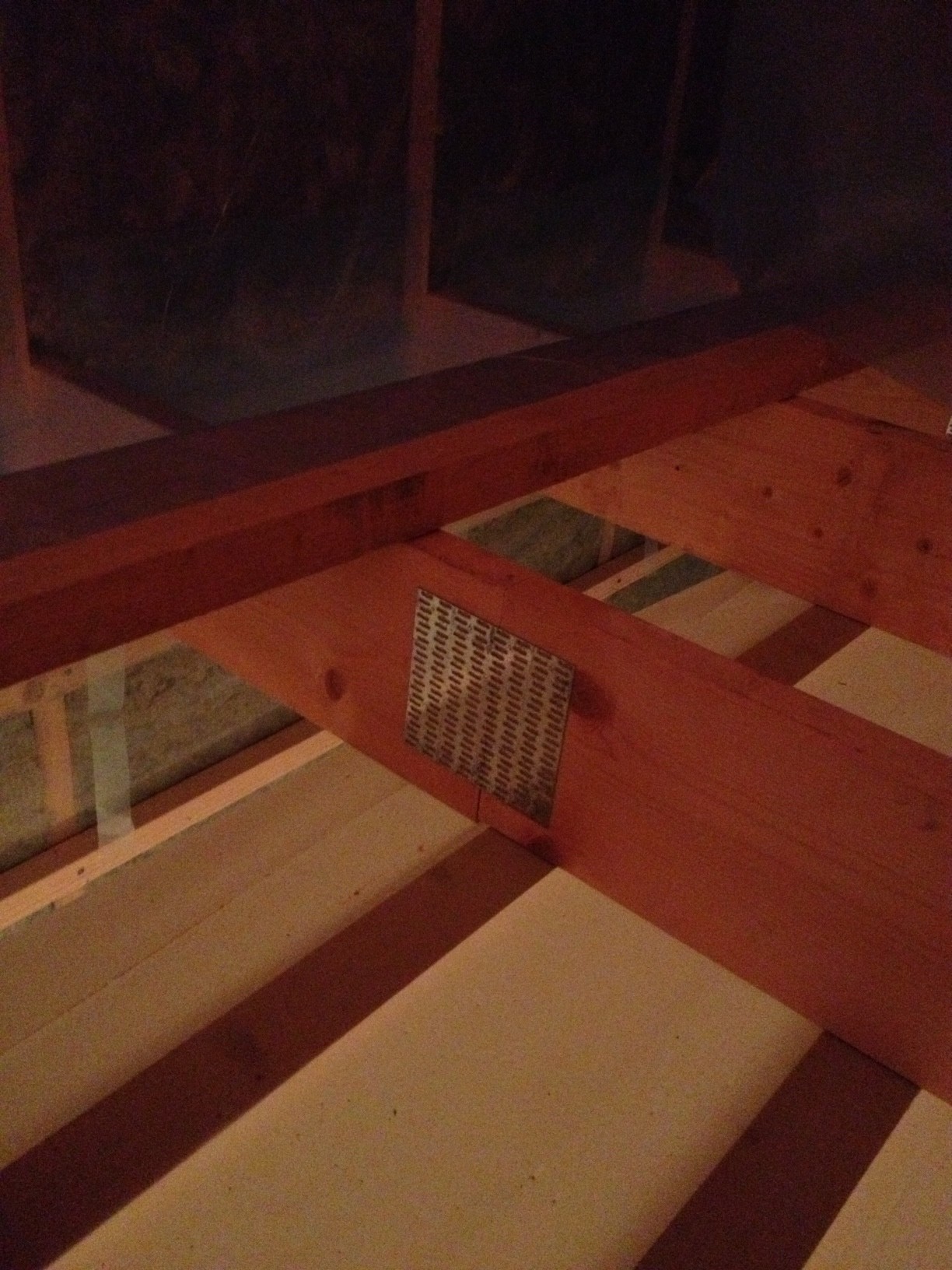
The upper floor's surface area measures approximately 6x6m and the joist consists of 220x45mm timber with CC60cm. These are not full-length 6m but spliced as per the image below.
Is it necessary to build a knee wall in our new extension, or can we utilize the full width of the room without needing to reinforce for the sake of the joist? Is there a risk that the floor will sway/sag/swing if we don't do this?
I don't know these expressions, but the floor structure has no support from underneath on the surface which is 6x6m. No planned inner wall on the ground floor where it will be the living room.
Is it a new construction or a renovation? If it's intended to be an upper floor, then surely the one who designed the house must have had this in mind. 220x45 freestanding at 6m is probably out of the question.
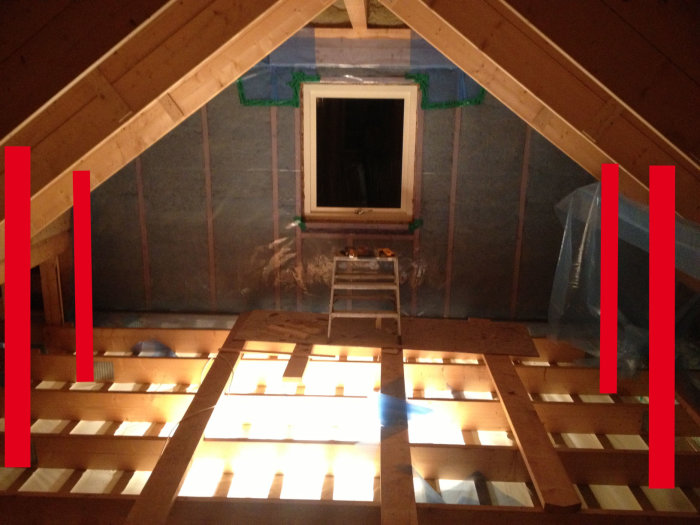
You don't need to build a kneewall, "hanging studs" as you show in picture 2 are sufficient.
The alternatives are to replace the beam structure or to place a beam underneath.
Is it common to hang the floor joist on the upper frame of the truss? If so, you probably need a support beam over the entire floor joist to hang every other floor joist.
Some answers to your questions, I haven't had time to check over the weekend.
Mattiaz said:
It is an extension on an existing house, an old cottage we are expanding and renovating. It is absolutely intended as an upper floor from the very beginning, and that's also how whoever designed the extension planned it. It was also decided that it should be catwalk or "hanging posts" in the planning stage, but I still wanted to ask the question in case there was another smart solution to it so as not to steal too much space.
andersmc said:
The area is intended as living space. There is a larger space to the left that is not visible in the picture.
hempularen said:
Extension of existing house, an old cottage.
haavard said:
Ok, just as I thought. Changing it out is not an option, so we continue as it was intended from the very beginning.
Support legs it must be... can't the truss manufacturer help you with possible reinforcements and dimensions of the support legs... I myself would probably have glued and nailed plywood on both sides of the bottom frame and put about 900mm high support legs...
I would not build an upper floor on a spliced floor structure without proper support below or above that "handles" the splice. It should also be added that the measure is likely to require a permit and notification.
Borrowing the thread a bit.
I have an old wooden house with a large upper floor.
Long span on the upper floor without any load-bearing wall underneath.
Today I removed a partition wall in the middle of the upper floor.
This was not load-bearing as, like the original poster, there are long beams in the ceiling that the roof rests on.
The wall was set very simply with flimsy studs.
They were not in tension, and some weren't even touching either the ceiling or the floor.
But now that it is down, I feel the floor sways significantly when walking on it.
Could it be that the floor was supported by that wall?