Materials can absorb odors, but you mention that it smells outside the house as well. Can you explain?
An example of musty smell was in our vacation home, which was originally a cold winterized summer cottage.
Despite having renovated and now having maintenance heating with ventilation, the enclosed smell partially remained.
The problem we had was old closets partially made of fiberboard; after they were torn out and replaced, the smell disappeared completely.
So materials can absorb odors.
We have a property in the neighborhood from the 70s where they did floor remediation that sounds like your problems, but the smell remained.
Now to the unfortunate part, a subsequent owner had to renovate/replace the lower part of the walls to get rid of the smell.
A passively ventilated floor risks pushing moisture towards the exterior walls. Do you have ventilated baseboards?
Are the partition walls directly on the slab, or did you use sill insulation there as well?
I would look for any odor/moisture in the outer corners behind any baseboards. Especially if you have any wallpaper that goes down behind the baseboards.
Jerfred, it actually smells quite a bit in one of the outer corners by the baseboard. In the southeast. Comes in wafts. The same smell that is in our clothes. Could it be incompletely replaced sills after all?
The smell you're noticing is likely connected to the Asfa-board that's probably placed against the concrete. When the sill was replaced, they likely only replaced the sill and not the Asfa-board which is affected! Possibly a strip without understanding that the Asfa-board is also impacted. The smell can also originate from attempts to treat the sill with some impregnation that desperate homeowners tried when sill problems were discovered. Even if the sill is now removed, other wooden parts may be soaked in impregnation and have begun to rot. The facade's plastic paint hides the status of affected parts, so I would perform the knife test on wooden parts near the concrete to see if they are or have been rotten. A knife pressed into healthy wood won't go far, but in rotten wood, you'll feel it.
If you've got odor contamination in the wind barrier Asfa-board and facade... but the acute causes—leaky outer shell and insufficient negative pressure ventilation that need to be adjusted, replaced—then I would hire a mold detection dog!
If you get clear markings against the outer wall and sill, or all the joints between wall and concrete, I would investigate the moisture content in the concrete? Then the ventilation? Then the waterproofing which seems to have been damaged during the sill replacement?
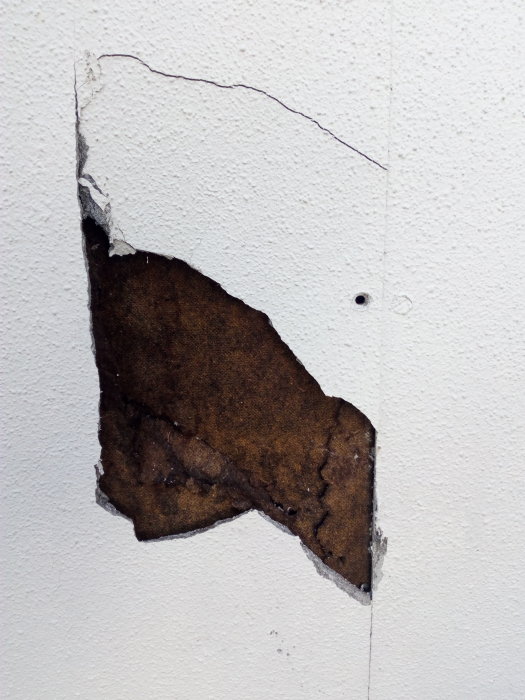
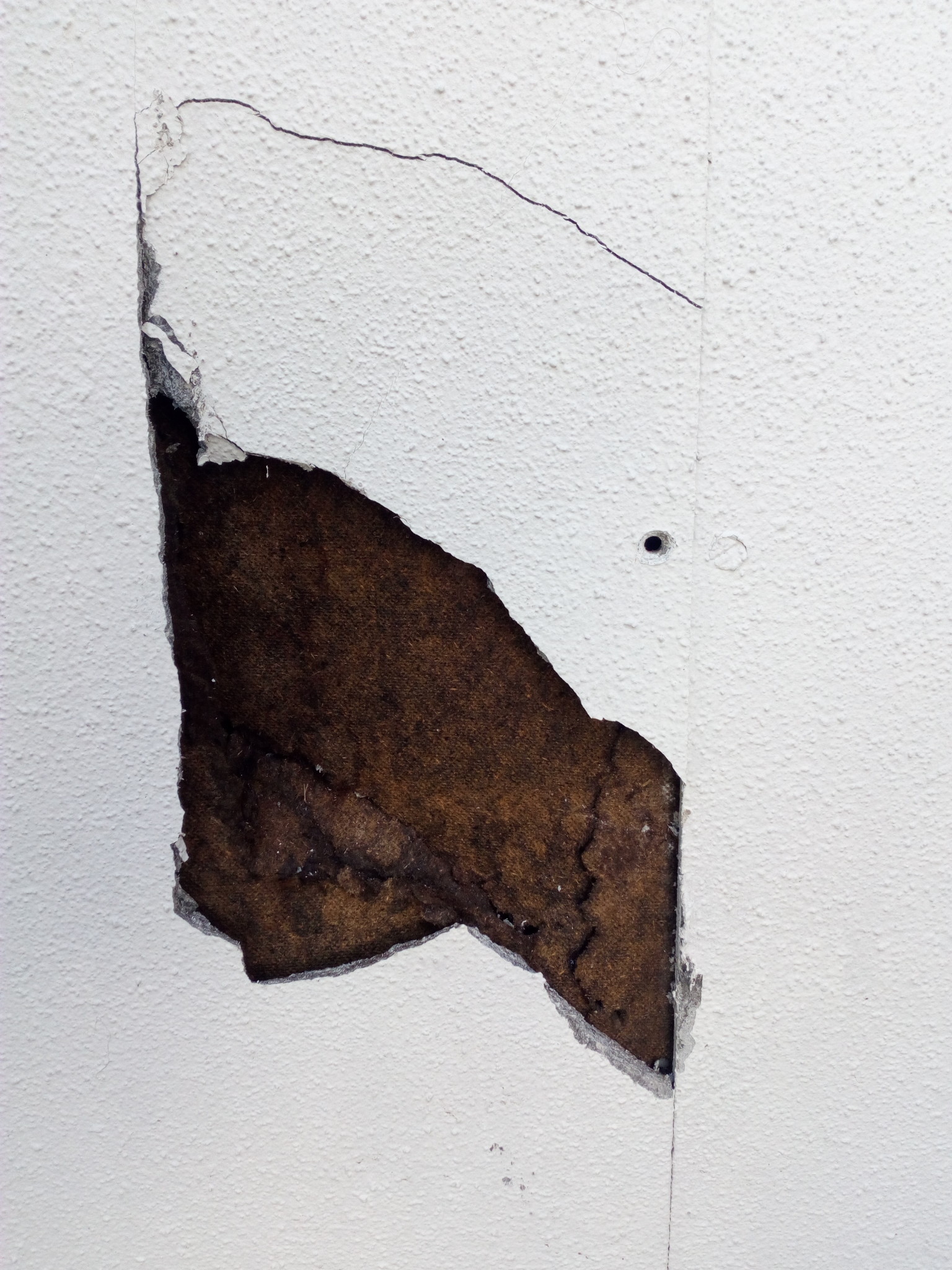
There was a manufacturer of façade boards, so-called asfarock, between 1950-1970 that still smells terribly from the impregnation agent today! Typically, it smells outside the house on a sunny day, especially on the leeward side of the house!
I myself have such a house, built in 1960 with painted asbestos-cement boards as façade cladding.
In April, an excavator accidentally made a small hole in the asbestos-cement board, and 2 days later the entire room inside smelled!
I took a small sample of asfarock and placed it in double plastic bags, and they smelled on the outside for months afterward.
After gluing the pieces back, airing the room, and ozone treating, the smell disappeared after a couple of months.
What happened?
When the surface layer was punctured, the air pressure inside the wall changed from a slight vacuum compared to the air pressure in the room to an overpressure, and the smell migrated into the room through gaps, it smelled around window frames and baseboards.
Just a small thought, if the house's framework and walls have absorbed the smell from the old sill even before it was replaced, then this smell would remain in the walls. When a mechanical ventilation system with negative pressure is then installed in the house, this smell is drawn into the house through various cracks and gaps. This might also include the smell that can be present in the treated exterior paneling, which is enclosed by a layer of plastic paint and cannot emit its smell outward.
Was the house built like that from the start? Or has the upper floor been remodeled since 1970?
Back in the day, they knew how to handle brick walls!
They were ventilated by leaving out mortar on every 4th or 5th brick on the first row, and there was a larger opening leading to the free area at the eaves. This creates a negative pressure behind the brick which prevents odors from the building materials from entering the house.
This situation changed a number of years ago when continuous FA began to be used, now the smell is pulled into the house instead of being ventilated at the eaves.
I can say with 90% certainty that it comes from "earth bacteria" which "eventually" creep into the constantly wet slab. (especially from all the corners of the house)
The outlets from the gutters are usually in every corner of the house, there are needles/leaves & growth from roof tiles that over the years "saturate" the drainage (which was "dirty" gravel in various fractions down to 1mm under & around the slab).
Additionally, the lawn/earth has grown right up to the slab/foundation on all sides of the house (except maybe a patio), so there is no chance for the slab to ever dry up.
Eventually, this moisture with earth bacteria seeps deeper into the slab and leaks through capillary action into gaps, causing odors that contaminate the whole house, clothes, and items in plastic bags like bread stink.
And you often don't notice the smell while you're there, but it hits you in the face if you take a piece of clothing from there to a "fresh house" since your smell sensors have been neutralized.
There is only one solution to this problem, & that is to get help from "real" professionals, not Anticimex or local so-called experts.
Can say with 90% certainty that it comes from "soil bacteria" that "eventually" crawl into the constantly wet slab. (especially from all corners of the house)
The outlets from the gutters are usually in every corner of the house, and there are needles/leaves & growth from roof tiles that over the years "saturate" the drainage (which was "dirty" gravel in various fractions down to 1mm under & around the slab)
In addition, the lawn/soil has grown right up to the slab/foundation on all sides of the house (except maybe a terrace), so there is no chance for the slab to ever dry up.
Eventually, this moisture with soil bacteria creeps deeper into the slab, and leaks through capillary action into gaps that contaminate the entire house, clothes, and things in plastic bags like bread stink. And you often don't smell it while you're there, but it hits you in the face if you take a piece of clothing from there to a "fresh house" since your odor sensors have been neutralized.
There is only 1 solution to this problem, & that is to get help from "real" professionals, no Anticimex or local so-called experts.
Do you have any tips on which companies can be considered professionals for these types of problems?
Hi
how did it go for you, did you find out what the cause was?
Our facade's wood paneling was pressure impregnated. Everything has been torn down and the entire facade has been rebuilt with new materials, including new insulation, wind deflectors, and new vapor barriers. We had to remove all the material behind the paneling because it was contaminated with odor. Now we have a completely new shell on the house, including a new roof that we took the opportunity to replace. The smell is completely gone and the house is like new.
Our facade's wood paneling was pressure treated. Everything has been demolished and the entire facade has been rebuilt with new materials including new insulation, fascia boards, and new vapor barriers. We had to remove all the material behind the paneling because it was odor contaminated. Now we have a completely new shell on the house including a new roof that we took the opportunity to replace. The smell is completely gone and the house feels like new.
Hi Lisa, we're considering bidding on a house that has a "certain chemical smell" and we're very interested in the house but after reading a lot - also of course worried about how much cost might actually be added. Here the problem seems to be in the hallway and in one of the rooms but the sills have not been replaced for example.. I was glad to scroll and see that you found a good solution for yourselves (eventually) but I'm afraid of how costly it might become.. between a thumb and a finger, do you know what it cost you with the renovation of the foundation and roof? (Not "decorations" like wallpaper, floors, etc.). Thanks in advance! Created an account when I found your thread so I don't know if there is any PM or the like but feel free to contact me if you have the opportunity! Best regards, Susanna
Click here to reply
Vi vill skicka notiser för ämnen du bevakar och händelser som berör dig.