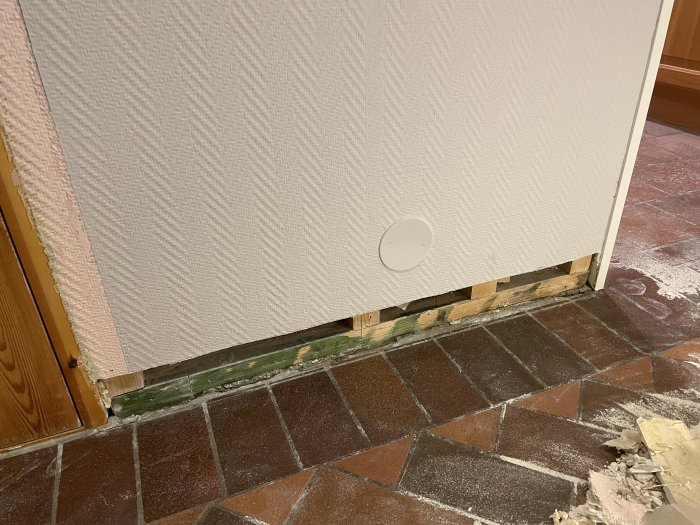
Gained access to a house built in 1974, the pressure-treated sills on exterior walls were replaced in 2006. Someone came here yesterday and thought they sensed a mold smell. Found out from the seller that the sills under interior walls were not replaced, believing it was as it should be there. Started tearing a little now.
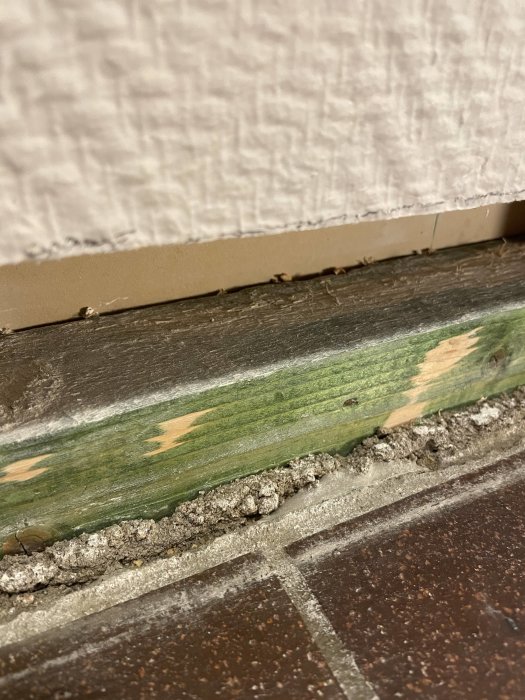
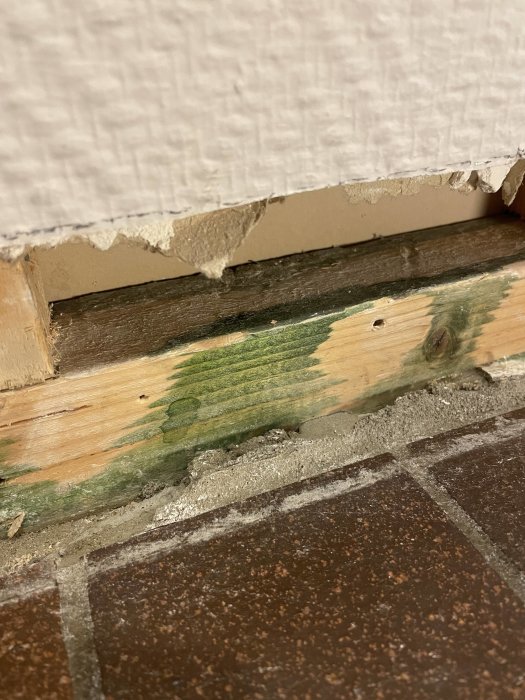
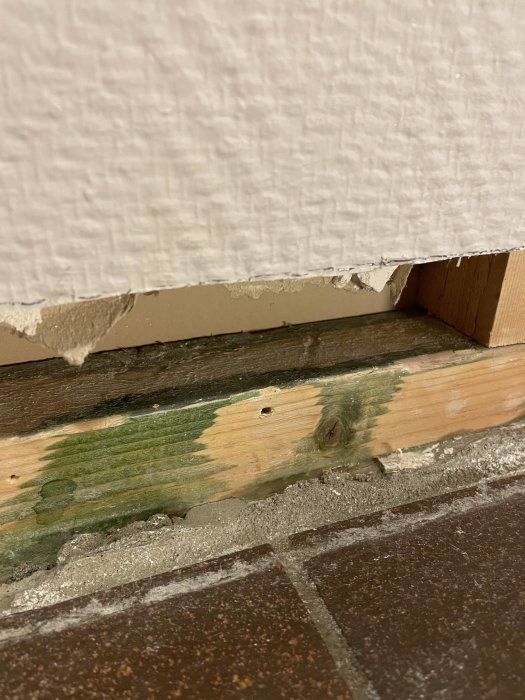
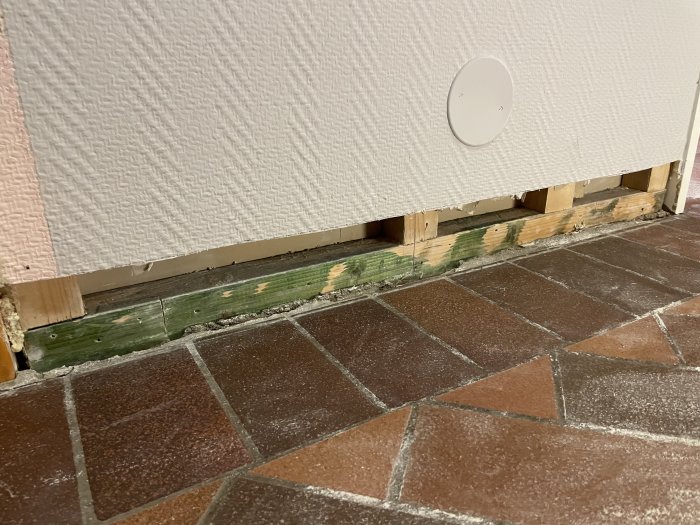
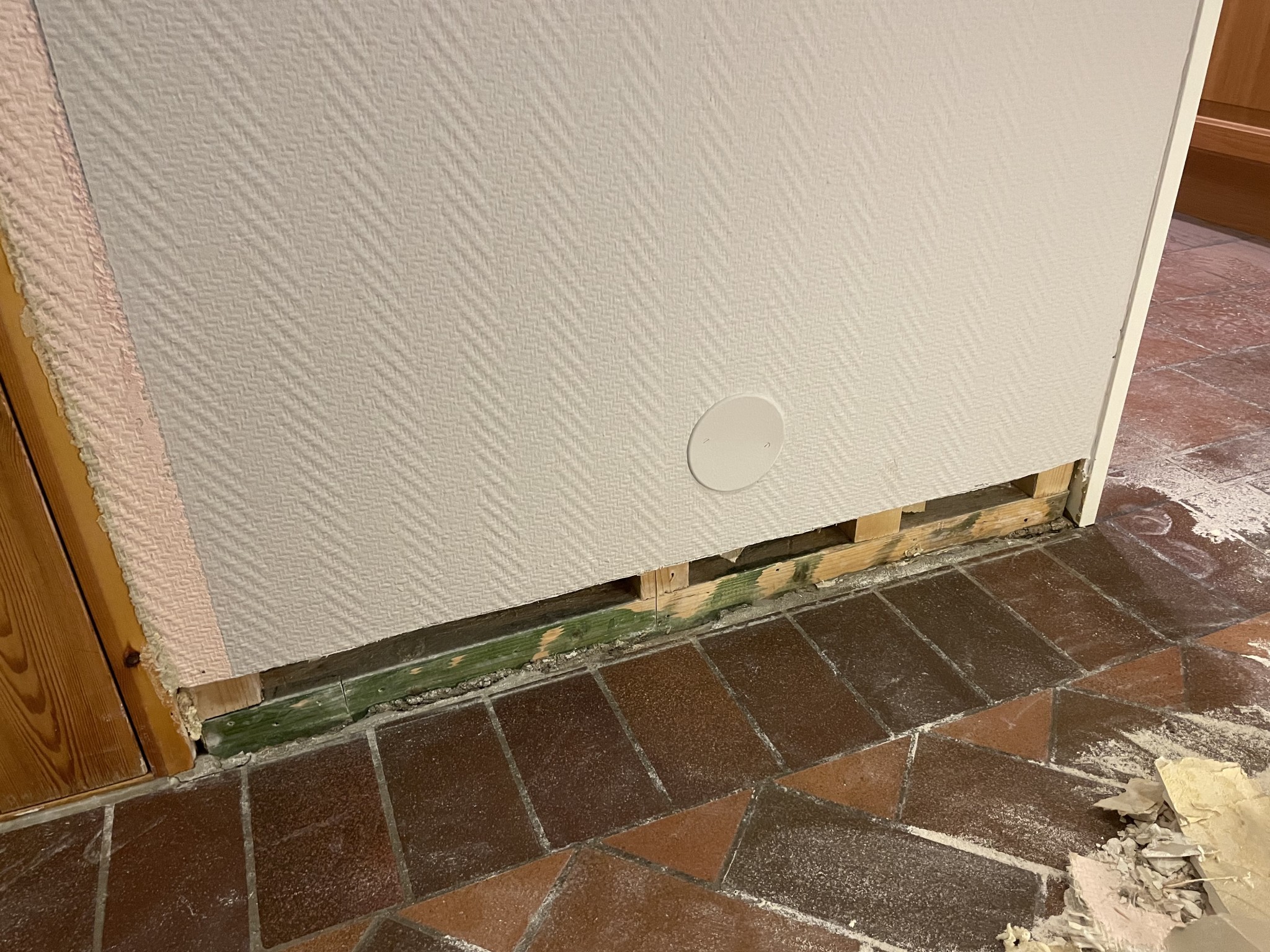
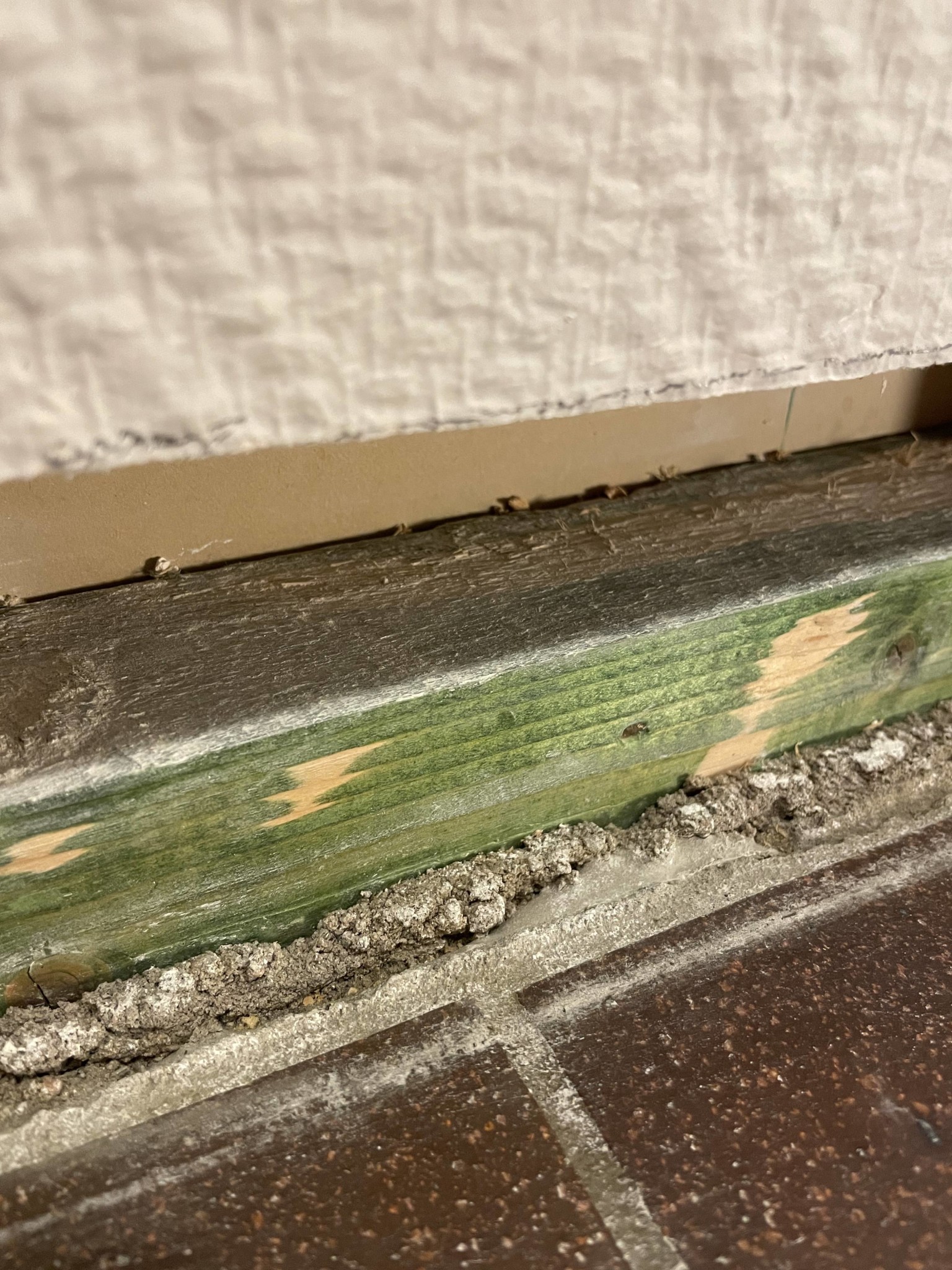
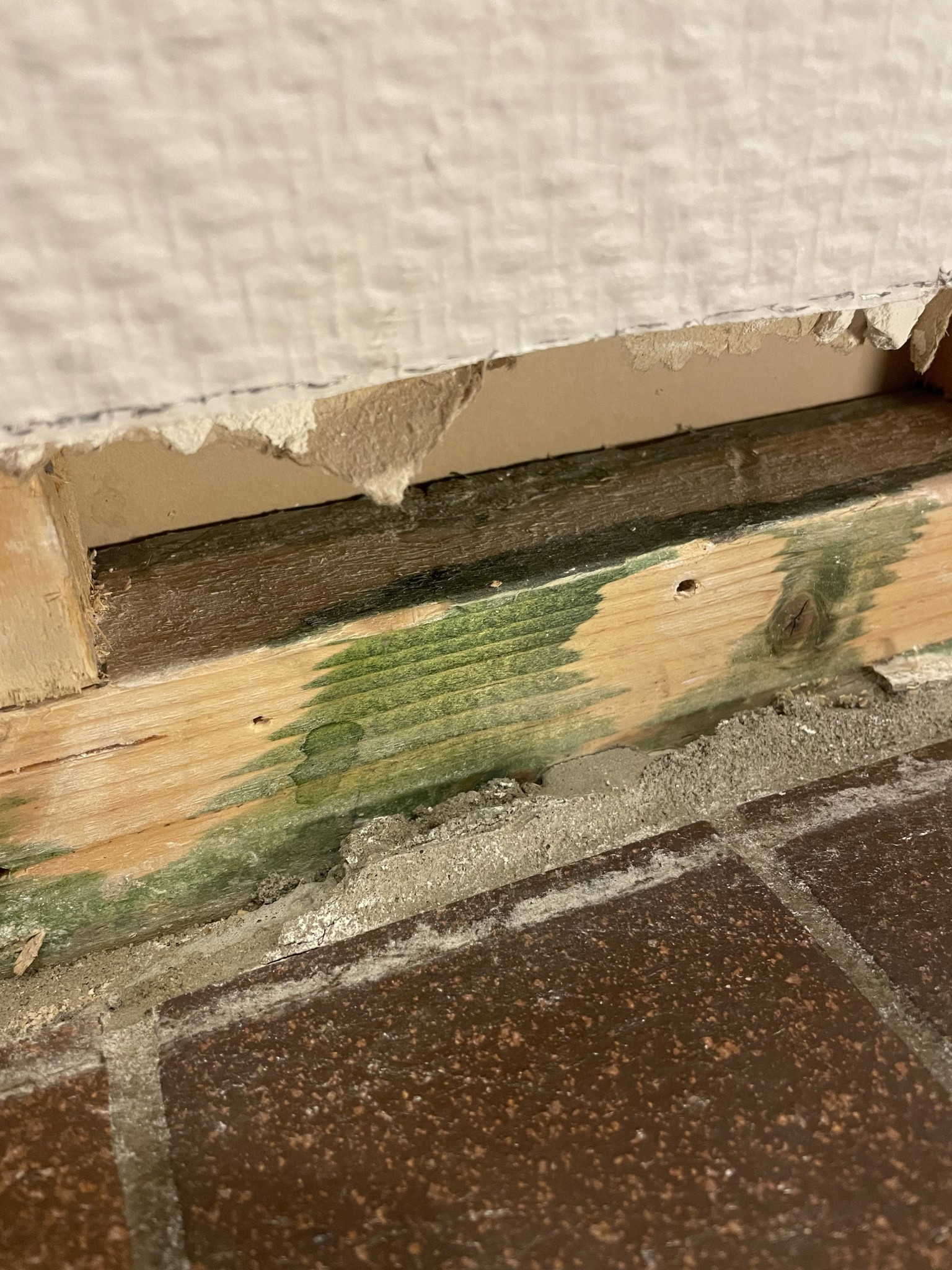
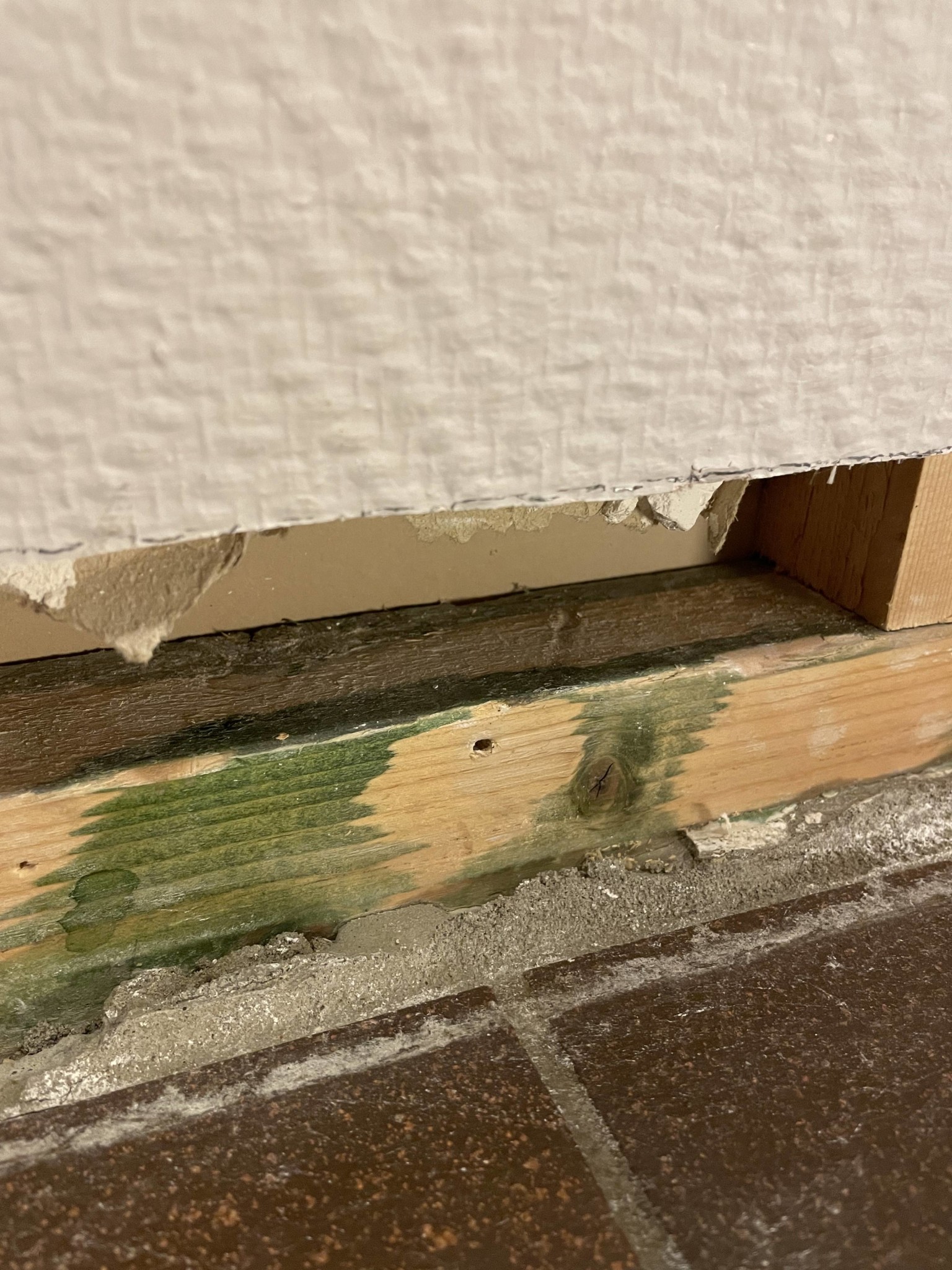
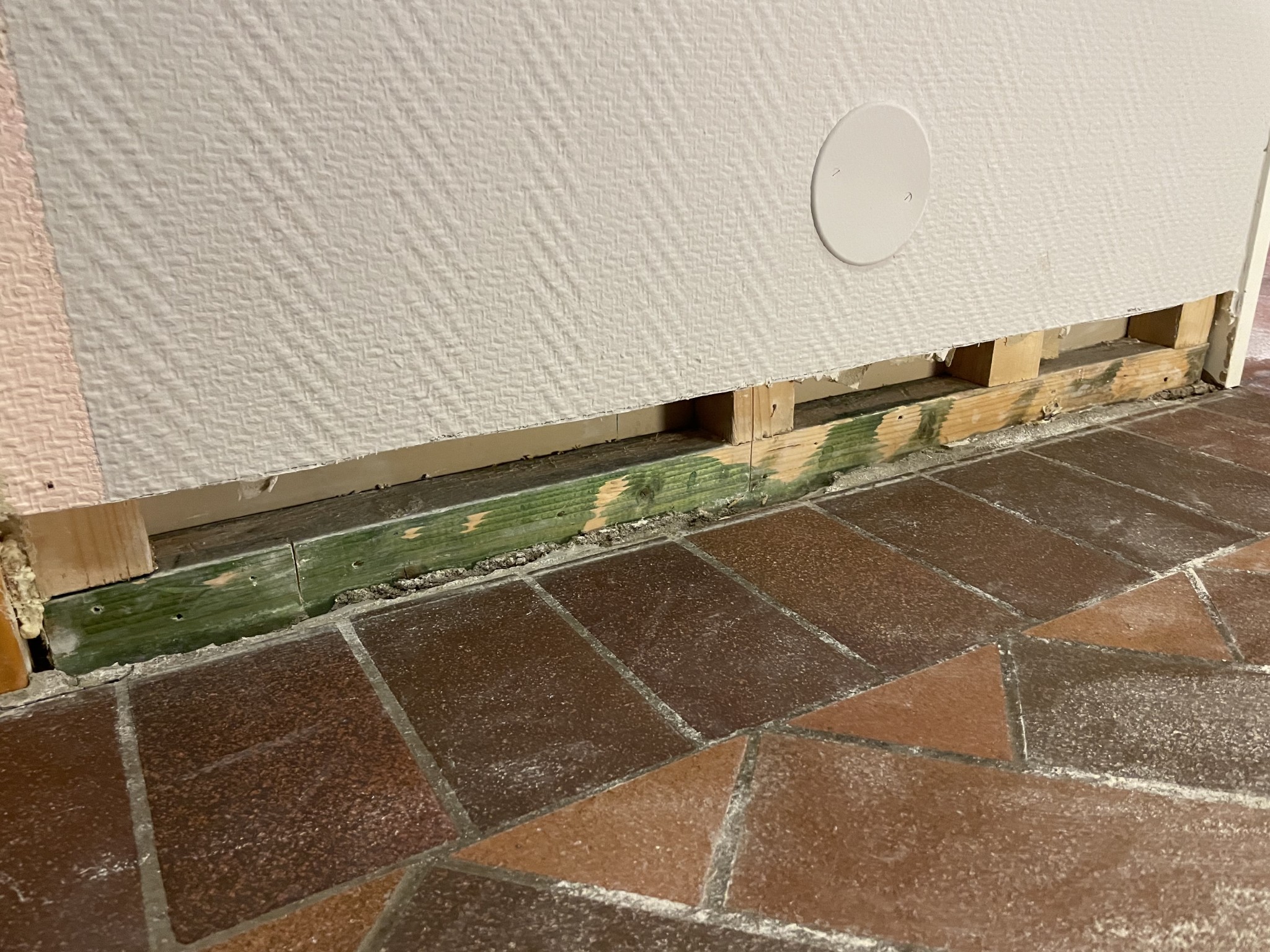
Can anyone, with these photos, say what type of sill this is?
I might be a bit dense, but isn't there less risk of mold in a treated piece of wood than in one that's unprotected? Or maybe there's no difference, but it shouldn't mold more easily and not in a dry interior wall. Then there are some things in old treated beams that aren't very beneficial, but whether it's so bad that you need to remove everything or not, others will have to tell.
However, as already mentioned, it's pretty easy to determine with your nose if the smell is coming from the wood that's now exposed.
What do you mean? It's a regular impregnated beam. Does it smell?
Ok, thanks, regular impregnated then. I thought since it looks painted, also fields with regular wood color. But that's probably how impregnated looked when the house was built.
It smells a bit when you enter the house. Then I get used to it quickly.
It smells in the clothes when I've been in the house for a few hours.
Doesn't seem more when I smell directly on the beam, I think.
I would have spontaneously aimed to replace those right away. If the walls aren't load-bearing, it's not excessively much work, but sure. If you planned to just move straight in, it's definitely an unpleasant thing to have to deal with.
I would have spontaneously aimed to replace those directly. If the walls are not load-bearing, it's not an excessively big job but sure. If you were planning to just move straight in, it's definitely an inconvenient thing to have to deal with
Looks like replacement it is. I don't smell anything on site. But when I cut away pieces of gypsum from different places in the house, the ones on the interior walls smell, but not the ones on the exterior walls, where there's been a steel sill since 2006.
Those aren't pressure-treated joists but rather someone who brushed them with cupfinal or something similar. As for how good it is, I can't answer that.
buy a moisture meter and test the beams, if it's dry then it's no problem.
When I read about cuprinol, it was a method of pressure treating back in the day? Because I assume you didn't mean cupfinal.
It seems dry but will be replaced anyway. The smell most likely comes from there.
"Copper Cuprinol green 10" was a product that could be applied with a brush. According to some googling, it supposedly contained chlorophenols, which give the bad smell associated with older preservatives. The ruler in the picture I don't think is printed, but it is definitely brushed, and probably with this substance.
"Copper Cuprinol green 10" was the name of a product that could be applied with a brush. According to some googling, it reportedly contained chlorophenols, which give the bad smell associated with older impregnation agents.
The yardstick in the picture I don't think is printed, but it is definitely brushed, and probably with this agent.
Thanks!
Click here to reply
Vi vill skicka notiser för ämnen du bevakar och händelser som berör dig.



Jonatan79 said:
Larsa said: