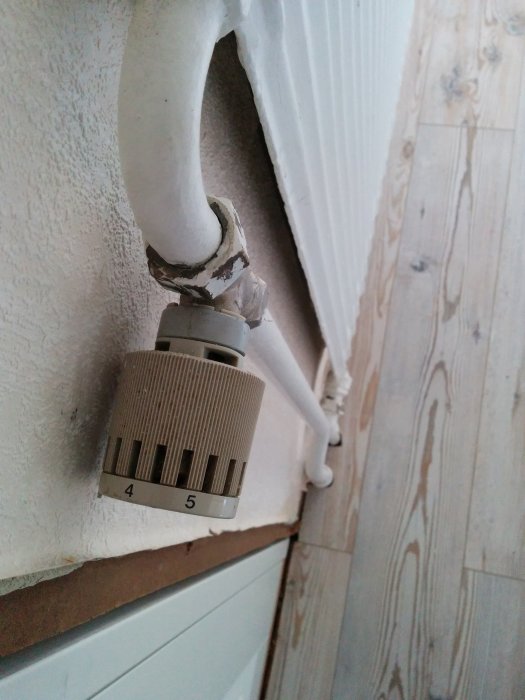
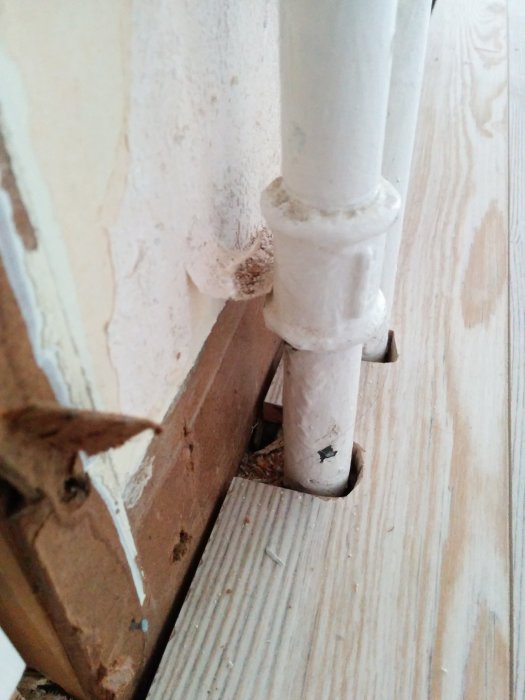
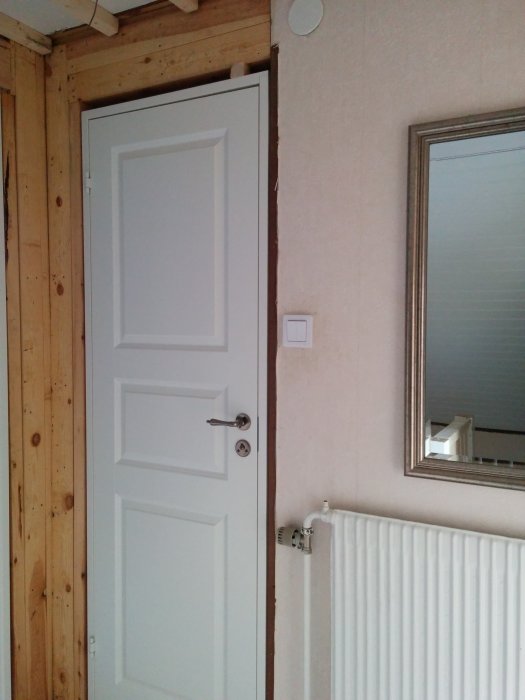
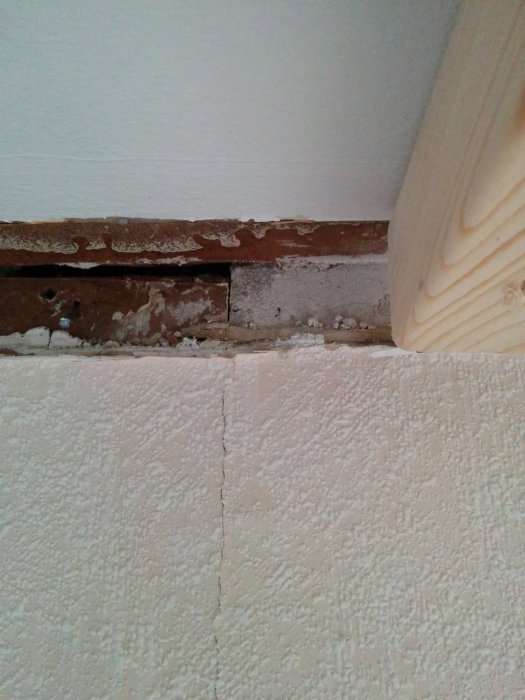
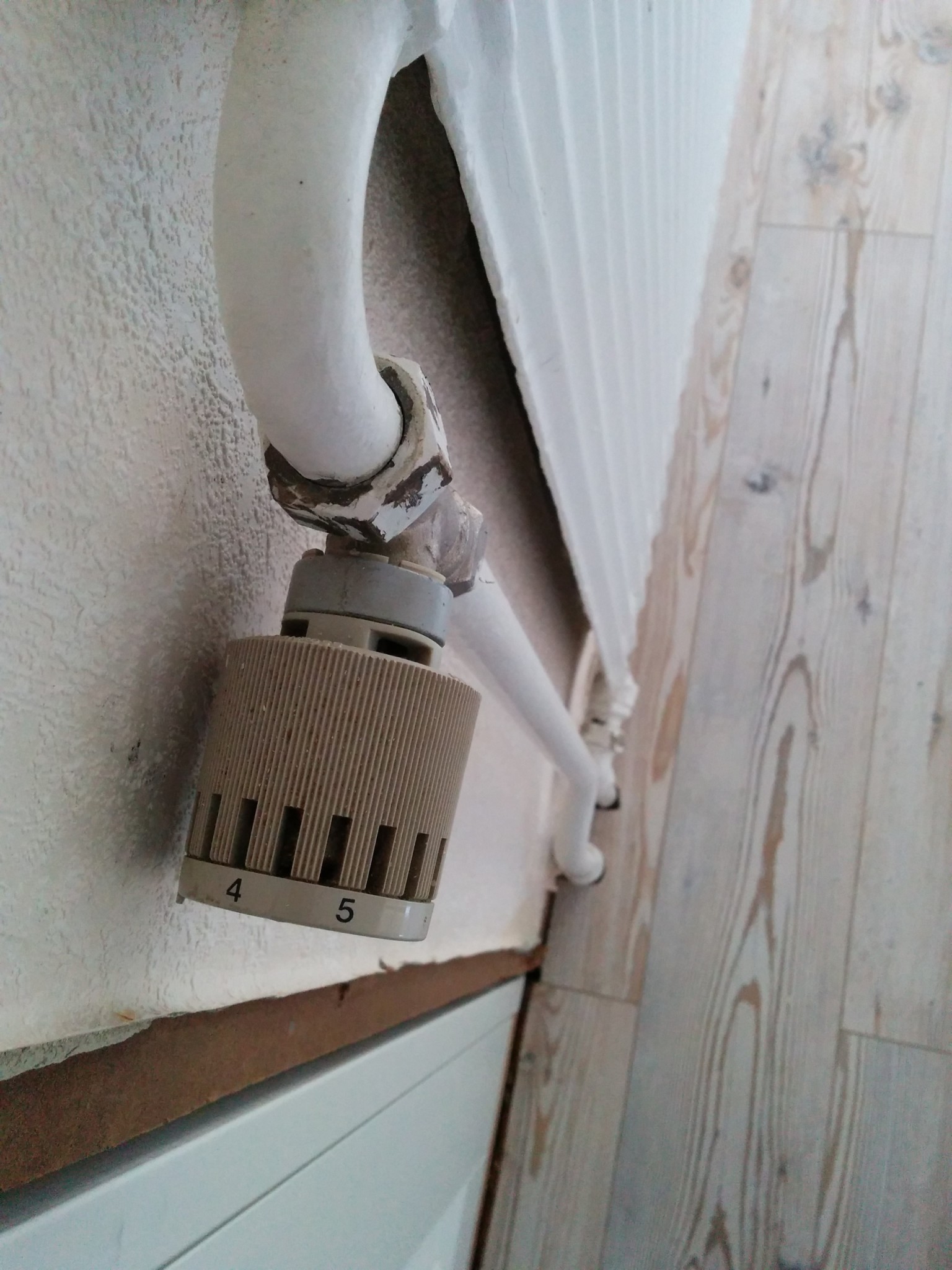
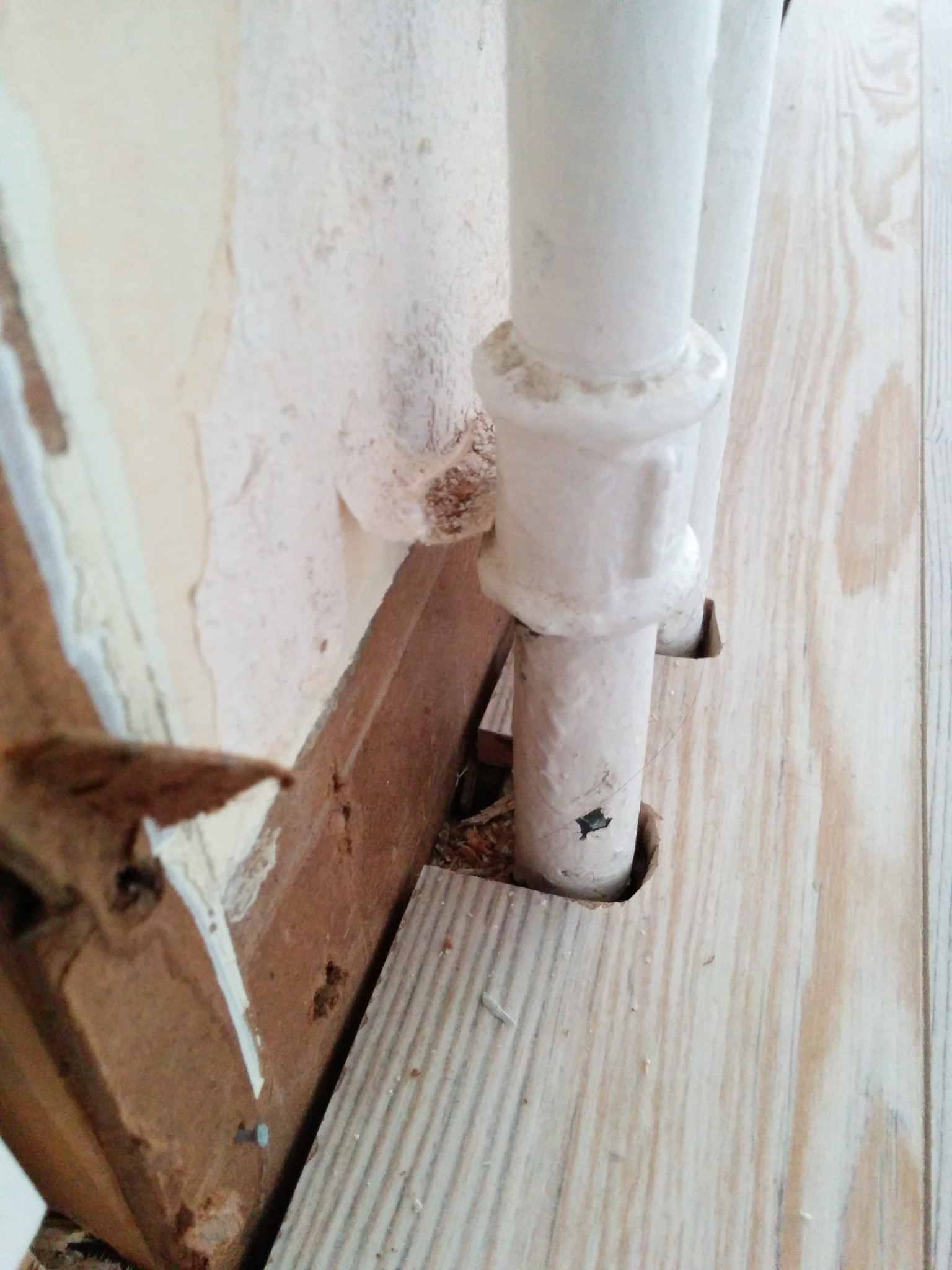
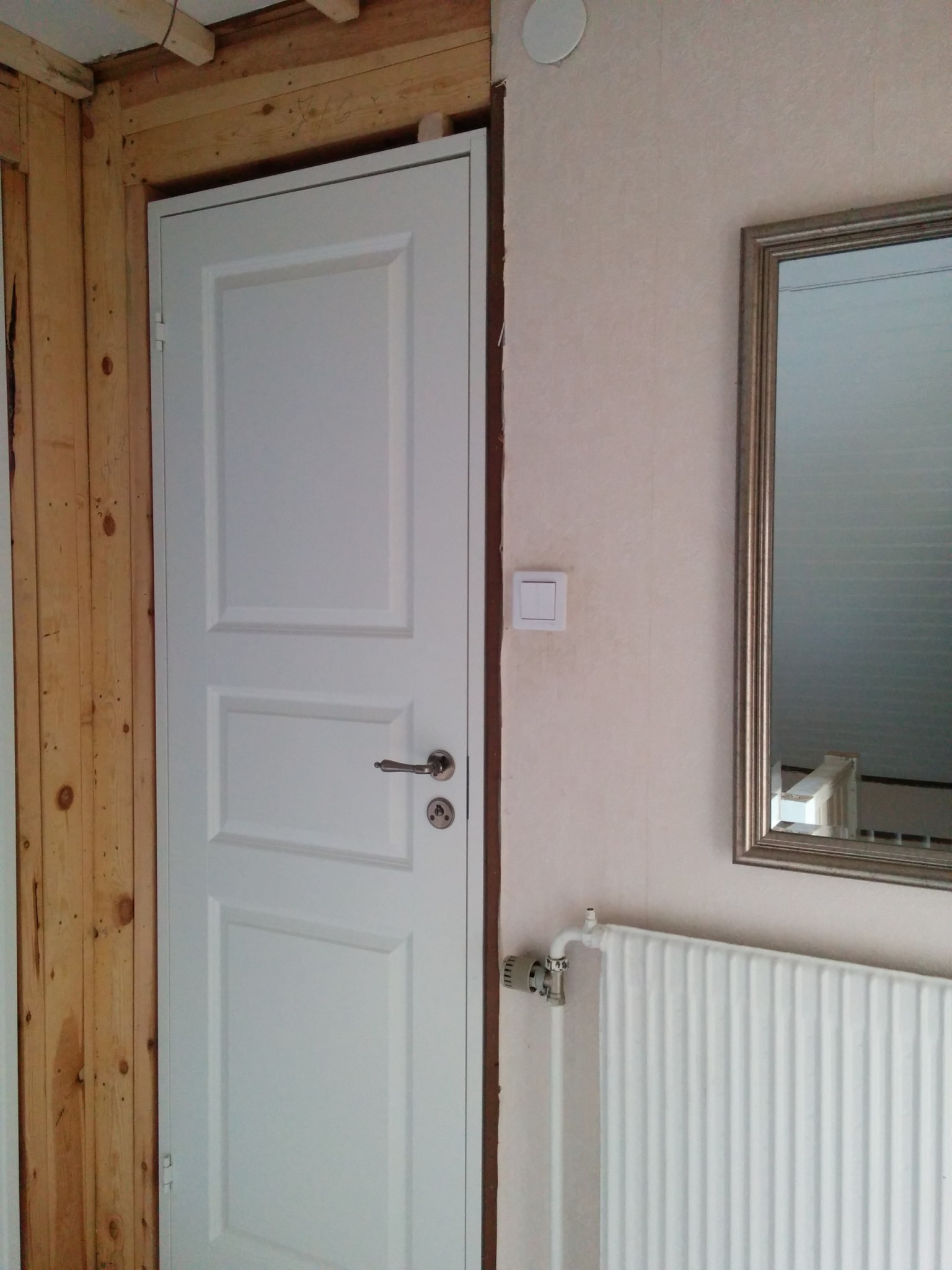
Hi, renovating in the hallway upstairs. Since I've installed a new door frame for the bathroom, the wall also needs to be fixed. It's currently textured wallpaper and my first plan was to put renovation plasterboard directly on it, but as you can see in the pictures, the radiator is insanely close to the wall. So I thought of removing the masonite that's on the wall and then putting plasterboard. The tricky part is that behind the mirror there's a chimney and it's plastered to the same height as the masonite, so if I remove the masonite, which I already did on part of the wall as you can see, the tongue-and-groove wall and the chimney won't align. So I can't put plasterboard as planned. What should I do? Should I remove the radiator and ask a plumber to install it further out, maybe replace the whole radiator while I'm at it? Are the pipes themselves too close to the wall in general? How do I make the wall and the chimney equally thick now?
I don't really understand the problem.. If you remove the masonite and then plan to plaster, what is the issue really? Won't it just be about placing the plasterboard so it's even?
Or do you mean that the masonite is missing in some place on the wall where it's plastered instead and that it's at the same level?
Plastering is the only way to make it smooth and nice despite all the current structural differences. Renovation plasterboard is only 6 mm. Tear off the old textured wallpaper (we call it maskodling) and you'll gain 2 mm. Then you can loosen the upper nut of the thermostat half a turn and slightly angle the thermostat away from the wall and tighten the nut again. If you're worried about leaks, you can try to access the upper bracket screws behind the radiator and loosen them a bit from the wall so that the top of the radiator comes out slightly. Shim the bracket against the wall and tighten again.
I don't really understand the problem.. If you remove the masonite and then plan to plaster, what is the issue exactly? Won't it be about placing the plasterboard so that it becomes even?
Or do you mean that the masonite is missing in some part of the wall where it is plastered instead and that it is at the same level?
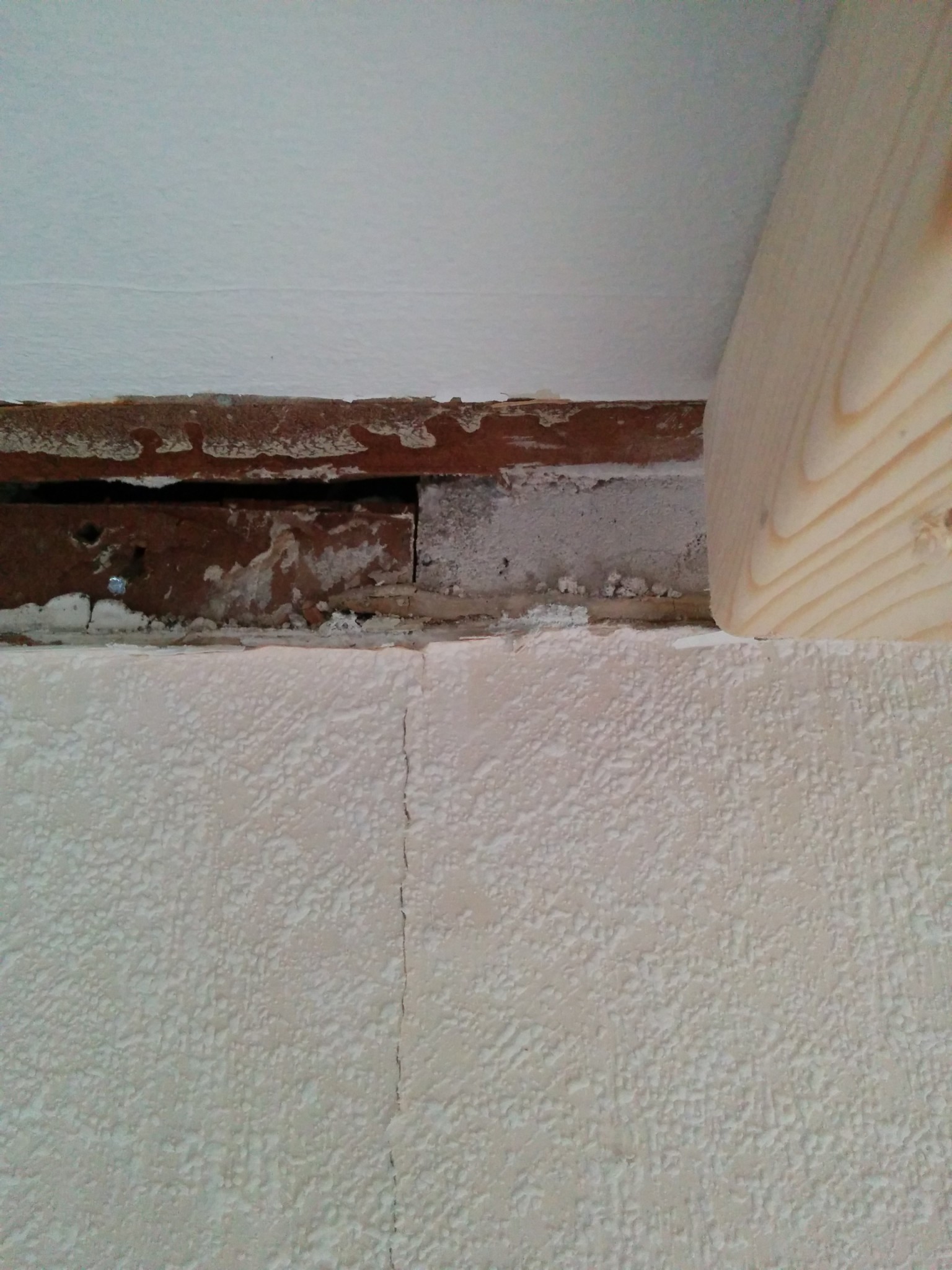
In the last picture, you can see that the masonite is currently at the same level as the plaster. I'm going to remove the masonite, which will create a level difference. How should I solve this? The alternative is to leave the masonite, but then the new plasterboard will build up so much that the radiator won't fit. Do you understand?
It's easy! I have used gypsum from Weber on some of my chimneys. Start by priming so that the substrate "absorbs" evenly. Apply in an even layer with filler, wipe with a damp sponge to achieve a nice texture.
Yes, at least if it needs to be both quick and have a good result. For those who are not natural talents, it requires some experience. So, if your time is valuable, you demand good results, and you don't like unexpected challenges in life, you might consider hiring someone for the job. With ROT, it doesn't have to be particularly expensive. But on the other hand, it's also a job that any amateur can attempt. Most eventually achieve an acceptable result; it just takes 2-4 times as long as when a seasoned professional does it. I belong to that quirky crowd who never hesitate to try to learn something that I will never have use for again, and see all of this as a fun hobby. I plastered the entire garage foundation without any prior experience. It went quite well, didn't take an awfully long time, and I don't regret taking it on.
Other options?
If the current plaster is relatively OK, just repair any minor damage, possibly paint (with silicate paint if it's that kind before), and then make the plaster->drywall transition look nice in some other way, maybe a trim.
Glue a plaster even on the chimney breast with the seam offset to prevent them from cracking.
Then apply a thin layer of something like gypsum to achieve the plaster look if that's what you're aiming for.
Install the baseboard and ceiling molding before "plastering" to avoid the level difference at the molding.
Click here to reply
Vi vill skicka notiser för ämnen du bevakar och händelser som berör dig.

 Is it difficult? Other alternatives?

