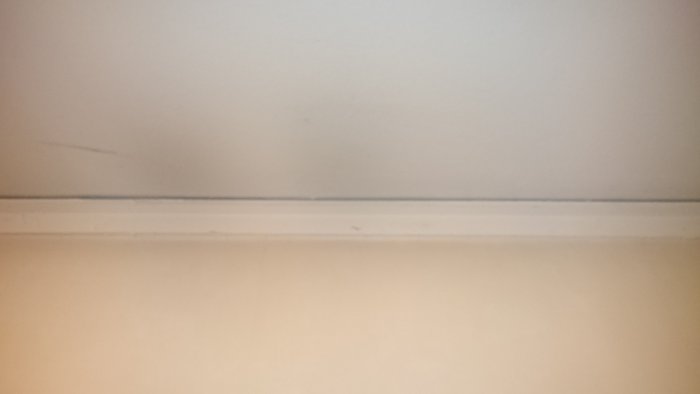
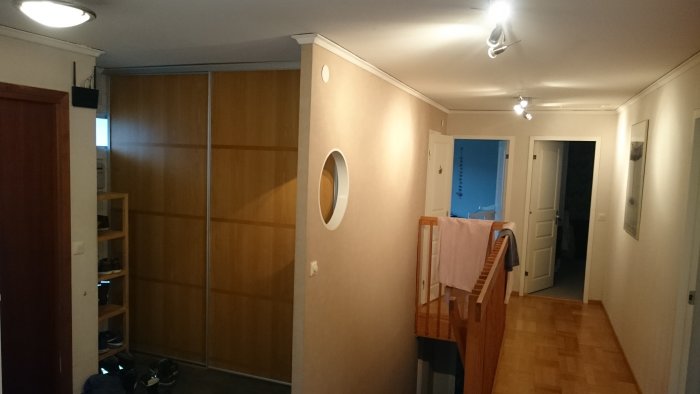
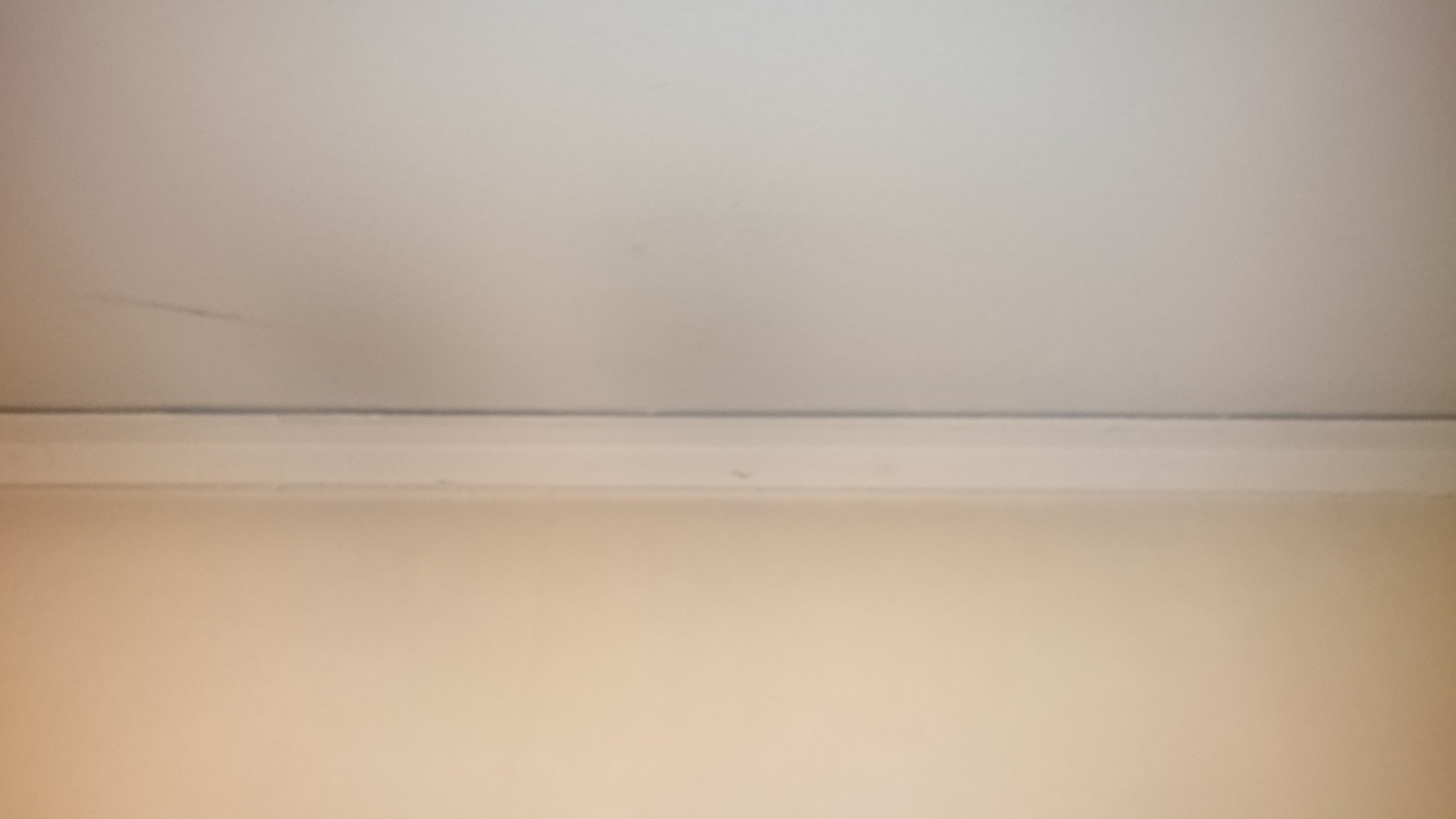
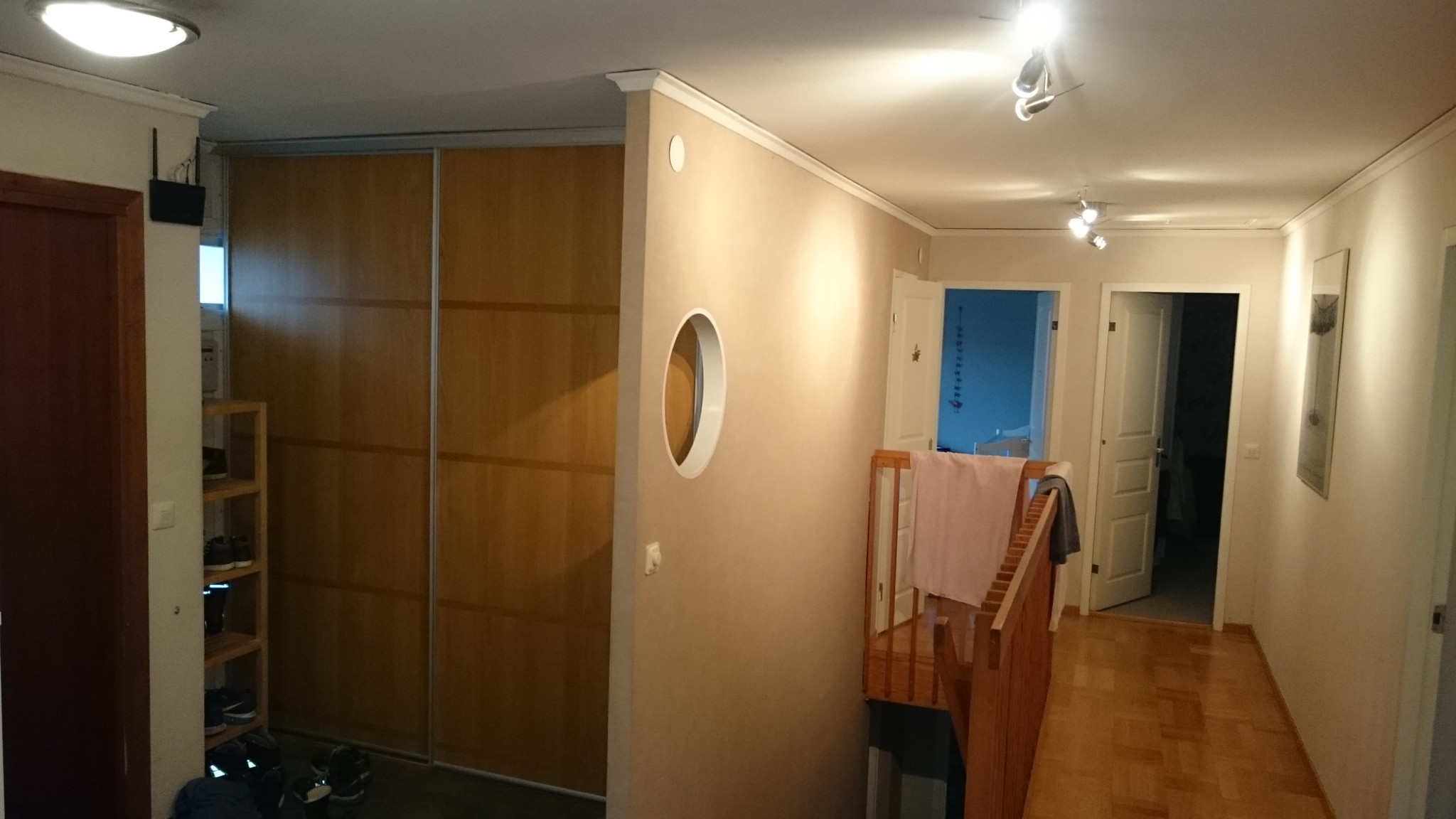
We have now reached the hallway of our recently purchased 1970s Gullringshus. The walls need to be painted, woodwork touched up, baseboards replaced, and the ceiling should first be washed and then possibly painted depending on the wash results. As the picture shows, the ceiling has become partially soot-stained, and my question is whether there is anything preventing us from applying a sealant between the molding and the ceiling to avoid this in the future? Does the gap have any other function besides being purely aesthetic?
The shadow moldings make it so that it isn't visible when it moves between the ceiling and wall, if you seal there, it will probably quite certainly result in cracks in the seal.
But there shouldn't be any airflow there, so sealing probably won't help. I would probably just paint everything in place and see; it could last a long time.
Can very well draft from interior walls.
Cause: construction flaws/negligence and/or small rodents.
I have the same issue myself. It drafts between the framework. Obviously, it's open to the outside at one or several spots where the framework meets the exterior walls. I also know there are plenty of small rodents there. In summary, it's as tight as Swiss cheese... and drafts generously until you pack insulation behind the crown moldings. Unfortunately, you can't access around the exterior walls without tearing down the house.
Insulating is significantly better than caulking, which just cracks/detaches from the surface over time.
In the kitchen, this air gap doesn't exist - there they have placed a decorative moulding flush against the ceiling and painted over it, and I can't see any cracking. Is the shadow line/air gap between the ceiling and the moulding common? How does it look in your home? I'd like to remove it, partly because of the mentioned thermal bridges but also because of the appearance; I don't understand the aesthetic point of the shadow.