Hello,

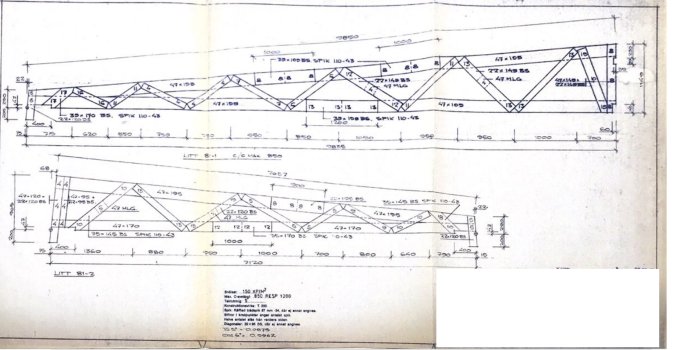
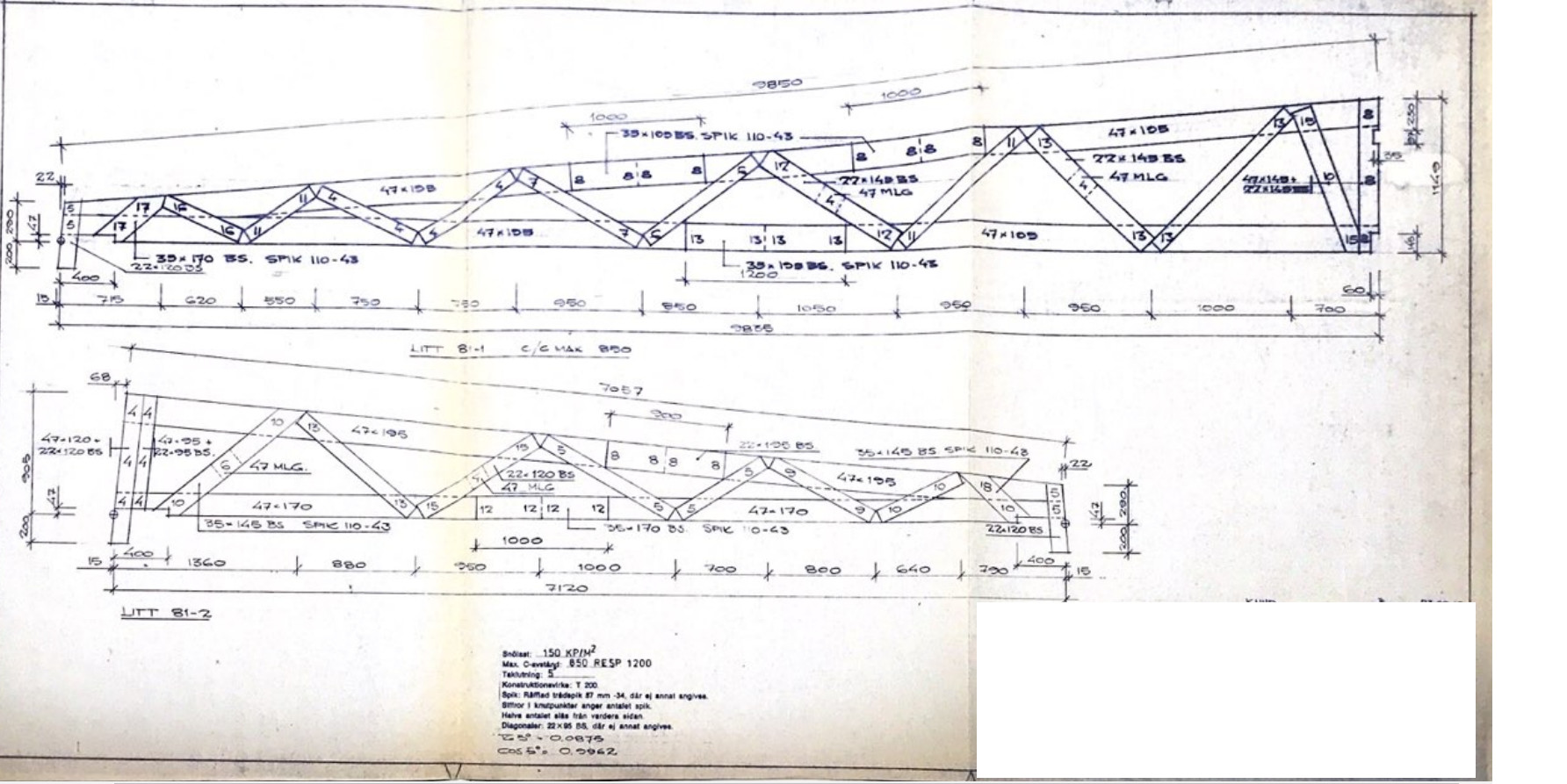
As the title states: is the upper of the two trusses below self-supporting?

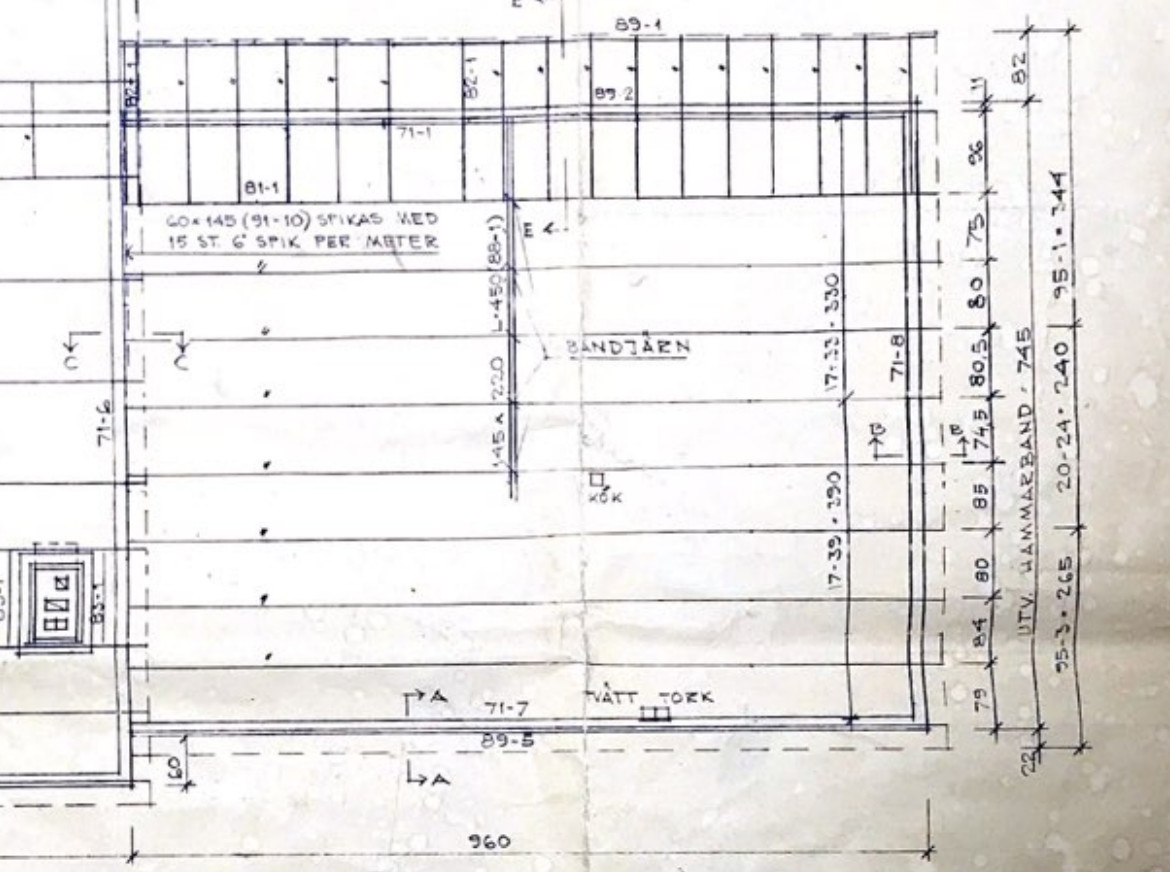
Blueprint showing two roof truss designs with measurements for a construction project involving a kitchen and living room.

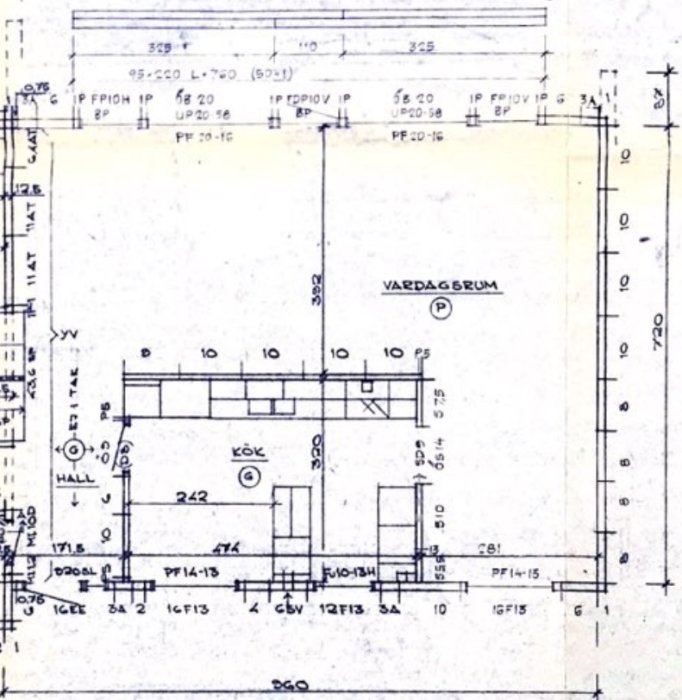
The rooms below consist of a kitchen and a living room. The walls are built with "klent virke" 45*45 with 15mm tongue-and-groove timber, except for the wall to the right between the kitchen and the room which has 35mm tongue-and-groove on each side. No horizontal studs thicker than about 45 are present.

Blueprint of a residential layout showing structural details of a kitchen and living room, with measurements and wall specifications.

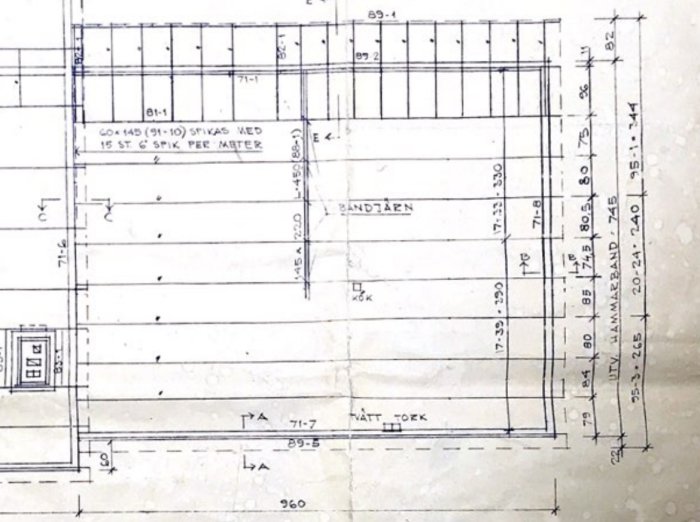
Roof plan:

Blueprint showing roof trusses with measurements and notes, discussing load-bearing capacities for spaces below, including kitchen and living room.

What does the forum think?

Best regards,
/Anders
 
Hello! It is not self-supporting, as the drawing shows, support is required from the wall and the beam that runs from the outer wall to the kitchen.
 
  • Like
an9ers
  • Laddar…
S Spikrätaren said:
Hi! It is not self-supporting, as the drawing shows it requires support from the wall and the beam that goes from the outer wall to the kitchen.
Thanks!
Suspected it was like that
/a
 
Trusses made of framework are always self-supporting. The purpose of the beam hanging in part of the trusses' lower frame is unclear to me. Presumably, it has a stabilizing function. To be a load-bearing beam, it is very undersized.
 
  • Like
an9ers
  • Laddar…
J justusandersson said:
Trusses are always self-supporting. The purpose of the beam that hangs in part of the trusses' lower frame is unclear to me. Presumably, it has a stabilizing function. To be a load beam, it is very undersized.
So in your opinion, no support is needed underneath?
That is, the truss can bear the specified load on its own
Regards
/Anders
 
Yes.
 
  • Like
an9ers
  • Laddar…
Click here to reply
Vi vill skicka notiser för ämnen du bevakar och händelser som berör dig.