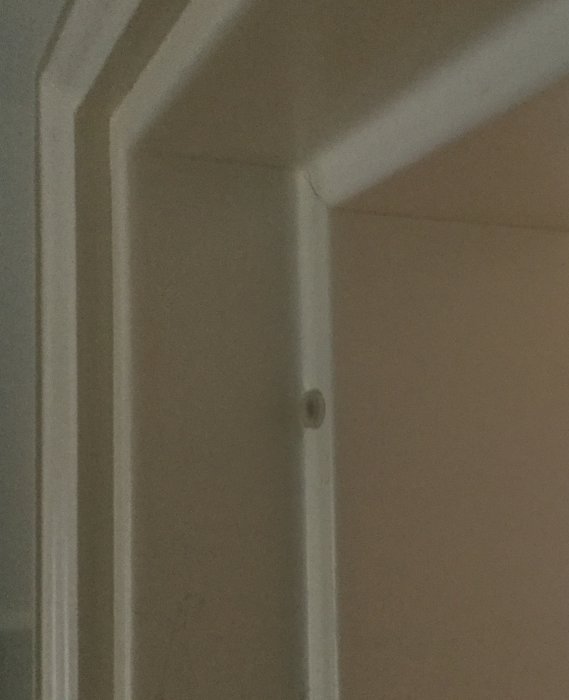
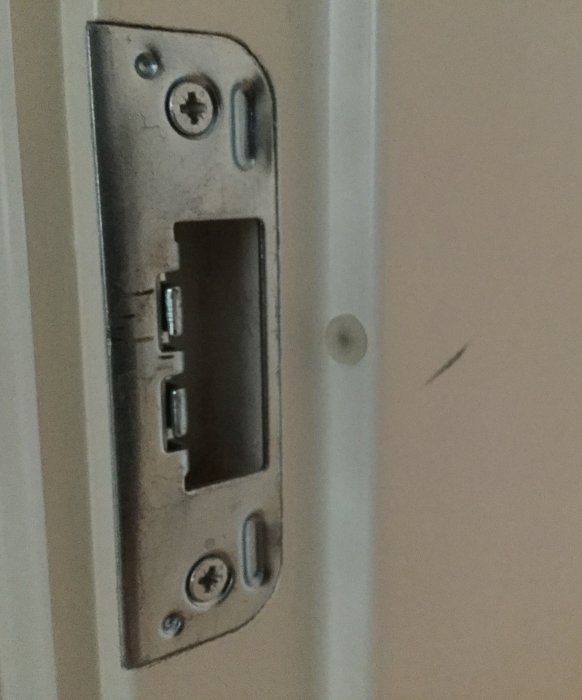
I've noticed that sometimes sealing strips are used on interior doors in public environments, probably for soundproofing.
However, I think it gives a more solid feel and the doors don't sound so terrible when you close them.
So, if you want to muffle the interior doors a bit, what kind of strip should you use? And will it last in the long run even if the frame doesn't have pre-made grooves for it?
If you just want to muffle the closing sound, small, soft silicone pads on the lock side of the frame work fine. One pad at the top, one at the bottom, and one in the middle by the strike plate.
Well, I was also thinking about paws or small "rubber plugs" but I feel that a strip might give a slightly better feel and maybe also block some of the noise even if you don't have a soundproof door or for that matter a proper skirting board.
Does anyone have experience with those available at Jula, Classe, or ByggMax? Is it the E profile you should choose? Or is P better?
Yes, there is a bit of a difference in sound between pads and full list. I have both. Pads on doors that are banged and slammed daily and list for the basement (against drafts), for the pantry (against pests), and for the bathroom (sound). Pads are very forgiving regarding the distance to the frame, but the big advantage is that the door "lands softly" when you slam it shut. You have to fiddle a bit with hinges and strike plates if it's a full list. P-list in foamed PU on both. E-list was too stiff.
However, it's not good if you need air exchange even with closed doors. For example, if you have FTX ventilation.
We had a door to the utility rooms that often rattled. It irritated me, so I just placed a piece of window/door seal directly over the striker plate. Now the door is quiet, and the ventilation works.
Edit: Regular self-adhesive EPDM E or P-strip. Has been working flawlessly for a few years now.
However, it's not good if you need air exchange even with closed doors. For example, if you have FTX ventilation.
We had a door to the utility rooms that often rattled. It bothered me so I just put a bit of window/door seal right at the strike plate. Now the door is silent, while the ventilation works.
Edit: Regular EPDM self-adhesive E or P seal. Has worked flawlessly for a few years now.
We have a fan in the attic that circulates air in both the basement and ground floor. Almost every room has a wall vent, but only a few have ducts directly from the fan in the attic. More precisely, air is sent out from the fan in the bathroom, the hallway, and 3 rooms (1 shower area) in the basement. I assume it's essentially a natural draft in the house.
All the windows on the ground floor have ventilation, while only 2 have it in the basement.
Some doors I plan to put on do not have a door jamb, which means the air (and sound) flows freely under the door, where it is nearly 1 cm.
Do you think I need to consider the airflow?
I can of course settle for placing the seal on smaller areas, but it looks a bit strange, at least if it's an interior door where people move often.
They worked excellently, in some cases the doors were difficult to close but I assume the strip will compress somewhat.
What I've now realized is that this is probably something you only want on doors leading to cold spaces or doors to bathrooms for slightly better sound insulation. Other doors are probably better with dampening pads of some kind, like the ones Johan Gunverth showed in his post.