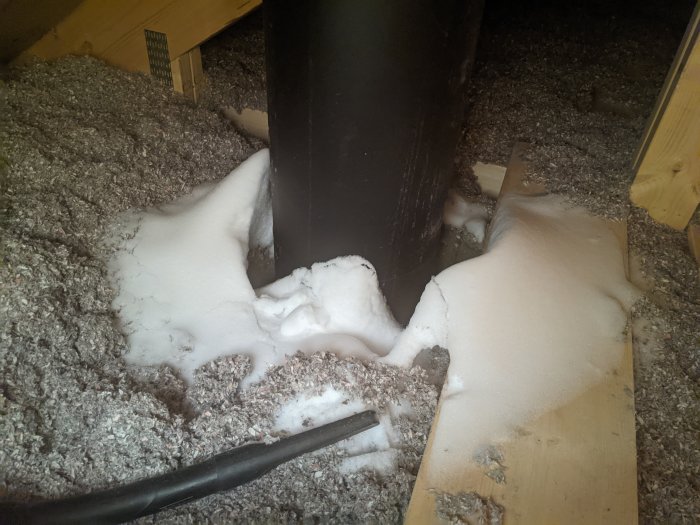
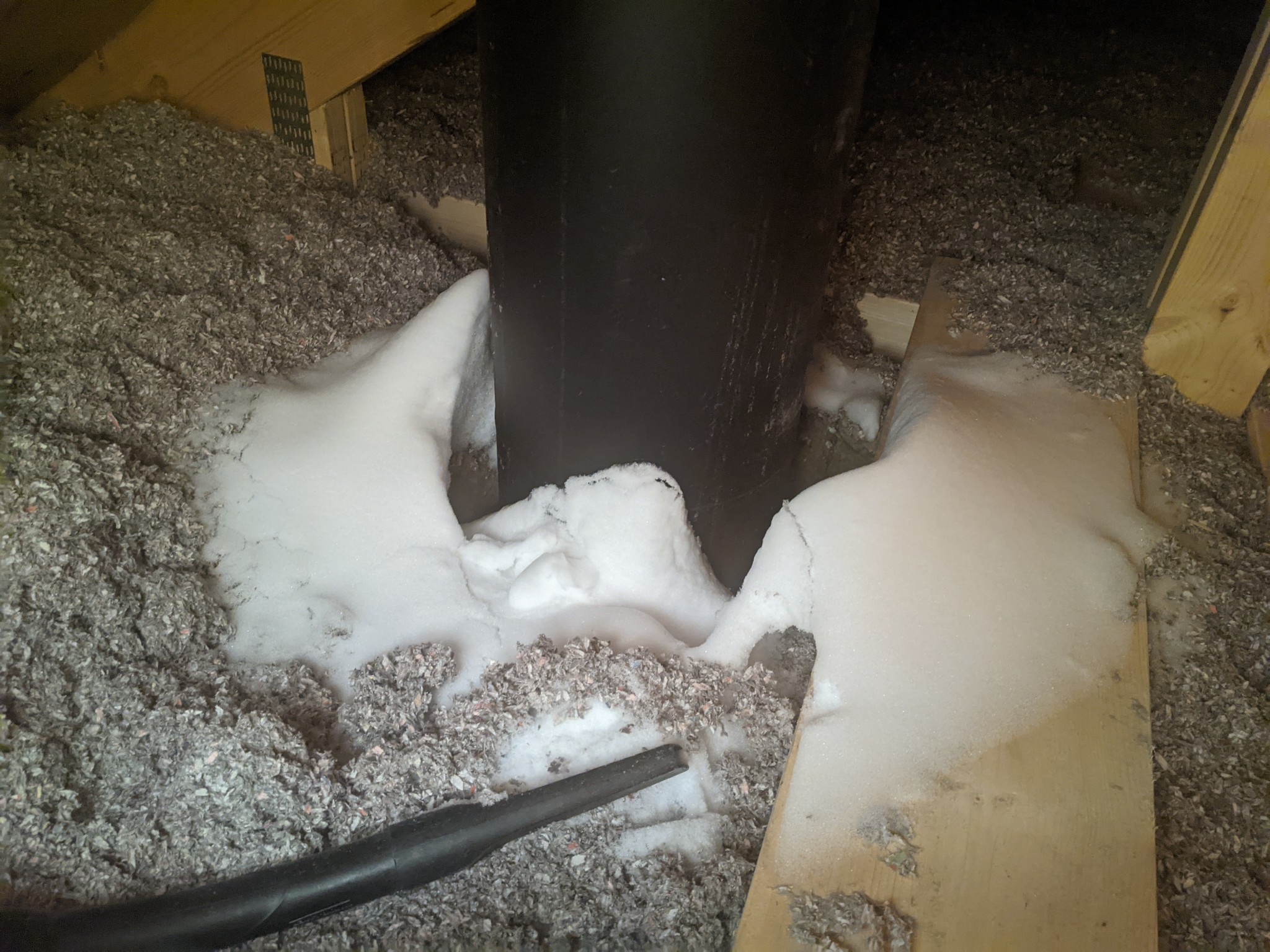
The day before yesterday we discovered that there was dripping from the ceiling on the upper floor due to snow that had entered along the chimney pipe and the hood.
Is it normal for this to happen when it snows a lot and is windy, or could there be some sealing missing or installed incorrectly?
Does anyone have a good description of how this should be done?
In short, no, snow should not be getting into the attic. Have you noticed if water has come in before, during heavy rain or similar?
When was it installed? If it was recent, just call the sheet metal guy and complain. If you can safely get up on the roof, do so, clear the snow around the vent, and see for yourself what is causing the snow to fall in; you might be able to seal it temporarily in the meantime.
In short, no, snow should not come into the attic. Have you noticed if water has come in before, during heavy rain or similar?
When was it installed? If it was recent, just call the sheet metal guy and complain. If you can safely get up on the roof, do it, shovel away the snow around the hatch and see for yourself what's causing the snow to fall in, so maybe you can seal it temporarily for now.
No, never noticed anything before... The house was built 5 years ago and we are referred to the insurance company to investigate the matter further.
So I'm considering what options we have since, as I understand it, the burden of proof is on us after 2 years....
The day before yesterday, we discovered that water was dripping from the ceiling on the upper floor, due to snow entering along the fireplace pipe and the hood.
Is it normal for this to happen when it snows a lot and is windy, or could there be a missing seal or something installed incorrectly?
Does anyone have a good description of how this should be done?
[image] [image] [image] [image]
The fault is on the roof. Not in the attic. You should contact the contractor from whom the fireplace work was ordered. If you look at the consumer agency’s website under “faulty services,” you can report a faulty job for up to 10 years. If I remember correctly, the burden of proof is on you after 3 years. If the contractor doesn’t come out on their own to take a look, you’ll need to hire someone to conduct an inspection and find the cause of the damage. The cause of damage in this case is likely incorrect installation, which should be reported and fixed by the one the work was ordered from.
I don't quite understand what the insurance company has to do with this, as they normally don’t cover damages related to water coming in from outside.
No, never noticed anything before... The house was built 5 years ago and we are referred to the insurance company to investigate the matter further.
So I'm considering what options we have because as I understand it, the burden of proof is on us after 2 years....
/Peter
Talk to those who installed the hood so they can come and look at it, or alternatively bring an inspector, but he will probably just say the same thing—that it needs to be redone. However, it might be good for them to look at it to ensure nothing else has been damaged in the vicinity. Otherwise, call a sheet metal worker to redo the hood if the installers are not willing to rectify the job or make it right.
In any case, your first step now is to seal it to prevent continuously bringing in new moisture from outside, which won't be good in the long run. So address it immediately before you get damage to the house.
Talk to those who installed the hood so they can come and look at it, or alternatively bring in an inspector, but he will probably just say the same thing that it needs to be redone. However, it might be good for them to look at it to ensure nothing else has been damaged in the surrounding area.
Otherwise, call in a sheet metal worker to redo the hood if the installers don't want to rectify the job or make it right.
In any case, you now want to seal it in the first step to prevent constantly adding new moisture from outside, as it won't be good in the long run. Address it immediately before you get damage to the house.
There is no reason to tinker yourself as long as those who did the work are still available. It could absolutely be the underlay that was done incorrectly. But my guess is that there was negligence with the felt over the underlay. In that case, initially it's a carpenter you need.
The wet insulation should be removed as quickly as possible.
There is no reason to tinker yourself as long as the people who performed the work are still available. It could absolutely be the flashing that is incorrectly done. But my guess is that they've been sloppy with the paper over the flashing. In that case, it's a carpenter that's needed first.
The wet insulation must be removed as soon as possible
You are absolutely right about that.
What I meant was if moisture is being added constantly now and the responsible contractor can come in 2 weeks, it might be nice to temporarily fix the problem and inform the contractor that it is done.
Of course, you document before and after so you have proof if any discussion arises.
There is no reason to mess with it yourself as long as the ones who performed the work are still around. It could definitely be that the underflashing is incorrectly done. But my guess is that there has been carelessness with the paper over the underflashing. In that case, a carpenter is needed first.
The wet insulation should be removed as soon as possible
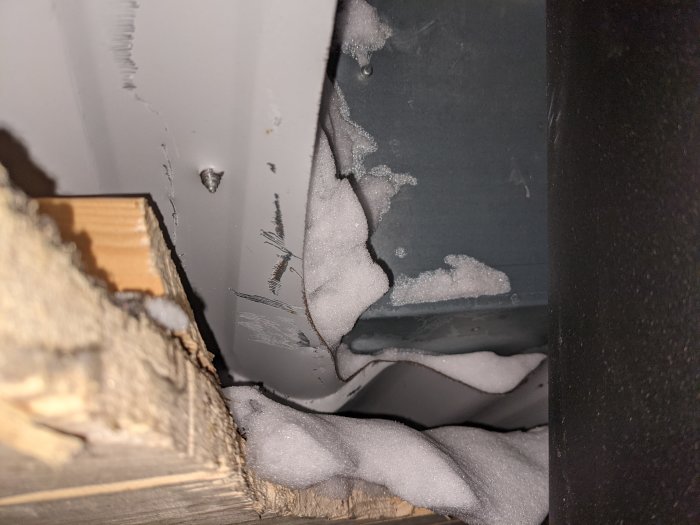
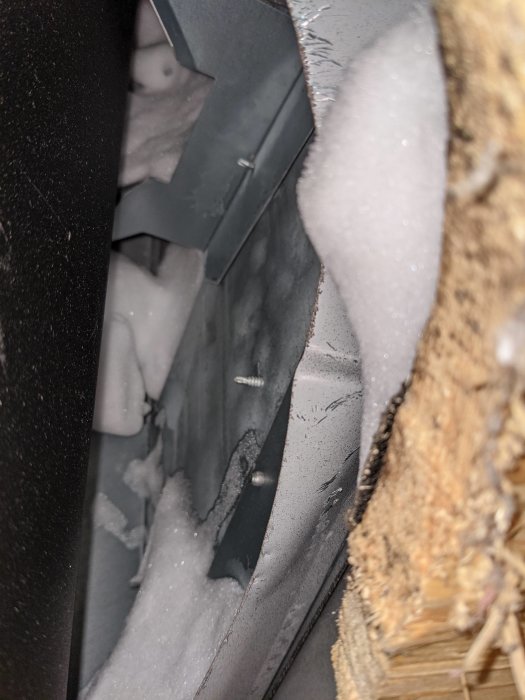
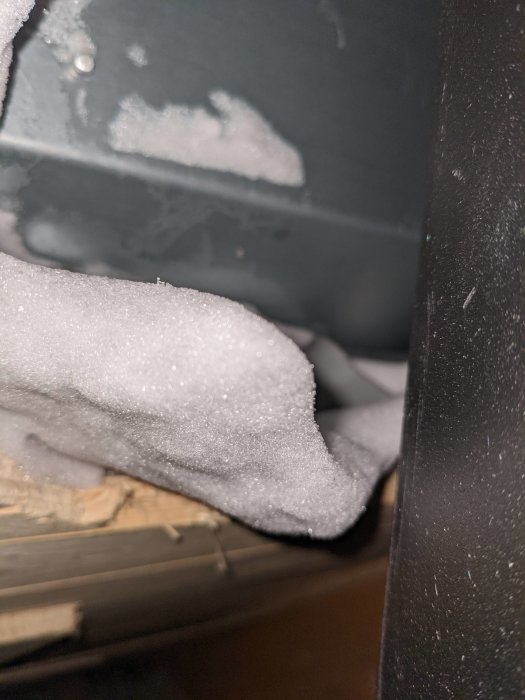
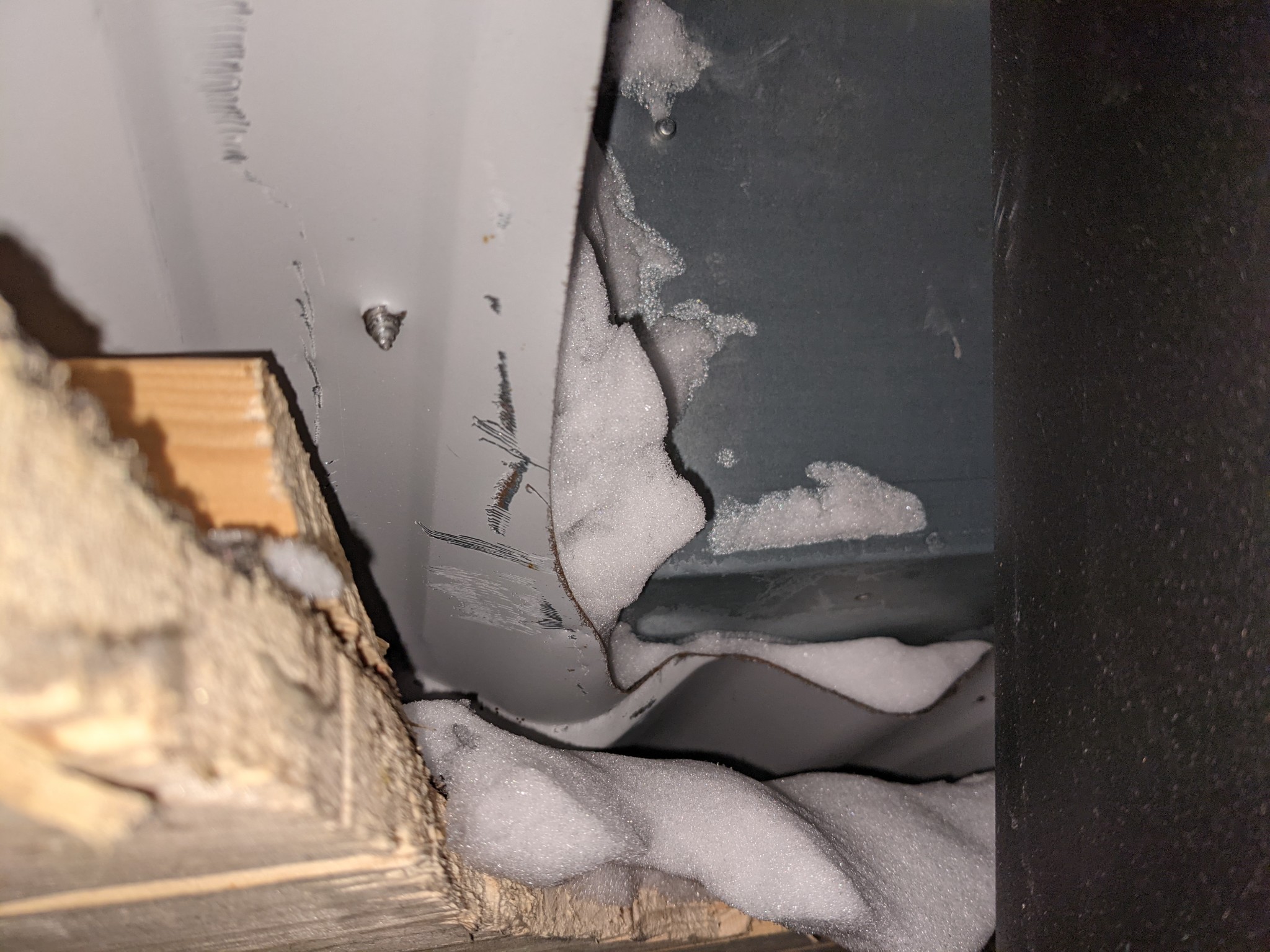
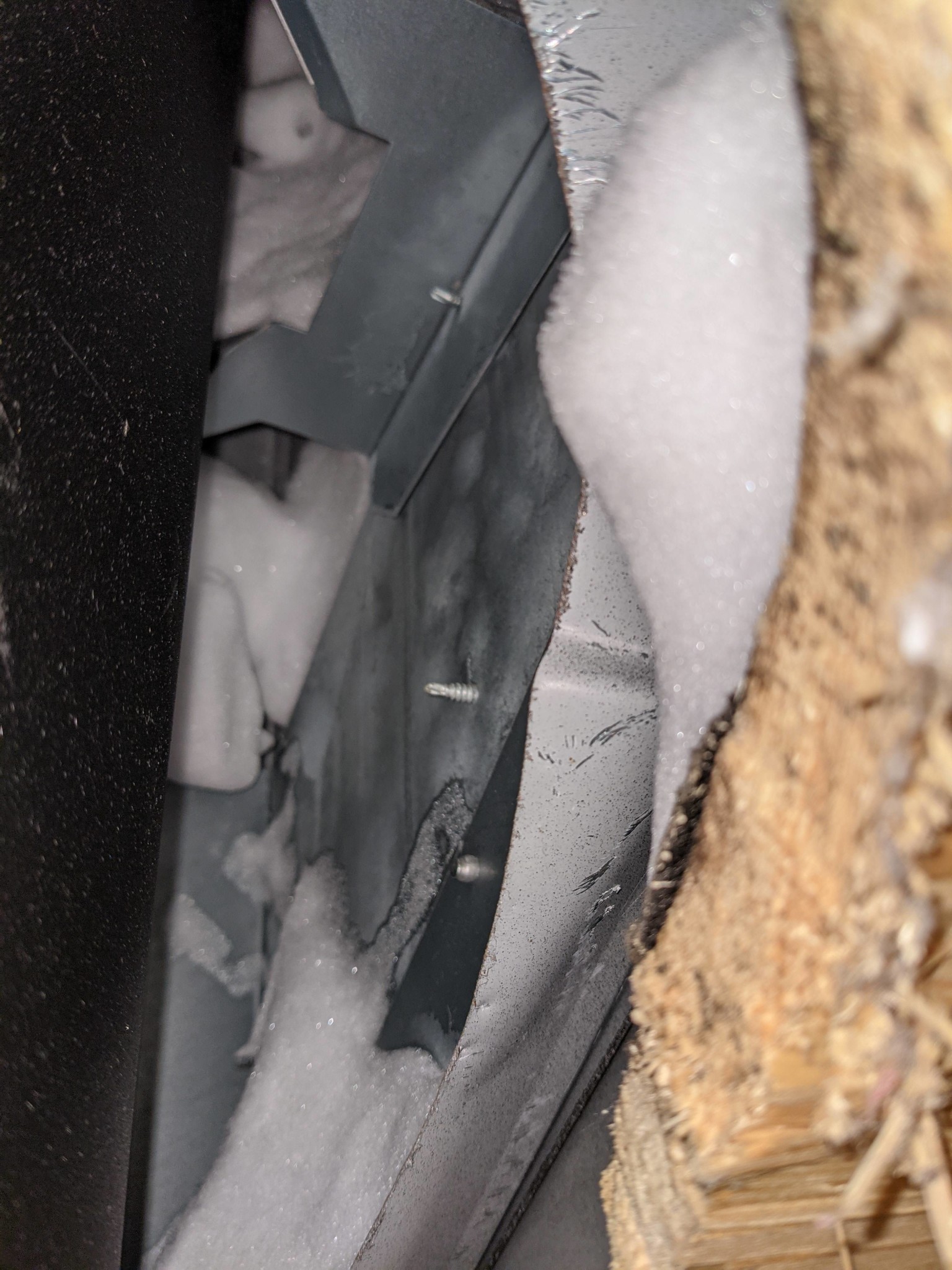
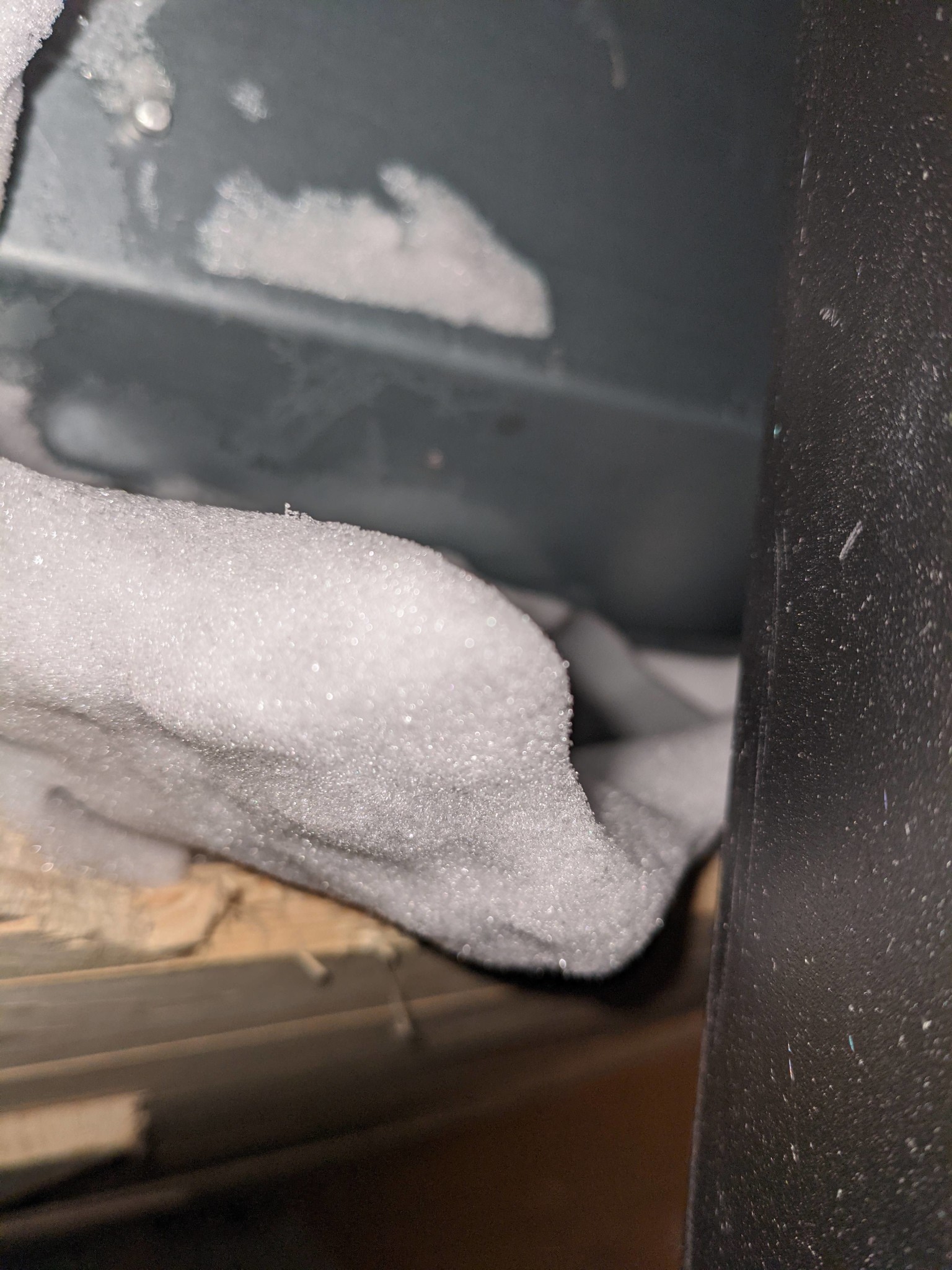
Look at the picture, there is neither paper nor underflashing... You can see the inside of the chimney hood... Unfortunately, it's not uncommon for it to look like this after the stove installers have done their job...
Look at the picture, there's neither paper nor flashing.... You can see the inside of the chimney cap... Unfortunately, it's not uncommon for it to look like this after the stove installers have done their job.....
You're probably right. Unbelievable. I didn't see that in the pictures at first. Now I actually think Dunbar is right. How can they dare to leave it like that when they're responsible for 10 years? Or is it like with many bathroom renovators, where the organization number changes every other year?
You are probably right. Absolutely incredible. Didn't see it at all in the pictures at first. Now I actually think Dunbar is right. How the hell do you dare to leave it like that when you're responsible for 10 years? Or is it like many bathroom renovators where the organization number changes every other year?
Look at the picture, there is neither tar paper nor under flashing.... You can see the inside of the chimney cap... Unfortunately, it's not uncommon to see this after the stove installers have done their work.....
Hi!
Can you point out on the picture where the tar paper or under flashing should have been?
Can you point out on the picture where the paper or sub-layer should have been placed?
/Peter
What the installers have done is "just a hole for the chimney," in the pictures, you see no sub-flashing, you only see the metal roof itself and the chimney cap, as well as the battens that the metal roof is screwed onto.
They must use sub-flashing; all the snow and water blowing in through the chimney flashing and the metal roof ends up on the viden, (the gap you have between the substructure and the actual chimney pipe) this gap should not exist and should be covered with sub-flashing.
Call the company to complain, call the insurance company, send your pictures there, and they will confirm that sub-flashing is missing.
What the installers have done is "just a hole for the chimney", in the pictures you see no underflashing, you only see the metal roof and chimney cap, as well as the battens that the metal roof is screwed onto.
They must use underflashing, all the snow water that blows in via the chimney flashing and the metal roof lands on the "viden" (the gap you have between the substrate and the actual chimney pipe) this gap should not exist, but should be covered with underflashing.
Call the company to complain, call the insurance company, send your pictures there, they will confirm that underflashing is missing.
Thanks! I googled an image now and understand what you mean
Click here to reply
Vi vill skicka notiser för ämnen du bevakar och händelser som berör dig.

Krille-72 said:
There is no reason to tinker yourself as long as the people who performed the work are still available. It could absolutely be the flashing that is incorrectly done. But my guess is that they've been sloppy with the paper over the flashing. In that case, it's a carpenter that's needed first.
