
Hello,
I’m extending my house and, as usual, bought a bunch of nails, 3", 4", 5".
But my carpenter recommended screws. And I can say it’s the best decision I’ve made; it’s more manageable and practical than anything I’ve experienced before. I can’t see any advantage to using nails today; the only thing we used nails for was the roof sheathing. So for all of you considering picking up a hammer, think instead about a screwdriver, there are so many benefits:
- You can basically work from all impossible angles
- It goes quickly and if you make a mistake you can just take it out and redo it
- It's easier to get the timber exactly right
- It becomes more durable
- You can work more easily on your own.
- You get a better grip in end grain
Disadvantages:
- Slightly higher price
- The screws I used are quite tough to saw off with a hacksaw.
I found a screw that was perfect (torx) in various dimensions (70x6, 100x5, 120x6, 145x6, etc.) that replaced all the nails I planned to use. The total cost for the screws for the house was about 7000:-, but it was worth every single penny.
I have built docks for many years that need to be removed in the fall, and I always used screws, but have always been dissatisfied because they rusted, corroded, or simply broke. But the screws I found are excellent, a completely different league.
So my purpose with this post is to recommend using screws for building instead of nails. I am extremely satisfied, and if it’s of interest I can also note the brand, but I’m unsure if that is permitted.
I’m extending my house and, as usual, bought a bunch of nails, 3", 4", 5".
But my carpenter recommended screws. And I can say it’s the best decision I’ve made; it’s more manageable and practical than anything I’ve experienced before. I can’t see any advantage to using nails today; the only thing we used nails for was the roof sheathing. So for all of you considering picking up a hammer, think instead about a screwdriver, there are so many benefits:
- You can basically work from all impossible angles
- It goes quickly and if you make a mistake you can just take it out and redo it
- It's easier to get the timber exactly right
- It becomes more durable
- You can work more easily on your own.
- You get a better grip in end grain
Disadvantages:
- Slightly higher price
- The screws I used are quite tough to saw off with a hacksaw.
I found a screw that was perfect (torx) in various dimensions (70x6, 100x5, 120x6, 145x6, etc.) that replaced all the nails I planned to use. The total cost for the screws for the house was about 7000:-, but it was worth every single penny.
I have built docks for many years that need to be removed in the fall, and I always used screws, but have always been dissatisfied because they rusted, corroded, or simply broke. But the screws I found are excellent, a completely different league.
So my purpose with this post is to recommend using screws for building instead of nails. I am extremely satisfied, and if it’s of interest I can also note the brand, but I’m unsure if that is permitted.

Att attach external framing (before facade) is super fun with a nail gun. But if you use 120x6 screws and a decent screwdriver, the time advantage isn’t that significant; other factors outweigh it, especially when you get to windows, etc. I'm talking small houses, not townhouse rows. I would never use a nail gun over a hammer and nails on smaller projects today (perhaps roof sheathing). Sure, if you're a professional, it might justify...
Of course, you should tell us what kind of screw you are so satisfied with!pbengtsson said:Hi
I found a screw that was amazing (torx) in various dimensions (70x6, 100x5, 120x6, 145x6 etc.) that replaced all the nails I intended to use. The total cost of the screws for the house was about 7000:-, but it was worth every single krona.
So my purpose with this post is to recommend using screws for construction instead of nails. I am so incredibly satisfied, if it's interesting I can also note the brand, but I'm unsure if it's allowed.
Yes, the hammer is mostly used for adjusting things nowadays. Nail guns and screws definitely dominate. I mostly use Essve's Cutter screw, which works excellently. Self-drilling, grooves under the head, and torx bits. Just remember to use nylon plugs, and not the yellow/red/blue/brown plastic plugs, when things are being screwed into concrete etc.

Sure, screws are good and they hold better, but nails are more suitable here (especially with a nail gun):
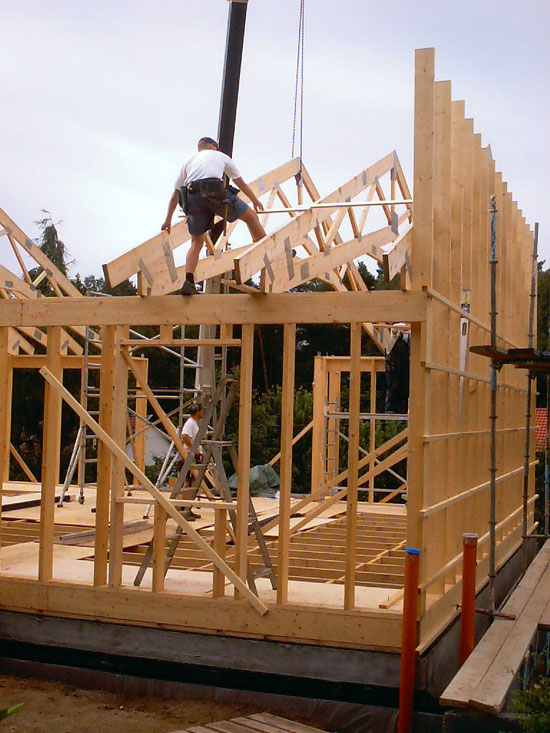
* Raising the frame:
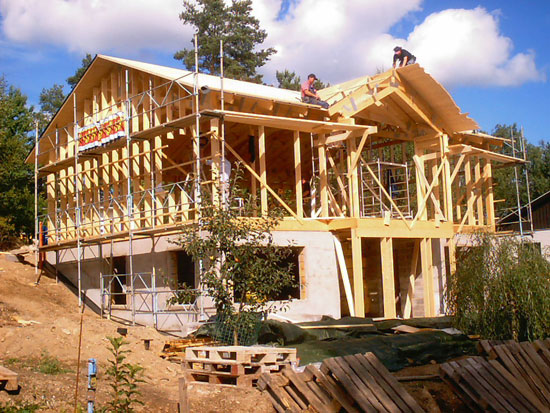
* Sheathing + nail papering:
* Sparse roof:
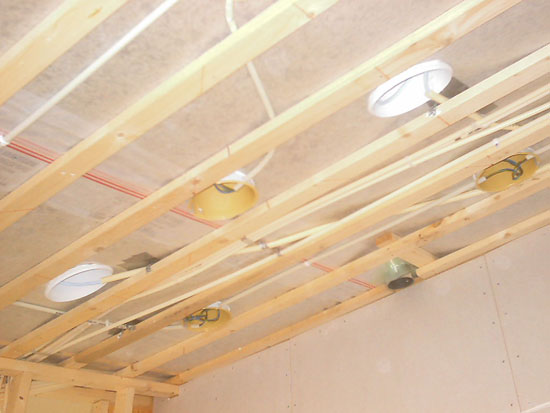
* Plastering (obviously screws):
http://www.familjenlindstrom.se/images/byggahus/inredning/tak_1.jpg
* Panel (both nails/screws):
http://www.familjenlindstrom.se/images/byggahus/verktyg/bosch.jpg
* Raising the frame:
* Sheathing + nail papering:
* Sparse roof:
* Plastering (obviously screws):
http://www.familjenlindstrom.se/images/byggahus/inredning/tak_1.jpg
* Panel (both nails/screws):
http://www.familjenlindstrom.se/images/byggahus/verktyg/bosch.jpg
Click here to reply