
2,233 views ·
13 replies
2k views
13 replies
Sand down and polish basement wall in bathroom
Hello,
I am in the process of building a bathroom and sauna in the basement. The house is from 1965 with siporex, but the walls in the basement seem to be made of leca blocks. To construct the bathroom, I will build a wall with aerated concrete (I was thinking of using studs until recently, but I've changed my mind). The other three walls in the bathroom are an interior wall and a wall against the crawl space.
In the part of the bathroom that will be wet zone 1, I plan to tile the walls. Otherwise, I plan to plaster and paint with silicate paint.
My first question concerns the actual plastering and whether I should sand off both the paint and plaster on the existing walls? I don't know what type of paint it is, but it seems to adhere well. Likewise, the plaster, which is about 10mm thick. I guess it's lime-cement plaster. I have done some tests to sand it off, as you can see in one of the pictures. If I decide to do so, I plan to sand it down with an angle grinder and diamond disc connected to a vacuum cleaner.
A simpler alternative might be to plaster directly on the paint, but I'm not too keen on that option since I don't know what kind of paint it is and it seems pointless to paint with silicate if it is sealed underneath.
My second question is which plaster I should choose? I want it as smooth as possible, like a gypsum board. It seems that plaster C with small grains such as 0-0.5mm might be an option or KC B plaster, but I am really a novice with this.
I am in the process of building a bathroom and sauna in the basement. The house is from 1965 with siporex, but the walls in the basement seem to be made of leca blocks. To construct the bathroom, I will build a wall with aerated concrete (I was thinking of using studs until recently, but I've changed my mind). The other three walls in the bathroom are an interior wall and a wall against the crawl space.
In the part of the bathroom that will be wet zone 1, I plan to tile the walls. Otherwise, I plan to plaster and paint with silicate paint.
My first question concerns the actual plastering and whether I should sand off both the paint and plaster on the existing walls? I don't know what type of paint it is, but it seems to adhere well. Likewise, the plaster, which is about 10mm thick. I guess it's lime-cement plaster. I have done some tests to sand it off, as you can see in one of the pictures. If I decide to do so, I plan to sand it down with an angle grinder and diamond disc connected to a vacuum cleaner.
A simpler alternative might be to plaster directly on the paint, but I'm not too keen on that option since I don't know what kind of paint it is and it seems pointless to paint with silicate if it is sealed underneath.
My second question is which plaster I should choose? I want it as smooth as possible, like a gypsum board. It seems that plaster C with small grains such as 0-0.5mm might be an option or KC B plaster, but I am really a novice with this.
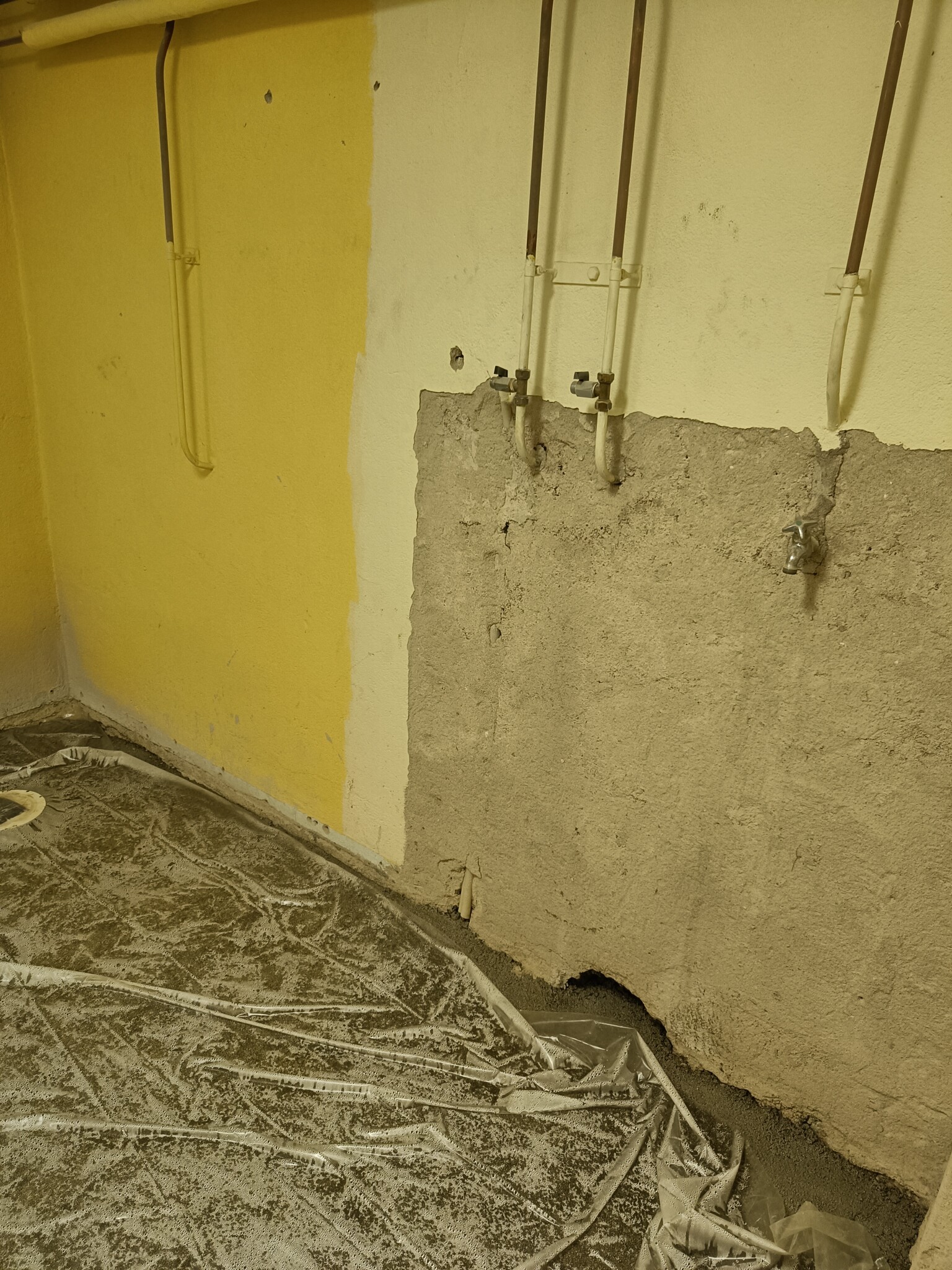
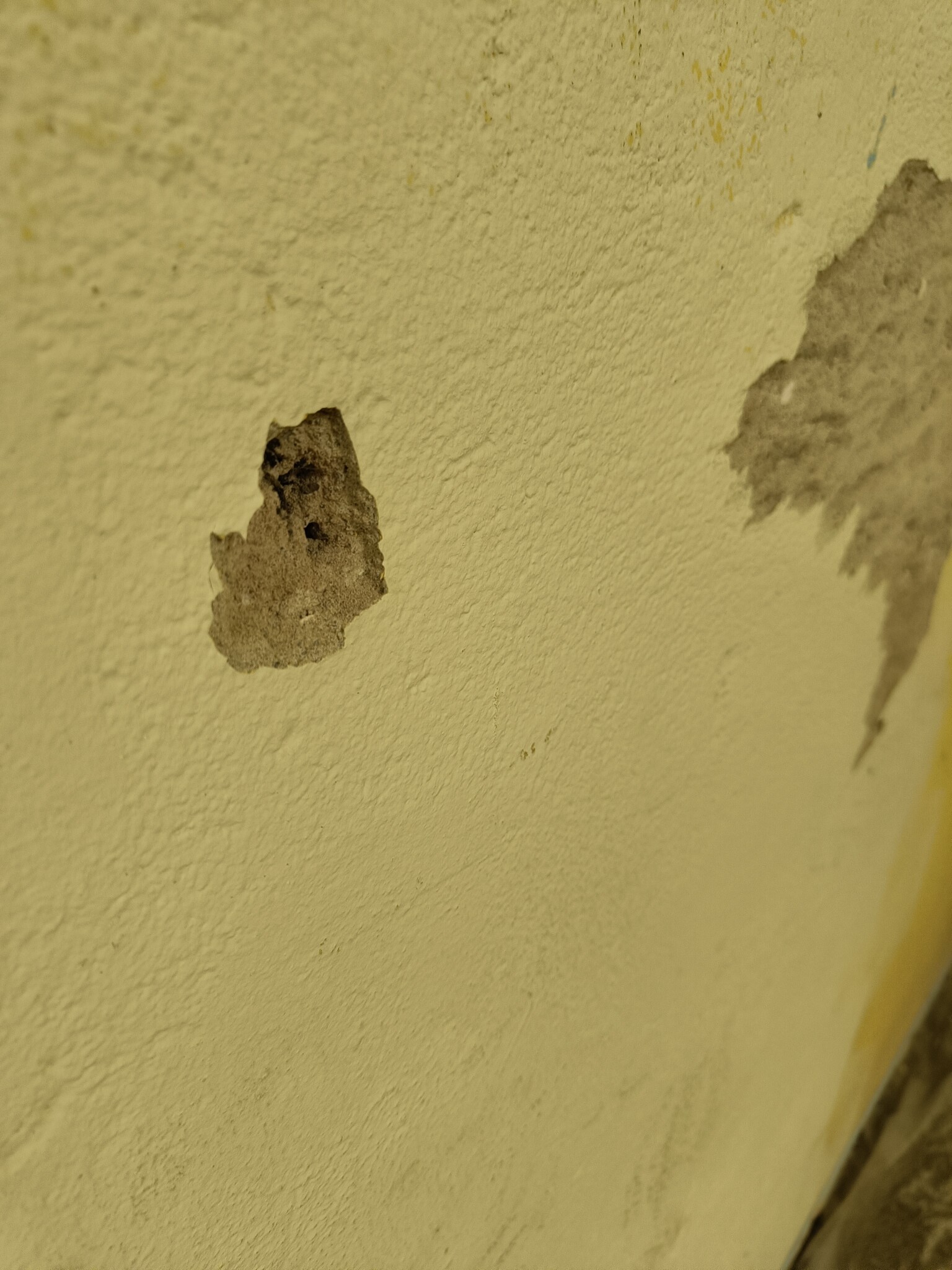
Anyone?
Planning to use H+H lightweight concrete multi.
Planning to use H+H lightweight concrete multi.
If you want to sand everything down, I can recommend shp primer, then apply new plasterboards with adhesive on the wall and board. Then add a foil system.
Thanks for the reply. I thought that by plastering and then painting the concrete walls with silicate paint, I could avoid sealing them with boards and moisture barriers. Considering possible moisture problems that it might entail. But maybe you don't see those risks?R Rickard.lj said:
Now what that shower is supposed to be I was thinking, outside the zone you can always use a concrete grinder with a vacuum to remove paint then sand or putty lv and then paint.
Ah, of course. The tiler is considering just sanding down the paint and then priming and applying adhesive directly. The question is whether the existing plaster behind can withstand it.R Rickard.lj said:
Yes, as long as there's no boom in the plaster, but should he continue with the fix and tiles directly without a waterproof membrane?
Click here to reply